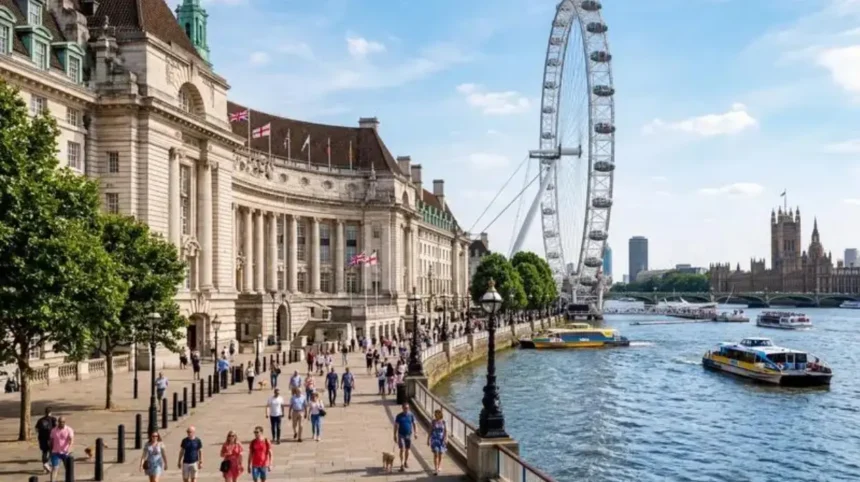
South Bank is one of London’s most popular destinations for half-day sightseeing, combining riverside walks, cultural attractions, public spaces, restaurants and entertainment venues. Located along the southern bank of the River Thames in central London, the area offers visitors several hours of activities within walking distance of major landmarks, including the London Eye, Southbank Centre, National Theatre and Tate Modern.
- What Makes South Bank a Good Destination for a Half-Day Visit?
- Which Major Attractions Can Visitors Explore Around South Bank?
- Where Can Visitors Enjoy the Best Riverside Walks Around South Bank?
- Where Can Visitors Find Free Things to Do Around South Bank?
- Where Can Visitors Eat and Drink During a South Bank Visit?
- Which South Bank Attractions Are Best for Art, Theatre and Film Lovers?
- What Can Families Do Around South Bank for Several Hours?
- Where Can Remote Workers and Business Travellers Spend Time Around South Bank?
- How Can Visitors Plan a Three-Hour or Five-Hour South Bank Itinerary?
- How Can Visitors Reach South Bank and Navigate the Area?
- When Is the Best Time to Spend Several Hours Around South Bank?
- How Can Visitors Make the Most of a Half-Day Around South Bank?
The district suits tourists exploring central London, residents planning a day out, business travellers with free time between meetings and remote workers looking for a comfortable place to relax. Its combination of indoor attractions and outdoor spaces makes South Bank suitable for visits throughout the year.
Visitors can organise a South Bank itinerary around architecture, art, entertainment, food or riverside views. The most practical approach is to group nearby attractions together, check opening times in advance and allow sufficient time for walking, refreshments and individual activities.
What Makes South Bank a Good Destination for a Half-Day Visit?
South Bank is ideal for a half-day visit because it brings together riverside scenery, cultural attractions, public art and dining within a compact central London area. Visitors can combine a Thames walk with a gallery, landmark, market or performance.
South Bank occupies the southern side of the River Thames opposite central London districts such as Westminster. Its pedestrian-friendly riverside route connects major cultural institutions and public spaces, making it suitable for independent sightseeing without extensive travel between attractions.
The area developed into a major cultural destination during the twentieth century. The 1951 Festival of Britain transformed part of the riverside into an exhibition site celebrating British design, architecture, science and industry. The Royal Festival Hall opened that year and became a lasting part of the district’s cultural identity.
Today, South Bank functions as both a visitor destination and a public gathering place. Its attractions range from the London Eye’s panoramic views to free-to-enter gallery spaces and open riverside walkways. This combination accommodates different budgets and interests.
A visit lasting three to five hours allows time for a relaxed walk, one major attraction, a meal and a short cultural stop. Visitors planning to attend a theatre performance, explore a major exhibition or take a guided tour should allow additional time.
The district also connects with neighbouring destinations. Walking east leads towards Gabriel’s Wharf, Oxo Tower Wharf and Tate Modern, while walking west leads towards Westminster Bridge, the London Eye and County Hall. This geographical arrangement helps visitors build an itinerary around their available time.
Which Major Attractions Can Visitors Explore Around South Bank?
The principal attractions around South Bank include the London Eye, Southbank Centre, National Theatre, BFI Southbank and Tate Modern. Each offers a different experience, from panoramic city views and live performances to contemporary art and independent cinema.
The London Eye is a large observation wheel beside County Hall. Its enclosed capsules provide elevated views of landmarks such as the Houses of Parliament, St Paul’s Cathedral and the wider London skyline. Visitors should allow approximately one to two hours for the experience, including queues and boarding procedures.
Southbank Centre is a major arts complex that includes the Royal Festival Hall, Queen Elizabeth Hall and Hayward Gallery. Its programme features concerts, exhibitions, festivals and public events. Visitors also use its public areas for meeting friends, drinking coffee and enjoying river views.
The National Theatre produces and stages plays across its performance spaces on the South Bank. Its building is also notable for its modernist architecture. Visitors with limited time can check the theatre programme, available tickets and tours before planning a visit.
BFI Southbank is a film and moving-image venue operated by the British Film Institute. Its programme includes classic films, international cinema, retrospectives and special screenings. It provides an indoor activity for visitors interested in film history or independent cinema.
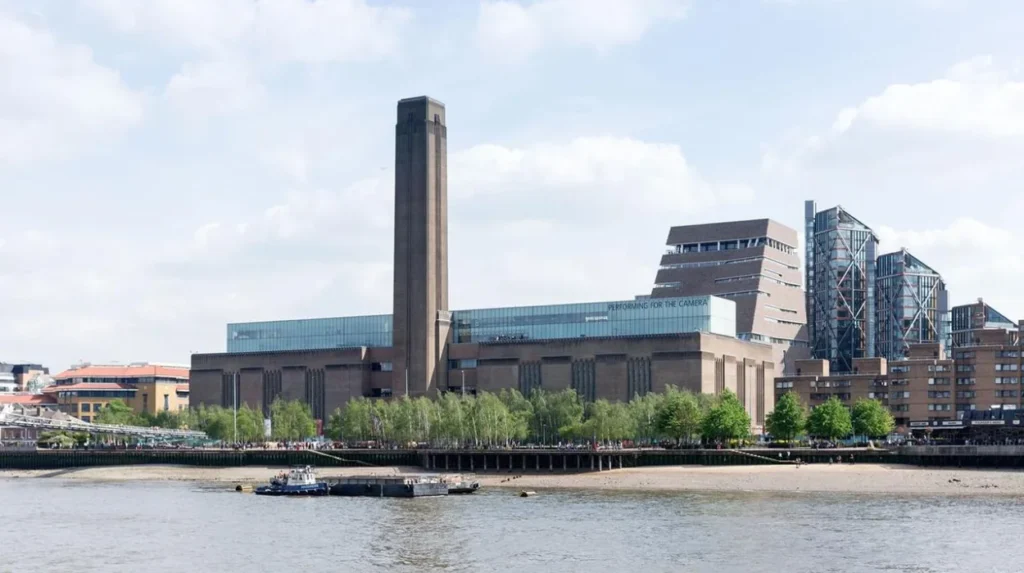
Tate Modern presents international modern and contemporary art inside the former Bankside Power Station. Its permanent collection displays are generally free to enter, while some temporary exhibitions require tickets. The museum lies east of the central South Bank stretch and suits visitors extending their walk towards Bankside.
These attractions serve different interests and time budgets. The London Eye suits visitors prioritising city views, while Southbank Centre provides a flexible stop for arts, architecture and refreshments. Tate Modern suits visitors prepared to spend longer exploring exhibitions.
Not every attraction requires a full visit. A walk past the National Theatre, a stop inside a public foyer and a short riverside break provide alternatives for travellers with limited time.
Where Can Visitors Enjoy the Best Riverside Walks Around South Bank?
The Queen’s Walk is the main riverside pedestrian route through South Bank, linking Westminster Bridge, the London Eye, Southbank Centre and the National Theatre. Continuing east connects visitors with Gabriel’s Wharf, Oxo Tower Wharf and the Bankside area.
The Queen’s Walk follows the southern bank of the Thames and forms part of London’s wider riverside walking network. Its open views across the river make it a practical route for sightseeing, photography and outdoor breaks.
The western section near Westminster Bridge provides views of the Palace of Westminster and the Elizabeth Tower, commonly known as Big Ben. Moving east, visitors pass County Hall, the London Eye, public seating areas and major arts buildings. Further along, the route reaches Gabriel’s Wharf and Oxo Tower Wharf.
The riverside path is useful because it links several destinations without requiring repeated journeys on public transport. Visitors can stop at landmarks as they appear rather than following a rigid timetable.
The route also offers changing architectural views. Historic Westminster buildings contrast with the modern structures around the London Eye and the large concrete forms of the National Theatre. Across the river, the skyline includes historic churches, government buildings and commercial developments.
The length of a walk depends on the chosen starting and finishing points, as well as stops along the way. A short walk between Westminster Bridge and Southbank Centre suits visitors with around 30 minutes. Continuing towards Tate Modern requires additional time, especially when including refreshments or gallery visits.
Visitors should remain aware of other pedestrians and cyclists. River levels and weather conditions also affect the experience. Comfortable footwear helps when combining the promenade with museum visits and nearby streets.
South Bank’s riverside setting reflects a longer history of London’s relationship with the Thames. The river supported trade, transport and industry before the area became a centre for arts and public recreation. Understanding the [history of South Bank and its transformation into a cultural district] provides useful context for exploring the modern riverside.
Where Can Visitors Find Free Things to Do Around South Bank?
Visitors can enjoy South Bank without buying attraction tickets by walking along the Thames, exploring Royal Festival Hall’s public spaces, viewing outdoor art and attending selected free events. These activities provide an affordable way to spend several hours in central London.
South Bank is particularly useful for travellers managing a sightseeing budget. The riverside promenade is a public walking route, and visitors do not need an admission ticket to enjoy the views or explore the surrounding streets.
The Royal Festival Hall is one of the strongest options for free indoor sightseeing. Its public foyer welcomes visitors who are not attending a concert. Visitors can explore the spacious interior, browse public areas and find refreshments when facilities are open.
The Clore Ballroom, located inside the Royal Festival Hall, hosts free events and provides a place to sit, meet friends or take a break. Its programme includes activities such as music performances and social dancing, although individual events follow their own schedules.
Outdoor public art adds another dimension to a free visit. Installations and temporary displays appear around Southbank Centre, particularly during cultural festivals. The artwork changes over time, so visitors should check the current programme rather than expect every installation to remain permanently.
The riverside also provides opportunities for photography. Westminster’s historic skyline, the London Eye, Waterloo Bridge and the Thames create different views along the promenade. Early mornings generally offer a quieter walking experience than busy weekend afternoons.
Free entry does not mean every activity costs nothing. Special exhibitions, guided tours, concerts and some events require paid tickets. Visitors should distinguish between entering a public building and attending a ticketed performance.
Where Can Visitors Eat and Drink During a South Bank Visit?
South Bank offers riverside cafés, casual restaurants, food stalls and sit-down dining around Southbank Centre, Gabriel’s Wharf and Oxo Tower Wharf. Visitors can choose quick refreshments between attractions or reserve a longer meal as part of their half-day itinerary.
Food is an important part of planning a longer visit because a meal provides a natural break between walking and indoor activities. South Bank has options ranging from coffee and pastries to international street food and full-service restaurants.
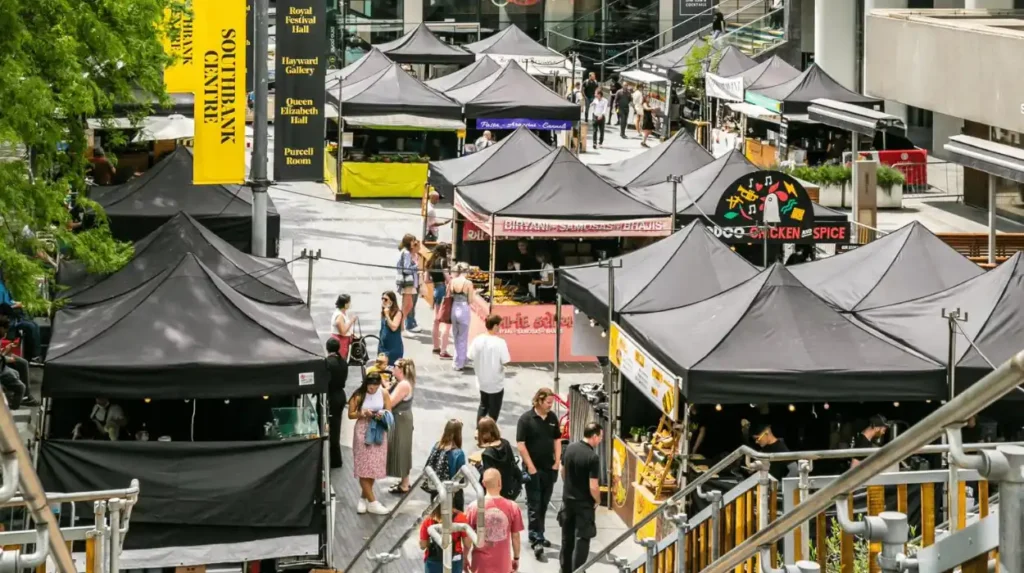
The Southbank Centre Food Market is a useful stop when its trading schedule aligns with a visit. The market features street-food choices representing different cuisines, while the surrounding cultural complex provides cafés, bars and restaurants. Stall availability and opening days vary, so visitors should check the current schedule.
Gabriel’s Wharf, east of the National Theatre, provides a smaller riverside setting with independent businesses and places to eat. It suits visitors walking between Southbank Centre and the eastern riverside attractions.
Oxo Tower Wharf combines design-focused retail spaces with dining and views across the Thames. Its location makes it a convenient stop for people continuing towards Tate Modern or returning towards Waterloo.
Visitors seeking a quick lunch should allow approximately 30–45 minutes for ordering and eating. A sit-down meal typically requires more time, particularly during busy lunch periods or before evening performances.
Prices vary by venue, menu and time of day. Food-market stalls and cafés provide flexible options, while restaurants with riverside views often require a larger budget. Checking menus before sitting down helps visitors manage spending.
Dietary requirements also deserve attention. Visitors looking for vegetarian, vegan, halal or allergen-conscious food should review individual menus and ask staff about ingredients and preparation. Options vary between traders, so a market’s overall range does not guarantee that every stall meets a particular requirement.
A practical food itinerary combines an early walk with coffee or breakfast, followed by sightseeing and a later lunch. This arrangement reduces the need to interrupt a timed attraction or performance.
Which South Bank Attractions Are Best for Art, Theatre and Film Lovers?
Art, theatre and film enthusiasts can spend several hours around South Bank by combining Southbank Centre exhibitions, National Theatre performances, BFI Southbank screenings and a walk towards Tate Modern. Checking event schedules first helps visitors fit ticketed activities into a realistic itinerary.
South Bank is one of London’s important cultural districts because it brings together institutions with different artistic purposes. The concentration of venues supports both short visits and longer cultural outings.
Southbank Centre presents concerts, literary activities, exhibitions and festivals. The Hayward Gallery, part of the complex, specialises in contemporary art exhibitions. Its programme changes throughout the year, making it relevant to repeat visitors as well as first-time tourists.
The National Theatre focuses on producing and presenting plays. Its programme ranges from new writing to adaptations of established works. A full performance generally takes several hours when arrival and interval time are included, so it is better treated as the main activity of an evening rather than an addition to a packed sightseeing schedule.
BFI Southbank offers a different experience through cinema. Its screenings cover classic films, international productions, retrospectives and special programmes. Film enthusiasts can plan a visit around a particular screening and explore nearby riverside spaces before the start time.
Tate Modern extends the cultural itinerary eastwards along the Thames. The museum’s collection includes modern and contemporary works across a broad range of artistic movements. Visitors should allow sufficient time for galleries, temporary exhibitions and the building itself rather than treating the museum as a brief stop.
A useful approach is to choose one principal cultural venue and add one shorter activity nearby. For example, a visitor can explore Royal Festival Hall, walk past the National Theatre and attend an evening performance. Another visitor can spend time at Tate Modern and finish with a meal at Oxo Tower Wharf.
Cultural planning also offers a way to explore the area’s historical development. The Festival of Britain in 1951 helped establish the modern South Bank as a destination for public exhibitions, architecture and the arts. The Royal Festival Hall remains a prominent surviving legacy of that event.
What Can Families Do Around South Bank for Several Hours?
Families can combine a riverside walk, the London Eye, public spaces at Southbank Centre and a suitable cultural activity to create a flexible South Bank outing. The best itinerary balances ticketed attractions with free breaks, food stops and time to rest.
The London Eye is a recognisable family attraction because its enclosed capsules provide views of central London without requiring visitors to walk between elevated viewpoints. The rotation itself takes approximately 30 minutes, excluding queues, security checks and boarding. Families should book in advance when travelling during school holidays or busy weekends.
Southbank Centre provides a second option for families who prefer a flexible schedule. Its public spaces and selected free events allow children and adults to take breaks without committing to a full performance. Activities vary according to the cultural programme, so families should check event details before travelling.
A riverside walk offers opportunities to observe boats, bridges and London’s changing skyline. Short stretches are easier for younger children than a long continuous walk towards Bankside. Families can divide the route into manageable sections and use cafés or public seating as rest points.
Food planning is particularly important for visits with children. A casual lunch, snack break or café stop helps keep the schedule manageable. Visitors should identify suitable toilet facilities and indoor alternatives before setting off.
A practical three-hour family visit starts with a short riverside walk, continues with the London Eye or another booked attraction, and finishes with food near Southbank Centre. A five-hour visit allows additional time for a family event or a longer walk eastwards.
Accessibility and individual needs should guide the route. Families using pushchairs should check step-free access where required and avoid assuming that every riverside connection has the same surface or gradient. Venue accessibility information provides more reliable guidance than a general map alone.
Where Can Remote Workers and Business Travellers Spend Time Around South Bank?
Remote workers and business travellers can use South Bank for a break between appointments, informal meetings and work sessions in suitable cafés. Royal Festival Hall offers public indoor space, while nearby cafés provide food and drink, subject to seating availability and venue policies.
South Bank’s central location makes it convenient for travellers staying in Waterloo, Westminster or other parts of central London. Waterloo station connects the area with national rail services and Underground lines, while nearby Embankment and Westminster stations provide alternative access.
Remote workers should distinguish between a public place to rest and a dedicated workspace. Royal Festival Hall’s public areas welcome visitors during opening hours, but seating is shared and specific areas can be affected by rehearsals, performances or events.
Cafés offer a practical setting for checking emails or completing short tasks while eating or drinking. However, not every café provides reliable Wi-Fi, power sockets or permission for extended laptop use. Visitors should check facilities in advance and avoid occupying busy tables for long periods without making purchases.
For confidential business calls, a public foyer or busy café is rarely suitable. Background noise and the presence of other visitors limit privacy. Business travellers handling sensitive discussions should use a booked meeting room or a dedicated workspace instead.
A short work-and-leisure itinerary can include a morning meeting, a riverside walk at lunchtime and a visit to Southbank Centre before returning to work. Travellers with a longer gap between appointments can extend the walk towards Tate Modern or book an evening performance.
Time management matters when the visit is tied to a train or meeting. Visitors should allow time to return to their departure point, particularly during rush hour or when travelling with luggage. South Bank’s pedestrian routes are convenient, but crowded sections and busy crossings affect walking speed.
How Can Visitors Plan a Three-Hour or Five-Hour South Bank Itinerary?
A three-hour South Bank itinerary works best with one main attraction, a short riverside walk and a refreshment stop. A five-hour itinerary allows visitors to add a gallery, food market or extended cultural activity without rushing between destinations.
The most effective itinerary depends on opening times, ticket availability and the visitor’s starting point. Grouping nearby places together reduces unnecessary walking and leaves time to enjoy each stop.
A three-hour itinerary can begin with a 45-minute riverside walk from Westminster Bridge towards the London Eye and Southbank Centre. Visitors can then spend approximately 75 minutes at a main attraction, followed by a 30-minute coffee or lunch break and another 30 minutes exploring nearby public spaces.
This plan works best when the main attraction has a confirmed booking. Queueing, unexpected closures and longer meal breaks require additional time.
A five-hour itinerary allows a more extensive visit. Visitors can spend 45 minutes walking along the Thames, 90 minutes at a major attraction, an hour eating lunch, 75 minutes exploring art or architecture and 30 minutes enjoying refreshments before leaving.
The five-hour plan is flexible rather than a fixed route. Visitors choosing Tate Modern should account for the walk east and the museum’s opening hours. Those choosing a theatre performance should schedule it separately because a full production generally exceeds the time allocated to a short cultural stop.
Visitors should prioritise their interests rather than attempt to enter every attraction. Selecting one major venue and two shorter activities usually creates a more manageable experience than moving continuously between locations.
Explore More Area Guide
What Business Travellers Can Do in Lambeth During Free Time
Best Lambeth Attractions for Short Visits in South London
How Can Visitors Reach South Bank and Navigate the Area?
Waterloo is a convenient transport hub for South Bank, with Westminster and Embankment offering alternatives on the opposite side of the river. Visitors can combine Underground or rail travel with walking along the Thames to reach the main attractions.
Waterloo station is close to Southbank Centre and provides Underground and national rail connections. Westminster station is convenient for the Houses of Parliament and Westminster Bridge, while Embankment offers access to the riverside from the northern bank.
Walking across Westminster Bridge provides a straightforward way to reach the London Eye area from Westminster. Waterloo Bridge is another useful crossing for visitors approaching the National Theatre or continuing towards the City of London.
South Bank is not a single enclosed attraction with one entrance. It is an extended riverside district containing venues, pedestrian routes, restaurants and public spaces. Visitors should therefore select a starting point based on the attraction they want to visit first.
People with mobility requirements should review step-free routes before travelling. The Southbank Centre publishes accessibility information covering entrances, lifts, seating and facilities. Lift availability can change during maintenance, so checking current notices is important.
Walking is generally the most practical way to move between riverside attractions. However, busy periods, crowded promenades and road crossings affect journey times. Visitors should allow additional time when travelling with children, using mobility aids or arriving for a timed performance.
When Is the Best Time to Spend Several Hours Around South Bank?
South Bank is suitable for visits throughout the year, with daytime offering opportunities for sightseeing and galleries, while evenings suit performances and riverside views. Weekday mornings are useful for a quieter walk, whereas weekends often bring busier attractions and cultural events.
Spring and summer provide longer daylight hours for exploring the promenade and stopping outdoors. Visitors can spend more time walking between Westminster Bridge, Southbank Centre and Bankside without relying entirely on indoor attractions.
Autumn and winter visits benefit from a more indoor-focused itinerary. Royal Festival Hall, BFI Southbank, Tate Modern and scheduled performances provide alternatives when rain or low temperatures make a long outdoor walk less comfortable.
The time of day also affects the experience. Early visits suit photography and leisurely walking, while lunchtime is practical for combining sightseeing with food-market stalls or cafés. Evening visits are especially relevant for visitors attending theatre productions, concerts or film screenings.
Opening times vary by venue, exhibition and event. Royal Festival Hall’s public opening schedule differs from the schedules of performance spaces and temporary exhibitions. Visitors should check official listings before setting out rather than assume every venue opens at the same time.
Advance booking is advisable for popular ticketed attractions and performances. Free public spaces generally offer more flexibility, although events and building operations can affect access to specific areas.
How Can Visitors Make the Most of a Half-Day Around South Bank?
Visitors get the most from South Bank by choosing one main attraction, planning a connected riverside route and leaving time for food or rest. Checking transport, opening times, accessibility and ticket requirements in advance keeps a half-day visit practical.
South Bank combines several experiences in one central London district. Visitors can enjoy the Thames, explore major cultural venues, view contemporary art, eat at riverside restaurants and attend performances without travelling across the city for every activity.
The best itinerary depends on the purpose of the visit. First-time tourists often prioritise the London Eye and riverside landmarks. Art enthusiasts benefit from including Tate Modern or Hayward Gallery, while families can balance a ticketed attraction with free public spaces. Business travellers can use the area for a short walk and refreshments between appointments.
Budget-conscious visitors can build a substantial outing around the promenade, Royal Festival Hall’s public areas and selected free cultural events. Those planning paid attractions should reserve enough time for admission procedures and travel between stops.
South Bank’s continuing relevance comes from its combination of public space, cultural institutions and transport connections. Its history as a Festival of Britain site and its development into a major arts district explain why it remains a practical destination for both visitors and London residents.
For a balanced half-day, begin with the riverside, spend time at one principal attraction, stop for a meal and finish with a gallery, architectural walk or cultural event. This approach provides a clear structure while leaving enough flexibility to enjoy South Bank at a comfortable pace.
What are the best things to do around South Bank, London?
Visitors can explore the London Eye, walk along the River Thames, visit Southbank Centre, discover Tate Modern and enjoy food at nearby cafés and markets.