Lambeth offers visitors a practical way to understand how London’s public services developed and how they operate today. Located on the south bank of the River Thames, the borough connects the history of local government, emergency services, public health, transport, housing and civic administration with some of South London’s most recognisable landmarks.
- What Is Lambeth’s Role in London’s Public Services?
- How Did Lambeth Develop Its Public-Service Institutions?
- Which Lambeth Landmarks Explain the Work of Local Government?
- How does Lambeth Archives explain public administration?
- What does Lambeth Palace reveal about institutional history?
- How Can Visitors Understand Lambeth Council’s Everyday Services?
- How does the council manage waste and street cleanliness?
- How does Lambeth manage planning and historic buildings?
- What can visitors learn about housing and social support?
- How Do Lambeth’s Libraries and Archives Support Public Learning?
- What services can visitors use at Lambeth libraries?
- Why is Lambeth Archives valuable for local research?
- How Does Lambeth Connect to London’s Healthcare and Emergency Services?
- What is the connection between Lambeth and St Thomas’ Hospital?
- How are emergency services organised across Lambeth?
- How Does Public Transport Demonstrate Lambeth’s Public-Service Role?
- Why is Waterloo important to Lambeth’s public infrastructure?
- What does Brixton reveal about accessible urban transport?
- How Can Visitors Explore Lambeth’s Public Services in One Day?
- Why Does Lambeth’s Public-Service Heritage Matter Today?
From the historic streets of Lambeth Palace and the surrounding Westminster area to the civic buildings of Brixton and the transport connections around Waterloo, Lambeth’s public-service heritage reflects London’s growth into a major capital city. Visitors exploring these places gain insight into how public institutions support residents, workers and travellers.
What Is Lambeth’s Role in London’s Public Services?
Lambeth is a London borough responsible for local services such as waste collection, housing support, environmental health, planning and community facilities. Its location near central London also connects the borough to wider public-service networks, including healthcare, transport, policing and emergency response.
Lambeth forms part of Greater London and is administered by Lambeth Council, the local authority responsible for delivering council services and implementing local policies. The borough includes neighbourhoods such as Brixton, Clapham, Kennington, Streatham, Stockwell, Vauxhall and Waterloo.
Public services are organised across different levels of government. Lambeth Council manages local responsibilities, while the Greater London Authority (GLA) coordinates strategic matters across the capital. Transport for London (TfL) operates major transport networks, and the Metropolitan Police Service provides policing across London.
The National Health Service (NHS) delivers healthcare through hospitals, general practices, community services and other providers. London Fire Brigade provides fire and rescue services, while the London Ambulance Service responds to medical emergencies.
These responsibilities demonstrate why Lambeth is useful for understanding public administration. A visitor travelling through the borough encounters services managed by different organisations, each with a defined geographical area and statutory role.
Lambeth’s public-service landscape also includes libraries, parks, public spaces, community centres and housing services. These facilities support daily life while illustrating how local authorities maintain urban neighbourhoods.

How Did Lambeth Develop Its Public-Service Institutions?
Lambeth’s public-service history reflects London’s expansion from historic riverside settlements into a densely populated metropolitan area. Parish administration, church institutions, urban infrastructure and later municipal government shaped the borough’s development, establishing foundations for modern services such as sanitation, housing regulation and community welfare.
Historically, Lambeth formed part of Surrey, south of the River Thames. Its riverside position connected it with Westminster and other centres of government, trade and religious authority. Lambeth Palace, the historic London residence of the Archbishop of Canterbury, remains an important landmark associated with the Church of England.
Before modern local government developed, parishes played a central role in community administration. Parish institutions dealt with poor relief, church affairs and aspects of local welfare. Their responsibilities differed from those of today’s councils, but they formed part of the institutional background to public administration.
Industrialisation and population growth transformed Lambeth during the nineteenth century. Expanding housing, factories, railways and commercial districts increased demand for clean water, drainage, road maintenance, public health measures and organised local administration.
The Public Health Act 1848 and subsequent public-health legislation helped establish a framework for addressing sanitation and disease in rapidly growing towns and cities. These reforms formed part of a wider national transformation rather than a development unique to Lambeth.
The Local Government Act 1888 created elected county councils in England and Wales, while the London Government Act 1899 reorganised London’s metropolitan boroughs. Later, the London Government Act 1963 established the framework that created the modern Greater London administrative structure in 1965.
Lambeth became the London Borough of Lambeth under this reorganisation. Its present-day services operate within a system that divides responsibilities between borough councils and London-wide institutions.
As you explore Lambeth’s modern civic buildings and public spaces, you are crossing places shaped by generations of local administration. Explore the full [history of Lambeth’s local government and civic development](Insert Anchor Text for History Article Here) to understand how the borough’s historical institutions influenced its contemporary public services.
Which Lambeth Landmarks Explain the Work of Local Government?
Lambeth’s civic landmarks help visitors understand how councils preserve records, manage neighbourhoods and provide public information. Lambeth Archives in Brixton is a particularly useful destination because its collections document local government, community organisations, transport, housing, education and the borough’s social history.
How does Lambeth Archives explain public administration?
Lambeth Archives, at 16 Brixton Hill, London SW2 1ET, is the borough’s record office and local studies library. It preserves historical documents and provides access to material relating to the development of Lambeth and its communities.
Its collections include council records, maps, photographs, local publications and documents deposited by community organisations. The records help researchers investigate how streets developed, how housing changed and how local institutions responded to the needs of residents.
The archive is relevant to visitors interested in the relationship between historical administration and contemporary services. Council records reveal how local decisions affect the built environment, public facilities and neighbourhood planning.
The Lambeth Landmark image collection also provides access to more than 16,000 photographs, illustrations, maps and other documents. Visitors can explore this resource to compare historical streetscapes with present-day locations.
Opening times and access arrangements should be checked before travelling. The archive recommends contacting staff when planning research visits, particularly when consulting original material.
What does Lambeth Palace reveal about institutional history?
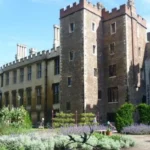
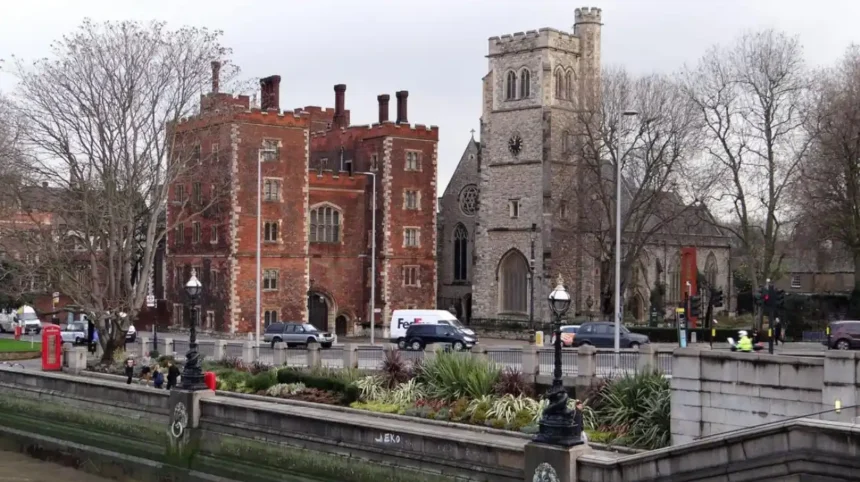
Lambeth Palace is a historic complex associated with the Archbishop of Canterbury, the senior bishop of the Church of England. Although it is not a modern council office, its location and long institutional history demonstrate how religious organisations contributed to London’s civic and social development.
The surrounding Lambeth Palace Conservation Area includes historic buildings, the former St Mary’s Church and Victorian buildings associated with St Thomas’ Hospital. Lambeth Council first designated the conservation area in 1968, with subsequent boundary changes.
This area helps visitors distinguish between different forms of public responsibility. Religious institutions historically provided forms of education, welfare and community support, while modern statutory services are delivered through councils, the NHS and other public bodies.
Lambeth Palace is therefore best understood as a landmark of institutional heritage rather than a present-day municipal service centre. Access to the palace itself is subject to its visiting arrangements, so visitors should check official information before planning an interior visit.
How Can Visitors Understand Lambeth Council’s Everyday Services?
Lambeth Council delivers local services that affect residents, businesses and visitors, including waste collection, housing advice, planning, street maintenance, libraries and environmental health. Exploring the borough’s neighbourhoods helps visitors see how administrative decisions translate into practical services across everyday urban life.
Local government becomes easier to understand when visitors connect individual services with the places where they operate. Residential streets, commercial centres, parks and public buildings all depend on maintenance, regulation and planning.
How does the council manage waste and street cleanliness?
Waste management includes household refuse collection, recycling, bulky-item collections and street-cleansing arrangements. Lambeth’s waste service also provides channels for reporting missed collections, fly-tipping, graffiti and blocked gullies.
These functions help maintain residential streets and commercial areas. They also demonstrate how residents participate in local service delivery by reporting problems and following collection requirements.
Visitors can observe the practical effects of waste management while walking through Brixton, Clapham, Kennington or Streatham. Public cleanliness depends on operational services, appropriate disposal facilities and cooperation between the authority, contractors, businesses and the public.
Waste collection arrangements vary by address and property type. Travellers staying in serviced apartments or rented accommodation should follow the instructions provided by their accommodation rather than assume that every street uses the same collection schedule.
How does Lambeth manage planning and historic buildings?
Planning services regulate development and help guide changes to buildings, streets and public spaces. Lambeth Council assesses planning applications, manages building-control functions and publishes information about conservation areas and listed buildings.
Planning decisions influence the appearance and use of neighbourhoods. They also address matters such as building design, land use, heritage protection and the relationship between new development and existing communities.
The Lambeth Palace Conservation Area offers a clear example of heritage management. Its designation helps identify the special architectural and historic character of the area and provides a framework for assessing proposed changes.
Visitors can use conservation-area information to understand why historic buildings remain part of the modern city. The process also illustrates a central responsibility of local government: balancing development needs with the preservation of significant places.
What can visitors learn about housing and social support?
Housing services address matters such as council housing, housing advice, homelessness support and standards in rented accommodation. Lambeth Council also publishes information on financial support, adult social care and services for families.
These services form part of the wider system that supports people experiencing housing insecurity, financial difficulty or barriers to independent living. Eligibility and application requirements depend on the service and the applicant’s circumstances.
Visitors can learn about these responsibilities through council information rather than treating residential estates as tourist attractions. Publicly available housing strategies and service reports explain local priorities, planned improvements and the challenges facing a densely populated London borough.
The council’s strategies also connect housing with broader urban issues, including neighbourhood development, public health and access to community facilities. These links demonstrate that housing policy extends beyond the provision of individual homes.
How Do Lambeth’s Libraries and Archives Support Public Learning?
Lambeth’s libraries provide public access to books, digital resources, reference materials and community learning facilities. The borough’s library network also supports school projects, local research and selected community activities, making libraries important examples of accessible public services beyond traditional book lending.
What services can visitors use at Lambeth libraries?
Lambeth Libraries provide access to books, DVDs, reference resources and online services for library members. Specific facilities differ by location, so visitors should check the relevant branch before making a journey.
Libraries also support activities beyond lending. Available services include meeting rooms, work pods, exhibition spaces and halls at selected locations. These facilities serve community groups, researchers and people seeking places for study or collaborative work.
Tate South Lambeth Library, for example, participates in the library service’s free ukulele-loan scheme for eligible cardholders. The service illustrates how libraries can support cultural participation alongside reading and digital access.
For digital nomads and business travellers, library facilities provide a useful starting point for finding quiet workspaces and public internet access. Availability, membership requirements and room-booking conditions should be confirmed with the individual branch.
Why is Lambeth Archives valuable for local research?
Lambeth Archives brings together records that help explain the borough’s development over several centuries. Its collections cover subjects such as architecture, transport, social history, education, local government and the experiences of different communities.
Researchers can use these materials to investigate how public services changed alongside the population. Historical maps show how streets and neighbourhoods expanded, while photographs record the changing appearance of civic buildings and public spaces.
The archive also supports school and college projects. Its educational role demonstrates how public institutions preserve information and make it available for learning across generations.
Visitors planning a focused research trip should identify a subject in advance, consult the online catalogues and contact the archive about access to original records. This approach makes a short visit more productive.
How Does Lambeth Connect to London’s Healthcare and Emergency Services?
Lambeth forms part of London’s wider healthcare and emergency-response network. The NHS provides healthcare through hospitals, general practices and community services, while the London Ambulance Service, London Fire Brigade and Metropolitan Police Service operate across wider service areas rather than solely within the borough.
Public services do not all follow the same administrative boundaries. Understanding this distinction helps visitors identify which organisation provides a particular service and where to find reliable information.
What is the connection between Lambeth and St Thomas’ Hospital?
St Thomas’ Hospital is a major NHS hospital on the south bank of the Thames, close to Westminster Bridge. Its historic presence in the Lambeth Palace Conservation Area connects healthcare with the borough’s architectural and institutional heritage.
The modern hospital provides healthcare as part of the NHS. Its role differs from that of Lambeth Council, which is responsible for local-authority functions such as housing, environmental health and community services.
Visitors walking along the riverside can observe how a major healthcare institution operates within a busy urban environment. The surrounding area also demonstrates the close relationship between hospitals, public transport, pedestrian routes and central London’s public spaces.
A hospital is a working healthcare facility rather than a conventional tourist attraction. Visitors should respect clinical operations and follow hospital access guidance.
How are emergency services organised across Lambeth?
Emergency response relies on organisations with different responsibilities. The Metropolitan Police Service handles policing, the London Fire Brigade provides fire and rescue services, and the London Ambulance Service responds to medical emergencies.
These organisations operate within London-wide systems. Their work involves dispatch centres, trained personnel, specialist equipment and coordination with other emergency responders.
Lambeth Council contributes through local community-safety initiatives, environmental management and partnerships with relevant organisations. Its responsibilities do not replace those of emergency services.
Visitors interested in public safety should use official service websites to understand emergency procedures and local advice. In the UK, 999 is the emergency number for police, fire, ambulance and other emergency assistance. The non-emergency police number is 101.
How Does Public Transport Demonstrate Lambeth’s Public-Service Role?
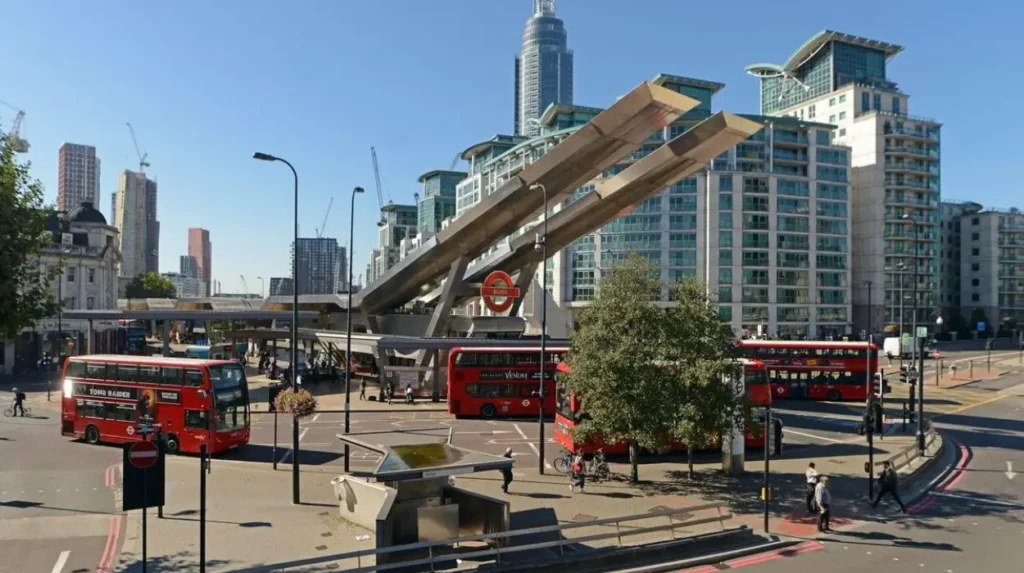
Lambeth’s transport connections show how local streets interact with London-wide public infrastructure. Waterloo, Vauxhall, Brixton and other transport hubs connect residents and visitors with Underground, National Rail and bus services, while TfL and transport operators manage different parts of the network.
Why is Waterloo important to Lambeth’s public infrastructure?
Waterloo is one of London’s major railway stations and a key gateway to the South Bank. Its transport connections bring commuters, tourists and business travellers into an area containing cultural venues, offices, public spaces and riverside attractions.
Railway operations are not managed by Lambeth Council alone. Train operators, Network Rail and other relevant organisations have distinct responsibilities, while TfL manages services such as the Underground and many London buses.
This division illustrates how public infrastructure depends on coordination between organisations. Station access, pedestrian routes, road management and local planning affect how people move through the surrounding neighbourhood.
Visitors can explore the area on foot to understand how transport supports employment, tourism and access to public facilities. Real-time journey information is best checked before travel because service patterns and engineering works change.
What does Brixton reveal about accessible urban transport?
Brixton connects Underground and National Rail services with local buses and pedestrian routes. These connections support access to shops, cultural venues, residential areas and public facilities.
Transport accessibility involves more than the presence of a station. Step-free routes, clear information, safe crossings and connections between different modes of travel influence whether people can use the network comfortably.
The local and London-wide authorities have different roles in transport planning and street management. TfL oversees major elements of the capital’s transport network, while the borough manages relevant local roads and public-realm responsibilities.
Visitors should check current accessibility details for individual stations and routes. This is particularly important for wheelchair users, families with pushchairs and travellers carrying luggage.
Explore More Area Guide
Where to Discover Lambeth’s Religious Heritage in South London
Kingston Ranks Among Safest Boroughs in Met Gun Crime Stats Kingston 2026
How Can Visitors Explore Lambeth’s Public Services in One Day?
A one-day visit can combine Lambeth’s civic heritage, local archives, transport infrastructure and riverside institutions. Starting around Waterloo and continuing towards Lambeth Palace before travelling to Brixton provides a practical overview of how historic institutions and modern public services occupy the same borough.
Which route provides a useful introduction?
Begin at Waterloo and explore the surrounding public spaces. This area introduces the relationship between major transport infrastructure, pedestrian movement and the cultural facilities of the South Bank.
Continue towards Lambeth Palace and the surrounding conservation area. View the historic buildings from publicly accessible routes and use official heritage information to understand the area’s institutional background.
Next, travel to Brixton to explore the local civic environment. Lambeth Archives is a particularly relevant stop for visitors interested in historical records, local government and community development.
Check the archive’s opening hours before travelling, as its availability differs from that of public streets and outdoor landmarks. If the archive is closed, explore Brixton’s public spaces and consult its online historical resources instead.
Allow additional time for travel between Waterloo and Brixton. The exact journey depends on the route, transport service and walking pace.
What should visitors check before visiting?
Visitors should confirm opening hours, admission arrangements, accessibility information and any restrictions on photography or entry. Historic institutions and research facilities do not necessarily offer unrestricted access to their interiors.
Public streets and riverside walks provide flexible alternatives when an indoor venue is closed. Visitors should also distinguish between viewing a building from outside and entering it for a guided tour or research appointment.
For transport, consult current TfL and National Rail journey information. For council services and local heritage information, use the official Lambeth Council website.
Why Does Lambeth’s Public-Service Heritage Matter Today?
Lambeth’s public-service heritage demonstrates how local administration, healthcare, transport, public learning and community support contribute to a functioning city. Its historic landmarks and working institutions help visitors understand the relationship between London’s past and the services that residents rely on today.
The borough’s public services respond to practical urban needs. Waste collection maintains neighbourhood cleanliness, planning regulates development, libraries support access to knowledge, and housing services address residential needs. Healthcare and emergency services operate through wider networks serving Lambeth and the rest of London.
These responsibilities remain relevant as London faces changing housing requirements, pressure on transport infrastructure, environmental challenges and demand for accessible community facilities. Lambeth Council’s published strategies cover subjects including housing, climate action, public health, education and community safety.
Public-service heritage also provides a framework for understanding civic participation. Residents can engage with consultations, access published council documents and examine how decisions are made. Visitors can learn about these processes through public records and official information without needing to participate directly in local administration.
Lambeth is therefore more than a collection of historic buildings and transport links. It is a place where local government, national institutions and London-wide services intersect. Exploring its civic landmarks offers a grounded introduction to how public services developed, how responsibilities are divided and why these institutions remain essential to everyday life in the capital.
What is Lambeth best known for in London’s public services?
Lambeth is known for its local government services, public libraries, housing support, waste collection, planning services and community facilities. Lambeth Council manages these responsibilities alongside other public organisations.