Lambeth’s religious heritage reflects centuries of Christian worship, monastic history, Anglican leadership, migration and changing patterns of community life in South London. Visitors can explore this heritage through Lambeth Palace, historic parish churches, the former site of religious institutions, and places of worship that represent the borough’s diverse communities.
- What makes Lambeth an important destination for religious heritage?
- How does Lambeth Palace explain the borough’s religious history?
- Which historic churches should visitors explore in Lambeth?
- What is the connection between Lambeth and the Archbishop of Canterbury?
- What can visitors learn from Lambeth’s medieval religious sites?
- Where can visitors explore Lambeth’s religious heritage outdoors?
- How does Lambeth’s religious architecture reflect different historical periods?
- Which museums and archives help explain Lambeth’s religious past?
- How can visitors discover Lambeth’s diverse religious communities today?
- How can visitors plan a religious heritage walking route in Lambeth?
- Why is preserving Lambeth’s religious heritage important?
- What should visitors know before exploring Lambeth’s religious heritage?
For visitors interested in religious buildings and historical sites, Lambeth offers a route through medieval London, the development of the Church of England, Victorian church architecture and modern multicultural religious life. Its location beside the River Thames also connects its religious history with royal government, pilgrimage, education and the growth of London.
What makes Lambeth an important destination for religious heritage?
Lambeth is an important religious heritage destination because it contains Lambeth Palace, the historic London residence of the Archbishops of Canterbury, alongside established parish churches and places of worship reflecting South London’s changing communities. These sites connect religious practice with architecture, civic history and urban development.
Religious heritage describes the buildings, landscapes, objects, traditions and institutions associated with religious belief and practice. In Lambeth, this heritage includes Anglican institutions, historic churches, surviving architectural features and contemporary places of worship.
The borough occupies a significant position opposite the Palace of Westminster, on the south bank of the Thames. Its history connects the development of the capital with the Church of England, the country’s established church, and the communities that settled in South London during later periods.
Lambeth’s religious landscape is not limited to one denomination. Anglican churches form an important part of its historic identity, while Roman Catholic churches, independent Christian congregations and places associated with other faith communities reflect the area’s demographic development.
Visitors gain a clearer understanding of Lambeth by distinguishing between a historic religious building, an active place of worship and a former religious institution. Each provides a different type of historical evidence.
How does Lambeth Palace explain the borough’s religious history?
Lambeth Palace is the historic London residence of the Archbishops of Canterbury and one of Lambeth’s most significant religious landmarks. Its medieval origins, historic buildings and connection with Anglican leadership make it an important place for understanding the relationship between the Church of England and national history.
Lambeth Palace stands beside the River Thames, close to Lambeth Bridge. It has served as the London residence of the Archbishops of Canterbury for centuries. The Archbishop of Canterbury is the senior bishop of the Church of England and a leading figure within the worldwide Anglican Communion.
The palace developed over successive periods rather than being constructed as one uniform building. Its architecture reflects changes in ecclesiastical administration, domestic arrangements and the needs of an institution with national responsibilities.
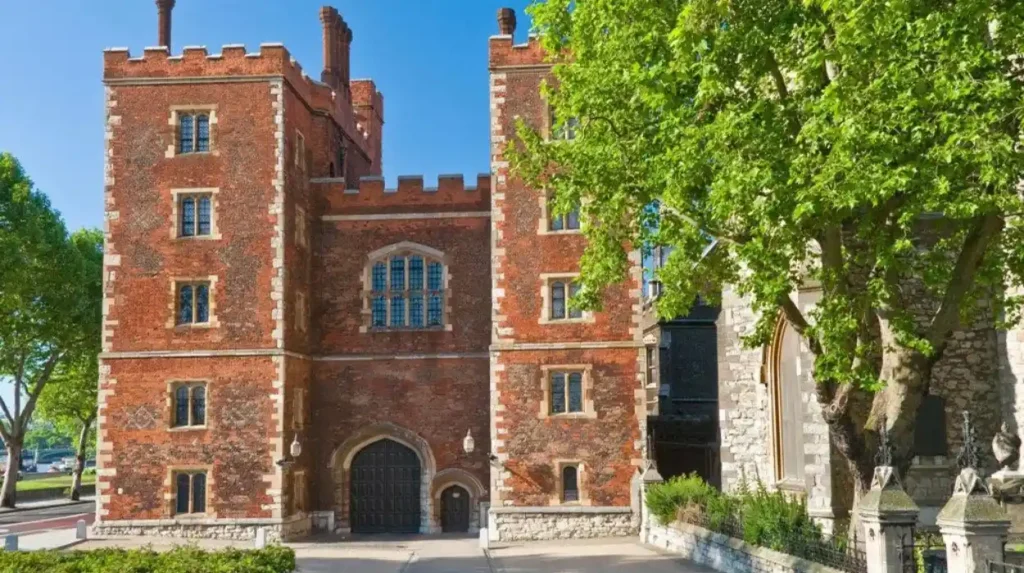
One of its best-known features is Morton’s Tower, a late-medieval brick gatehouse associated with Archbishop John Morton. The palace complex also contains the Great Hall, historic rooms and a chapel, although access to individual areas depends on the arrangements for visits and events.
The palace’s importance extends beyond architecture. Archbishops of Canterbury have participated in major religious and political developments, including the English Reformation, debates about church governance and the evolution of the modern Church of England.
Can visitors enter Lambeth Palace?
Public access is organised through specific tours and events rather than unrestricted entry. Visitors should check the official Lambeth Palace website for current opening dates, booking arrangements, accessibility information and restrictions before planning a visit.
The palace is a working ecclesiastical residence and administrative site. Access arrangements therefore differ from those at a conventional public museum. Photography rules, available rooms and the route through the building also depend on the particular visit.
The palace library is another important element of its heritage. Lambeth Palace Library holds historic manuscripts, archives and printed works documenting the Church of England and wider religious history. Its collections are particularly valuable to historians, genealogists and academic researchers. Research access operates separately from ordinary visitor tours.
A visit to Lambeth Palace provides a useful starting point for exploring the borough’s religious past because it connects a physical landmark with the institution that shaped much of England’s ecclesiastical history.
Which historic churches should visitors explore in Lambeth?
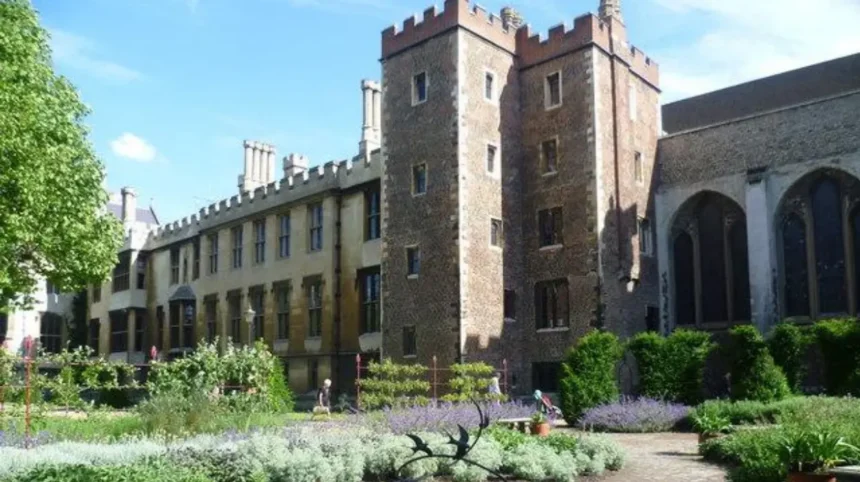
Visitors exploring Lambeth’s historic churches should begin with established parish churches and buildings with documented architectural or community significance. St Mary-at-Lambeth, now the Garden Museum, is a particularly important example because its historic church building preserves a visible connection with the area’s religious past.
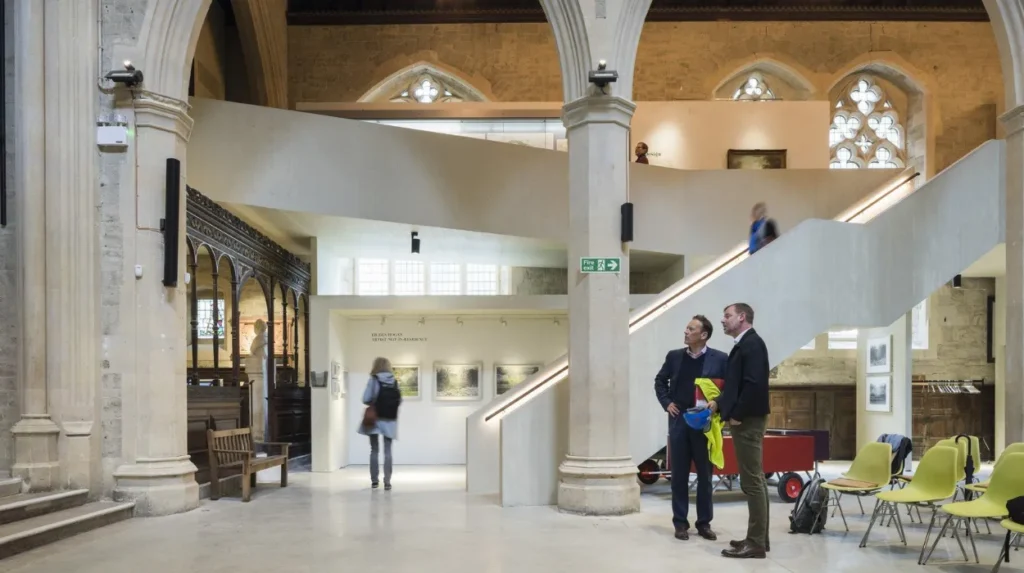
St Mary-at-Lambeth stands beside Lambeth Palace and is one of the most recognisable historic church buildings in the borough. The medieval church served the local parish for centuries before its later conversion into the Garden Museum, which explores the history and practice of gardening.
Its location makes it particularly relevant to visitors researching Lambeth’s religious heritage. The building and churchyard preserve evidence of an earlier settlement pattern in which the parish church formed a central part of community life.
The churchyard contains historic memorials, including the tomb of John Tradescant the Elder and John Tradescant the Younger. The Tradescants were influential gardeners and plant collectors associated with seventeenth-century England. Their memorial connects the former churchyard with the history of horticulture, collecting and scientific curiosity.
The site’s present museum function illustrates how historic religious buildings acquire new uses while retaining architectural and cultural significance. Visitors should distinguish between the building’s original religious purpose and its current museum role.
How can visitors identify other historic parish churches?
Historic parish churches are best assessed through their foundation dates, architectural features, surviving records and continuing community use. Parish churches traditionally served defined local areas, recording baptisms, marriages and burials while providing a regular place for worship.
Lambeth’s development produced churches from different architectural periods. Medieval foundations, Georgian rebuilding and Victorian expansion each reflect changes in population, building technology and religious practice. Victorian churches are particularly relevant because nineteenth-century population growth created demand for new worship spaces across expanding London neighbourhoods.
Before visiting a specific church, check whether it is open to the public outside services. Some churches welcome visitors during weekday hours, while others restrict entry to worship, community activities or scheduled heritage events.
The Historic England National Heritage List provides authoritative information on listed buildings, including architectural descriptions and designation details. A listing identifies a building’s special architectural or historic interest; it does not guarantee unrestricted public access.
What is the connection between Lambeth and the Archbishop of Canterbury?
Lambeth’s connection with the Archbishop of Canterbury centres on Lambeth Palace, the historic London residence of the Church of England’s senior bishop. The relationship links the borough to national religious leadership, church administration, ecclesiastical scholarship and major developments in English Christianity.
The Archbishop of Canterbury occupies a distinctive position within English religious history. The office developed from the medieval church and became especially significant during the Reformation, when England separated from papal authority and established a distinct national church.
Lambeth Palace provided a London base for the archbishop alongside Canterbury, the historic cathedral city in Kent. Its position near Westminster also placed the archbishop within reach of political institutions and royal government.
The relationship between church and state changed over time. The monarch remains the Supreme Governor of the Church of England, while the Archbishop of Canterbury has a central spiritual and pastoral role. The office also has an international dimension through the Anglican Communion, a worldwide association of autonomous churches.
For heritage visitors, Lambeth Palace makes these relationships tangible. Its buildings demonstrate how religious institutions required residences, meeting spaces, archives and ceremonial rooms to support their work.
Visitors seeking deeper historical context can also explore the history of Lambeth and its religious institutions, connecting the modern borough with its earlier ecclesiastical landscape.
This historical relationship remains relevant to understanding Lambeth’s identity. The palace is not simply an old residence; it is an active institution whose historical continuity connects medieval ecclesiastical life with contemporary Anglican leadership.
What can visitors learn from Lambeth’s medieval religious sites?
Lambeth’s medieval religious history is visible in the surviving buildings around Lambeth Palace, the former St Mary’s Church and the historic route of Lambeth Road. These sites reveal how parish worship, archiepiscopal residence and riverside settlement developed together before modern London expanded.
The Lambeth Palace Conservation Area, designated in 1968 and subsequently extended, protects a historic setting that includes Lambeth Palace, the former St Mary’s Church and historic buildings associated with St Thomas’ Hospital. Lambeth Council identifies this concentration of historic structures as a defining feature of the area.
The parish church of St Mary existed before the Norman Conquest, according to Lambeth’s conservation-area appraisal. The medieval church was rebuilt between 1374 and 1377, and its surviving ragstone tower provides evidence of that rebuilding. The church served a riverside settlement that was considerably more rural than modern Lambeth.
These surviving structures help explain the organisation of medieval communities. Parish churches provided places for regular worship, religious ceremonies and burial. The archbishop’s residence served a different purpose, supporting ecclesiastical administration and hospitality.
The proximity of the two institutions reflects a longstanding relationship between the parish and the archbishop’s household. Historical records, church architecture and the arrangement of streets provide evidence of that relationship.
Why does Lambeth Road matter to religious heritage?
Lambeth Road preserves the historic relationship between the palace, the former parish church and the wider settlement. Its earlier name, Church Street, reflects the importance of the church in the area’s local geography. The route connects surviving historic buildings with the changing urban landscape around them.
Visitors walking through this area can examine how historic institutions became integrated into a densely developed London borough. Modern roads, hospitals, public gardens and cultural venues occupy a landscape that once contained a smaller riverside settlement.
The area is particularly suitable for visitors interested in architectural history because the surviving structures represent different periods. Medieval masonry, later residential buildings and modern public spaces illustrate the gradual transformation of Lambeth.
Where can visitors explore Lambeth’s religious heritage outdoors?
Visitors can explore Lambeth’s religious heritage outdoors around Lambeth Palace, St Mary’s Gardens, the Garden Museum and nearby Archbishop’s Park. These public spaces provide views of historic buildings and their surroundings, although access to palace interiors and private grounds follows separate arrangements.
St Mary’s Gardens is a public green space beside Lambeth Palace and the Garden Museum. Lambeth Council records that the garden was laid out in 1932–33 following changes to the road and bridge arrangements in the area. It offers a place to pause while exploring the nearby historic sites.
The gardens are useful for understanding the relationship between heritage and public space. Their location beside the former parish church and the palace makes it possible to appreciate the concentration of historic institutions without entering every building.
Archbishop’s Park, immediately beside the palace grounds, adds another public space to the route. Visitors should distinguish the public park from the palace’s private gardens, which have their own opening and admission arrangements.
A self-guided walk through this area works well for tourists with limited time. The route combines historic architecture, religious history and riverside surroundings in a compact part of central Lambeth.
Visitors should respect barriers, signs and the privacy of working religious institutions. Public access to the exterior of a historic building does not automatically include access to its interior or grounds.
How does Lambeth’s religious architecture reflect different historical periods?
Lambeth’s religious architecture reflects medieval ecclesiastical foundations, later rebuilding and the expansion of London during the Victorian period. Visitors can identify these changes through masonry, towers, windows, roof structures and the relationship between religious buildings and surrounding streets.
Architecture provides a physical record of religious history. Medieval buildings often retain thick masonry walls, stonework and features altered during later rebuilding. Subsequent additions reflect changing construction methods, worship requirements and the resources available to religious institutions.
Lambeth Palace provides a particularly clear example. Historic England identifies its medieval chapel and crypt, fifteenth-century towers, late-fifteenth-century Morton’s Gatehouse and seventeenth-century Great Hall among the complex’s important features. The palace is Grade I listed, recognising its exceptional architectural and historic significance.
The Great Hall dates from 1660–63 in its surviving form. Its architecture combines elements from different periods, demonstrating that historic religious buildings often develop through successive construction and restoration rather than remaining unchanged.
Victorian religious architecture reflects a later phase of urban development. As London’s population expanded during the nineteenth century, established parishes and new congregations required additional accommodation. Churches built or altered during this period often incorporated Gothic Revival features, including pointed arches, decorative stonework and prominent towers.
Visitors should avoid assuming that every pointed arch or medieval-looking feature dates from the Middle Ages. Architects in later centuries deliberately revived earlier styles. Building descriptions from Historic England and local conservation reports help distinguish original fabric from later additions.
Which museums and archives help explain Lambeth’s religious past?
The Garden Museum and Lambeth Palace Library offer complementary ways to investigate Lambeth’s heritage. The museum occupies the former St Mary’s Church, while the library preserves historical collections connected with the Archbishops of Canterbury, the Church of England and the development of religious institutions.
The Garden Museum provides access to the history of the former St Mary’s Church through a museum setting. Its location allows visitors to consider how a historic religious building can continue to serve the public after its original congregational role has changed.
The building itself remains central to the site’s significance. Its connection with Lambeth Palace and its historic churchyard makes it relevant to both architectural heritage and the social history of the local community.
Lambeth Palace Library provides a different form of evidence. Its historic books, manuscripts and archival collections support research into ecclesiastical administration, theology, church governance and the lives of people connected with the Church of England.
Researchers can use historical documents to investigate questions that buildings alone cannot answer. Parish records, correspondence and institutional papers help establish how religious organisations operated and how their relationships with local communities changed over time.
Access arrangements differ between a public museum and a specialist research library. Visitors should consult each institution’s official information before travelling, particularly when they require access to archival material rather than a general heritage visit.
How can visitors discover Lambeth’s diverse religious communities today?
Visitors can explore contemporary religious life in Lambeth by identifying active churches and other places of worship, checking public service schedules and respecting each community’s visitor policies. The borough’s present religious landscape reflects long-established Christian institutions alongside communities shaped by migration and cultural change.
Religious heritage includes living traditions as well as historic monuments. Active places of worship provide evidence of how communities practise their faith, maintain institutions and organise religious festivals, charitable work and community activities.
Lambeth’s religious landscape has changed alongside London’s wider population. Historic Anglican parishes remain part of the borough, while Roman Catholic congregations, independent Christian churches and communities associated with other faith traditions contribute to contemporary religious life.
Visitors researching this diversity should use official congregation websites, local directories and information from the London Borough of Lambeth. These sources help establish whether a building is active, whether visitors are welcome and whether services or guided visits are publicly accessible.
A place of worship should not be treated as a conventional tourist attraction without checking its rules. Visitors should dress appropriately, remain quiet during services, seek permission before photographing worshippers and follow instructions about restricted areas.
For people interested in religious studies, architecture or social history, observing the differences between historic buildings and contemporary religious spaces provides a fuller understanding of how faith communities respond to urban change.
Lambeth’s religious heritage therefore extends beyond its best-known landmark. It includes the continued use, adaptation and maintenance of buildings that serve different communities and preserve distinct traditions.
How can visitors plan a religious heritage walking route in Lambeth?
Visitors can plan a Lambeth religious heritage walk by starting near Lambeth Palace, exploring the former St Mary’s Church and Garden Museum, and continuing through nearby public spaces. Checking opening times, booking requirements and walking access in advance helps create a practical and respectful visit.
The central Lambeth heritage area is compact enough to explore on foot. A route focused on Lambeth Palace, the Garden Museum and St Mary’s Gardens combines religious history with architecture and public spaces.
Lambeth Palace
Begin with the historic residence of the Archbishops of Canterbury. Examine the exterior and join an official tour when available.
Garden Museum
Explore the former St Mary’s Church and its connection with Lambeth’s medieval parish history. Check museum opening times and admission details.
St Mary’s Gardens
Finish with a short outdoor visit to the public garden beside the historic sites. Observe the surrounding buildings and the relationship between the former church and palace.
These suggested durations are planning estimates rather than official visit times. The total route takes approximately two to three hours when museum visits and a palace tour are available. An exterior-only walk takes less time.
Visitors should confirm the locations’ current arrangements before setting out. The palace operates as a working institution, the museum has its own opening schedule, and public access to historic interiors is not guaranteed.
For a broader itinerary, visitors can connect the walk with the South Bank and nearby Westminster riverside attractions. This extends the visit beyond religious heritage while preserving the historical connection between Lambeth and the political and religious institutions across the Thames.
Explore More Area Guide
Kingston Ranks Among Safest Boroughs in Met Gun Crime Stats Kingston 2026
Lambeth Landmarks and London’s Changing Political History
Why is preserving Lambeth’s religious heritage important?
Preserving Lambeth’s religious heritage protects historic architecture, documents the development of local communities and maintains connections with England’s ecclesiastical history. Listed-building protection, conservation-area management, archival research and responsible public access all contribute to safeguarding this heritage for future generations.
Historic buildings provide evidence of the social and architectural changes that shaped London. They help researchers understand how religious institutions operated, how local communities developed and how public space changed as the city expanded.
Lambeth Palace is protected as a Grade I listed building. Historic England explains that listing recognises special architectural or historic interest and provides legal protection under the Planning (Listed Buildings and Conservation Areas) Act 1990, as amended. Listing controls certain changes to a building; it does not automatically make the site publicly accessible.
The Lambeth Palace Conservation Area provides a wider framework for considering the historic relationship between buildings, streets and public spaces. This approach recognises that heritage significance often depends on the setting as well as individual structures.
Religious heritage also supports education and cultural tourism. Visitors can study architecture, explore archival sources and learn about the different roles that religious institutions have played in public life.
Responsible tourism helps preserve these places. Visitors should follow conservation guidance, avoid touching vulnerable historic features and respect the activities of active congregations. Donations, museum admissions and participation in official tours also support heritage organisations where those options are available.
The continued relevance of Lambeth’s religious sites lies in their ability to connect past and present. Their preservation safeguards physical evidence of historical events while maintaining places for learning, worship and public engagement.
What should visitors know before exploring Lambeth’s religious heritage?
Visitors should verify opening times, admission arrangements, photography rules and accessibility before exploring Lambeth’s religious heritage. Lambeth Palace is not permanently open for unrestricted public entry, while the Garden Museum and public gardens operate under different access arrangements.
A little preparation helps visitors avoid unnecessary travel and respect the purpose of each site.
- Check access: Confirm official tours and museum opening times before travelling.
- Plan transport: Use public transport and walking routes to reach the central Lambeth heritage area.
- Respect worship: Keep noise low and avoid disrupting services or private events.
- Research architecture: Consult Historic England’s official heritage listings for building dates, designations and historical descriptions.
- Allow time for research: Contact Lambeth Palace Library in advance if your visit involves archival material.
- Check accessibility: Confirm step-free access, available facilities and any restrictions directly with each venue.
Lambeth’s religious heritage is best understood as a connected landscape rather than a single attraction. Lambeth Palace explains the role of Anglican leadership, the former St Mary’s Church preserves the story of a medieval parish, and the surrounding streets and gardens reveal how these institutions became part of modern South London.
For tourists and residents alike, exploring these sites provides a direct way to understand Lambeth’s place in London’s religious, architectural and social history.
What is the most famous religious heritage site in Lambeth?
Lambeth Palace is the borough’s most famous religious heritage site. It has served as the historic London residence of the Archbishops of Canterbury for centuries and remains an important centre of Anglican history.