Key Points
- Impending Tribunal Hearing: Manaquel Ltd, the multi-millionaire landlord of Dorchester Court, is set to challenge Lambeth Council’s enforcement improvement notices at a tribunal hearing commencing on November 16th 2026.
- Scope of Works Required: Should the landlord lose the appeal, Manaquel Ltd will be legally bound to repair collapsing balconies and replace hundreds of broken, draughty windows that have affected the estate for more than twenty years.
- Resident Anxiety over Legal Setbacks: Tenants residing in the Herne Hill estate express deep concern that a prolonged legal battle or further procedural delays will leave them exposed to dangerous disrepair and freezing indoor temperatures.
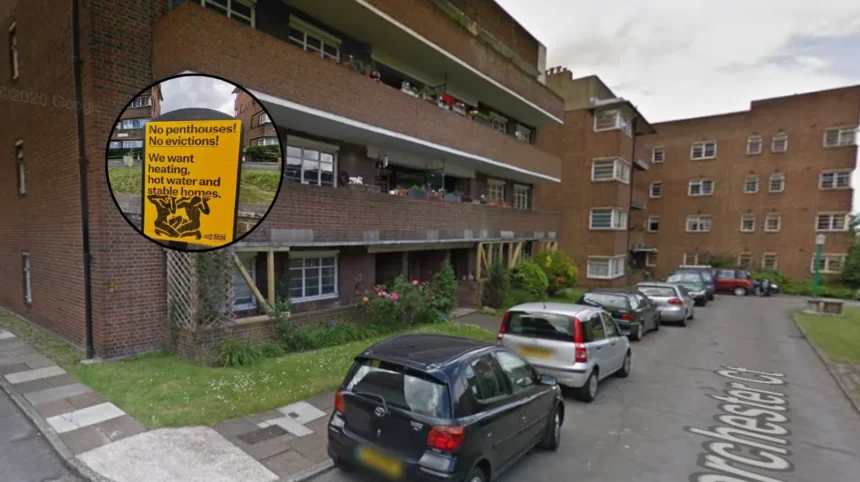
- Severe Substandard Conditions: Physical deterioration across the site includes structural balconies held up by timber props, safety debris netting, broken glazing, and widespread draughts throughout the residential blocks.
- Financial Burden on Tenants: Residents report paying extra for standalone electric heating to keep warm, despite already paying for communal heating charges incorporated into their regular rent payments.
- Political Scrutiny: Local Member of Parliament Helen Hayes has actively backed the residents, characterising the landlord’s handling of the estate as a prime example of exploitative private landowning practices.
Herne Hill (South London News) October 12, 2026 – Residents living at Dorchester Court in Herne Hill face ongoing uncertainty over critical safety works as a formal legal tribunal approaches to determine the enforcement duties of their freeholder. The estate’s multi-millionaire landlord company, Manaquel Ltd, is scheduled to challenge improvement notices issued by Lambeth Council at a tribunal hearing set to start on November 16th 2026. The legal proceeding forms a decisive junction for the estate: if Manaquel Ltd loses the appeal, the company will be compelled to replace hundreds of damaged, draughty windows and execute comprehensive structural repairs to crumbling residential balconies across the development.
However, tenants remain apprehensive that potential legal maneuvering or procedural delays could extend their living under hazardous, substandard conditions for additional years.
What Conditions Are Residents at Dorchester Court Currently Experiencing?
As reported by journalists at Brixton Buzz, living conditions across the Dorchester Court estate have long been defined by severe, unaddressed maintenance shortcomings and visible structural decay. Tenants across the Herne Hill site describe enduring persistent indoor cold caused by broken, ill-fitting window frames that fail to keep out wind and moisture. Furthermore, external structural balconies serving the residential blocks have deteriorated to the point where temporary timber props, debris netting, and safety scaffoldings have become permanent features of the estate’s landscape.
In addition to safety risks from collapsing structural features, tenants face a substantial economic strain. Many residents have been forced to buy and operate portable electric space heaters to maintain basic livable temperatures within their flats during colder months. This secondary heating cost comes as an added burden on top of standard rent payments, which already include charges meant to cover communal heating provision.
As reported by journalists at Brixton Buzz, local Member of Parliament Helen Hayes, who has consistently supported the tenants in their long-running campaign for comprehensive structural repairs, stated that the freeholder represents “one of the worst examples of an exploitative, private landlord I have ever seen.”
What Is the Background to the Legal Dispute at Dorchester Court?
The upcoming tribunal represents the latest chapter in a decades-long conflict between the freeholder, local municipal authorities, and the tenant community of Herne Hill. Dorchester Court, a 1930s 1930s-built residential complex situated in South London, has experienced gradual physical neglect over more than twenty years. Over this timeframe, window frames have decayed beyond basic maintenance, leading to severe thermal inefficiency, draughts, and water ingress across numerous properties.
In response to sustained resident advocacy and physical inspections of the site, Lambeth Council intervened by issuing formal enforcement improvement notices against Manaquel Ltd. These legal notices mandate that the landlord rectify structural risks—specifically regarding the balconies, which require timber support props to prevent structural collapse—and perform complete replacements of deteriorated window units. Rather than initiating the required works, Manaquel Ltd elected to appeal the municipal improvement notices, referring the statutory enforcement decision to an independent tribunal.
What Is the Prediction for How This Legal Outcome Will Impact Residents and the Local Community?
The upcoming November 16th tribunal decision holds direct consequences for the residents of Dorchester Court, as well as broader implications for private sector tenants across the London Borough of Lambeth.
Direct Impact on Dorchester Court Tenants
- If the Tribunal Dismisses the Landlord’s Appeal: Manaquel Ltd will be legally required to execute millions of pounds worth of structural repairs. For residents, this outcome would lead to the eventual removal of timber props and debris safety mesh, long-overdue window replacements, improved energy efficiency, lower electricity bills, and a safer living environment.
- If the Tribunal Rules in Favor of the Landlord or Delays Proceedings: Residents will face prolonged living under hazardous conditions. Continued reliance on supplementary electric heating will sustain financial pressure on household budgets during winter periods, while unresolved balcony disrepair maintains ongoing safety risks.
Wider Implications for Private Renters and Municipal Enforcement
A ruling upholding Lambeth Council’s statutory improvement notices serves as a strong regulatory precedent across the borough. It reinforces the authority of local councils to hold private freeholders accountable for housing standards under statutory law. Conversely, an extended legal contest highlights the procedural hurdles local authorities face when enforcing housing compliance against well-resourced property owners.