Key Points
- Staff at Haji & Sons in Thornton Heath have defended parking a vehicle on double yellow lines directly outside their premises.
- A local bus driver complained that the double-parked delivery vehicle causes significant congestion and delays along Croydon’s London Road.
- Employees of the business stated that there is “no issue” with their parking practices, citing a lack of designated council loading bays as the main cause.
- The location near a busy bus stop frequently forces buses to navigate around the vehicle into oncoming traffic.
- The shop operates across several connected units that house a butchers, greengrocers, and convenience store, requiring continuous stock unloading.
- Croydon Council enforces double yellow line restrictions, which generally prohibit parking at any time unless specific loading exemptions apply.
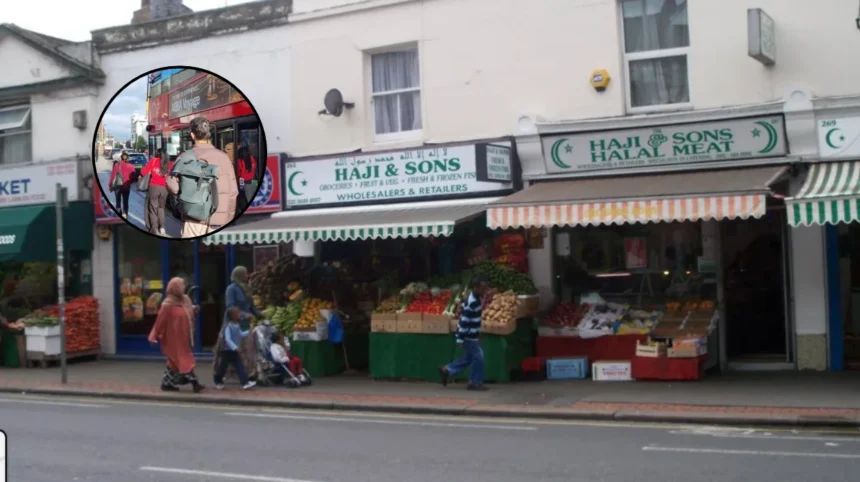
Thornton Heath (South London News) October 19, 2026 – Employees of a prominent Thornton Heath butcher’s shop have publicly defended their ongoing practice of parking a delivery vehicle on double yellow lines directly outside their storefront, following formal complaints from a local bus driver who warned that the obstruction is causing severe traffic congestion and transit delays. Staff at Haji & Sons, a multi-unit commercial operation that functions as a butchers, greengrocers, and convenience store on Croydon’s London Road, informed the Local Democracy Reporting Service (LDRS) that they see “no issue” with positioning their delivery vehicle in front of a heavily used bus stop, arguing that the practice is strictly necessary due to an acute shortage of designated council loading bays in the immediate vicinity.
- Key Points
- How does the double-parked delivery vehicle impact Croydon’s public bus service?
- What do Haji & Sons staff say regarding the lack of local loading bays?
- What are Croydon Council’s official rules on double yellow line parking and loading?
- Background of traffic enforcement and retail logistics in Croydon
- Prediction: How this development could affect local businesses, transit users, and residents
As reported by Harrison Galliven of the Local Democracy Reporting Service, the continuous double-parking on London Road regularly obstructs public buses, forcing drivers to maneuver around the stationary vehicle into lanes of opposing traffic or wait behind the obstruction, thereby causing secondary delay loops across the local transport network.
Despite the criticism raised by transit operators and commuters, workers at the premises maintain that their daily commercial operations depend entirely on immediate curb access. Operating several adjacent storefronts requires a heavy frequency of deliveries each day to supply fresh meat, produce, and general grocery items. As reported by Harrison Galliven of the LDRS, shop staff stated that without dedicated loading infrastructure provided by the local authority, parking on the restricted double yellow lines remains their only feasible method to offload stock efficiently.
How does the double-parked delivery vehicle impact Croydon’s public bus service?
The primary objection to the routine parking on London Road stems from public transport operators who navigate the busy thoroughfare daily. As reported by Harrison Galliven of the LDRS, a local bus driver raised concerns regarding the severe operational disruptions created by the delivery vehicle remaining stationary outside Haji & Sons. Because the vehicle is routinely parked adjacent to a busy bus stop, buses are frequently unable to pull safely into the designated stop area to pick up or drop off passengers.
This positioning creates a series of hazardous traffic conditions:
- Obstructed Sightlines: Approaching bus drivers and motorists behind them face restricted visibility when attempting to scan for oncoming traffic around the parked delivery vehicle.
- Traffic Bottlenecks: When a bus is forced to halt in the middle of the active traffic lane to load or unload passengers due to the blocked stop, traffic behind the bus immediately grinds to a halt.
- Hazardous Overtaking: Vehicles traveling behind the obstructed bus or delivery van often pull into the opposing lane to bypass the block, raising the risk of head-on collisions during peak travel hours.
As reported by Harrison Galliven of the LDRS, the bus driver emphasized that the persistent obstruction on London Road regularly causes timetable delays, frustrating commuters and disrupting the scheduled synchronization of London’s outer borough bus network.
What do Haji & Sons staff say regarding the lack of local loading bays?
When approached regarding the traffic disruptions and complaints from transit workers, representatives and staff members at Haji & Sons defended their actions, framing the situation as an unavoidable consequence of local urban planning decisions. As reported by Harrison Galliven of the LDRS, staff at Haji & Sons stated that the delivery vehicle is parked on double yellow lines out of operational necessity rather than disregard for traffic regulations.
As reported by Harrison Galliven of the LDRS, staff members explained that unloading heavy crates of produce, carcasses, and boxed goods requires direct proximity to the shop entrance. Carrying high-volume stock from distant parking locations or side streets is deemed impracticable for daily commercial operations. According to the workforce, the local municipality has failed to provide adequate designated loading bays to support the row of active commercial businesses along this stretch of London Road.
Because no dedicated loading zones exist in the immediate space outside their multi-unit premises, the shop workers contend that utilizing the area directly outside their doors—despite the presence of double yellow lines and a bus stop—remains the only viable option to maintain their business workflow.
What are Croydon Council’s official rules on double yellow line parking and loading?
Under standard UK traffic management law and local borough regulations enforced by Croydon Council, double yellow lines indicate a strict prohibition on parking at any time. While general parking is strictly forbidden, specific exemptions sometimes apply for commercial loading and unloading, provided certain statutory conditions are met:
- Commercial Loading Exemptions: Vehicles may momentarily stop on double yellow lines to continuously load or unload heavy or bulky goods, unless specific kerb blips (single or double yellow stripes on the kerb) indicate a total loading ban.
- Continuous Activity Rule: Loading exemptions only apply while active, continuous loading or unloading is visibly taking place. Leaving a vehicle stationary while unattended, parked for extended periods between deliveries, or sitting idle does not qualify for an exemption.
- Bus Stop Clearways: Stopping or parking within a marked bus stop clearway is prohibited for general traffic at all times to ensure unhindered public transport access.
Croydon Council utilizes Civil Enforcement Officers and traffic camera systems to monitor compliance along major thoroughfares such as London Road. Vehicles found in breach of stopping or loading regulations face Penalty Charge Notices (PCNs).
Background of traffic enforcement and retail logistics in Croydon
The conflict between commercial shopkeepers and public transit operators on London Road reflects broader structural issues regarding traffic management, parking enforcement, and infrastructure design across the London Borough of Croydon. London Road serves as a critical commercial artery running through Thornton Heath and northern Croydon, packed with independent grocers, eateries, and retail outlets that depend heavily on daily road freight.
Over recent years, Croydon Council has implemented various traffic management measures intended to prioritize public transport, reduce vehicular congestion, and improve air quality along major high streets. However, local business associations and shop owners have frequently expressed frustration that these initiatives have reduced available curb space for commercial delivery vehicles without providing sufficient alternative loading infrastructure.
When retail corridors lack dedicated loading bays, shop staff routinely rely on double yellow line stopping allowances to process deliveries. This historical overlap between statutory loading rights and strict parking prohibitions frequently leads to friction between local traders, bus operators, traffic enforcement staff, and local residents competing for limited roadway space.
Prediction: How this development could affect local businesses, transit users, and residents
This ongoing dispute over parking and loading access on London Road is poised to trigger direct consequences for various community stakeholders across Thornton Heath and the wider Croydon area:
Impact on Local Businesses and Shopkeepers
If Croydon Council responds to public transit complaints by introducing stricter loading restrictions—such as kerb markings that enforce a complete ban on stopping during peak hours—businesses like Haji & Sons will face severe logistical challenges. Shopkeepers may be forced to rearrange delivery schedules to unsociable early morning or late night hours, pay higher operational costs for smaller delivery vehicles, or risk receiving frequent civil penalty notices that erode profitability.
Impact on Public Transit Users and Commuters
For London bus commuters, continued unchecked double-parking outside retail units will perpetuate route delays, missed connections, and safety hazards at bus stops. Conversely, if enforcement is heightened or targeted physical infrastructure changes are made, bus reliability along London Road should improve, leading to faster travel times and safer boarding conditions for passengers.
Impact on the Wider Community and Local Council
Continued friction between traders and transit workers may compel Croydon Council to undertake a formal parking and loading review along the London Road commercial corridor. Such a review could result in the redesignation of specific kerbside zones into timed loading bays, balancing the operational needs of local independent retailers with the safety and efficiency requirements of London’s public transport network.