Key Points
- Wandsworth Council has launched new trial measures, including temporary warning stencils at dumping hotspots, to combat fly-tipping as part of the national ‘Fight Fly-Tipping Fortnight’.
- The council is expanding social media publicity of fines, deploying additional enforcement officers, and drafting a comprehensive borough-wide waste strategy.
- Main street-cleaning operations in Wandsworth currently cost approximately £4 million annually, covering the clearance of smaller illegal waste dumps.
- Wandsworth recorded the highest number of fly-tipping incidents among all London boroughs in 2024.
- National figures reveal 1.26 million fly-tipping incidents in England in 2024/25 (a 9 per cent annual increase), with London registering 53 incidents per 1,000 residents compared to the national average of 21 per 1,000.
- Rogue traders and unlicensed operators advertising on social media account for roughly 38 per cent of all illegal dumping incidents.
- Prime Minister Andy Burnham announced in August that the Government will involve the National Crime Agency and utilise the Proceeds of Crime Act to address organised waste crime.
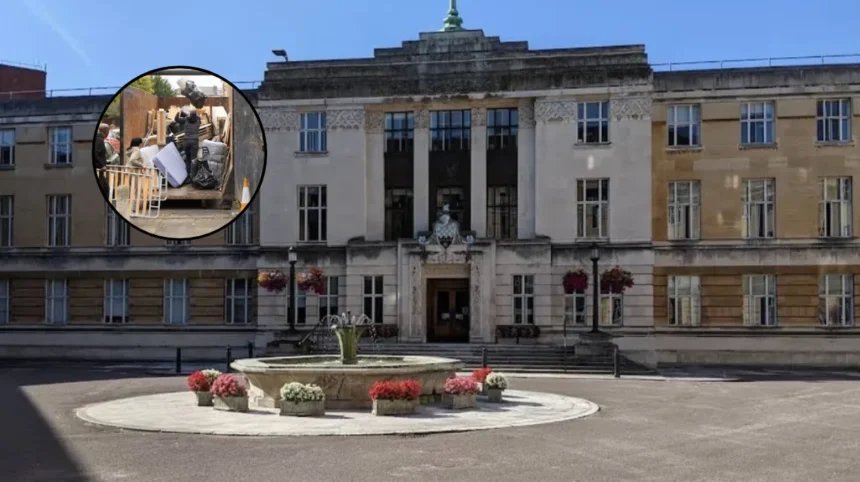
Wandsworth Council (South London News) October 19, 2026 – Wandsworth Council has introduced a series of targeted trial measures to tackle the illegal dumping of waste across the borough as part of the nationwide Fight Fly-Tipping Fortnight campaign. Organised by the environmental charity Keep Britain Tidy, the two-week initiative encourages local authorities and community groups to take direct action against waste crime. As part of its immediate trial, Wandsworth Council is painting temporary warning stencils onto pavements at known fly-tipping hotspots once cleared of rubbish to deter repeat offences. In addition to physical warnings, the local authority is increasing the presence of enforcement officers on local streets, publishing details of penalised offenders on social media platforms, and formulating a borough-wide waste strategy focused on rapid clearance, prevention, and targeted reduction goals.
Councillor Ethan Brooks, cabinet member for the environment, stated that
“Most residents take pride in keeping their neighbourhoods clean, and it is unfair that a small minority continue to blight our streets through fly-tipping.”
Councillor Ethan Brooks further added that
“We are determined to use every tool available to prevent it.”
Wandsworth Council disclosed that its primary street-cleaning contract incurs an annual cost of approximately £4 million, a figure that includes the routine removal of smaller fly-tipped deposits across the local area.
What Is The Extent Of The Fly-Tipping Problem In London And Nationally?
The implementation of these local measures coincides with widespread increases in waste offences recorded across both Greater London and England as a whole. Official figures from the Department for Environment, Food and Rural Affairs show that England recorded 1.26 million fly-tipping incidents during the 2024/25 period, representing a 9 per cent increase compared to the previous year.
Data highlights a higher concentration of illegal waste dumping within the capital. London recorded an average of 53 fly-tipping incidents per 1,000 residents in 2024/25, whereas the overall average for England stood at 21 incidents per 1,000 people. Within the capital, local records indicate that Wandsworth registered the highest total number of fly-tipping incidents of any London borough in 2024, prompting the local authority to commit to ongoing enforcement actions against persistent offenders.
How Are Rogue Traders And Organised Crime Driver Factors In Waste Crime?
Research conducted by Keep Britain Tidy indicates that approximately 38 per cent of all fly-tipping incidents nationally are linked to unlicensed waste operators. These cases frequently involve rogue traders who offer low-cost rubbish removal services through social media channels before illegally discarding the collected waste in public spaces, alleys, or residential streets.
In response to the growth of illegal waste disposal networks, central government has signalled a broader enforcement approach. Prime Minister Andy Burnham stated in August that the Government would involve the National Crime Agency in addressing organised waste crime. Prime Minister Andy Burnham also confirmed that authorities will utilize the Proceeds of Crime Act to recover clean-up costs directly from convicted offenders.
Background Of The Fly-Tipping Development
Fly-tipping has remained an ongoing operational and financial challenge for local councils across England over recent years. Under the Environmental Protection Act 1990, the illegal dumping of waste is a criminal offence punishable by fixed penalty notices or court prosecution leading to fines and imprisonment. Local authorities bear the statutory responsibility for clearing fly-tipped waste from public land, while private landowners remain responsible for clearance on private property.
The national campaign, Fight Fly-Tipping Fortnight, was established by Keep Britain Tidy to coordinate anti-fly-tipping activity across local government bodies, raise public awareness regarding the duty of care when hiring waste contractors, and test new enforcement and prevention mechanisms. Wandsworth Council’s high volume of recorded incidents in 2024 has made the borough a central focus for localized anti-littering and waste enforcement trials, leading to the current deployment of street stencils, enforcement officer patrols, and public warning campaigns.
Predictions: How This Development Can Affect Wandsworth Residents and Local Businesses
The implementation of Wandsworth Council’s strategy, combined with national enforcement measures, is expected to impact local residents and businesses in several distinct ways:
- Increased Scrutiny on Household Waste Disposal: Residents hiring third-party rubbish clearance services will face stricter enforcement regarding their legal ‘duty of care’. Homeowners who engage unlicensed operators who subsequently fly-tip waste could face indirect liability or formal enquiries as authorities track social media operators.
- Visibility of Local Enforcement: Increased patrols by enforcement officers and public disclosures on social media platforms will raise awareness of penalties, likely increasing reported sightings of illegal dumping by residents utilizing local council reporting tools.
- Local Street Environment and Cleanliness: If the trial stencils and rapid clearance strategies prove effective, high-frequency dumping spots across Wandsworth may see reduced visual blight, reducing health hazards and pest risks in affected residential areas.
- Financial Allocations for Local Services: With street-cleaning contracts requiring around £4 million annually, successful deterrence of fly-tipping could prevent further upward pressure on municipal waste management budgets, allowing local resources to be directed towards broader council services.
- Impact on Commercial Waste Contractors: Legitimate, licensed waste management businesses in the area may see increased demand as local monitoring deters competitive undercutting from unlicensed rogue traders advertising on social platforms.