Key Points
- Extended Delays: Complex emergency engineering works on damaged water mains across south-east London are stretching into their third week.
- Infrastructure Removal: Works require the temporary removal of street light lampposts and the installation of additional subterranean isolation valves.
- Deep Excavations: Technical teams are operating up to 3.7 metres underground to safely reach damaged pipework along key thoroughfares.
- Active Work Sites: Operations remain active across Sydenham Rise, Woodvale Road, Dulwich Common, and opposite the Horniman Museum on London Road.
- Sinkhole Monitoring: A sinkhole on the Woodvale Road footpath is under active surveillance by Thames Water engineers due to escaping water.
- Traffic Disruption: Ongoing lane closures, temporary barriers, and traffic management measures continue along Sydenham Rise and surrounding access routes.
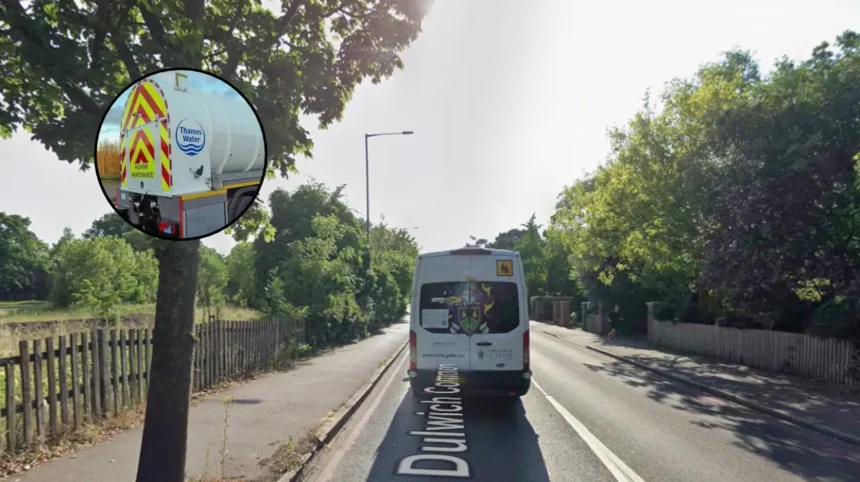
- Supply Mitigation: Tankers remain deployed to bolster network pressure for affected residents across the SE21, SE22, and SE23 postal districts.
- Revised Timeline: Thames Water estimates the remaining repair scheme could take an additional fortnight to complete, subject to excavation conditions.
Dulwich (South London News) October 23, 2026 – Emergency infrastructure repairs to multiple damaged water mains across south-east London are continuing to drag on nearly two weeks after underground pipe leaks first caused widespread disruption in the area.
- Key Points
- What is causing the ongoing delay to Thames Water repairs in Dulwich?
- Where are the primary repair sites located across south-east London?
- When were the initial water leaks reported and how are residents affected?
- What official operational update has Thames Water provided?
- What is the background to this water infrastructure crisis?
- What are the predictions for how this development will affect local stakeholders?
As reported by the News Shopper newsdesk, utility firm Thames Water confirmed that engineering crews are working extended hours around Sydenham Rise, Woodvale Road, and Dulwich Common as they attempt to bring the extensive repair project to a close.
What is causing the ongoing delay to Thames Water repairs in Dulwich?
The utility supplier has stated that the operational environment beneath the surface remains highly intricate. As detailed by reporters at the News Shopper, Thames Water explained that the engineering situation on site is “complex”, requiring specialized procedures including the installation of additional subterranean control valves alongside the removal of street light lampposts to allow heavy excavation machinery safe access to deep-seated pipework.
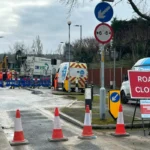
Traffic management systems and protective barriers remain positioned along Sydenham Rise to isolate the working area from public access while deep excavation continues.
Where are the primary repair sites located across south-east London?
According to reporting by Alex Orr of Southwark News, the infrastructural failure involves several distinct locations across the local borough network. A damaged section of water main situated directly opposite the Horniman Museum on London Road has already been successfully repaired by utility technicians. However, a second severely damaged pipe section along Sydenham Rise was uncovered approximately 3.7 metres below ground level, necessitating substantial trenching and structural ground support to establish a safe environment for engineering teams.
Simultaneously, safety barriers remain erected around a developing sinkhole located on the pedestrian footpath at Woodvale Road. At this site, Thames Water technicians have been closely monitoring water escaping from an underlying compromised main. Further investigative work and ground testing are also proceeding along Dulwich Common to determine whether additional subterranean sections require complete structural replacement.
When were the initial water leaks reported and how are residents affected?
The utility disruptions first began on October 11, 2026, when a series of concurrent leaks broke out across the Dulwich network, impacting Lordship Lane, London Road adjacent to the Horniman Museum, and Dulwich Common.
Following the initial bursts, households and commercial properties within the SE21, SE22, and SE23 postcode districts were issued formal warnings that they could experience low water pressure or complete interruptions to their mains supply. To mitigate supply drops, fleet water tankers were deployed into the local distribution network to pump auxiliary pressure into the mains while physical isolation and repair work proceeded underground.
What official operational update has Thames Water provided?
In an official public update issued at 9:48 am today, October 23, 2026, a Thames Water spokesperson outlined the current operational status:
“Our teams are continuing to work extended hours to complete repairs safely. The situation on site remains complex with additional valves needing to be installed, street lights that need be removed whilst also carrying out repairs deep below ground.
“We understand the impact that roadworks and traffic management are having on residents, businesses and those travelling through the area. Traffic management remains in place on Sydenham Rise to protect the public and our workforce while repairs are carried out.
“We’re grateful for the patience and understanding residents and road users are showing whilst we continue these complex work.”
As noted by the News Shopper, Thames Water indicated on Wednesday, October 21, that the complete repair programme could require up to a further two weeks to conclude, though exact operational timescales remain subject to change depending on ongoing underground discoveries. The company committed to providing its next progress update by noon on October 26.
What is the background to this water infrastructure crisis?
The operational difficulties encountered in Dulwich highlight broader challenges facing London’s water supply and distribution network. Thames Water, the United Kingdom’s largest water and wastewater service provider, manages thousands of miles of Victorian-era pipework across Greater London, much of which is subject to age-related degradation, ground movement, and pressure fluctuations.
Major trunk mains in south-east London traverse heavily built-up urban corridors, running parallel to critical public transport links and historic sites such as the Horniman Museum. When deep mains fail—such as the 3.7-metre-deep section under Sydenham Rise—the resulting water displacement frequently undermines the surrounding sub-base, leading to secondary hazards like footway sinkholes and surface subsidence.
Over recent years, regulatory scrutiny from Ofwat and local authorities has focused on the speed of emergency repairs and the resilience of aging municipal utility networks under high demand and changing environmental conditions.
What are the predictions for how this development will affect local stakeholders?
The extension of Thames Water’s repair schedule is expected to exert significant operational and financial pressures across several distinct groups within the affected south-east London communities:
Local Residents and Households
Residents across the SE21, SE22, and SE23 postal sectors face continued vulnerability to fluctuating water pressure, particularly those residing on upper floors of residential blocks or high-rise structures where network head pressure is most sensitive. The physical removal of street lighting along active engineering segments could temporarily reduce nocturnal visibility on footpaths, raising localized safety concerns until lighting infrastructure is reinstated. Furthermore, persistent construction noise from extended-hour digging and heavy pump operations will impact residential amenities along Sydenham Rise and Woodvale Road.
Road Users and Commuters
With traffic management systems remaining active along Sydenham Rise and adjacent corridors, vehicular travel through Southwark and Lewisham will continue to experience heightened congestion. Key arterial routes connecting the A205 South Circular to local centers are subject to tailbacks during peak commuting hours. Local bus routes operating through Dulwich and Sydenham face ongoing delays or temporary diversions, increasing travel times for public transit passengers reliant on consistent timetables.
Local Businesses and Commercial Enterprises
Retail outlets, hospitality venues, and independent traders along Lordship Lane and nearby corridors face secondary economic impacts. Prolonged traffic disruption typically deters passing trade and alters pedestrian footfall patterns. Businesses dependent on uninterrupted water supplies—such as cafes, restaurants, and salon services—must maintain contingency plans against sudden pressure drops, while delivery logistics for local commercial premises remain hampered by active roadworks and lane restrictions.