Key Points
- A major water main burst on Beulah Hill near the junction with Downsview Road, causing widespread flooding, severe traffic disruption, and water supply issues across south London.
- Residents in the SE19 postcode district and surrounding areas experienced reduced water pressure or a complete loss of supply starting on October 26.
- Emergency response teams from Thames Water worked through the night to locate, isolate, and repair the damaged subterranean pipework.
- Complex underground infrastructure and a high density of water mains delayed the initial containment and identification of the broken main.
- Lane restrictions and heavy machinery remain in place while repair crews complete excavation and pipe replacement operations.
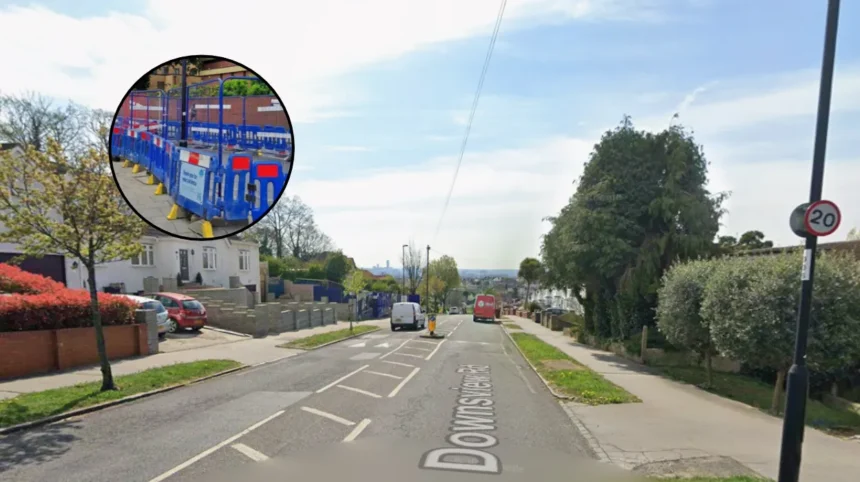
South London (South London News) October 27, 2026 – A major burst water main on Beulah Hill has caused extensive localized flooding, major traffic delays, and left numerous households without running water across south London. As reported by local news desk journalists at London News Online, Thames Water engineering crews were deployed to the site near the junction with Downsview Road following initial reports of high-volume water discharge and sharp pressure drops across the regional network on October 26. The incident quickly escalated as surface water inundated local carriageways, requiring immediate traffic management interventions and continuous overnight engineering operations to isolate the breach.
As detailed by regional reporters covering the incident for MyLondon, the onset of the leak on October 26 triggered widespread supply disruptions, with households in the SE19 postcode area and neighboring suburbs experiencing either low water pressure or a complete cessation of service. As documented by coverage from the South London Press, Thames Water confirmed that the initial burst resulted in surface flooding that disrupted local transit corridors. Consequently, emergency lane restrictions were established around the junction of Beulah Hill and Downsview Road to ensure specialist repair teams could operate safely amid ongoing traffic flow.
As outlined by reporting teams at the News Shopper, Thames Water initially advised the public that specialist repair units would arrive on site during the afternoon of October 26 to execute containment measures. As noted by journalists at InYourArea, engineers successfully brought the primary surface leakage under control by early afternoon; however, a small count of nearby properties remained entirely without water service. Water utility crews subsequently prioritized returning supply to the majority of affected homes through network rerouting before initiating deep excavation work down to the physical site of the pipe damage.
As reported by media correspondents at the Croydon Guardian, repair timelines were subsequently extended after Thames Water personnel encountered unexpected logistical complications. Engineering teams noted that the structural position of the damaged section, combined with the extreme density of adjacent subterranean utilities and water mains, hampered swift physical access. As highlighted by regional news reports in the Evening Standard, multi-disciplinary teams operated throughout the night of October 26 and the early morning of October 27, carrying out technical investigations, network pressure testing, and systematic valve adjustments to pinpoint the exact point of failure.
As recorded by local press monitors following Thames Water official bulletins, the utility company issued an updated status report at 7:40 am on October 27 confirming that technical crews had successfully identified the precise source of the breach and isolated the damaged pipe segment. As quoted directly from Thames Water’s published statement in coverage by the South London Press, the utility provider stated:
“Following these investigations, we have now confirmed the source of the burst and are progressing plans to complete the repair.”
As further published in their official communication, Thames Water added:
“Customers may notice an increased presence of our teams and vehicles in the area while this work continues.”
What Caused the Water Main Breach on Beulah Hill?
The physical failure of the water main near Downsview Road highlights ongoing vulnerabilities within urban subterranean distribution systems. As reported by infrastructure correspondents at the Construction News, main breaches of this magnitude typically occur due to a combination of ground movement, age-related material degradation, and localized pressure fluctuations within pressurized trunk networks. The Beulah Hill corridor carries significant daily utility loads, and the presence of multiple interconnecting water lines beneath the road surface complicated initial efforts to determine which specific conduit had failed.
Engineers on site were required to isolate specific distribution sections without causing secondary pressure surges elsewhere in the SE19 network. This delicate balancing act required systematic valve isolation and hydrostatic testing across several kilometers of connected piping before heavy excavation machinery could safely break ground near the Downsview Road junction.
How Has the Incident Impacted Local Residents and Transit Networks?
The operational footprint of the repair effort has created noticeable friction across South London transit routes. As observed by traffic reporters at BBC Radio London, lane restrictions along Beulah Hill have led to tailbacks affecting local bus services, commuter traffic, and freight delivery schedules between Crystal Palace, Upper Norwood, and surrounding boroughs.
For local residents, the loss of mains water pressure created immediate household challenges. While bulk supply rerouting restored baseline pressure to the majority of SE19 properties by late October 26, isolated pockets of domestic and commercial premises experienced prolonged outages while the primary main was isolated. Emergency water delivery units and specialized engineering vehicles remain stationed along the thoroughfare as physical pipe replacement and subsequent road surface reinstatement proceed.
Background of the Particular Development
Water distribution networks across South London comprise an intricate weave of historical cast-iron mains, mid-century steel connections, and modern modernised polymer piping. The Beulah Hill ridge serves as a key geographical conduit for water distribution across the London Borough of Croydon and adjacent areas, holding high-pressure trunk lines that feed numerous domestic supply networks across the elevated topography of SE19.
Over recent years, trunk mains across older urban sectors of Greater London have faced heightened structural stresses brought on by environmental shifts, heavy surface traffic loads, and seasonal soil expansion and contraction. Utility providers like Thames Water maintain ongoing capital investment and maintenance programs designed to monitor network integrity through acoustic logging and pressure regulation. However, when high-pressure mains fail in densely populated corridors, the immediate engineering response requires delicate coordination between municipal transport authorities, emergency services, and utility technicians to isolate leaks without compromising structural integrity or wider regional supply networks.
Prediction: How This Development Can Affect Local Residents and Commuters
The ongoing repair and restoration work on Beulah Hill will have several direct long-term and short-term implications for local residents, business operators, and regular commuters using the SE19 transport corridor:
- Continued Transport Delays and Route Alterations: Commuters and motorists utilizing Beulah Hill should anticipate lingering traffic congestion, temporary traffic signals, and potential bus diversions over the coming days. Even after the subterranean pipe repair is fully completed, highway engineering teams must backfill the excavation site, allow structural base layers to cure, and re-lay the asphalt surface before full lane capacity can be restored safely.
- Temporary Water Quality Adjustments: As water supply is fully restored and re-pressurized across the SE19 network, domestic and commercial consumers may experience short-term water discoloration or minor air pockets within their private plumbing systems. Utility standards dictate that network flushing will take place, but households may briefly need to run cold taps to clear localized sediment caused by directional flow changes within the main.
- Potential Infrastructure Review and Localized Upgrades: Repeated stress or major burst incidents on high-density utility corridors frequently prompt municipal authorities and regulatory bodies like Ofwat to review asset health. Localized residents may see an increase in planned, non-emergency maintenance schemes along Beulah Hill and surrounding junctions in future quarters as utility providers work to reinforce aging trunk infrastructure and reduce the likelihood of similar disruptions.