Key Points
- Goldsmiths, University of London, has officially cancelled its project to build a new satellite campus inside Catford’s Old Town Hall.
- The original scheme, agreed early in 2026, aimed to relocate around 600 Fine Art and Design students from their current site at Deptford Bridge into the historic building by summer 2027.
- Lewisham Council expressed that it was “shocked and surprised”, alongside feeling “surprised and frustrated”, by the sudden reversal after extensive collaborative efforts over the past year.
- The university intends to consolidate its academic offerings by bringing courses back to its central campus in New Cross to build a “greener, more connected campus environment”.
- The decision leaves Catford’s regeneration strategy facing an unexpected setback following other recent high-profile property project delays in the borough.
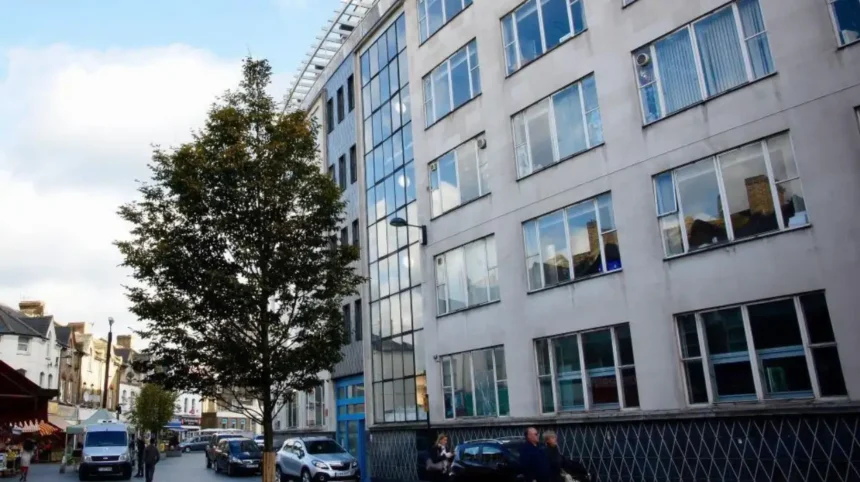
Lewisham (South London News) October 29, 2026 – As reported by Robert Firth of MyLondon, Goldsmiths, University of London, has abandoned its high-profile plan to set up a brand-new campus within Lewisham Council’s landmark Old Town Hall building in Catford. The university’s Fine Art and Design department was initially set to move from its current home at the former Lewisham College site in Deptford Bridge over to Catford by summer 2027. However, the higher education institution has made a strategic shift to retreat from the relocation and instead concentrate its facilities within its primary estate in New Cross.
As detailed by Darryl Chamberlain of The Greenwich Wire, local authority officials were informed that Goldsmiths would instead be moving the relevant courses to its main campus in New Cross rather than proceeding with the leased town hall model. This complete reversal comes just nine months after the agreement between the local authority and the university was proudly made public.
How Did Lewisham Council Respond To The Sudden Cancellation?
As highlighted by Tony of Ladywell Live, Lewisham Council released an official statement voicing profound disappointment regarding the university’s unexpected operational decision. The local authority confirmed that it was “shocked and surprised” and left “surprised and frustrated to learn” that the agreed relocation had been unilaterally dropped.
As noted by Dorothy Stein of Salamander News, local civic representatives had counted on the deal to inject youth, creative energy, and commercial footfall into the heart of Catford. Local leaders indicated that residents deserve clear answers and a viable alternative vision following the sudden loss of what was envisioned as an anchor cultural institution for the town center.
What Will Happen To The Fine Art And Design Department Now?
As outlined by Darryl Chamberlain of The Greenwich Wire, the affected Fine Art and Design students will no longer prepare for a transition to Catford. Instead, the academic programs will be integrated onto the core New Cross site.
As reported by Dorothy Stein of Salamander News, Goldsmiths intends to utilize its main land holding to create a “greener, more connected campus environment” for both students and staff, seeking operational efficiency by centralizing its footprint rather than expanding onto satellite municipal properties.
Background of the Particular Development
The partnership between Goldsmiths and Lewisham Council was formally announced in early 2026 to breathe fresh life into Catford’s historic Old Town Hall. Under the proposed arrangement, approximately 600 students along with academic staff were slated to occupy the space by summer 2027. This was part of a broader push to vacate the former Lewisham College site at Deptford Bridge, which has been subject to separate large-scale redevelopment discussions.
The announcement comes amidst wider institutional pressures across the higher education sector, alongside severe local development shifts across the borough. Goldsmiths has been undergoing organizational restructures under its internal governance strategies. Concurrently, Lewisham Council’s broader master plan for Catford and surrounding areas has faced broader complications, including the recent decision by developer Landsec to pause its £1.5 billion town center shopping center redevelopment scheme due to viability and affordable housing disputes. The vacant Old Town Hall site now returns to the local authority’s active property portfolio as municipal leaders seek alternative options to advance their housing and local regeneration priorities.
Prediction: How This Development Can Affect Local Residents, Businesses, and Students
Impact on Local Businesses and the Night-Time Economy
The withdrawal of 600 students from Catford town center will likely reduce projected weekday footfall for local independent retailers, cafés, market traders, and hospitality venues. Small business owners who had anticipated an uptick in daily trade from students will need to rely on existing community trade until a new long-term tenant or redevelopment plan is secured for the Old Town Hall.
Impact on Lewisham Council’s Regeneration Strategy
Lewisham Council will need to rapidly recalibrate its asset strategy for Catford town center. On one hand, the release of the Old Town Hall complex creates a blank canvas that could potentially be repurposed for civic services, community arts hubs, or residential opportunities aligned with the borough’s updated social housing strategy. On the other hand, finding a long-term commercial or institutional tenant of comparable scale may delay civic master planning timelines.
Impact on Goldsmiths Students and Academic Community
For students and staff, the decision to remain integrated at the main New Cross site avoids geographic fragmentation across multiple hubs. Students are likely to benefit from more unified access to central library services, student support facilities, and cross-departmental collaboration, avoiding the operational disruption of a physical relocation while the university consolidates its core campus infrastructure.