Lambeth is one of South London’s most significant destinations for exploring British musical heritage. From Brixton’s reggae and multicultural music scene to the internationally recognised performances at O2 Academy Brixton and Southbank Centre, the borough connects generations of musicians, audiences and cultural movements. Its musical history reflects Caribbean migration, Black British creativity, independent music venues, classical performances and the development of modern popular culture.
- What Makes Lambeth Important to London’s Musical History?
- Which Brixton Attractions Reveal the Borough’s Reggae and Caribbean Music Heritage?
- Why is Windrush Square important to Brixton’s musical heritage?
- What does Electric Avenue reveal about Brixton’s cultural development?
- How did Caribbean communities influence Brixton’s music scene?
- How Does Black Cultural Archives Preserve Lambeth’s Musical Heritage?
- What can visitors discover inside Black Cultural Archives?
- How does Black Cultural Archives connect music with migration?
- Why Is O2 Academy Brixton One of Lambeth’s Most Important Music Attractions?
- Which musicians have performed at O2 Academy Brixton?
- What makes the building architecturally significant?
- Can tourists experience O2 Academy Brixton without attending a concert?
- Which Lambeth Attraction Celebrates David Bowie’s Musical Legacy?
- What Musical History Can Visitors Discover at the Royal Vauxhall Tavern?
- How did the Royal Vauxhall Tavern develop as a performance venue?
- What makes the Tavern culturally significant today?
- How Does Southbank Centre Preserve Lambeth’s Classical and International Music History?
- Why is Royal Festival Hall historically important?
- How did Queen Elizabeth Hall influence electronic music?
- Which music festivals and performances take place at Southbank Centre?
- How Does Lambeth Archives Help Visitors Research Local Music History?
- Which Other Lambeth Locations Help Explain the Borough’s Musical Development?
- What is the connection between Brixton Village and local music culture?
- Why is Vauxhall important to Lambeth’s entertainment history?
- How does Waterloo contribute to Lambeth’s modern music scene?
- How Can Visitors Explore Lambeth’s Musical Attractions in One Day?
- Morning: Explore Brixton’s musical heritage
- Midday: Discover O2 Academy Brixton
- Afternoon: Visit Vauxhall
- Evening: Finish at Southbank Centre
- Why Does Lambeth’s Musical Heritage Remain Relevant to Modern Visitors?
- How has Caribbean music influenced modern British culture?
- Why should visitors explore independent cultural spaces?
- How do archives and historic venues protect musical heritage?
- Which Lambeth Attractions Should Music Lovers Prioritise?
Visitors exploring Lambeth encounter more than concert venues. Historic streets, cultural archives, public squares and performance spaces explain how music became part of the borough’s identity. Brixton, Vauxhall and Waterloo each contribute a different chapter to this history.
The strongest attractions for discovering Lambeth’s musical heritage include O2 Academy Brixton, Windrush Square, Black Cultural Archives, Brixton’s David Bowie mural, Royal Vauxhall Tavern and Southbank Centre. Together, these destinations reveal how local communities and international performers shaped the sound of South London.
What Makes Lambeth Important to London’s Musical History?
Lambeth is important to London’s musical history because its communities, performance venues and cultural institutions have supported reggae, ska, punk, soul, jazz, electronic music and classical performances. Brixton’s Caribbean heritage and Waterloo’s major concert venues provide particularly important historical connections.
The London Borough of Lambeth occupies a central position in South London. Its neighbourhoods include Brixton, Vauxhall, Waterloo, Kennington, Stockwell, Clapham, Herne Hill and Streatham. Each area has developed its own cultural identity through migration, entertainment, education and community activity.
Music became particularly important in Brixton during the twentieth century. Caribbean migration after the Second World War transformed the neighbourhood’s population, businesses and cultural life. Jamaican, Trinidadian and other Caribbean communities introduced musical traditions that influenced London’s reggae, ska, sound system and dancehall scenes.
Sound systems became an important part of this development. A sound system is a mobile or venue-based arrangement of speakers, turntables, amplifiers and microphones used to play recorded music and host performances. Jamaican sound system culture influenced British popular music through community parties, DJs, selectors and independent record labels.
Lambeth also developed a strong connection with international performance. Royal Festival Hall opened in 1951 as part of the Festival of Britain. Brixton Academy became an important concert destination during the 1980s. These venues connected local audiences with established and emerging musicians.
The borough’s musical importance therefore comes from two connected developments: community-led music culture and internationally recognised performance institutions.
Visiting these locations also provides an opportunity to understand the wider development of the area. Explore the [Insert Anchor Text for Lambeth’s Historical Background Article Here] to discover how migration, urban development and local communities shaped the borough before its modern music scene emerged.
Which Brixton Attractions Reveal the Borough’s Reggae and Caribbean Music Heritage?
Brixton offers some of Lambeth’s strongest connections to Caribbean musical heritage. Windrush Square, Black Cultural Archives, Electric Avenue and the surrounding neighbourhood reveal how Caribbean migration, independent businesses and community celebrations helped establish reggae and sound system culture in London.
Brixton is widely associated with Black British cultural history and the development of Caribbean-influenced music. Its cultural identity developed through successive generations of residents, musicians, entrepreneurs and community organisations.
The arrival of Caribbean migrants after 1948 helped transform Brixton into an important centre of Black British life. The arrival of the Empire Windrush in June 1948 became a defining moment in post-war British migration history. Caribbean communities subsequently established businesses, churches, social organisations and entertainment spaces across the neighbourhood.
Music played an important role in maintaining cultural connections and creating new forms of British expression.
Why is Windrush Square important to Brixton’s musical heritage?
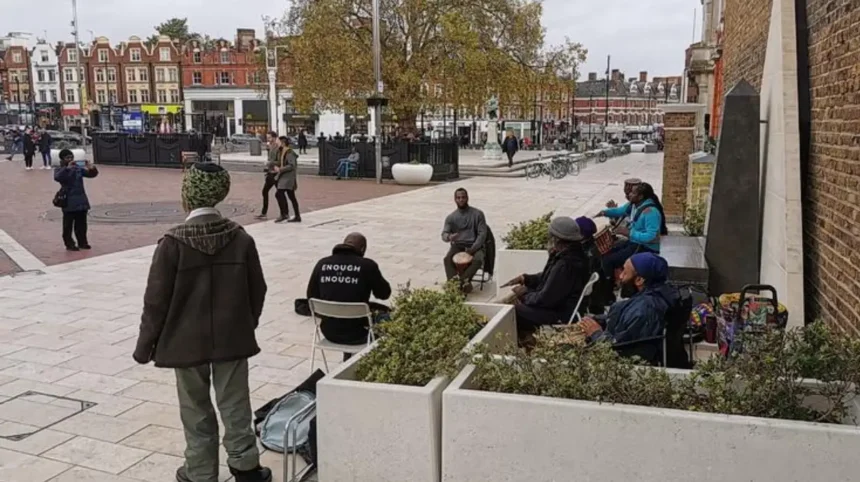
Windrush Square is a public space in the centre of Brixton, named in recognition of the Caribbean passengers who arrived in Britain aboard the Empire Windrush in 1948.
The square sits beside important cultural institutions, including Black Cultural Archives. Its location makes it a useful starting point for exploring the relationship between Caribbean migration, Black British identity and music.
The square represents the communities that helped establish reggae, ska, lovers rock and other Caribbean-influenced musical traditions in Britain.
Visitors can explore the surrounding streets, cultural buildings and public memorials to understand how migration influenced Brixton’s development.
What does Electric Avenue reveal about Brixton’s cultural development?
Electric Avenue is one of Brixton’s recognisable historic streets. It was developed in the 1880s and became known for its early electric street lighting.
The street later became famous through Eddy Grant’s 1982 song Electric Avenue. The song refers to Brixton and its social conditions during the early 1980s.
Grant’s recording brought international attention to the street’s name and connected Brixton with discussions about inequality, urban life and racial tensions.
The song also demonstrates how local places become part of international musical culture. Visitors can walk along Electric Avenue, explore its market surroundings and understand the connection between Brixton’s physical environment and its musical identity.
How did Caribbean communities influence Brixton’s music scene?
Caribbean communities introduced musical styles, performance traditions and entertainment practices that influenced London’s cultural development.
Reggae developed in Jamaica during the late 1960s from earlier Jamaican musical traditions, including ska and rocksteady. Its distinctive basslines, offbeat rhythms and socially conscious lyrics influenced British musicians and audiences.
Lovers rock also became significant in the British Caribbean music scene during the 1970s. This romantic reggae style developed in Britain and became particularly associated with young Black British performers and audiences.
Brixton’s community venues, record shops, parties and sound systems helped these musical styles reach wider audiences.
These influences also contributed to later developments in jungle, UK garage, grime and other forms of British urban music.
How Does Black Cultural Archives Preserve Lambeth’s Musical Heritage?
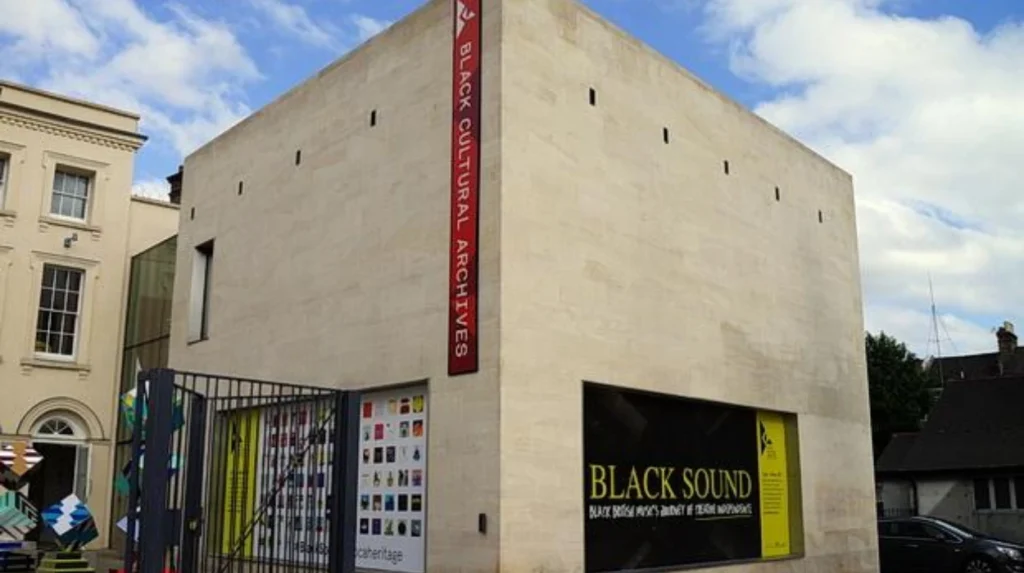
Black Cultural Archives in Brixton preserves historical records, photographs, documents and cultural objects relating to Black British experiences. Its collections provide important context for understanding Caribbean migration, community identity and the social conditions that influenced Lambeth’s musical development.
Black Cultural Archives is one of the most important heritage attractions in Brixton. Established in 1981, the organisation works to preserve and communicate the histories of people of African and Caribbean descent in Britain.
Its headquarters are located at 1 Windrush Square, Brixton, London SW2 1EF.
The institution offers access to historical collections, exhibitions, educational programmes and research resources. These materials help visitors understand the communities that shaped modern British culture.
What can visitors discover inside Black Cultural Archives?
The archive preserves several types of historical resources, including photographs, documents, publications, museum objects and personal records.
These materials provide information about migration, community organisations, political movements, cultural expression and everyday life.
Although Black Cultural Archives is not exclusively a music museum, its collections provide valuable context for understanding the development of Black British music.
Visitors researching reggae, soul, jazz and Caribbean musical traditions benefit from understanding the social experiences of the communities that created and supported these scenes.
The institution also helps explain how Black British cultural contributions became part of the country’s wider artistic history.
How does Black Cultural Archives connect music with migration?
Music often provides a way for migrant communities to preserve cultural identity and establish new connections in their adopted countries.
Caribbean music in Brixton developed through family networks, community gatherings, independent entertainment businesses and local performances.
Black Cultural Archives helps preserve the wider historical evidence surrounding these developments. Its collections connect cultural expression with migration, identity, education and social change.
Visitors should check the official website before travelling because reading-room access, exhibitions and public opening arrangements vary. The organisation currently promotes advance bookings and selected open days rather than unrestricted walk-in access.
Official visitor information is available through Black Cultural Archives.
Why Is O2 Academy Brixton One of Lambeth’s Most Important Music Attractions?
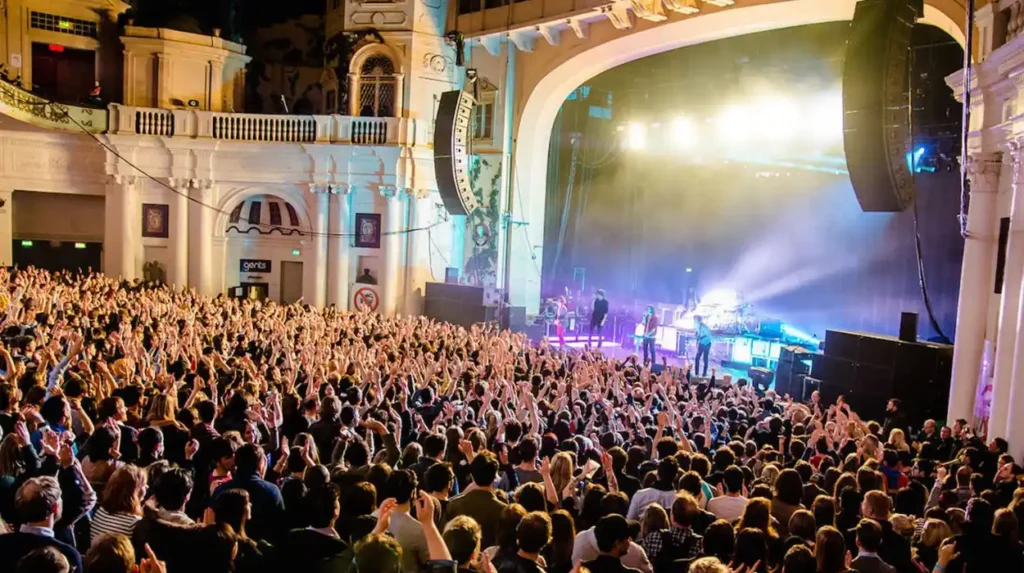
O2 Academy Brixton is one of Lambeth’s most recognisable live music attractions. The Grade II-listed building opened as the Astoria in 1929, became Brixton Academy in 1983 and subsequently hosted internationally recognised performers across rock, pop, reggae and alternative music.
O2 Academy Brixton is a major live entertainment venue at 211 Stockwell Road, Brixton, SW9 9SL.
The building has a history extending beyond its modern identity as a concert venue. It originally opened as the Astoria on 19 August 1929. Its early programme included cinema, theatre and variety entertainment.
After closing in 1972, the building reopened as the Sundown club. Simon Parkes subsequently acquired the property and transformed it into Brixton Academy, which officially opened on 7 October 1983.
Its first performance featured the reggae artist Eek-A-Mouse.
Which musicians have performed at O2 Academy Brixton?
The venue has hosted internationally recognised performers from different musical generations.
Its performance history includes artists and groups such as:
- The Clash, associated with British punk and post-punk music.
- Amy Winehouse, known for combining soul, jazz and contemporary pop.
- Madonna, an internationally recognised pop performer.
- Blur, one of Britain’s major Britpop bands.
- Coldplay, an internationally successful alternative rock group.
- Rihanna, a global pop and R&B performer.
- Florence and the Machine, known for alternative pop and rock.
The variety of performers demonstrates how the venue developed into an important destination for contemporary music.
What makes the building architecturally significant?
O2 Academy Brixton is a Grade II-listed building, meaning its architectural and historical importance receives statutory protection.
Its interior features a distinctive domed ceiling, Art Deco detailing, sloping floors and a large stage framed by an architectural design inspired by Venice’s Rialto Bridge.
The building’s design supports large-scale performances while maintaining strong audience views.
Its architectural features make the venue relevant to visitors interested in entertainment history as well as live music.
Can tourists experience O2 Academy Brixton without attending a concert?
Visitors can appreciate the building’s exterior and surrounding streets without purchasing concert tickets. However, access to the auditorium generally depends on scheduled events and venue arrangements.
Checking the official event calendar before visiting helps travellers identify performances, ticket availability and entry requirements.
The venue is close to Brixton Underground and National Rail stations, making it accessible from other parts of London.
Its concert history makes it one of the strongest individual attractions for anyone researching Lambeth’s musical heritage.
Which Lambeth Attraction Celebrates David Bowie’s Musical Legacy?
Brixton’s David Bowie mural is an important attraction for visitors exploring the borough’s connection with British popular music. Created by artist Jimmy C in 2013, the artwork commemorates Bowie, who was born in Brixton in 1947.
David Bowie was born David Robert Jones at 40 Stansfield Road, Brixton, on 8 January 1947. He became one of Britain’s most influential musicians, known for his distinctive musical experimentation, visual identity and contributions to glam rock, art rock and electronic music.
Bowie’s connection with Brixton makes the neighbourhood an important destination for fans interested in his early life.
Where is the David Bowie mural in Brixton?
The mural is located on the side of Morleys department store at 472–488 Brixton Road. Visitors can view it from Tunstall Road, SW9 8EH.
Artist Jimmy C, whose real name is James Cochran, completed the artwork in May 2013. It features a colourful portrait of Bowie inspired by his Ziggy Stardust appearance.
The mural became a focal point for public tributes following Bowie’s death in January 2016. Fans gathered around the artwork to leave flowers, messages and other commemorative objects.
The Brixton Society documents the artwork’s location, artist and completion date. The Brixton Society
Why does the mural matter to Brixton’s musical identity?
The mural connects an internationally recognised musician with his birthplace. It also demonstrates how public art preserves local cultural associations.
Bowie’s career extended across several musical periods, including glam rock, soul, experimental electronic music and pop. His influence reached audiences across different generations.
For visitors, the mural provides an accessible outdoor attraction that connects Brixton’s contemporary streets with its contribution to international music history.
It also creates an opportunity to explore nearby Brixton Road, Electric Avenue and Windrush Square as part of one cultural visit.
What Musical History Can Visitors Discover at the Royal Vauxhall Tavern?
The Royal Vauxhall Tavern reveals Lambeth’s history of alternative entertainment, cabaret, drag performance and live music. Built between 1860 and 1862, this Grade II-listed Vauxhall venue became an important LGBTQ+ cultural space and performance destination.
Royal Vauxhall Tavern stands on Kennington Lane in Vauxhall.
The building occupies part of the former Vauxhall Pleasure Gardens site. These pleasure gardens were important London entertainment grounds, known for public gatherings and performances before closing in 1859.
The Tavern was constructed between 1860 and 1862. Its Victorian architectural features and longstanding entertainment connections make it one of Lambeth’s important historic performance venues.
Historic England awarded the building Grade II listed status on 8 September 2015. Its designation recognises architectural interest and its cultural significance as an established LGBTQ+ venue.
How did the Royal Vauxhall Tavern develop as a performance venue?
The Tavern developed a reputation for alternative entertainment, cabaret and drag performances.
By the twentieth century, it had become an important meeting place for London’s LGBTQ+ community. Its entertainment programme provided opportunities for performers who were not always represented in mainstream venues.
The venue became particularly associated with drag performers during the later twentieth century.
Paul O’Grady, performing under the stage name Lily Savage, became one of the best-known entertainers associated with the Tavern. Other performers and entertainers also contributed to its reputation.
The venue’s history demonstrates that Lambeth’s musical heritage includes performance traditions beyond conventional concerts.
What makes the Tavern culturally significant today?
The Royal Vauxhall Tavern represents the relationship between entertainment, community identity and cultural preservation.
Its Grade II listing protects its historic architectural character and recognises its national cultural significance.
The venue continues to operate as an entertainment destination, hosting performances, club nights, cabaret and music-related events. Visitors should consult its programme before travelling because individual events determine admission and performance times.
For tourists, the Tavern provides an opportunity to explore a different dimension of Lambeth’s musical history: the development of independent entertainment spaces and LGBTQ+ performance culture.
How Does Southbank Centre Preserve Lambeth’s Classical and International Music History?
Southbank Centre preserves an important part of Lambeth’s musical heritage through Royal Festival Hall, Queen Elizabeth Hall and Purcell Room. Since 1951, its performance spaces have presented classical music, international musicians, electronic experimentation and contemporary performances.
Southbank Centre is one of the UK’s major cultural institutions. Its location on the South Bank places it within Lambeth’s Waterloo area.
The organisation includes several important performance spaces. Royal Festival Hall is the principal concert venue, while Queen Elizabeth Hall and Purcell Room accommodate different musical and performing arts programmes.
Its history began with the 1951 Festival of Britain, a national exhibition intended to celebrate British achievements and encourage post-war cultural renewal.
Why is Royal Festival Hall historically important?
Royal Festival Hall officially opened on 3 May 1951. King George VI attended the opening, and the first concert was conducted by Sir Adrian Boult and Sir Malcolm Sargent.
The hall became an important destination for orchestral music and international performances.
Its history includes a significant connection with composer and sitar player Ravi Shankar. He made his Royal Festival Hall debut on 4 October 1958, beginning a long association with the Southbank Centre.
Shankar introduced international audiences to Indian classical music and helped expand the visibility of South Asian musical traditions in Britain.
The hall also installed its major pipe organ in 1954. Designed by Ralph Downes and built by Harrison & Harrison, the instrument became an important part of its classical music identity.
How did Queen Elizabeth Hall influence electronic music?
Queen Elizabeth Hall opened in 1967 as part of the Southbank Centre’s expanding performance complex.
On 15 January 1968, it hosted the First London Concert of Electronic Music by British Composers.
The programme included electronic music pioneers Delia Derbyshire, Peter Zinovieff and Tristram Cary.
This event represents an important moment in the development of electronic music in Britain. It demonstrated how concert institutions supported new instruments, recording techniques and experimental compositions.
In 1973, the Southbank Centre also hosted the first live performance of Mike Oldfield’s Tubular Bells.
These events established the complex as an important destination for musicians working outside traditional orchestral formats.
Which music festivals and performances take place at Southbank Centre?
Southbank Centre presents different musical programmes throughout the year.
Its events include classical orchestras, jazz concerts, world music, contemporary performances and artist-led festivals.
One particularly important programme is Meltdown, an annual music and arts festival established in 1993. Each edition is curated by a different artist, bringing together performers and creative projects from different musical backgrounds.
The programme has featured notable curators including David Bowie, Yoko Ono, Grace Jones, Patti Smith and Laurie Anderson.
For visitors, the venue offers a way to experience Lambeth’s musical heritage as a continuing cultural activity rather than simply a collection of historic buildings.
How Does Lambeth Archives Help Visitors Research Local Music History?
Lambeth Archives provides historical records that help researchers investigate the borough’s changing music venues, neighbourhoods, performers and communities. Its photographs, documents, maps and deposited collections preserve evidence of local cultural development across generations.
Lambeth Archives is the borough’s official record office and local studies library.
The institution collects historical material relating to Lambeth and its residents. Its resources include photographs, maps, council records, documents, artworks and artefacts.
For visitors interested in musical history, these resources provide a research route into the development of local entertainment and community culture.
What historical materials are available at Lambeth Archives?
The archive’s collections cover different aspects of the borough’s history.
Researchers can investigate:
- Historic photographs showing Brixton, Vauxhall and Waterloo.
- Records relating to local organisations and community activities.
- Maps documenting changes to entertainment districts and streets.
- Documents relating to the borough’s social and cultural development.
- Historical publications and local studies resources.
These materials help establish the background of music-related places and the communities associated with them.
Can tourists visit Lambeth Archives?
Lambeth Archives is located at 16 Brixton Hill, London SW2 1ET, within walking distance of Brixton Underground and National Rail stations.
The council provides free research facilities, including internet access and microfilm readers. The archive also hosts exhibitions and educational events.
Its published opening schedule includes Monday afternoons and evenings, Tuesday and Thursday daytime, Friday daytime and Saturday sessions. Wednesday and Sunday are listed as closed. Visitors should confirm current arrangements before travelling, particularly when planning to view exhibitions or consult specific collections. Appointments are recommended for research visits.
The archive is particularly valuable for visitors who want to move beyond famous performers and investigate the everyday history of Lambeth’s music communities.
Which Other Lambeth Locations Help Explain the Borough’s Musical Development?
Several other Lambeth locations provide useful connections to the borough’s entertainment history. Brixton Village, Electric Avenue, Waterloo’s cultural quarter and historic Vauxhall help visitors understand how markets, public spaces and independent cultural institutions supported musical communities.
What is the connection between Brixton Village and local music culture?
Brixton Village is a historic market complex with strong connections to Brixton’s multicultural development.
Originally known as Granville Arcade, the market opened in 1937. It was designed by Alfred and Vincent Burr and connected several important Brixton streets.
Following the Second World War, Caribbean and other migrant communities established businesses and contributed to the neighbourhood’s cultural development.
The market itself is not a dedicated music museum. However, its location within Brixton’s historic commercial district helps explain the social environment in which independent music businesses, community gatherings and cultural activities developed.
Visitors can combine a market visit with Windrush Square, Electric Avenue and the David Bowie mural.
Why is Vauxhall important to Lambeth’s entertainment history?
Vauxhall has a longstanding association with public entertainment.
Its historic Vauxhall Pleasure Gardens attracted visitors through performances, music, social gatherings and outdoor entertainment. The gardens closed in 1859, but their influence remains visible in the surrounding area’s entertainment heritage.
The Royal Vauxhall Tavern continues this association through cabaret, music and alternative performance.
The connection between the former pleasure gardens and the modern Tavern demonstrates how entertainment traditions developed across different generations.
How does Waterloo contribute to Lambeth’s modern music scene?
Waterloo is an important cultural destination because of Southbank Centre’s performance spaces.
Royal Festival Hall, Queen Elizabeth Hall and Purcell Room provide opportunities to experience different musical traditions in one location.
The surrounding South Bank also connects music with theatre, exhibitions, public art and cultural festivals.
Visitors can explore the riverside, attend a concert and discover the history of the Festival of Britain within the same area.
This combination makes Waterloo particularly suitable for tourists with limited time in South London.
How Can Visitors Explore Lambeth’s Musical Attractions in One Day?
Visitors can explore Lambeth’s musical heritage through a one-day route connecting Brixton’s cultural landmarks with Vauxhall and Waterloo. Starting in Brixton provides access to its Caribbean heritage, historic music venues and public art before continuing towards central Lambeth.
A structured route helps visitors understand the relationship between Lambeth’s neighbourhoods and musical development.
Morning: Explore Brixton’s musical heritage
Start at Windrush Square.
Visit the surrounding area and learn about Caribbean migration and Black British cultural history. Black Cultural Archives provides historical context through its exhibitions and collections, subject to its opening and booking arrangements.
Continue towards Electric Avenue and Brixton Village. These locations reveal the neighbourhood’s commercial and cultural development.
Walk towards the David Bowie mural on Tunstall Road to explore Brixton’s connection with British popular music.
Midday: Discover O2 Academy Brixton
Continue towards O2 Academy Brixton on Stockwell Road.
Explore the building’s exterior and architectural features. If a concert is scheduled, consider purchasing tickets through the official venue.
Allow time to explore the surrounding streets and independent businesses.
Afternoon: Visit Vauxhall
Travel towards Vauxhall and explore the Royal Vauxhall Tavern’s historic exterior.
Its Victorian architecture and cultural significance provide a different perspective on Lambeth’s entertainment history.
Check the venue’s event schedule if you want to experience a live performance or cabaret programme.
Evening: Finish at Southbank Centre
Continue towards Waterloo and Southbank Centre.
Explore the riverside cultural complex and visit Royal Festival Hall. Check the performance programme for orchestral concerts, jazz, international music or contemporary events.
This final stop connects Brixton’s community-led musical development with London’s international concert culture.
This route is flexible. Visitors can shorten it by focusing on Brixton or extend their visit by including Lambeth Archives.
Explore More Area Guide
Where to Find Independent Art Galleries in Lambeth, London
Lambeth Art Heritage: Best Galleries, Archives and Creative Spaces
Why Does Lambeth’s Musical Heritage Remain Relevant to Modern Visitors?
Lambeth’s musical heritage remains relevant because its historic communities, performance spaces and cultural organisations continue to influence London’s entertainment industry. Reggae, British popular music, LGBTQ+ cabaret and international concert traditions remain visible through its attractions and events.
Music heritage is not limited to historic recordings or famous performers. It also includes the buildings, businesses, communities and institutions that supported musical development.
Lambeth demonstrates this through several important cultural connections.
How has Caribbean music influenced modern British culture?
Caribbean musical traditions contributed to the development of several British music genres.
Reggae, ska and lovers rock influenced generations of British performers. Their musical structures and cultural themes also contributed to the evolution of jungle, UK garage and other urban music styles.
Brixton remains an important place for understanding these connections because of its historical relationship with Caribbean communities.
Why should visitors explore independent cultural spaces?
Independent cultural spaces provide opportunities for artists to perform and develop audiences.
The Royal Vauxhall Tavern demonstrates the importance of venues associated with alternative performance and LGBTQ+ identity. O2 Academy Brixton demonstrates how a former cinema developed into an internationally recognised concert destination.
These attractions reveal different ways in which entertainment spaces adapt to changing audiences and musical styles.
How do archives and historic venues protect musical heritage?
Archives preserve historical evidence, while listed buildings protect important architectural and cultural assets.
Lambeth Archives maintains local historical records. Black Cultural Archives preserves Black British history. Historic England records and protects significant buildings such as the Royal Vauxhall Tavern.
These institutions provide different but complementary forms of heritage protection.
Their work ensures that future visitors, researchers and cultural organisations can investigate how Lambeth’s music scene developed.
Which Lambeth Attractions Should Music Lovers Prioritise?
Music lovers should prioritise O2 Academy Brixton for live performances, Windrush Square and Black Cultural Archives for Caribbean and Black British heritage, the David Bowie mural for popular music history, Royal Vauxhall Tavern for cabaret culture and Southbank Centre for international music.
The best attractions depend on the type of musical history visitors want to explore.
These attractions collectively demonstrate that Lambeth’s musical identity developed through different communities, genres and performance traditions.
Visitors interested in live music should prioritise O2 Academy Brixton and Southbank Centre. Those interested in historical research should include Lambeth Archives and Black Cultural Archives. Travellers exploring British popular culture should visit the David Bowie mural and Electric Avenue.
Planning visits around actual opening times and event schedules ensures that the experience includes both historical attractions and contemporary performances.
What are the best attractions for exploring Lambeth’s musical history?
The best attractions include O2 Academy Brixton, Windrush Square, Black Cultural Archives, the David Bowie mural, Royal Vauxhall Tavern and Southbank Centre.