Lambeth is one of the most varied parts of South London for a one-day visit. The borough combines the Thames riverside, South Bank, historic Lambeth, Waterloo, Kennington, Brixton, parks, museums, markets and cultural venues.
- Can you realistically see Lambeth in one day?
- What should you see first in Lambeth?
- How much of South Bank can you walk in one day?
- Should you visit the London Eye during a one-day Lambeth trip?
- Which cultural attractions can you fit into the afternoon?
- Can you include Lambeth’s history without losing sightseeing time?
- Is Brixton realistic to add to a one-day Lambeth itinerary?
- Where should you take a break during a Lambeth sightseeing day?
- What is the most realistic one-day Lambeth itinerary?
- 9:00am–10:00am: Lambeth Palace and riverside
- 10:00am–11:30am: Garden Museum
- 11:30am–12:30pm: Queen’s Walk and London Eye
- 12:30pm–1:30pm: South Bank lunch
- 1:30pm–3:30pm: Choose one cultural attraction
- 3:30pm–4:30pm: Riverside walk
- 4:30pm–5:00pm: Travel to Brixton
- 5:00pm–7:30pm: Brixton
- What should you leave out if you only have one day?
- Is Lambeth worth visiting for just one day?
The key to seeing Lambeth in one day is not attempting to cover the entire borough. Lambeth stretches well beyond the central riverside attractions. A realistic itinerary concentrates on a connected route, then uses public transport for one longer jump if Brixton is included.
For most first-time visitors, the strongest route runs from Lambeth Palace and the Garden Museum towards the South Bank, London Eye and Waterloo, followed by either a cultural stop or an evening visit to Brixton. This approach provides a high concentration of landmarks without spending most of the day travelling.
The South Bank itself stretches between Lambeth Bridge and Blackfriars Bridge along the southern side of the River Thames. It contains major attractions including the London Eye, National Theatre, Southbank Centre and SEA LIFE London Aquarium.
Can you realistically see Lambeth in one day?
Yes, you can see the main central attractions of Lambeth in one day by concentrating on South Bank, Lambeth Palace, the Thames and one additional neighbourhood such as Brixton. A full borough-wide visit requires more time because Lambeth covers extensive residential, commercial and green areas.
A one-day visit works because several of Lambeth’s best-known attractions are concentrated around the River Thames. The riverside section is particularly efficient for walking. The London Eye, Southbank Centre, Garden Museum and Lambeth Palace sit within a relatively compact central area.
A practical sightseeing day should therefore focus on depth within one geographic corridor rather than attempting every attraction.
A realistic schedule starts around 9am and finishes between 6pm and 9pm, depending on whether you include an evening in Brixton.
The central route also provides flexibility. A visitor interested in history can spend more time around Lambeth Palace and the Garden Museum. An art-focused visitor can prioritise Tate Modern across the river. A visitor seeking panoramic views can allocate more time to the London Eye.
The official London visitor guide identifies South Bank as a major sightseeing district containing the London Eye, SEA LIFE London Aquarium, London Dungeon, Southbank Centre and other attractions.
The main limitation is attraction entry time. A ticketed museum or observation experience creates a fixed block in the itinerary. Walking along the Thames and viewing public spaces is more flexible.
This makes one major ticketed attraction plus several outdoor or cultural stops the most efficient structure for a Lambeth day trip.
What should you see first in Lambeth?
Start beside Lambeth Palace and the Garden Museum, then walk towards Lambeth Bridge and the South Bank. This opening section combines medieval heritage, gardening history, riverside scenery and views towards Westminster before reaching Lambeth’s busiest visitor attractions.
Lambeth Palace provides an important historical starting point. It is the London residence of the Archbishop of Canterbury and stands beside the River Thames.
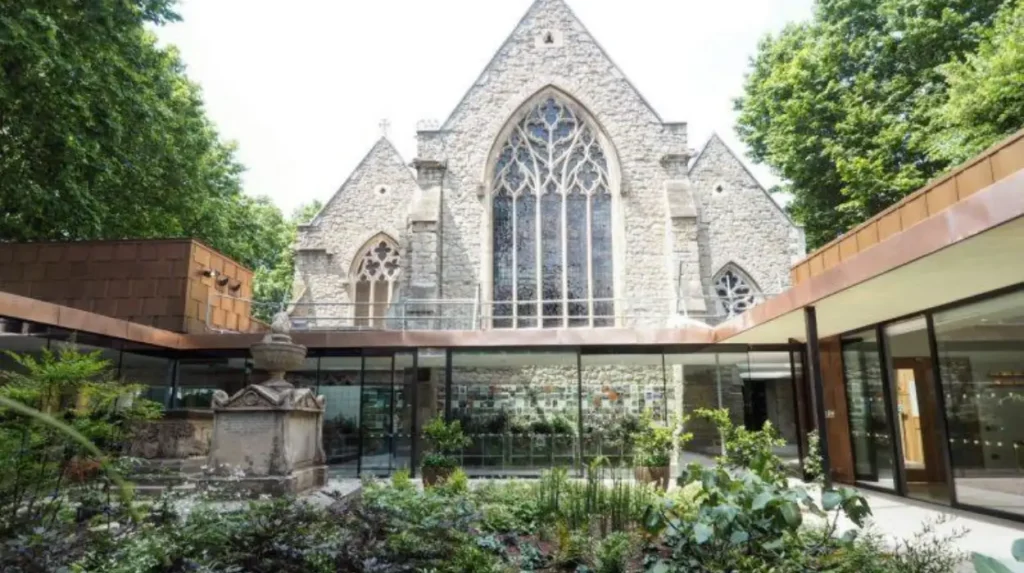
Next door is the Garden Museum, housed in the former St Mary-at-Lambeth Church. The museum describes itself as Britain’s only museum dedicated to the art, history and design of gardens. Its location creates a direct connection between Lambeth’s religious history and its horticultural heritage.
The site itself is significantly older than the modern museum. The Garden Museum records a church on the site from the medieval period and identifies the surviving medieval tower as the oldest surviving structure in the borough of Lambeth.
The churchyard also contains the tomb of John Tradescant, the 17th-century gardener and plant collector. Tradescant established a famous collection in Lambeth that became known as the Ark. His legacy provides one of the clearest links between historic Lambeth and British gardening history.
This is an efficient first stop because the area establishes the historical context before the itinerary moves towards the modern South Bank.
Allow around 60 to 90 minutes for the Garden Museum and surrounding area if you want to enter the museum. Visitors who prefer a faster itinerary can view the exterior, churchyard and riverside surroundings before continuing.
Opening arrangements should always be checked before travelling because museum hours and special events change. The Garden Museum currently lists regular opening from Tuesday to Sunday, 10am to 4pm.
As you explore the modern site, you are crossing land with a deep heritage. Read about the full to understand its origins.
How much of South Bank can you walk in one day?
You can cover the main Lambeth-side section of South Bank comfortably on foot, including Lambeth Bridge, the London Eye, Queen’s Walk, Southbank Centre and Waterloo. The riverside route is pedestrian-friendly and keeps several major landmarks within one continuous sightseeing corridor.
The most efficient walking route follows the Thames.
From Lambeth Palace, walk towards Lambeth Bridge. The bridge provides views towards Westminster and the Palace of Westminster across the river. It also marks the transition from the quieter Lambeth Palace area into the more heavily visited South Bank corridor.
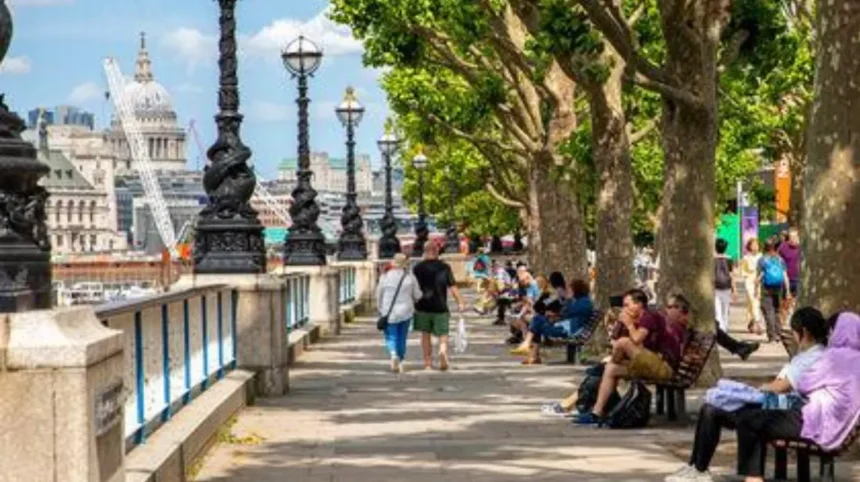
Continue along Queen’s Walk, the pedestrianised riverside route. Visit London describes Queen’s Walk as a riverside walkway extending between Lambeth Bridge and Tower Bridge.
The route gives visitors continuous access to views of the River Thames while passing major cultural venues.
The London Eye is the most prominent landmark on this part of the river. The observation wheel opened in 2000 and stands 135 metres high. A complete rotation takes approximately 30 minutes.
The London Eye is particularly useful early in the day because it provides a geographical overview of central London. From the top, visitors can identify landmarks across Westminster and the wider capital. The official London Eye site states that visibility reaches around 40 kilometres on a clear day.
After the London Eye, continue towards the Southbank Centre.
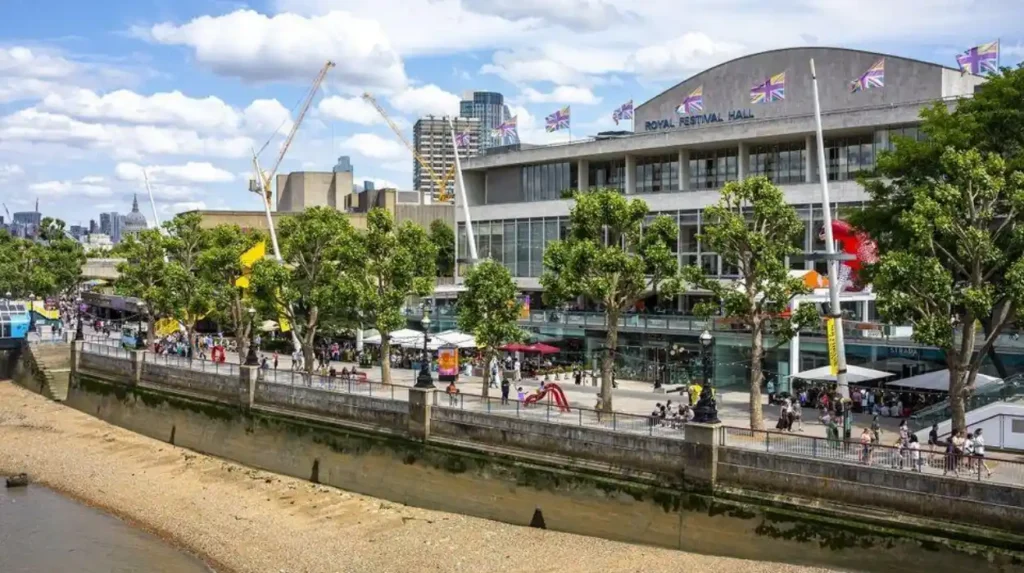
The Southbank Centre is a major arts complex comprising the Royal Festival Hall, Queen Elizabeth Hall, Purcell Room and Hayward Gallery. Its venues host music, performance, literature, visual arts and cultural events.
The riverside walk is also suitable for visitors who do not want a heavily scheduled itinerary. Public spaces allow time for photographs, architecture, river views and short breaks without requiring admission tickets.
Should you visit the London Eye during a one-day Lambeth trip?
The London Eye fits well into a one-day Lambeth itinerary because the experience itself takes about 30 minutes and occupies a central South Bank location. Pre-booking a timed visit helps protect the rest of the sightseeing schedule.
The London Eye is one of the most recognisable landmarks associated with Lambeth’s riverside.
Its 135-metre height makes it an obvious visual reference point along the Thames. It was designed by Marks Barfield Architects and launched in 2000. The attraction was originally conceived as a temporary structure but became a permanent part of London’s skyline.
The main experience is straightforward. Visitors enter a glass capsule and complete a slow rotation above the Thames. The full rotation lasts approximately 30 minutes.
The attraction works particularly well as a morning or early afternoon booking.
A timed ticket establishes a fixed point in the itinerary. This is useful because queues, security procedures and visitor volumes affect the actual amount of time spent at the attraction.
The London Eye is located near Waterloo Underground station, which is served by the Bakerloo, Jubilee, Northern and Waterloo & City lines. Waterloo National Rail station also provides extensive connections.
The attraction therefore functions as both a sightseeing experience and a convenient transport landmark.
Visitors who do not want to pay for an observation experience can still obtain strong views from the surrounding riverside. Westminster Bridge, Queen’s Walk and the riverfront provide extensive opportunities for photography without entering the attraction.
This distinction is important for budget planning. A one-day Lambeth itinerary does not require a paid attraction to remain worthwhile.
Which cultural attractions can you fit into the afternoon?
Choose one major indoor cultural attraction for the afternoon rather than attempting several full museum visits. Tate Modern, the Southbank Centre, the Garden Museum and Imperial War Museum London each provide substantial experiences that require different amounts of time.
The afternoon should be built around your primary interest.
For modern and contemporary art, Tate Modern is a logical choice. It stands on Bankside, across the Thames from the main South Bank route, and is connected to the area by Millennium Bridge.
For visitors prioritising performance and architecture, the Southbank Centre provides a stronger fit. Its Royal Festival Hall is the largest and oldest building within the centre, while Queen Elizabeth Hall and Purcell Room provide additional performance spaces.
The Hayward Gallery is also part of the Southbank Centre complex. It focuses on contemporary and modern visual art exhibitions.
For visitors interested in military history, Imperial War Museum London provides a different experience. The museum is on Lambeth Road, making it geographically connected to the wider central Lambeth area rather than the riverside alone. Its official access guide places it within walking distance of Lambeth North, Elephant & Castle and Waterloo.
The Garden Museum is the most efficient option for visitors who prioritise historic architecture and gardening.
The choice should depend on the length of your available afternoon.
A museum visit often takes between one and three hours depending on the size of the collection and the visitor’s interests. Trying to complete multiple large museums in the same afternoon reduces time available for outdoor sightseeing.
The most effective one-day strategy is therefore to select one substantial cultural venue, then continue outdoors.
Can you include Lambeth’s history without losing sightseeing time?
Yes, Lambeth’s history can be integrated directly into the route instead of treated as a separate activity. Lambeth Palace, St Mary-at-Lambeth, Lambeth Bridge, Windrush Square and Brixton each represent different periods of the area’s development.
Lambeth’s history is visible throughout the modern visitor landscape.
The Garden Museum provides one of the clearest examples. The former St Mary-at-Lambeth Church has medieval origins, while the present museum occupies a building that evolved over centuries. The site survived deconsecration, wartime damage and proposed demolition before becoming a museum.
The building was threatened with demolition in the 1970s. Rosemary and John Nicholson established the Tradescant Trust and secured a long lease to save the site. The Garden Museum was subsequently established in 1977.
Another layer appears at Lambeth Palace, whose long association with the Archbishops of Canterbury makes it one of the borough’s most significant historic sites.
The Thames also explains Lambeth’s development. The riverside provided transport, industry and connections with Westminster and the wider capital.
Further south, Brixton represents a very different historical chapter.
Windrush Square commemorates the arrival of the MV Empire Windrush at Tilbury on 22 June 1948. Lambeth Council states that 492 migrants were aboard the ship and that the event became a major symbol of modern British multicultural society.
The square is adjacent to the Black Cultural Archives, a nationally recognised institution dedicated to collecting, preserving and celebrating the histories of African and Caribbean people in Britain.
This makes Brixton particularly valuable for visitors interested in modern British social history.
Is Brixton realistic to add to a one-day Lambeth itinerary?
Brixton is realistic as an evening extension rather than as another full daytime destination. Travel there after the central riverside sightseeing, then concentrate on Windrush Square, Brixton’s cultural quarter, local food and evening atmosphere.
Brixton sits well beyond the central riverside cluster, so including it requires deliberate planning.
The area is especially valuable for visitors interested in London’s Caribbean heritage, music, food and community history.
Begin at Windrush Square, the central public space in Brixton. The square was created by combining Windrush Square with the former Tate Library Gardens, with the redevelopment completed in 2010.
The square contains the African and Caribbean War Memorial, which commemorates African and Caribbean service personnel who served in the First and Second World Wars. The Cherry Groce Memorial Pavilion is also located there.
Brixton also contains Brixton Windmill, a Grade II* listed monument in Windmill Gardens. The windmill was used to grind corn and other cereals and eventually ceased operating in the 1930s as surrounding development reduced its access to suitable wind.
However, Brixton Windmill is not an efficient addition to a short evening itinerary if your priority is the central visitor district. It is better suited to visitors staying longer or specifically interested in industrial and local history.
For a single day, Windrush Square and the surrounding central Brixton area provide the stronger use of time.
Brixton also connects directly with Rush Common, a series of surviving green spaces extending along Brixton Hill towards Streatham. The Rush Common Act 1806 protected parts of the former common from development.
This provides an additional option for visitors who prefer open space over museums.
Where should you take a break during a Lambeth sightseeing day?
Use the riverside and South Bank as the main break zone because the area combines cafés, restaurants, public seating, cultural venues and open space. Brixton provides a stronger evening food option when the itinerary continues south after central sightseeing.
A one-day itinerary requires regular breaks because Lambeth is best explored through a combination of walking and public transport.
The South Bank provides numerous places to pause along the Thames. The pedestrianised riverside has cafés, restaurants and public spaces, while the Southbank Centre provides additional indoor space around its cultural venues.
The area also contains food options around the Southbank Centre and Borough Market. Visit London’s South Bank guide identifies both locations as food destinations within the wider sightseeing area.
Lunch should ideally remain close to the planned route.
A long restaurant visit in the middle of the day reduces the number of attractions you can comfortably cover. A shorter lunch between major stops provides more efficient sightseeing.
For a digital nomad or business traveller, the South Bank also provides a practical combination of public transport, cafés, cultural venues and riverside walking. The area is well connected through Waterloo and nearby Underground stations.
Brixton works particularly well for an evening meal because it adds a distinct neighbourhood experience after the central sightseeing route.
Visitors should still prioritise the itinerary over restaurant hopping. The purpose of the day is to experience Lambeth rather than spend several hours travelling between individual venues.
What is the most realistic one-day Lambeth itinerary?
A realistic itinerary starts around Lambeth Palace, continues through the Garden Museum and along the Thames, includes the London Eye or one major cultural attraction, then finishes in Brixton. This route combines heritage, architecture, riverside sightseeing, culture and local neighbourhood character.
A practical schedule can follow this structure.
9:00am–10:00am: Lambeth Palace and riverside
Start around Lambeth Palace and Lambeth Bridge.
Use the first hour for exterior sightseeing, riverside views and orientation. Visitors entering a ticketed venue should adjust the start time around its opening schedule.
10:00am–11:30am: Garden Museum
Spend around 60 to 90 minutes at the Garden Museum.
The museum provides a compact combination of historic architecture, gardening history, collections and the St Mary-at-Lambeth site. Its current regular opening schedule is Tuesday to Sunday, 10am to 4pm.
11:30am–12:30pm: Queen’s Walk and London Eye
Walk along the Thames towards the London Eye.
If you have pre-booked a London Eye experience, use this period for the timed visit. The rotation itself takes approximately 30 minutes.
12:30pm–1:30pm: South Bank lunch
Remain around South Bank.
This avoids unnecessary transport time and keeps the itinerary geographically compact.
1:30pm–3:30pm: Choose one cultural attraction
Select one major attraction.
Tate Modern suits modern art visitors. The Southbank Centre suits performance, architecture and contemporary culture. Imperial War Museum London suits military and social history. The Garden Museum suits visitors who have not already visited it in the morning.
Do not attempt to complete every major museum.
3:30pm–4:30pm: Riverside walk
Return to the Thames.
Walk along Queen’s Walk and take time for views towards Westminster, the City and the river.
This period creates breathing space between ticketed attractions and the evening itinerary.
4:30pm–5:00pm: Travel to Brixton
Use public transport to move south.
The exact journey depends on your starting point and the day’s transport conditions.
5:00pm–7:30pm: Brixton
Start at Windrush Square.
Visit the surrounding cultural sites, explore the central streets and allow time for food.
Windrush Square remains open 24 hours, making it particularly flexible for an evening visit.
This final section gives the day a different character without requiring another large museum visit.
Explore More Area Guide
Is Lambeth Worth Visiting? South London Day Trip 2026
Why Is Lambeth One of London’s Most Diverse Boroughs?
What should you leave out if you only have one day?
Leave out distant attractions that require substantial cross-borough travel, multiple full museums and long detours into residential districts. Prioritise connected attractions around the Thames, then add Brixton only when its cultural history matches your interests.
The most common mistake is treating Lambeth as a checklist of individual attractions.
The borough contains enough parks, neighbourhoods, cultural venues and historic locations to require several days for comprehensive exploration. Lambeth Council maintains a large parks portfolio containing spaces with facilities such as wildlife areas, community gardens, children’s play areas, sports facilities and cafés.
That range demonstrates why a one-day visit requires selection.
Brockwell Park, Ruskin Park, Clapham Common, Kennington Park, Rush Common and Windmill Gardens each provide different experiences. Visiting several of them in the same day would shift the itinerary towards parks rather than central sightseeing.
The same principle applies to museums.
A visitor who spends three hours inside one museum receives a deeper cultural experience but sees fewer outdoor landmarks. A visitor who prioritises the London Eye and riverside walk covers more recognisable sights but receives less museum time.
Neither approach is inherently better. The correct choice depends on the visitor’s primary objective.
For a first-time leisure traveller, the strongest balance is usually:
historic Lambeth + Thames + one major attraction + South Bank + optional Brixton.
Is Lambeth worth visiting for just one day?
Lambeth is well suited to a one-day visit because its central riverside area concentrates major landmarks, cultural institutions and historic sites within an efficient walking route. Adding Brixton extends the experience into a distinct part of South London without requiring an overnight stay.
The biggest advantage is geographic concentration.
South Bank contains several internationally recognised visitor attractions within a pedestrian-friendly riverside environment. Visit London’s official guide describes the area as a major cultural and sightseeing destination, with the London Eye, Southbank Centre, National Theatre and other attractions forming a connected visitor district.
The second advantage is variety.
A single day can include medieval heritage at St Mary-at-Lambeth, religious history around Lambeth Palace, modern architecture at the Southbank Centre, engineering at the London Eye, riverside scenery along the Thames and multicultural history in Brixton.
The third advantage is transport connectivity.
Waterloo provides Underground and National Rail connections, while Lambeth North, Waterloo and other nearby stations connect the central route with wider London. Visit London identifies Waterloo and Southwark as key Underground stations for the South Bank area.
The itinerary also works for different visitor types.
Tourists can prioritise landmark sightseeing. Residents can focus on heritage and lesser-known green spaces. Digital nomads can combine cultural visits with cafés and riverside working breaks. Business travellers can use a half-day version centred on the South Bank.
Lambeth also continues to develop its public realm. The Garden Museum’s Lambeth Green project includes new gardens, public spaces and additional tree planting, with phases progressing through 2026 and beyond.
That continuing investment strengthens the area’s relevance as a visitor destination while preserving its historical identity.
Ultimately, one day is enough to understand Lambeth’s central visitor experience, but not enough to explore the entire borough comprehensively.
For the greatest sightseeing coverage, stay geographically disciplined. Begin around Lambeth Palace, move along the Thames, choose one major ticketed attraction, explore the South Bank and finish in Brixton if time and interests allow.
That route delivers the strongest balance between landmarks, history, culture, walking, public spaces and local South London character without turning the day into a race between attractions.
Is one day enough to see Lambeth?
Yes. One day is enough to experience Lambeth’s main central attractions, including Lambeth Palace, the Garden Museum, the River Thames, South Bank and the London Eye. Adding Brixton is realistic when the itinerary is planned around a focused route.