Key Points
- Kingston University academic Dr Martin Dines, in partnership with local community organisation The Community Brain, has launched the “Root and Branch Line” project.
- The public series features free events, including guided walks, in-transit rail conversations, creative activities, and shared reading sessions running from 31 October to 14 November.
- Dr Dines serves as the project’s inaugural artist-in-residence along the four-station Chessington branch line in South West London.
- Key environmental and historical sites highlighted include the Hogsmill River chalk stream, Tolworth Court Farm Fields, and the aborted “ghost line” extension towards Leatherhead.
- Project outcomes include a collaborative community podcast recorded on and near the train line and an illustrated map created by artist Helen Cann for display at Tolworth station.
South London (South London News) November 6, 2026 – Kingston University Associate Professor Dr Martin Dines has initiated a two-week series of free public arts and heritage events designed to uncover the ecological, historical, and cultural narratives embedded along the Chessington branch railway line. The project, titled “Root and Branch Line,” runs from 31 October to 14 November in partnership with Kingston-based community organisation The Community Brain. Serving as the rail line’s first official artist-in-residence, Dr Dines aims to transform traditional commuter corridors into vibrant cultural infrastructure through community engagement, guided landscape walks, onboard discussions, and creative workshops.
- Key Points
- What Is the Root and Branch Line Project and Why Was It Created?
- Which Local Heritage and Ecological Landmarks Are Highlighted Along the Chessington Line?
- How Will Public Participation Shape the Final Deliverables of the Project?
- Background of the Chessington Branch Line Development
- Predictions: How This Development Can Affect Suburban Residents, Commuters, and Local Infrastructure
What Is the Root and Branch Line Project and Why Was It Created?
The Root and Branch Line project is a public arts initiative created to reframe how residents and commuters perceive suburban transport infrastructure. While railway lines are predominantly viewed as utilitarian channels for commuting, this initiative positions rail corridors as valuable cultural and natural spaces.
As stated by Dr Martin Dines of Kingston University, the project emerged from a desire to address cultural gaps in suburban regions:
“Suburban areas are often relatively well served by transport infrastructure but less well served by cultural infrastructure. We’re interested in how railways and stations can become places of community, creativity and connection, rather than simply spaces people pass through on their way somewhere else.”
By engaging local residents, students, walkers, artists, and daily commuters, the programme seeks to foster a deeper appreciation for the overlooked heritage and biodiversity residing just outside train carriage windows.
Which Local Heritage and Ecological Landmarks Are Highlighted Along the Chessington Line?
Despite taking just over 10 minutes to travel from end to end across four stations, the Chessington branch line cuts through significant geographical and historic terrain.
The rail route passes over the Hogsmill River, recognized globally as one of only approximately 200 chalk streams. In addition, the line runs adjacent to Tolworth Court Farm Fields, which forms Kingston’s largest local nature reserve, before terminating at the edge of London’s Green Belt near Chessington South.
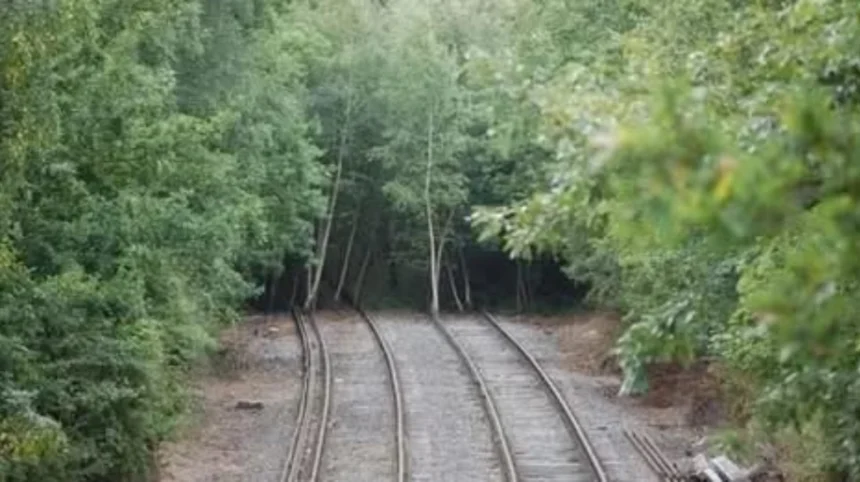
The public events schedule includes guided walks along the Hogsmill River and Tolworth Court Farm Fields, alongside an exploration of the line’s historic “ghost line.” This unbuilt track section beyond Chessington South was originally intended to extend towards Leatherhead, but construction was halted by the onset of the Second World War and subsequently permanently restricted by post-war Green Belt protections.
How Will Public Participation Shape the Final Deliverables of the Project?
Root and Branch Line relies on direct community co-creation rather than a top-down artistic display. Attendees are invited to read together, exchange personal memories of the area, debate local land use, and offer insights during interactive “Branch Line Conversations” held directly onboard moving trains.
Addressing the collaborative nature of the initiative, Dr Dines stated:
“I’m interested in bringing together different kinds of knowledge. Some people may know these places intimately, while others are discovering them for the first time. Through conversations, walks and shared reading, we can uncover stories and perspectives that might otherwise remain hidden.”
The public’s contributions will directly inform two permanent assets:
- A Community Podcast: Featuring interviews, field recordings, and stories captured on and around the train line.
- An Illustrated Map: Designed by artist Helen Cann, visually documenting the hidden social and ecological features of the corridor.
Both completed works will ultimately be installed and displayed at Tolworth station for public viewing.
Background of the Chessington Branch Line Development
The Chessington branch line represents a distinct period of 20th-century suburban railway development in South West London. Constructed by the Southern Railway company, the line opened up to Chessington South in 1939 as part of a planned arterial extension into Surrey. However, the outbreak of the Second World War suspended further track construction.
In the post-war era, the passage of the Town and Country Planning Act 1947 and the formal establishment of London’s Metropolitan Green Belt permanently prohibited major housing expansion past Chessington South, leaving the remaining earthworks, bridges, and rights-of-way towards Leatherhead as a suburban “ghost line.”
Historically, suburban train lines were planned strictly to service expanding residential suburban development and direct daily commuters into central London. The partnership between Kingston University and The Community Brain marks a structural shift toward integrating local academic research directly into public transport spaces, using suburban infrastructure to foster local biodiversity awareness and community identity.
Predictions: How This Development Can Affect Suburban Residents, Commuters, and Local Infrastructure
The implementation of the Root and Branch Line initiative is likely to affect several local demographic groups across South West London in distinct ways:
- Local Residents and Community Groups: By highlighting ecological assets like the Hogsmill River chalk stream and Tolworth Court Farm Fields, the project can increase community stewardship of local green spaces. Residents gain structured opportunities to engage with local history, reducing social isolation through free shared cultural activities.
- Daily Rail Commuters: Incorporating public art, podcasts, and visual maps into stations such as Tolworth can shift the commuter experience from routine travel to active civic connection. Interactive transit events may encourage commuters to view suburban rail hubs as community spaces rather than purely functional transport zones.
- Regional Transport and Cultural Authorities: If successful, this pilot project by Kingston University and The Community Brain could serve as a practical model for transport planners and regional councils across the UK. Transport authorities may increasingly partner with academic and arts bodies to repurpose underutilised suburban station assets for community engagement and heritage preservation.