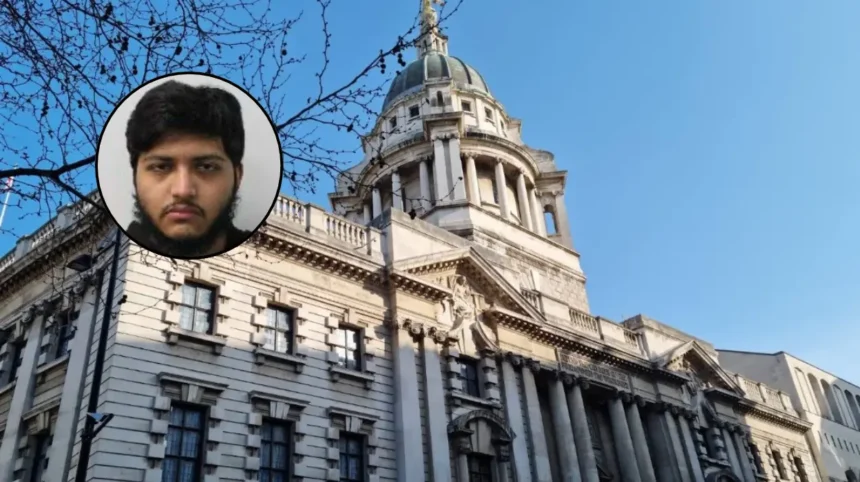
Key Points
- Defendant and Sentence: Shuja Gibraeel Mohsin, a 20-year-old resident of Mitcham, south London, was sentenced to four years in custody at the Old Bailey on Thursday, 26 November 2026, to be served in a Young Offender Institution.
- Convictions: Following a two-week trial at the Old Bailey, a jury found Mohsin guilty on 19 June 2026 of one count of possessing a document likely to be of use to a terrorist and two counts of disseminating terrorist material.
- Seized Material: Counter-terrorism officers discovered a bomb-making manual, information regarding plastic explosives, and execution videos produced by the extremist group Daesh on his devices, alongside evidence of participation in online chat groups linked to the Taliban, Hamas, and Daesh.
- Investigation Timeline: Officers initially stopped Mohsin at Heathrow Airport under Schedule 7 in January 2024 upon his return from Pakistan, seizing his mobile phone before arresting him in March 2024 and July 2024.
- Additional Court Orders: Alongside the four-year custodial term, the court ordered the forfeiture and destruction of Mohsin’s seized mobile phone.
- Police Warning: Counter Terrorism Policing London highlighted that Mohsin was drawn into extremist ideologies at age 14 or 15 and urged parents and carers to monitor young people’s online activities.
South London (South London News) November 28, 2026 – A 20-year-old man from Mitcham, south London, has been sentenced to four years in a Young Offender Institution after an investigation by Counter Terrorism Policing London uncovered a bomb-making manual and Daesh execution videos on his electronic devices. Shuja Gibraeel Mohsin received his custodial sentence at the Old Bailey on Thursday, 26 November 2026, having previously been convicted by a jury on 19 June 2026 following a two-week trial.
- Key Points
- What Offences Was Shuja Gibraeel Mohsin Convicted Of?
- How Did Counter Terrorism Policing London Uncover the Material?
- What Did Police and Defence Representatives Say About the Case?
- Background of the Development
- Prediction: How This Development Can Affect Young People, Parents, and Online Communities
What Offences Was Shuja Gibraeel Mohsin Convicted Of?
According to reporting by Daniel Brooks of LondonStreets.uk, jurors at the Old Bailey found Mohsin, born on 24 January 2006, guilty of three terrorism offences after he denied the charges. Specifically, as detailed by Tanvir Anjum Arif of The Daily Dazzling Dawn, the jury convicted him of one count of possession of a document likely to be of use to a terrorist, contrary to section 58 of the Terrorism Act 2000, in relation to a bomb-making manual discovered on his mobile phone.
Furthermore, as reported by Jon King of Express.co.uk and Will Twigger alongside Helen William of MyLondon, the court heard that the seized material included information regarding plastic explosives. In addition to the possession charge, the Old Bailey jury convicted Mohsin on two counts of dissemination of terrorist material, contrary to section 2 of the Terrorism Act 2006, over graphic Daesh execution videos that he had sent to an online contact. Alongside the four-year custodial term, the judge ordered the forfeiture and destruction of Mohsin’s mobile phone.
How Did Counter Terrorism Policing London Uncover the Material?
The investigation began in January 2024 when counter-terrorism officers stopped Mohsin at Heathrow Airport as he returned to the United Kingdom from a trip to Pakistan. As documented by Daniel Brooks of LondonStreets.uk, officers exercised powers under Schedule 7 to examine his belongings and seized his mobile phone.
Subsequent forensic examinations of the handset revealed the bomb-making instructions and extremist footage. As reported by Tanvir Anjum Arif of The Daily Dazzling Dawn, digital examiners also uncovered evidence demonstrating that Mohsin had viewed extremist content and joined online chat groups associated with proscribed and extreme Islamist organisations, including the Taliban, Hamas, and Daesh.
Following the initial border stop, officers arrested Mohsin in March 2024 and seized his computer for further forensic analysis. As noted by Will Twigger and Helen William of MyLondon, Mohsin was arrested a second time in July 2024 and questioned by detectives regarding the material recovered from his devices, during which he answered no comment. Following further police enquiries, the Crown Prosecution Service authorised criminal charges against him in April 2025.
What Did Police and Defence Representatives Say About the Case?
During earlier preliminary proceedings in June 2025 reported by Josh Bolton of Your Local Guardian, Mohsin’s defence barrister, Jonathan Page, indicated that his client would deny the allegations “in terms of any mindset and intention” before Mrs Justice Cheema-Grubb set the timetable for the trial. However, following the jury’s guilty verdicts in June 2026 and the subsequent sentencing in November 2026, senior counter-terrorism officials emphasised the severity of online youth radicalisation.
As reported by Homeland Security Today, Commander Helen Flanagan, head of Counter Terrorism Policing London, stated:
“Our investigation showed that Mohsin was being drawn into extremist and terrorist material and ideologies from when he was only 14 or 15 years old.”
Speaking on the broader implications of the conviction, Commander Flanagan also addressed the responsibilities of families, as reported by Ahmed Oluwasanjo of Peoples Gazette and Jon King of Express.co.uk. Commander Flanagan stated:
“This is reflective of a growing trend and concern over children and young people being radicalised and accessing extremely dangerous and violent terrorist ideologies and material online.”
Commander Flanagan further urged vigilance among adults, stating:
“It’s vital parents and carers are aware of what children are doing on the internet. Otherwise, there are very clear and serious consequences for those who are involved in downloading or sharing terrorist content online, a reality that Mohsin is now facing.”
Background of the Development
The prosecution of Shuja Gibraeel Mohsin takes place within the framework of United Kingdom counter-terrorism legislation designed to disrupt the early stages of violent extremism and the digital circulation of instructional or propagandistic material. Under section 58 of the Terrorism Act 2000, it is a criminal offence to collect, make a record of, or possess information of a kind likely to be useful to a person committing or preparing an act of terrorism, without a reasonable excuse. Similarly, section 2 of the Terrorism Act 2006 criminalises the dissemination of terrorist publications, encompassing the electronic transmission of videos or documents that encourage terrorism or provide practical assistance to militants.
Border stops under Schedule 7 of the Terrorism Act 2000 remain a primary operational tool for UK counter-terrorism units, allowing examining officers at ports and airports to question travellers and inspect electronic devices without prior suspicion to determine whether an individual is involved in terrorism. In recent years, Counter Terrorism Policing has repeatedly highlighted a demographic shift in arrests, noting a rise in teenagers and young adults accessing violent extremist material via encrypted messaging applications and social media platforms, leading authorities to promote public safeguarding initiatives such as the ACT Early campaign.
Prediction: How This Development Can Affect Young People, Parents, and Online Communities
This custodial sentence demonstrates the strict judicial approach applied to young offenders convicted of digital terrorism offences in the United Kingdom. For young people aged 18 to 20, the ruling illustrates that downloading, storing, or forwarding extremist propaganda and bomb-making instructions carries severe custodial penalties in a Young Offender Institution, regardless of whether an imminent physical attack has been planned.
For parents, carers, and educators across London and the wider UK, the case reinforces the necessity of actively monitoring adolescent internet usage and recognising early behavioural indicators of online radicalisation, particularly given police findings that Mohsin’s engagement with extremist material began when he was 14 or 15 years old. Additionally, international travellers returning to UK ports of entry can expect continued scrutiny of digital devices under Schedule 7 powers where intelligence or travel patterns prompt counter-terrorism enquiries, while authorities are likely to maintain pressure on digital platforms to restrict access to encrypted chat groups hosting proscribed content.