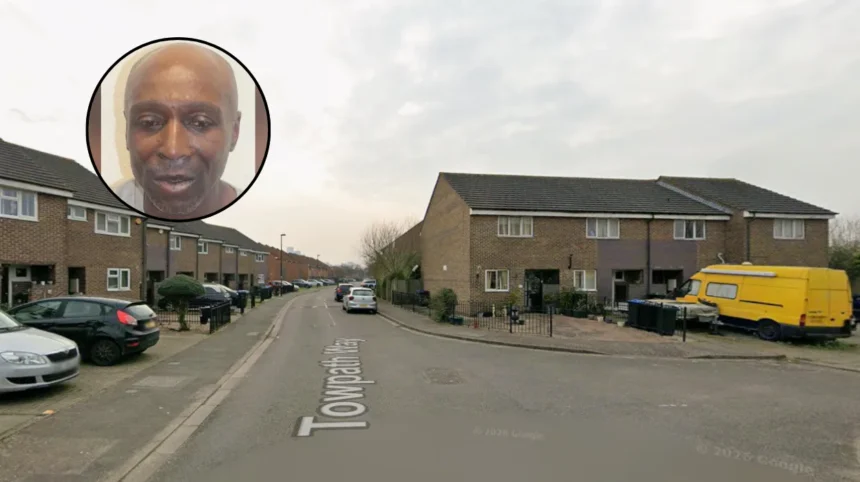
Key Points
- Conviction at Southwark Crown Court: Earlston Bennett, 58, of Towpath Way, Croydon, has been found guilty of the murder of his 58-year-old partner, Sarah Reynolds, and of controlling and coercive behaviour.
- False Claims to Emergency Services: In the early hours of 12 April 2025, Bennett summoned paramedics to their home, claiming Ms Reynolds had suffered a drug overdose.
- Pathology Findings: A post-mortem examination concluded that Ms Reynolds died from blunt force trauma to her head and torso, with no evidence of a drug overdose discovered.
- Systematic Abuse Exposed: Prosecution evidence brought before the court demonstrated a long-standing pattern of severe physical cruelty, isolation, aggressive messaging, and emotional manipulation inflicted on Ms Reynolds behind closed doors.
- Sentencing Date Set: Bennett has been remanded in custody following the trial and is scheduled to be sentenced at Southwark Crown Court on 4 December 2026.
Croydon (South London News) October 7, 2026 — A 58-year-old Croydon man has been convicted of murdering his partner and engaging in coercive and controlling behaviour following a detailed trial at Southwark Crown Court. Earlston Bennett, residing at Towpath Way in Croydon, was found guilty on 6 October 2026 for the murder of Sarah Reynolds, 58, who died in April 2025 after suffering severe, sustained physical abuse within their shared home.
As reported by Samuel Turner of Your Local Guardian, emergency services were first alerted in the early hours of 12 April 2025 when Bennett placed a call to the ambulance service claiming that Ms Reynolds had taken an overdose. Upon arrival at the couple’s residence in Croydon, paramedics found Ms Reynolds unresponsive in the living room area. Medical staff noted visible, fresh bruising across her body. When queried by attending paramedics, Bennett brushed off the physical injuries and maintained his initial account that she had suffered a substance overdose.
Ms Reynolds was immediately transported to hospital, where medical staff subsequently pronounced her dead. A thorough post-mortem examination conducted by a pathologist subsequently refuted Bennett’s claim, confirming that Ms Reynolds died as a direct result of blunt force trauma to her head and torso. Furthermore, the post-mortem analysis revealed no evidence whatsoever to indicate that a drug overdose had taken place.
How Was the Pattern of Abuse Uncovered by Prosecutors?
The prosecution’s case presented to the court established that the murder was the culmination of years of persistent domestic abuse. As reported by Samuel Turner of Your Local Guardian, evidence presented during the proceedings uncovered text messages containing aggressive and emotionally manipulative content, alongside testimony that Ms Reynolds had become increasingly isolated from her friends and family. Loved ones had also noticed unexplained bruising on Ms Reynolds in the period leading up to her death.
In official statements issued following the verdict, senior prosecution and investigative officials detailed the extent of the evidence used to secure the conviction. As reported by Samuel Turner of Your Local Guardian, Bethan David, Deputy Chief Crown Prosecutor for the Crown Prosecution Service London Homicide Unit, stated:
“Our deepest condolences go out to the family and friends of Sarah Reynolds. The evidence in this case painted a devastating picture of the fear, isolation and control Sarah experienced in the years leading up to her death, and her injuries exposed the violence and cruelty inflicted on her behind closed doors at the hands of someone she should have been able to trust.”
David further detailed the joint efforts of law enforcement and prosecutors, adding:
“Prosecutors worked closely with police to build a compelling case, and, despite Bennett’s repeated denials, the evidence proved he caused the injuries that killed Sarah and had subjected her to controlling and coercive behaviour throughout their relationship. The jury’s verdicts reflect the strength of the prosecution’s case, and I hope this conviction brings some measure of justice for Sarah.”
What Have the Family and Investigating Officers Said About the Verdict?
Following the delivery of the guilty verdicts, the victim’s family released a tribute reflecting on their loss and the hidden nature of the abuse. As documented by official Crown Prosecution Service and police records, Ms Reynolds’ family expressed their grief, noting:
“Although this is a good result and justice has been served, we have lost a sister, mum and grandmother. We won’t ever come to terms with her loss. Sarah was a loving mum and sister, what happened to Sarah should never have happened. We feel sad that she felt she could not open up to us, even though we reached out to her. We had no idea what was going on behind closed doors and that makes us extremely sad. We will miss and always remember her.”
Bennett remains remanded in custody and is due to return to Southwark Crown Court on 4 December 2026 to receive his formal sentence.
Background of the Development
The conviction of Earlston Bennett highlights the legal mechanisms established under UK law to address controlling and coercive behaviour within intimate relationships. Introduced under Section 76 of the Serious Crime Act 2015, the offence of controlling or coercive behaviour carries a statutory framework designed to criminalise patterns of non-violent or violent abuse that cause a victim to fear violence or suffer serious alarm or distress.
In homicide prosecutions, evidence of coercive control is frequently utilised by police and the Crown Prosecution Service to establish a history of systematic intimidation, social isolation, and financial or emotional manipulation leading up to fatal incidents. The Metropolitan Police Homicide Command works alongside specialised CPS Homicide Units to collate forensic evidence, digital communication records, and witness statements to reconstruct coercive patterns that occur behind closed doors.
Prediction: Impact on Victims, Legal Standards, and Community Support
This conviction reinforces legal precedents surrounding the prosecution of domestic homicide alongside coercive control offences. The outcome demonstrates to the public and legal practitioners that claims of self-inflicted injury or overdose made by perpetrators can be systematically dismantled through forensic pathology and digital evidence gathering.
For individuals experiencing domestic abuse, particularly those in south London, this ruling emphasizes the legal protections available and the standard of evidence required to secure convictions even when abuse occurs entirely behind closed doors. The prominence of such cases often leads to increased self-referrals and enquiries to national support services, such as the National Domestic Abuse Helpline. Furthermore, the outcome may encourage family members and friends who suspect coercive behaviour to utilise tools such as Clare’s Law (the Domestic Violence Disclosure Scheme) to check the police records of partners, potentially intervening before escalating patterns of coercive control lead to fatal violence.