Lambeth is one of South London’s most varied photography destinations, offering riverside landmarks, historic architecture, colourful street art, traditional markets, landscaped parks and distinctive urban neighbourhoods. Located on the south bank of the River Thames, the London Borough of Lambeth combines historic attractions with contemporary cultural spaces and residential streets.
- Why Is Lambeth an Interesting Destination for Photography?
- Which Riverside Locations in Lambeth Offer the Best Photography Opportunities?
- Where Can Visitors Photograph Historic Landmarks in Lambeth?
- Which Lambeth Parks Are Best for Landscape and Nature Photography?
- Where Can Visitors Find Street Photography Opportunities in Brixton?
- Which Public Art Locations in Lambeth Are Worth Photographing?
- Where Can Visitors Photograph Lambeth’s Architecture and Urban Streets?
- Vauxhall and Albert Embankment
- Waterloo and the National Theatre
- Kennington’s Residential Architecture
- Stockwell and Urban Photography
- Which Lambeth Locations Are Best for Sunset and Night Photography?
- Sunset Photography Along the Thames
- Night Photography Around the South Bank
- Night Photography in Vauxhall
- Seasonal Photography at Brockwell Park
- How Can Visitors Plan a Photography Route Across Lambeth?
- What Photography Equipment Is Useful for Exploring Lambeth?
- Equipment for Architectural Photography
- Equipment for Street Photography
- Equipment for Nature Photography
- Equipment for Night Photography
- What Photography Rules and Permissions Should Visitors Know in Lambeth?
- Personal Photography in Public Spaces
- Commercial Photography on the South Bank
- Photography Inside Museums and Historic Buildings
- Respecting Parks and Local Communities
- When Is the Best Time of Year to Photograph Lambeth?
- How Does Lambeth’s History Influence Its Photography Locations?
- How Can Visitors Capture Respectful and Meaningful Photographs Across Lambeth?
- Why Should Lambeth Be Included in a South London Photography Guide?
The borough stretches from Waterloo and Vauxhall in the north to Streatham and Norwood in the south. Its neighbourhoods include Kennington, Brixton, Stockwell, Herne Hill, Tulse Hill and Clapham. Each area provides different photographic subjects, from internationally recognised London landmarks to everyday community life.
Visitors looking for photography opportunities across Lambeth can explore riverside promenades, green spaces, historic buildings, public art installations and busy commercial streets. These locations support different photography styles, including landscape photography, architectural photography, street photography, portrait photography and travel photography.
Lambeth also has a strong historical identity. Its development reflects centuries of religious heritage, riverside industry, railway expansion, migration and cultural change. These influences remain visible in its buildings, public spaces and neighbourhood character.
According to Lambeth’s growth planning information, the South Bank attracts more than three million visitors each month. This makes the riverside one of the borough’s most significant visitor destinations.
For photographers, Lambeth offers opportunities throughout the year. Morning light highlights historic buildings, afternoon conditions suit street photography, and evening illumination creates distinctive riverside compositions.
Why Is Lambeth an Interesting Destination for Photography?
Lambeth is an interesting photography destination because it combines Thames-side landmarks, historic buildings, multicultural neighbourhoods, public art and extensive green spaces. Its contrasting environments provide visitors with opportunities to photograph London’s architecture, landscapes, cultural identity and everyday urban activity.
Photography across Lambeth benefits from the borough’s geographical and architectural variety. The northern section contains major visitor attractions around Waterloo, the South Bank and Lambeth Palace. Further south, Brixton, Stockwell and Herne Hill provide recognisable neighbourhood environments.
The River Thames creates a strong geographical feature for landscape and cityscape photography. Its embankments provide views towards Westminster, the Houses of Parliament and other central London landmarks.
Lambeth’s parks provide a different photographic environment. Brockwell Park, Ruskin Park and Archbishop’s Park contain mature trees, landscaped gardens, ponds and historic features. These settings are suitable for nature photography, outdoor portraits and seasonal landscape images.
The borough also has a distinctive cultural identity. Brixton’s markets, independent businesses, murals and music-related heritage provide subjects connected with London’s social and cultural development.
Photography opportunities are not limited to famous attractions. Residential streets, local shopping areas, railway infrastructure and community gardens provide additional subjects for visitors interested in documenting everyday London.
Which Riverside Locations in Lambeth Offer the Best Photography Opportunities?
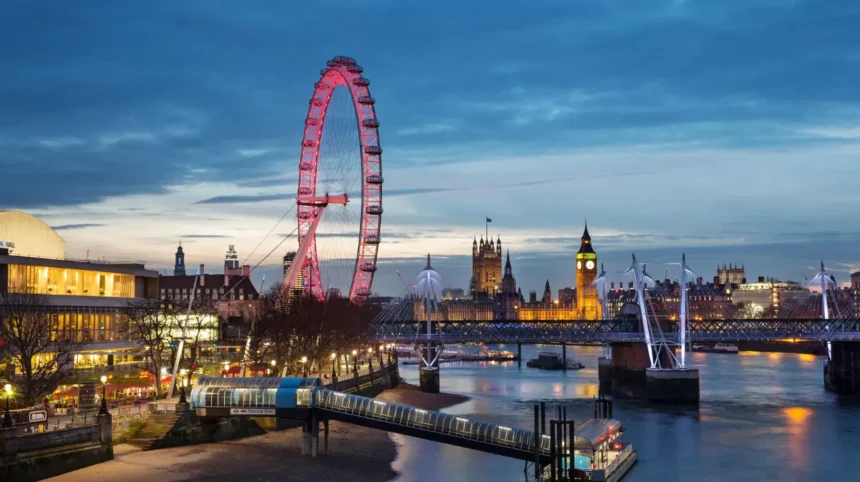
Lambeth’s riverside offers excellent photography opportunities through the South Bank, Albert Embankment, Lambeth Bridge and the Thames Path. These locations provide views of London’s skyline, historic architecture, bridges, river traffic and illuminated landmarks throughout the day.
The Thames is one of Lambeth’s most recognisable photographic features. The riverside provides changing perspectives of London’s central landmarks and combines historic architecture with contemporary public spaces.
South Bank and Queen’s Walk
The South Bank is among London’s best-known riverside photography destinations. Its pedestrian spaces extend along the Thames and include major cultural attractions, public areas and architectural landmarks.
Queen’s Walk provides opportunities to photograph:
- The London Eye and its surrounding riverside environment.
- The Thames and passing riverboats.
- Westminster’s historic skyline.
- The National Theatre’s concrete architecture.
- The riverside walkways and public spaces.
The London Eye is particularly recognisable in wide-angle cityscape photography. Visitors can photograph its structure from the surrounding public riverside areas, subject to local access and photography restrictions.
The National Theatre also provides distinctive architectural subjects. Its exposed concrete design creates strong geometric patterns, shadows and textured surfaces.
Albert Embankment
Albert Embankment runs alongside the Thames between Lambeth Bridge and Vauxhall. It provides a quieter riverside environment compared with the busiest parts of the South Bank.
Photographers can capture river views, bridges, historic buildings and contemporary riverside development. The changing light across the Thames creates opportunities for reflective compositions and skyline photography.
The embankment is particularly useful for photographers interested in combining architectural details with open river landscapes.
Lambeth Bridge
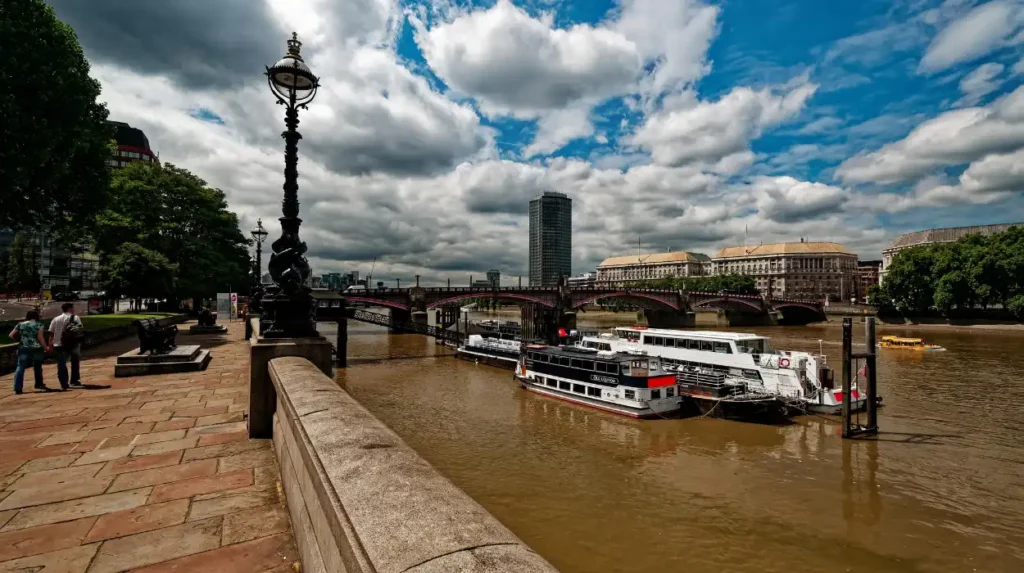
Lambeth Bridge provides another recognisable photographic location. Its red-painted structure creates a distinctive contrast with the surrounding buildings and river environment.
Photographers can capture the bridge itself, river traffic and views towards Westminster. The surrounding embankments provide different angles for architectural and urban landscape images.
The riverside becomes particularly attractive during sunset and after dark, when illuminated buildings and street lighting create reflections across the water.
Where Can Visitors Photograph Historic Landmarks in Lambeth?
Visitors can photograph historic landmarks across Lambeth at Lambeth Palace, the Garden Museum, historic churches and heritage buildings around Waterloo and Kennington. These locations document the borough’s religious, architectural and cultural development across several centuries.
Lambeth has an important architectural heritage. Historic buildings reflect the borough’s development from a riverside settlement into a densely populated part of metropolitan London.
Lambeth Palace
Lambeth Palace is one of the borough’s most significant historic landmarks. It has served as the London residence of the Archbishop of Canterbury since 1197. The Archbishop of Canterbury is the senior bishop of the Church of England.
The palace stands beside the Thames between Lambeth Bridge and Westminster Bridge. Its historic buildings include architectural features from different periods, reflecting centuries of religious and institutional use.
Photographic subjects include:
- Historic brickwork and architectural details.
- The palace’s exterior and entrance.
- Views towards the Thames.
- The relationship between the palace and surrounding riverside buildings.
Access to the interior is controlled. Visitors should check official tour dates and photography conditions before planning an indoor photography visit.
Garden Museum
The Garden Museum stands next to Lambeth Palace, overlooking the Thames.
The museum occupies the former church of St Mary-at-Lambeth. Its historic church tower and architectural features provide interesting subjects for heritage photography.
The museum explores the history of gardens, gardening and landscape design. Its exhibitions and interior spaces offer additional photographic subjects, subject to visitor photography rules.
The Garden Museum is approximately a ten-minute walk from Vauxhall, Westminster, Waterloo and Lambeth North stations. Its published admission arrangements and opening hours should be checked before visiting.
Historic Streets Around Kennington
Kennington offers opportunities to photograph traditional London architecture, residential streets, historic churches and local public spaces.
Its architectural character includes Georgian and Victorian buildings, historic terraces and older institutional structures.
Photographers interested in architectural documentation can explore the contrast between historic residential properties and modern developments. Street-level compositions also capture the relationship between buildings, pavements, gardens and neighbourhood activity.
As you explore these modern streets, you are crossing land with a deep heritage. Read about the full [Historic Development of Kennington and Lambeth] to understand how centuries of religious, residential and industrial change shaped the neighbourhood.
Which Lambeth Parks Are Best for Landscape and Nature Photography?
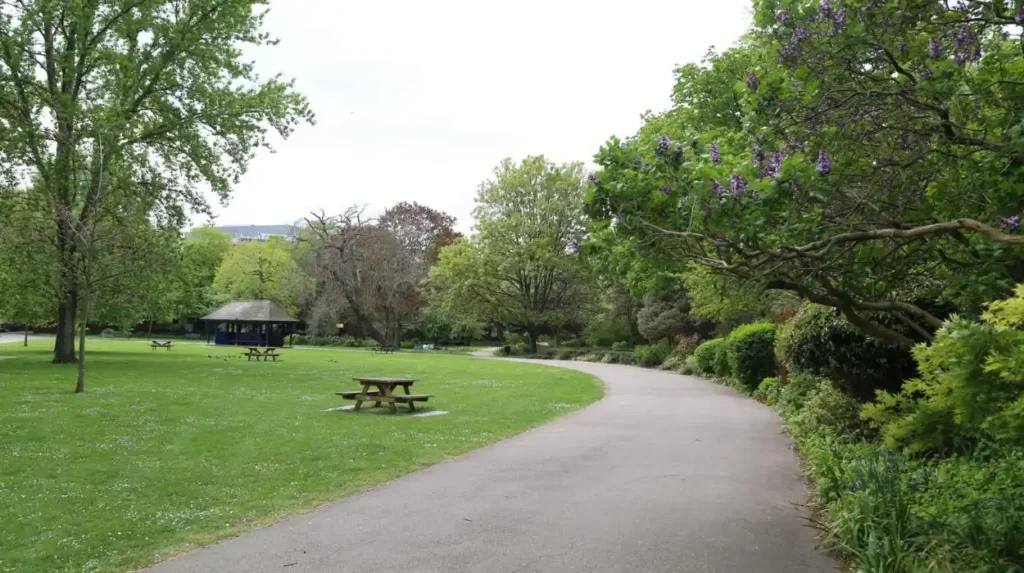
Brockwell Park, Ruskin Park and Archbishop’s Park are among Lambeth’s strongest locations for landscape and nature photography. Their ponds, mature trees, gardens, historic structures and open spaces provide varied subjects for outdoor photographers throughout the seasons.
Lambeth contains several public parks that provide accessible alternatives to busy urban photography locations. These spaces are suitable for landscape images, wildlife photography, botanical subjects and outdoor portraits.
Brockwell Park
Brockwell Park is one of the borough’s most attractive outdoor photography destinations.
The park contains open meadows, ponds, mature trees, a walled garden and historic buildings. Brockwell Hall and Brockwell Lido provide recognisable architectural subjects within the landscaped environment.
The park officially opened to the public in 1892 after being acquired by the Metropolitan Board of Works. Its elevated landscape provides views across London, including parts of the central skyline. Lambeth Council+1
Photography opportunities include:
- Panoramic views across London.
- Reflections around the park’s ponds.
- Seasonal flowers in the walled garden.
- Historic architectural details around Brockwell Hall.
- Trees, wildlife and open grassland.
Spring is suitable for photographing flowering plants and fresh greenery. Summer provides longer daylight hours and opportunities for outdoor portraits. Autumn creates colourful foliage, while winter offers clearer views through bare trees.
The park normally opens at 7.30am and closes 15 minutes before sunset.
Ruskin Park
Ruskin Park is located between Camberwell, Brixton and Herne Hill.
It opened as a public park in 1907 and takes its name from Victorian writer and naturalist John Ruskin, who grew up locally.
The park contains an ornamental pond, wooden bandstand, terraced gardens, mature trees and wildlife areas. These features create opportunities for traditional landscape photography and detailed nature images.
The central pond provides reflective compositions, while the bandstand creates a distinctive architectural subject. Visitors can also photograph seasonal flowers, community gardens and the park’s tree-lined paths.
Ruskin Park normally opens at 7am and closes 15 minutes before sunset.
Archbishop’s Park
Archbishop’s Park is situated in Waterloo, close to Lambeth Palace. The site originally formed part of the palace grounds before becoming a public park in 1901.
The park combines mature trees, herbaceous borders, community gardens and public art. Its historic connection with Lambeth Palace makes it an interesting location for combining natural and heritage photography. Lambeth Council
Its smaller scale makes it useful for visitors exploring central Lambeth on foot. Photographers can capture green spaces against the surrounding urban environment.
Other Green Spaces Across Lambeth
Other public spaces also provide photography opportunities. Examples include Clapham Common, Albert Embankment Gardens and Brixton Orchard.
Clapham Common offers expansive open landscapes, mature trees and recreational scenes. Albert Embankment Gardens provide smaller riverside compositions, while Brixton Orchard offers community-focused greenery within an urban setting.
Lambeth Council’s parks directory lists 75 public parks and open spaces, demonstrating the borough’s range of outdoor environments.
Where Can Visitors Find Street Photography Opportunities in Brixton?
Brixton is one of Lambeth’s most distinctive street photography destinations because it combines colourful murals, traditional markets, independent shops, music heritage and multicultural street life. Its busy public spaces provide opportunities to document contemporary London culture and neighbourhood identity.
Brixton is particularly suitable for photographers interested in urban culture and documentary photography. Its streets contain a mixture of historic commercial buildings, modern developments, independent businesses and public artwork.
The neighbourhood is also closely associated with African and Caribbean communities and the history of the Windrush generation. Between 1948 and 1971, many Caribbean citizens who arrived in Britain established homes in Brixton and neighbouring areas. This history continues to influence local businesses, food, music and cultural institutions.
Brixton Market
Brixton Market offers opportunities to photograph independent traders, food stalls, colourful shopfronts and covered market spaces.
Market photography is particularly useful for documenting everyday commercial activity. Visitors can capture architectural details, displays, signage and the visual character of local businesses.
The market environment also provides opportunities for close-up photography, including food photography and photographs of traditional shop interiors. Visitors should ask permission before making identifiable portraits of traders or customers.
Electric Avenue
Electric Avenue is one of Brixton’s best-known commercial streets. Its colourful shopfronts, street signs and busy pedestrian environment provide recognisable London street photography subjects.
The street is associated with Brixton’s commercial and cultural development. Its visual character comes from the combination of traditional retail premises, modern businesses and everyday neighbourhood activity.
Photographers can use the street’s shopfronts to create layered urban compositions. Morning hours are useful for capturing the architecture before pedestrian activity becomes particularly busy.
Brixton Street Art
Brixton has a strong street art culture. Its murals and painted walls provide opportunities for colourful urban photography.
Street artwork includes community-related imagery, cultural references and portraits that reflect local history. These works also provide interesting backgrounds for environmental portraits and documentary photography.
Visitors should distinguish between publicly accessible artwork and privately owned walls. Photographing a mural from a public street is different from entering private premises to photograph artwork.
Which Public Art Locations in Lambeth Are Worth Photographing?
Lambeth’s public art locations include Brixton murals, community artworks in Waterloo, architectural installations and the Leake Street graffiti tunnel. These places offer colourful photographic subjects, contemporary urban compositions and visual records of London’s creative communities.
Public art gives photographers opportunities to explore the relationship between visual creativity and the surrounding urban environment.
Leake Street Graffiti Tunnel
Leake Street Arches is a recognised street art destination close to Waterloo Station.
The tunnel is known for its graffiti-covered walls and constantly changing artwork. Its enclosed structure creates strong leading lines, colourful surfaces and opportunities for wide-angle photography.
Photographers can explore:
- Large-scale graffiti compositions.
- Colourful wall textures.
- Perspective and tunnel geometry.
- Contrasting artificial and natural light.
- Urban portraits against painted backgrounds.
The artwork changes over time, so photographs taken during different visits document different visual arrangements.
Leake Street is a popular location for creative photography. Visitors should remain aware of pedestrians and artists working in the tunnel.
Commercial photography and organised filming require separate consideration. The South Bank’s official guidance identifies Leake Street as an area with specific filming permission arrangements. South Bank London
Public Art Around Waterloo
Waterloo contains several public spaces with community-inspired artworks and changing cultural installations.
Archbishop’s Park includes public art alongside its landscaped gardens. The combination of sculptures, greenery and surrounding buildings creates opportunities for contextual photography.
The South Bank also hosts temporary installations and artistic displays. Their availability changes according to cultural programmes and events.
Photographers should check the current programme before travelling specifically to capture a temporary installation.
Brixton’s Cultural Murals
Brixton’s murals provide opportunities to document cultural identity and community history.
The area’s public artwork includes portraits, music-related references and visual representations of local heritage. These subjects help explain why Brixton is an important destination for documentary and cultural photography.
When photographing murals, visitors should record the surrounding street context as well as the artwork itself. This creates more informative images than close-up photographs without geographical context.
Where Can Visitors Photograph Lambeth’s Architecture and Urban Streets?
Lambeth offers architectural photography opportunities across Waterloo, Vauxhall, Kennington, Brixton and Stockwell. These neighbourhoods combine historic residential buildings, railway structures, modern developments, religious architecture and distinctive commercial streets.
Architectural photography across Lambeth reveals the borough’s changing urban character. Historic buildings stand alongside contemporary residential developments, transport infrastructure and cultural institutions.
Vauxhall and Albert Embankment
Vauxhall offers an interesting combination of riverside architecture and modern urban development.
The area contains high-rise residential buildings, commercial structures and historic transport-related features. Its riverside position creates opportunities for skyline photography and architectural compositions.
Photographers can experiment with vertical framing to capture modern buildings against the sky. Wider compositions include the Thames, embankment and surrounding urban landscape.
Waterloo and the National Theatre
Waterloo provides some of Lambeth’s most recognisable examples of contemporary cultural architecture.
The National Theatre is particularly notable for its concrete design and large geometric forms. Its exterior surfaces create opportunities for architectural detail photography, symmetry and contrasting light.
The surrounding South Bank contains other cultural buildings, pedestrian walkways and public spaces.
Photographers interested in architectural design should examine the relationship between building materials, structural patterns and public movement.
Kennington’s Residential Architecture
Kennington offers a different architectural environment from the busy riverside.
Its residential streets contain traditional London terraces, historic properties and older institutional buildings. These locations provide subjects for architectural heritage photography.
Early morning is suitable for photographing building facades with fewer parked vehicles and pedestrians. Overcast conditions also help reduce harsh shadows when recording architectural details.
Stockwell and Urban Photography
Stockwell provides opportunities for photographing everyday residential London.
Its streets combine housing, transport infrastructure, local businesses and community spaces. Photographers interested in documentary projects can explore the relationship between residential architecture and neighbourhood activity.
Visitors should respect private property and avoid photographing people in ways that interfere with their privacy.
Which Lambeth Locations Are Best for Sunset and Night Photography?
The South Bank, Lambeth Bridge, Albert Embankment, Vauxhall and Brockwell Park provide useful settings for sunset and night photography. Their combination of illuminated landmarks, river reflections, skyline views and open landscapes supports different low-light photographic techniques.
Light conditions change the appearance of Lambeth’s landmarks throughout the day. Sunset photography emphasises warm architectural tones, while night photography highlights illuminated buildings and urban movement.
Sunset Photography Along the Thames
The riverside is particularly useful for sunset photography because it provides open views across the water.
Photographers can position themselves along the accessible riverside walkways to capture changing colours in the sky and reflections across the Thames.
Lambeth Bridge and Albert Embankment provide opportunities to include bridges and buildings within sunset compositions.
A tripod helps with longer exposures, although photographers should check local rules and avoid obstructing pedestrian routes.
Night Photography Around the South Bank
The South Bank becomes visually distinctive after dark.
The London Eye, illuminated buildings, riverside walkways and passing boats provide several possible subjects. Reflections on the Thames also create opportunities for long-exposure images.
A wide-angle lens is useful for capturing large architectural structures, while a standard lens works well for individual details and street scenes.
Night Photography in Vauxhall
Vauxhall offers modern cityscape photography opportunities through its illuminated residential and commercial buildings.
The area’s contemporary architecture provides strong vertical lines and contrasting lighting conditions.
Photographers can experiment with reflections, building silhouettes and compositions that combine modern structures with the surrounding transport environment.
Seasonal Photography at Brockwell Park
Brockwell Park is useful for sunset landscape photography because of its elevated position and open views.
Visitors can capture changing light across the park’s trees and meadows. Seasonal changes also affect the appearance of the landscape.
Park closing times are important. Lambeth Council states that Brockwell Park normally closes 15 minutes before sunset, so visitors should plan accordingly.
How Can Visitors Plan a Photography Route Across Lambeth?
Visitors can plan a Lambeth photography route by grouping locations according to geographical proximity, transport connections and lighting conditions. A practical itinerary starts around Waterloo, continues towards Lambeth Palace and Vauxhall, then explores Brixton and Brockwell Park.
A planned route reduces unnecessary travel and gives photographers more time at individual locations.
Start at Waterloo and the South Bank
Begin near Waterloo Station and explore the riverside.
The South Bank provides access to the London Eye, Queen’s Walk, National Theatre and surrounding public spaces. These locations are suitable for cityscape, architectural and street photography.
Allow additional time for different viewpoints along the Thames.
Continue Towards Lambeth Palace
Walk east along the riverside towards Lambeth Palace and the Garden Museum.
This section provides opportunities to photograph historic architecture, religious heritage and riverside landscapes.
Visitors interested in indoor photography should check the Garden Museum’s current opening arrangements and admission conditions.
What Photography Equipment Is Useful for Exploring Lambeth?
A versatile camera, standard zoom lens, wide-angle lens, spare batteries and suitable weather protection are useful for exploring Lambeth. Equipment choices depend on whether visitors prioritise architecture, street scenes, portraits, landscapes or low-light photography.
Visitors do not need professional equipment to photograph Lambeth successfully. Modern smartphones provide sufficient image quality for many travel photography situations.
However, different photography environments benefit from specific equipment.
Equipment for Architectural Photography
A wide-angle lens helps capture large buildings, bridges and riverside structures.
A tripod supports careful framing and longer exposures. A polarising filter also helps manage reflections in suitable daylight conditions.
Equipment for Street Photography
A compact camera or smartphone is practical for exploring Brixton and Waterloo.
A standard focal length provides natural-looking street compositions. Lightweight equipment also makes walking between neighbourhoods more comfortable.
Equipment for Nature Photography
A zoom lens helps capture distant birds and wildlife in parks.
A macro lens is useful for close-up photographs of flowers, leaves and other botanical subjects.
Equipment for Night Photography
A tripod and fast lens improve results in low-light environments.
Photographers should also carry spare batteries because long exposures and colder weather affect battery performance.
What Photography Rules and Permissions Should Visitors Know in Lambeth?
Visitors should distinguish between personal photography in public spaces and organised commercial photography on privately managed land. Public access does not automatically provide permission for professional shoots, commercial filming or photography using restricted equipment.
Lambeth contains public streets, council-managed parks, cultural attractions and privately managed riverside spaces. Each environment has different access arrangements.
Personal Photography in Public Spaces
Ordinary personal photography in publicly accessible streets and open spaces is generally possible.
Visitors should avoid obstructing pedestrian routes, transport entrances and emergency access points.
Photographing identifiable people also requires consideration of privacy, consent and the intended use of images.
Commercial Photography on the South Bank
The South Bank is managed by several different landowners and organisations.
Its official destination management platform explains that commercial or editorial photography and filming require permission from the relevant landowner in designated areas.
The rules apply to locations including parts of Queen’s Walk, Southbank Centre spaces, Coin Street-managed areas and the London Eye. South Bank London
Visitors planning commercial photography should contact the relevant organisation before arriving with professional equipment.
Photography Inside Museums and Historic Buildings
Museums and heritage attractions maintain their own photography policies.
Visitors should check whether flash photography, tripods, video recording and commercial photography are permitted.
Lambeth Palace also operates selected tours and open days, with access arrangements varying by event. Archbishop of Canterbury
Respecting Parks and Local Communities
Photographers should respect wildlife, planted areas and other park users.
Commercial photography, organised shoots and event photography should follow the relevant park management and booking requirements.
The same approach applies to market traders, independent businesses and residents. Asking permission before taking close-up portraits supports respectful documentary photography.
When Is the Best Time of Year to Photograph Lambeth?
Spring and summer provide longer daylight hours and colourful landscapes, while autumn offers attractive foliage and winter creates opportunities for architectural and atmospheric city photography. Each season provides different photographic conditions across Lambeth’s parks and urban locations.
Seasonal photography helps visitors document how Lambeth changes throughout the year.
Spring Photography
Spring is particularly suitable for photographing Brockwell Park, Ruskin Park and Archbishop’s Park.
Flowering plants, fresh leaves and brighter daylight create opportunities for nature photography. Gardens and landscaped areas also provide attractive backgrounds for outdoor portraits.
Summer Photography
Summer offers longer daylight hours and more opportunities for riverside photography.
The South Bank becomes particularly active, with visitors, street performers and outdoor cultural activities providing subjects for documentary photography.
Brockwell Park also offers open landscapes and panoramic city views.
Autumn Photography
Autumn provides colourful foliage across Lambeth’s parks.
Ruskin Park and Brockwell Park are useful locations for photographing changing leaves, tree-lined paths and seasonal landscapes.
The softer daylight also supports detailed architectural photography.
Winter Photography
Winter offers opportunities to photograph Lambeth’s historic architecture, riverside landmarks and illuminated public spaces.
The shorter daylight period makes it easier to photograph city lights during late afternoon and early evening.
Visitors should prepare for rain, reduced daylight and colder temperatures.
How Does Lambeth’s History Influence Its Photography Locations?
Lambeth’s photography locations reflect its development from a historic riverside settlement into a major South London borough. Religious institutions, industrial expansion, railway development, Caribbean migration and cultural regeneration have shaped its present-day architecture and public spaces.
Understanding local history helps photographers recognise the significance of the places they capture.
Lambeth Palace represents the borough’s religious heritage, while the historic streets of Kennington document its residential development.
The Thames played an important role in the borough’s industrial expansion. From the eighteenth century onwards, riverside industries included glassmaking and pottery production. These industries influenced the development of Lambeth’s built environment.
The nineteenth century brought further changes through railway expansion and urban development. Vauxhall and surrounding districts developed as important transport and residential areas.
The twentieth century introduced another major transformation. Following wartime bombing and industrial decline, cultural institutions became increasingly important to the riverside.
The Southbank Centre, National Theatre and BFI Southbank contributed to the area’s modern cultural identity.
Brixton’s cultural development also shaped Lambeth’s contemporary identity. Caribbean migration, independent businesses, music and community organisations influenced its streets and public spaces.
Visitors interested in understanding these changes can consult Lambeth Archives. The archive holds historical photographs, maps, documents, artworks and records relating to the borough’s buildings and communities. Its collections include material dating back to the sixteenth century. Lambeth Council+1
These historical records provide useful background for photographers creating documentary projects about Lambeth.
Explore More Area Guide
Which Lambeth Museums Offer Unique Experiences for Visitors?
Old Nun’s Head Named Best South London Queer Pub 2026
How Can Visitors Capture Respectful and Meaningful Photographs Across Lambeth?
Meaningful photography across Lambeth combines careful composition, accurate location identification and respect for residents, businesses and public spaces. Visitors should document cultural landmarks and everyday activities without disrupting local communities or misrepresenting the borough’s identity.
Responsible photography is particularly important in busy neighbourhoods such as Brixton and Waterloo.
Photographers should consider the following practices:
- Ask permission before taking close-up portraits of identifiable individuals.
- Respect signs restricting photography inside buildings and attractions.
- Avoid blocking entrances, pavements and pedestrian crossings.
- Follow commercial photography and filming permission requirements.
- Avoid disturbing wildlife in parks and landscaped gardens.
- Represent cultural landmarks accurately when publishing photographs.
- Respect private property and residential boundaries.
Photographers documenting Lambeth’s multicultural communities should also provide appropriate context for their images.
For example, photographs of Brixton Market communicate more than the appearance of retail buildings. They also document local businesses, food culture and the area’s commercial heritage.
Similarly, photographs of Lambeth Palace and the Garden Museum help preserve visual records of the borough’s architectural and institutional history.
Why Should Lambeth Be Included in a South London Photography Guide?
Lambeth deserves a place in South London’s photography guides because it combines internationally recognised landmarks, historic buildings, green spaces, street art and culturally distinctive neighbourhoods. Its geographical variety supports complete photography itineraries for visitors with different interests and experience levels.
The borough provides a broad range of photographic environments within one London destination.
The South Bank and Thames offer recognisable cityscape photography. Lambeth Palace and Kennington provide historic architecture, while Brixton offers street photography and cultural documentation.
Brockwell Park and Ruskin Park provide natural landscapes, and Leake Street offers colourful contemporary urban artwork.
These locations also connect with wider themes in London’s development. They document religious history, industrial change, migration, architecture, public recreation and contemporary cultural life.
For visitors, this diversity makes Lambeth suitable for a dedicated photography trip as well as a wider South London itinerary.
Lambeth is geographically part of South London, rather than North London. Visitors exploring London by region should therefore include it in a South London photography guide.
Ultimately, the best photography opportunities across Lambeth come from exploring its contrasting environments. From the Thames and historic landmarks to Brixton’s streets and Brockwell Park’s landscapes, the borough provides a varied visual record of London’s past and present.
Where are the best photography locations in Lambeth?
The best photography locations in Lambeth include the South Bank, Lambeth Palace, Brockwell Park, Ruskin Park, Brixton Market, Leake Street Graffiti Tunnel and Albert Embankment. These places offer riverside views, historic architecture, street art and natural landscapes.