Lambeth, in South London, combines an important medical heritage with historic buildings, riverside landmarks, museums, public gardens and cultural attractions. The area surrounding St Thomas’ Hospital and the former Lambeth Hospital provides visitors with opportunities to explore Victorian healthcare history, discover influential historical figures and experience some of London’s best-known attractions.
- Which Historic Hospitals Make Lambeth an Important Heritage Destination?
- What Can Visitors Discover at the Florence Nightingale Museum?
- Why Should Visitors Explore Lambeth Palace?
- What Makes the Garden Museum Worth Visiting?
- Which Parks and Gardens Are Best Near St Thomas’ Hospital?
- What Can Visitors See at the Imperial War Museum?
- Why Is Kennington Park an Interesting Place to Visit Near Lambeth’s Historic Hospitals?
- What Is Worth Exploring Around the Oval and St Mark’s Churchyard?
- Which South Bank Attractions Are Easily Accessible from St Thomas’ Hospital?
- What Historical Churches and Religious Landmarks Can Visitors Explore in Lambeth?
- How Can Visitors Explore Lambeth’s Historic Hospitals and Nearby Attractions on Foot?
- What Transport Options Help Visitors Reach Lambeth’s Historic Attractions?
- When Is the Best Time to Visit Lambeth’s Historic Hospitals and Nearby Attractions?
- How Does Lambeth’s Medical Heritage Influence Its Modern Visitor Experience?
- Which Places Should Visitors Prioritise When Exploring Lambeth’s Historic Hospital District?
- What Should Visitors Know Before Planning a Lambeth Heritage Visit?
The best places to visit near Lambeth’s historic hospitals include the Florence Nightingale Museum, Lambeth Palace, the Garden Museum, Archbishop’s Park, the Imperial War Museum, Kennington Park and the South Bank. These destinations offer a combination of medical history, architecture, green spaces, cultural experiences and riverside sightseeing.
Lambeth’s location opposite Westminster makes it particularly convenient for tourists exploring central London. Visitors can combine hospital heritage sites with walking routes, independent cafés, historic churches and major London landmarks without travelling long distances.
Which Historic Hospitals Make Lambeth an Important Heritage Destination?
Lambeth’s medical heritage centres on St Thomas’ Hospital and the former Lambeth Hospital, alongside its wider connections to Victorian healthcare. These institutions reflect the development of medical treatment, nursing, public health and hospital architecture in South London.
St Thomas’ Hospital is one of London’s most historically significant healthcare institutions. Its origins date back to the 12th century, when religious communities provided accommodation and care for sick and poor people. The institution developed over several centuries and became an important centre for medical education and treatment.
The hospital previously occupied a site in Southwark before relocating to its present position beside Westminster Bridge in 1871. Its Lambeth location placed it directly opposite the Palace of Westminster, creating a distinctive relationship between healthcare, government and the River Thames.
St Thomas’ Hospital also has an important association with Florence Nightingale. Nightingale, a pioneering British nurse and healthcare reformer, helped establish professional nursing standards following her experiences during the Crimean War. The hospital continues to recognise her contribution through its Florence Nightingale Museum and medical education heritage.
The former Lambeth Hospital represents another part of the borough’s healthcare history. Its institutional development reflects the expansion of hospital provision and public healthcare in South London. Visitors exploring this wider heritage should distinguish between historic hospital sites and currently operating healthcare facilities.
The history of these institutions also connects with the development of Lambeth’s surrounding neighbourhoods. Streets, religious buildings, parks and riverside spaces reflect changes in the area’s population, transport infrastructure and public services.
For a deeper understanding of the borough’s development, explore the [Insert Anchor Text for Lambeth’s Historic Hospitals and Medical Heritage Article Here] to understand how healthcare institutions shaped Lambeth’s identity.
What Can Visitors Discover at the Florence Nightingale Museum?
The Florence Nightingale Museum is one of the most relevant attractions near St Thomas’ Hospital. It explores the life, nursing achievements and healthcare reforms of Florence Nightingale through historical objects, personal belongings, documents and exhibitions connected with modern nursing.
The Florence Nightingale Museum occupies part of the St Thomas’ Hospital site on Lambeth Palace Road. Its location connects the history of nursing directly with the institution that helped establish professional nursing education.
Florence Nightingale became internationally recognised for her nursing work during the Crimean War between 1853 and 1856. She worked at military hospitals, addressed poor sanitation and promoted improvements in patient care. Her work contributed to wider reforms in hospital management and nursing education.
The museum opened in 1989 and presents her achievements through historical collections and educational displays. Visitors encounter objects associated with her personal and professional life, including:
- Her famous Crimean War lamp.
- Her medicine chest.
- Personal correspondence and historical documents.
- Material relating to nursing education.
- Exhibitions exploring other influential healthcare figures, including Mary Seacole.
Mary Seacole was a Jamaican-born British nurse and businesswoman who provided care to soldiers during the Crimean War. Her contribution provides an important additional perspective on nineteenth-century nursing history.
The museum also explores how Nightingale influenced healthcare beyond the battlefield. Her work on hospital sanitation, nursing education, statistics and public health helped shape modern healthcare administration.
Location and visitor information
The museum is situated at 2 Lambeth Palace Road, London SE1 7EP, inside the St Thomas’ Hospital grounds. Its proximity to Westminster Bridge and Waterloo makes it accessible to visitors exploring central London.
The museum’s published visiting information lists Tuesday to Sunday opening, generally from 10 am to 5 pm, with last admission at 4.30 pm. Visitors should check its official website before travelling because opening arrangements and special events change.
A visit generally fits into a wider South Bank itinerary. Visitors can combine the museum with Lambeth Palace, the Garden Museum and a walk along the River Thames.
Why Should Visitors Explore Lambeth Palace?
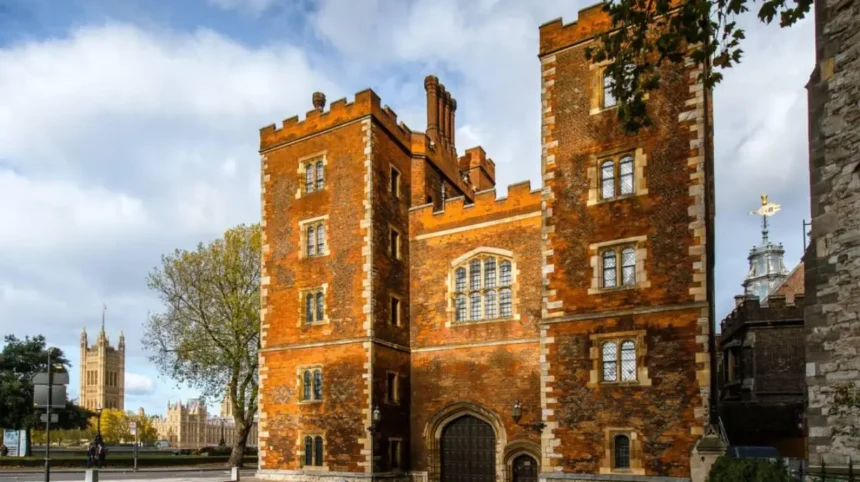
Lambeth Palace is an important historic landmark beside the River Thames and the Garden Museum. It serves as the official London residence of the Archbishop of Canterbury and preserves centuries of religious, architectural and political history within Lambeth.
Lambeth Palace stands on Lambeth Palace Road, a short walk from St Thomas’ Hospital. It has served as the London residence of the Archbishops of Canterbury for centuries.
The Archbishop of Canterbury is the senior bishop of the Church of England and an important figure in the Anglican Communion. Lambeth Palace provides an institutional base for religious leadership, official meetings and historical collections.
The palace complex contains buildings from different historical periods. Its architecture reflects centuries of construction, alteration and restoration. The historic gatehouse is particularly recognisable and provides an important example of the site’s architectural heritage.
The palace is also associated with the history of the Church of England. Its archives, library collections and historical records preserve documents relating to religious institutions, political developments and ecclesiastical administration.
Visitors should understand that Lambeth Palace is not an ordinary public museum with unrestricted daily access. Public visits depend on scheduled tours, events and access arrangements. Advance booking is important when guided tours are available.
The surrounding area provides additional opportunities for sightseeing. Visitors can explore the riverside, photograph the palace exterior from public spaces and visit the neighbouring Garden Museum.
Lambeth Palace also offers an important architectural contrast with the modern hospital buildings nearby. Its historic walls and religious buildings demonstrate the long development of Lambeth as an institutional centre.
What Makes the Garden Museum Worth Visiting?
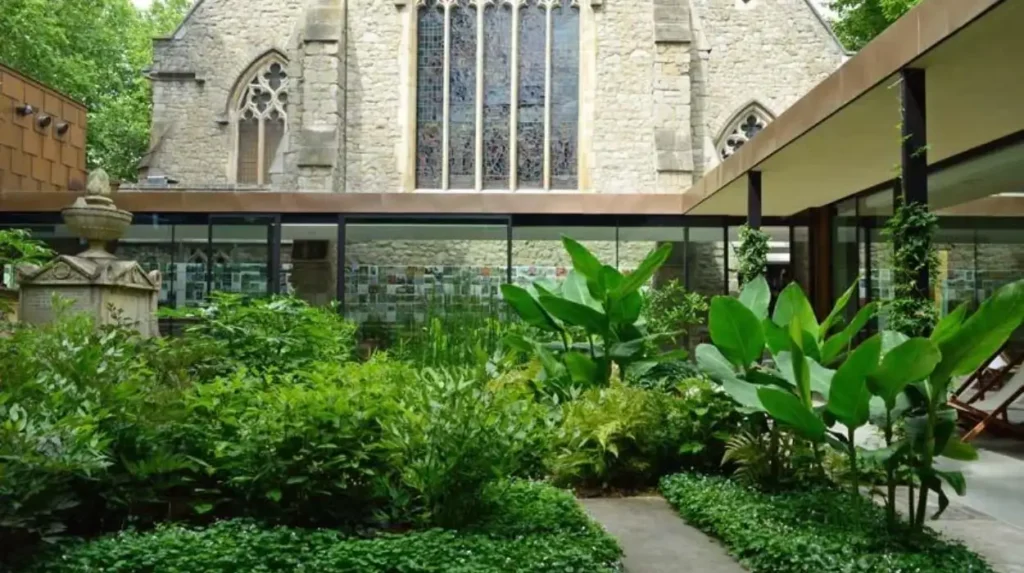
The Garden Museum celebrates Britain’s gardening history, landscape design and horticultural heritage. Located beside Lambeth Palace, it occupies the historic former church of St Mary-at-Lambeth and provides visitors with exhibitions, collections, architectural interest and a courtyard garden.
The Garden Museum is one of the most distinctive cultural attractions near St Thomas’ Hospital. It occupies the former St Mary-at-Lambeth Church, a historic religious building with medieval origins.
The museum was established in 1977 by Rosemary and John Nicholson. They worked to preserve the abandoned church, which faced demolition. The building subsequently became a dedicated institution exploring the history and design of gardens.
The church’s history adds architectural significance to the museum. Its tower dates to 1377, while the wider site has religious associations extending back to the eleventh century.
One of the museum’s most important historical connections is John Tradescant. Tradescant was a seventeenth-century gardener and plant collector whose work influenced British horticultural history. His tomb stands within the museum’s courtyard garden.
The museum’s collections examine the relationship between people, plants and designed landscapes. Exhibitions explore garden design, botanical art, horticultural objects and the development of gardening practices.
Visitors can also experience the courtyard garden, which provides an outdoor setting within the historic church complex. The garden complements the museum’s exhibitions by connecting historical gardening traditions with contemporary landscape design.
Practical information
The museum is located at Lambeth Palace Road, London SE1 7LB. It is within walking distance of Lambeth North, Vauxhall, Westminster and Waterloo stations.
Published visitor information lists opening from Tuesday to Sunday, with different weekday and weekend closing times. Admission charges apply, and visitors should check current prices and opening arrangements before travelling.
The Garden Museum is particularly suitable for visitors interested in architecture, history, gardening, design and quieter cultural attractions.
Which Parks and Gardens Are Best Near St Thomas’ Hospital?
Several public green spaces surround St Thomas’ Hospital, providing places for walking, relaxation and outdoor activities. Archbishop’s Park, St Mary’s Gardens and nearby Jubilee Gardens offer convenient alternatives to busy streets and major tourist attractions.
Lambeth’s parks form an important part of its public landscape. These green spaces provide recreational facilities, pedestrian routes and opportunities to experience the borough beyond its museums and historic buildings.
Archbishop’s Park
Archbishop’s Park is one of the closest green spaces to Lambeth Palace and St Thomas’ Hospital. Located off Carlisle Lane, it provides a convenient outdoor destination for visitors exploring the hospital district.
The park contains open grass areas, trees, recreational facilities and spaces for families. Its location also makes it useful for people walking between Lambeth Palace, Waterloo and the riverside.
Visitors can use the park for short walks, outdoor breaks and informal recreation. Its proximity to historic buildings makes it a practical addition to a heritage itinerary.
St Mary’s Gardens
St Mary’s Gardens is a smaller public green space beside Lambeth Palace and the Garden Museum.
The gardens were created in 1932–1933 after changes to the road layout around the former Lambeth Bridge approach. Lambeth Borough Council developed the area into a public garden with seating, planting and a water fountain.
The space forms part of a local Site of Importance for Nature Conservation. This designation recognises its contribution to urban biodiversity and access to nature.
Its compact layout makes it suitable for short breaks during sightseeing. Visitors can combine the gardens with the Garden Museum and a walk along Lambeth Palace Road.
Jubilee Gardens
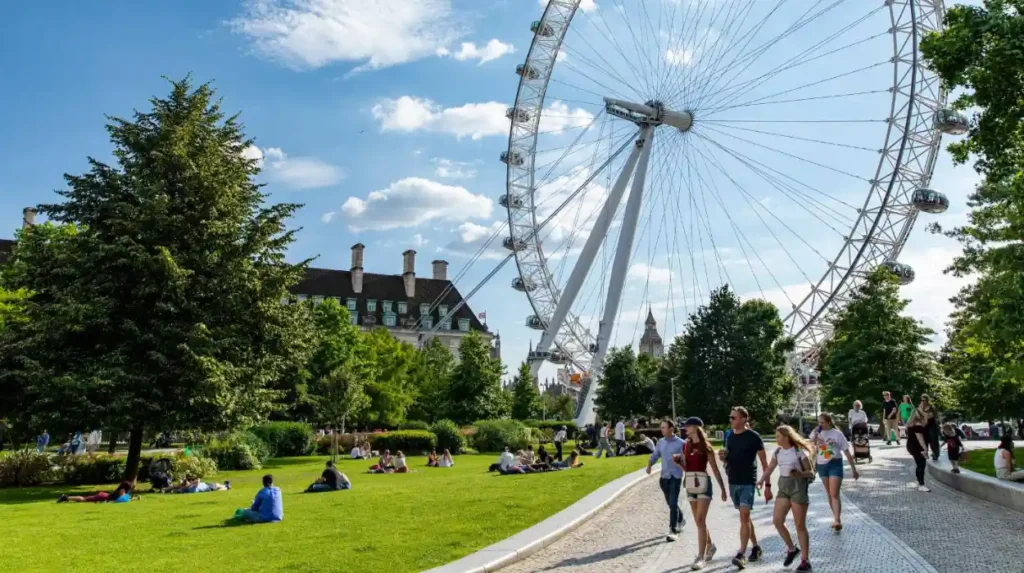
Jubilee Gardens sits near the London Eye and South Bank attractions. It provides landscaped lawns, seating and views of the surrounding riverside environment.
The gardens offer a convenient place to rest after exploring Westminster Bridge and the hospital district. Their location also makes them useful for families visiting the London Eye and nearby cultural attractions.
Together, these green spaces demonstrate how Lambeth combines historic institutional buildings with accessible public outdoor environments.
What Can Visitors See at the Imperial War Museum?
The Imperial War Museum London explores the history and human impact of modern conflicts. Located on Lambeth Road, it provides access to historical galleries, military objects, photographs and exhibitions covering the First World War through contemporary conflicts.
The Imperial War Museum London is one of the most important historical attractions within Lambeth. It stands on Lambeth Road, within Geraldine Mary Harmsworth Park, and is accessible from Lambeth North and Elephant & Castle Underground stations.
The museum was established in 1917 during the First World War. Its original purpose was to document Britain’s involvement in the conflict and preserve records of military and civilian experiences.
The London museum occupies a building with an earlier institutional history. The structure originally served as part of Bethlem Royal Hospital, historically associated with the name Bedlam. Bethlem was an important institution in the development of mental healthcare in Britain.
This connection makes the museum particularly relevant to visitors interested in Lambeth’s wider institutional and healthcare history. Its architecture represents an earlier period of public institutional development, while its collections explore the consequences of international conflict.
Important exhibitions and collections
The museum contains several major exhibition areas, including:
- First World War Galleries, documenting military and civilian experiences between 1914 and 1918.
- Holocaust Galleries, examining the persecution and murder of European Jews under Nazi Germany.
- Second World War displays, exploring the conflict’s impact on individuals and communities.
- Peace and Security exhibitions, examining international developments after 1945.
- Art, photography and film collections documenting the realities of warfare.
The museum uses personal accounts, historical documents, photographs and physical objects to explain the consequences of conflict.
Its permanent exhibitions provide educational value for families, students, researchers and international visitors. The galleries also connect military history with social change, politics and civilian life.
Visitor information
IWM London is located at Lambeth Road, London SE1 6HZ. General admission to its permanent collections is free, although special exhibitions and events can carry separate charges.
Visitors should allocate approximately two to three hours for the main galleries. The museum is a practical destination for people staying near Waterloo, Lambeth North or the South Bank.
Why Is Kennington Park an Interesting Place to Visit Near Lambeth’s Historic Hospitals?
Kennington Park is a Victorian public park with connections to London’s political and social history. Its gardens, mature trees, sports facilities and historical features make it an important outdoor destination for visitors exploring Lambeth and nearby Kennington.
Kennington Park is situated in the southern part of Lambeth, within travelling distance of the former Lambeth Hospital and other historic neighbourhood landmarks.
The park occupies land historically known as Kennington Common. Before its conversion into a public park, the common provided open land for local residents and hosted public gatherings.
One of its most significant historical events occurred in April 1848. More than 25,000 supporters of the Chartist movement gathered at Kennington Common to campaign for political reform.
Chartism was a nineteenth-century working-class movement that demanded democratic reforms, including broader voting rights and changes to parliamentary representation.
The gathering demonstrated the importance of public open spaces in London’s political and social development.
The common was subsequently converted into a public park in 1852. The development introduced formal landscaping, recreational facilities and improvements for local residents.
What can visitors explore?
The park contains several features of interest:
- The Old English Flower Garden, a restored formal garden.
- Prince Consort Lodge, associated with Victorian social housing design.
- Mature trees and landscaped pathways.
- Children’s play facilities and sports areas.
- Kennington Park Extension, providing additional recreational space.
The Prince Consort Lodge has a particular connection with nineteenth-century housing reform. Its original design reflected Prince Albert’s interest in improving accommodation standards for working people.
Kennington Park also provides a connection to contemporary community life. Local residents use its outdoor facilities for exercise, recreation and informal gatherings.
The park is normally open from 7.30 am until 15 minutes before sunset. Visitors should check Lambeth Council’s information for any temporary restrictions.
What Is Worth Exploring Around the Oval and St Mark’s Churchyard?
The Oval and St Mark’s Churchyard provide visitors with a combination of sporting heritage, historic religious architecture and public green space. These attractions are particularly suitable for people exploring Kennington and the southern parts of Lambeth.
The The Kia Oval is one of London’s best-known cricket venues. It is home to Surrey County Cricket Club and has an important place in English sporting history.
The ground opened in 1845 and has hosted major cricket fixtures, including international Test matches. Its history connects Lambeth with the development of organised cricket and the growth of spectator sport in Britain.
Visitors can experience the ground through scheduled matches, stadium tours and other organised events. Access to particular areas depends on the venue’s programme and ticket arrangements.
The Oval is also close to several historical neighbourhood landmarks, making it suitable for a wider Kennington walking route.
St Mark’s Churchyard
St Mark’s Churchyard is a public green space near the Oval and Kennington Park.
St Mark’s Church was originally designed as one of Lambeth’s Waterloo churches. It was consecrated in 1824 and formed part of a wider programme of church construction during the nineteenth century.
The churchyard also has an earlier connection with the area’s history. The surrounding common was once known as Gallows Common or Gallows Green because executions took place there before the beginning of the nineteenth century.
The grounds were transferred to Lambeth Council in the 1950s and subsequently arranged as a public open space.
Today, the churchyard offers a quieter place for visitors exploring Kennington. Its proximity to the Oval and Kennington Park makes it easy to incorporate into a local heritage walk.
The Oval Farmers’ Market also takes place in the churchyard area on many Saturdays throughout the year. Visitors should check current market arrangements before making a special journey.
Which South Bank Attractions Are Easily Accessible from St Thomas’ Hospital?
The South Bank provides some of the most recognisable attractions near St Thomas’ Hospital. The London Eye, Southbank Centre, County Hall and riverside walkways allow visitors to combine medical heritage with entertainment, architecture and panoramic views.
St Thomas’ Hospital occupies a central position on the South Bank, opposite the Palace of Westminster. This location provides convenient access to major cultural and leisure attractions.
The London Eye
London Eye is a large observation wheel on the South Bank. It opened in 2000 and became one of London’s most recognisable modern landmarks.
Visitors experience elevated views across central London from enclosed passenger capsules. The attraction provides views of Westminster, the River Thames, St Paul’s Cathedral and surrounding city landmarks.
The London Eye is particularly convenient for visitors combining sightseeing with a visit to the Florence Nightingale Museum.
County Hall
County Hall is a historic riverside building that opened in 1922.
It formerly served as the headquarters of the London County Council and subsequently the Greater London Council. Its institutional history reflects the development of local government in the capital.
Today, the building accommodates commercial, hospitality and visitor attractions. Its location beside the London Eye makes it a convenient architectural stop.
Southbank Centre
Southbank Centre is one of the United Kingdom’s major arts and cultural organisations.
Its complex includes the Royal Festival Hall, Queen Elizabeth Hall and Hayward Gallery. These venues host concerts, exhibitions, performances and cultural events.
The Royal Festival Hall opened in 1951 as part of the Festival of Britain. The wider cultural complex reflects post-war architectural development and London’s changing cultural identity.
Visitors can explore public areas, attend performances and experience seasonal cultural programmes. Event tickets and gallery admission arrangements vary.
The Thames riverside
The riverside walkways provide an additional attraction for visitors interested in photography and urban sightseeing. Walking along the Thames allows visitors to observe Westminster Bridge, Lambeth Bridge, County Hall and the surrounding historic buildings.
The route is particularly useful for travellers who prefer outdoor sightseeing rather than spending the entire day inside museums.
What Historical Churches and Religious Landmarks Can Visitors Explore in Lambeth?
Lambeth contains historic churches and religious buildings that reflect centuries of architectural and community development. St Mary-at-Lambeth, St Mark’s Church and nearby St George’s Cathedral provide opportunities to explore religious heritage alongside the borough’s medical history.
Religious institutions played an important role in the development of Lambeth. Churches provided places of worship, community support and charitable activity, while religious organisations also contributed to early forms of healthcare provision.
St Mary-at-Lambeth
The former St Mary-at-Lambeth Church is now home to the Garden Museum. Its medieval tower and historic church fabric preserve an important part of the area’s religious heritage.
The building’s connection with John Tradescant adds further historical significance. Tradescant was an influential gardener and plant collector whose tomb remains within the museum’s courtyard.
Visitors exploring the museum therefore encounter both architectural history and the development of British gardening traditions.
St Mark’s Church
St Mark’s Church in Kennington was consecrated in 1824. Its construction formed part of the nineteenth-century development of Anglican church provision in Lambeth.
The surrounding churchyard provides public access to a historic setting close to the Oval and Kennington Park.
St George’s Cathedral stands on Lambeth Road, opposite the Imperial War Museum.
The cathedral is the principal Roman Catholic cathedral of the Archdiocese of Southwark. It was designed by architect Augustus Pugin and opened in 1848.
The building represents an important example of nineteenth-century Gothic Revival architecture. Its interior contains religious artwork, memorials and features associated with Catholic history in South London.
Visitors can explore the cathedral when it is open to the public, subject to worship services and other arrangements.
Its location makes it particularly convenient for people visiting the Imperial War Museum. Both attractions can form part of the same Lambeth Road walking itinerary.
How Can Visitors Explore Lambeth’s Historic Hospitals and Nearby Attractions on Foot?
Walking is one of the most practical ways to explore the attractions around St Thomas’ Hospital. Visitors can connect museums, historic buildings, gardens and riverside landmarks through short routes, with public transport providing access to destinations further south.
Lambeth’s central location makes it suitable for independent walking tours. The St Thomas’ Hospital district connects directly with Westminster Bridge, Lambeth Palace and the South Bank.
Visitors can organise their sightseeing around two main geographical areas.
Route one: St Thomas’ Hospital and the riverside
Start at St Thomas’ Hospital and visit the Florence Nightingale Museum. Continue along Lambeth Palace Road towards Lambeth Palace and the Garden Museum.
After exploring the museum, visit St Mary’s Gardens and Archbishop’s Park. Continue towards Lambeth Bridge for views of the River Thames and the Palace of Westminster.
The route includes:
- St Thomas’ Hospital.
- Florence Nightingale Museum.
- Lambeth Palace.
- Garden Museum.
- St Mary’s Gardens.
- Archbishop’s Park.
- Lambeth Bridge.
This route combines medical history, religious heritage, gardening history and riverside sightseeing.
Route two: Lambeth Road and Kennington
Start at Lambeth North Underground station and walk towards the Imperial War Museum. Explore the museum before visiting St George’s Cathedral.
Continue towards Kennington Park and explore its Victorian gardens and historical features. Visitors interested in sporting history can finish the route at the Oval.
This route includes:
- Imperial War Museum.
- St George’s Cathedral.
- Kennington Park.
- St Mark’s Churchyard.
- The Kia Oval.
These two routes provide different experiences of Lambeth. The first focuses on medical and riverside heritage, while the second explores political history, architecture, sport and public parks.
What Transport Options Help Visitors Reach Lambeth’s Historic Attractions?
Lambeth is connected to central London through Underground stations, railway services, buses, river transport and pedestrian routes. Waterloo, Lambeth North, Westminster and Vauxhall provide convenient access to its principal hospitals, museums and historic attractions.
Public transport makes Lambeth accessible to domestic and international visitors.
Underground connections
Several Underground stations serve the area:
- Lambeth North: Bakerloo line, providing access to the Imperial War Museum and St Thomas’ Hospital area.
- Waterloo: Bakerloo, Jubilee, Northern and Waterloo & City lines.
- Westminster: Circle, District and Jubilee lines, across the river from St Thomas’ Hospital.
- Vauxhall: Victoria line, providing access to the Garden Museum and Lambeth riverside.
Rail connections
Waterloo is a major railway station serving destinations across London and southern England. Its proximity to St Thomas’ Hospital makes it a useful arrival point for visitors travelling from outside the capital.
Vauxhall also provides National Rail connections.
Bus services
London’s bus network connects Lambeth with surrounding boroughs, including Westminster, Southwark, Wandsworth and central London.
Routes serving Westminster Bridge Road, Lambeth Palace Road and Lambeth Road provide access to the main attractions.
River transport
The River Thames provides another way to explore central London. London Eye Pier and Westminster Pier serve river transport connections, allowing visitors to combine sightseeing with journeys along the river.
Accessibility considerations
Visitors with mobility requirements should check individual attraction accessibility information before travelling. Step-free access, lift availability, accessible toilets and historic-building restrictions differ between venues.
The Garden Museum and Florence Nightingale Museum provide visitor information to help people plan accessible visits.
When Is the Best Time to Visit Lambeth’s Historic Hospitals and Nearby Attractions?
Spring and summer provide longer daylight hours for exploring Lambeth’s parks, gardens and riverside attractions. Autumn offers quieter outdoor sightseeing, while winter visits suit indoor museums, historic buildings and cultural venues with scheduled opening hours.
Lambeth offers year-round sightseeing opportunities because its attractions combine indoor and outdoor experiences.
Spring
Spring is suitable for visiting the Garden Museum, Archbishop’s Park and Kennington Park. Gardens and landscaped spaces become increasingly attractive as seasonal planting develops.
Summer
Summer provides longer daylight hours for riverside walks and outdoor sightseeing. The South Bank becomes particularly active, with cultural events, performances and outdoor activities.
It is also a convenient season for combining the Florence Nightingale Museum with the London Eye and Jubilee Gardens.
Autumn
Autumn offers opportunities for photography and exploring historic architecture. Kennington Park’s mature trees and the landscaped areas surrounding Lambeth Palace provide seasonal interest.
Winter
Winter sightseeing is better suited to indoor attractions, including the Imperial War Museum, Florence Nightingale Museum and Garden Museum.
Visitors should check seasonal opening arrangements and special holiday closures before travelling.
The best time also depends on the purpose of the visit. Museum visitors benefit from checking exhibition schedules, while photographers often prefer early mornings and quieter weekdays.
How Does Lambeth’s Medical Heritage Influence Its Modern Visitor Experience?
Lambeth’s medical heritage gives the borough a distinctive cultural identity that connects historical healthcare with contemporary education, architecture and public life. Its hospitals, museums and surrounding landmarks demonstrate how medical institutions influenced London’s social and urban development.
St Thomas’ Hospital remains an active healthcare institution, while the Florence Nightingale Museum preserves important material connected with nursing history.
This relationship provides visitors with an opportunity to understand healthcare as part of London’s wider historical development.
The hospital’s association with Florence Nightingale also creates an educational connection between historical nursing reforms and contemporary professional healthcare.
The Imperial War Museum adds another institutional dimension through its building’s former association with Bethlem Royal Hospital. This provides an opportunity to examine changing attitudes towards mental healthcare and the treatment of patients.
Lambeth’s historic religious institutions also demonstrate the relationship between charitable activity, healthcare and community development.
The surrounding parks and public spaces contribute to the modern visitor experience by providing accessible outdoor destinations between museums and historical landmarks.
These attractions also support local tourism and cultural activity. Visitors spend time in cafés, restaurants, independent businesses and cultural venues around Waterloo, Kennington and the South Bank.
For digital nomads and business travellers, the wider area offers cafés, transport connections and public spaces that support short breaks between professional commitments. Visitors seeking a suitable working environment should check individual businesses’ facilities, Wi-Fi availability and opening arrangements.
Lambeth’s combination of heritage and contemporary urban activity ensures that its historic hospital district remains relevant to different generations of visitors.
Explore More Area Guide
Did a Ghost Train Entomb Victorian Corpses at Crystal Palace Park 2026
Greenwich Completes UK’s Largest Council Home Scheme in Kidbrooke 2026
Which Places Should Visitors Prioritise When Exploring Lambeth’s Historic Hospital District?
Visitors with limited time should prioritise the Florence Nightingale Museum, Lambeth Palace, Garden Museum and nearby riverside attractions. Those with additional time can explore the Imperial War Museum, Kennington Park, St George’s Cathedral and the Oval.
The best attractions depend on visitors’ interests and available time.
A half-day visit is sufficient for exploring the St Thomas’ Hospital area, Florence Nightingale Museum, Lambeth Palace surroundings and Garden Museum.
A full-day itinerary allows visitors to include the Imperial War Museum, St George’s Cathedral and Kennington Park.
Visitors interested in photography and architecture can extend their journey along the River Thames and across Lambeth Bridge.
The most effective approach is to group attractions geographically rather than travelling repeatedly between different parts of the borough.
Lambeth’s historic hospitals provide an excellent starting point for discovering South London’s cultural and architectural heritage. Their surrounding museums, churches, gardens and riverside landmarks demonstrate the area’s importance beyond healthcare.
What Should Visitors Know Before Planning a Lambeth Heritage Visit?
Planning ahead helps visitors make the most of Lambeth’s historic attractions. Checking museum opening times, ticket requirements, transport connections and accessibility arrangements ensures a more organised sightseeing experience around St Thomas’ Hospital and Kennington.
A few practical considerations improve the experience:
- Check admission: The Florence Nightingale Museum and Garden Museum charge admission. The Imperial War Museum’s permanent collections are free.
- Book guided tours: Lambeth Palace visits depend on scheduled public tours and availability.
- Allow sufficient time: Allocate around one hour for smaller museums and two to three hours for larger museum visits.
- Wear comfortable footwear: Walking between Lambeth’s attractions involves pavements, bridges and historic streets.
- Check accessibility: Historic buildings sometimes have architectural restrictions that affect access.
- Respect hospital facilities: St Thomas’ Hospital and other healthcare facilities remain operational. Visitors should respect patient privacy and avoid restricted clinical areas.
- Check event schedules: The Oval, Southbank Centre and local museums organise events that affect visitor availability.
Lambeth’s attractions are distributed across several neighbourhoods. Planning a route around Waterloo, the South Bank, Lambeth Palace Road and Kennington reduces unnecessary travel.
What are the best places to visit near St Thomas’ Hospital in Lambeth?
The best places include the Florence Nightingale Museum, Lambeth Palace, Garden Museum, Archbishop’s Park, Jubilee Gardens and the London Eye. These attractions offer historical, cultural and outdoor experiences within easy reach of St Thomas’ Hospital.