Lambeth is one of London’s strongest destinations for live theatre and performing arts. The borough’s cultural landscape stretches from the South Bank and Waterloo to Brixton and Clapham. It combines major national institutions, historic theatres, Shakespearean performance, independent venues and community-focused contemporary arts.
- What makes Lambeth a strong destination for theatre visitors?
- Which National Theatre experience is best for visitors?
- What is special about the Olivier Theatre?
- What is the Lyttelton Theatre?
- What is the Dorfman Theatre?
- Why should visitors choose the Old Vic Theatre?
- How does the Young Vic differ from larger Lambeth theatres?
- Why is Shakespeare’s Globe an important theatre experience near Lambeth?
- What can visitors experience at the Southbank Centre?
- What makes Brixton House different from Lambeth’s major theatres?
- Why visit Omnibus Theatre in Clapham?
- Which Lambeth theatre is best for different types of visitors?
- How should visitors plan a theatre day in Lambeth?
- What should visitors check before booking a Lambeth theatre performance?
- How important is theatre to Lambeth’s wider visitor economy?
- What is the best overall theatre experience for first-time visitors to Lambeth?
For visitors, this concentration creates several distinct theatre experiences within a relatively compact area. The National Theatre provides large-scale productions across three theatres. The Old Vic presents drama and musical theatre from its historic home on The Cut. The Young Vic focuses on innovative directing, new writing and international collaboration. Brixton House presents contemporary work rooted in South London communities, while Omnibus Theatre in Clapham specialises in new writing, reimagined classics and independent performance.
Lambeth’s theatre offer also connects closely with the South Bank cultural district. The National Theatre and Southbank Centre sit beside the River Thames, making it possible to combine a performance with riverside walks, galleries, restaurants and other attractions.
What makes Lambeth a strong destination for theatre visitors?
Lambeth combines major national theatres, historic performance spaces and independent venues within accessible South London districts. Visitors can experience classical drama, new writing, experimental theatre, musical productions and multidisciplinary performances in one borough.
The strongest theatre cluster is around Waterloo and the South Bank. Lambeth Council’s cultural infrastructure records identify the National Theatre, Old Vic and other theatre facilities within the borough, illustrating the concentration of performance spaces around this part of London.
The South Bank also has a long relationship with British theatre. The National Theatre Company was formed in 1963, and the National Theatre building opened on the South Bank in 1976. Its archive documents the long campaign to establish a national theatre in London.
The area is particularly convenient for visitors because several major venues sit within walking distance of Waterloo station. This makes a theatre visit practical during a short London stay, including an evening between sightseeing activities.
Brixton and Clapham provide a different experience. Their theatres operate on a smaller scale and focus strongly on emerging artists, community participation and contemporary subjects. This gives visitors access to performances beyond the large institutional theatre circuit.
Which National Theatre experience is best for visitors?
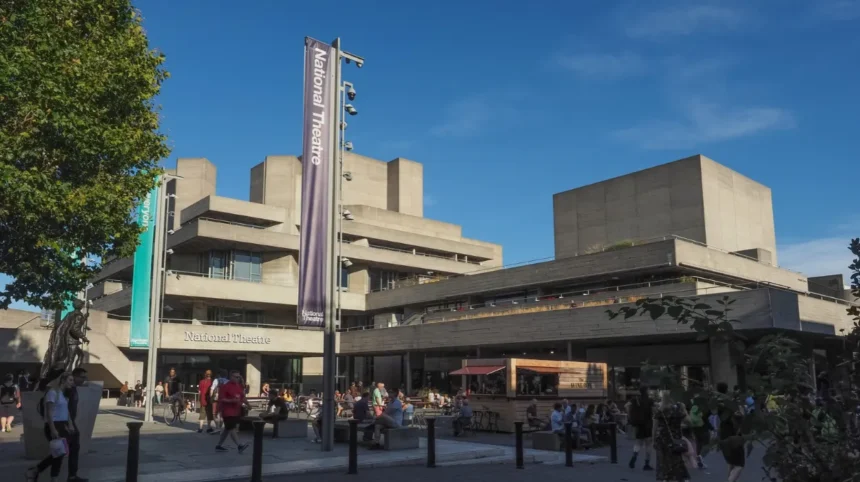
The National Theatre is the leading choice for visitors seeking large-scale British theatre, with three performance spaces called the Olivier, Lyttelton and Dorfman. Its South Bank location also places visitors close to the Thames and major cultural attractions.
The National Theatre is one of Lambeth’s most important performing-arts institutions. Its South Bank building contains three theatres: the Olivier, Lyttelton and Dorfman. The venue’s official access information confirms the three-theatre structure and its Upper Ground location.
What is special about the Olivier Theatre?
The Olivier is the National Theatre’s largest performance space. Its auditorium uses a distinctive fan-shaped arrangement around a central stage. The design creates strong sightlines and supports productions that require substantial scenery, movement and technical production.
Visitors choosing an Olivier performance generally encounter major productions with large casts, ambitious stage designs or substantial classical and contemporary repertoire.
The theatre has also been reconfigured for particular productions. The National Theatre’s archival and annual-report material records examples of productions using different auditorium arrangements, demonstrating the flexibility of the space.
What is the Lyttelton Theatre?
The Lyttelton is a more conventional proscenium theatre within the National Theatre complex. It supports drama, adaptations, new writing and major revivals.
Its programme has included productions that later became significant within British theatre. The National Theatre archive, for example, records The History Boys in the Lyttelton, where it ran for 222 performances after opening in 2004.
What is the Dorfman Theatre?
The Dorfman is the smallest of the National Theatre’s three principal theatres. Its scale supports contemporary work, experimental productions and new writing.
For visitors interested in discovering theatre before it reaches larger stages, the Dorfman offers an important perspective on the National Theatre’s artistic development process.
The National Theatre also produces work that transfers elsewhere. Its annual reporting records productions touring nationally and internationally, demonstrating the institution’s wider influence beyond its South Bank home.
Why should visitors choose the Old Vic Theatre?
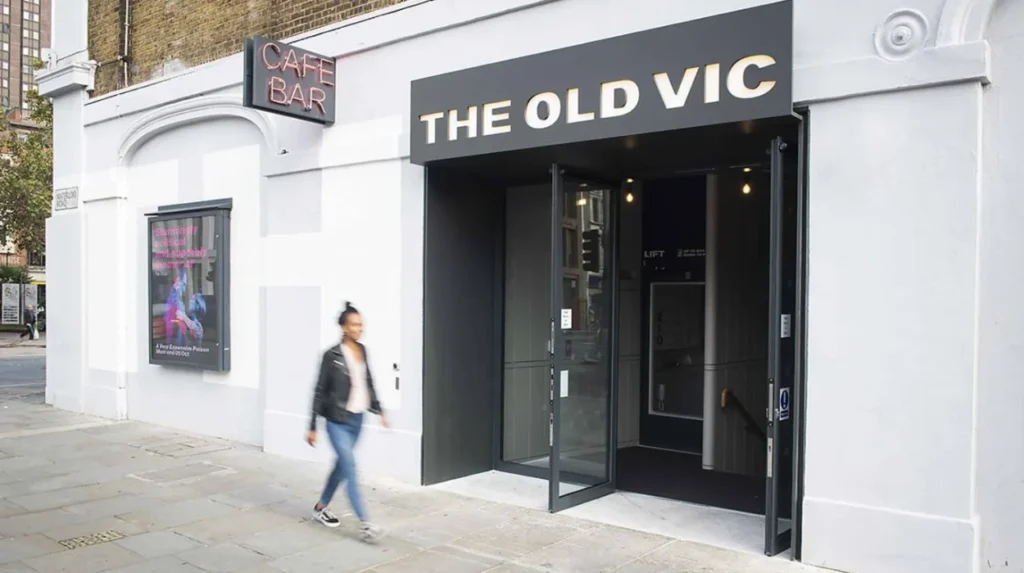
The Old Vic is ideal for visitors seeking historic theatre combined with contemporary productions. Located on The Cut, the theatre presents plays and musicals in an intimate historic setting and sits close to Waterloo, Southwark and other South Bank cultural attractions.
The Old Vic occupies a particularly important position in Lambeth’s theatre history. Its address is The Cut, London SE1 8NB, placing it within the Waterloo cultural district.
The theatre is particularly useful for visitors who want a traditional evening performance rather than a large cultural complex. Its programming includes drama and musical productions, while its historic setting gives the visit an additional architectural and heritage dimension.
The Old Vic also provides accessibility arrangements, including dedicated access membership and performances with British Sign Language interpretation, captioning, audio description and relaxed formats.
Transport is straightforward. The theatre states that Southwark station is about two minutes away on foot, while Blackfriars is approximately 15 minutes away. Waterloo is also close to The Cut.
The theatre operates Backstage Café & Bar, which provides a practical option for food and drinks around a performance. The venue also maintains a free script library, creating an additional cultural resource for visitors interested in theatre beyond the performance itself.
For Lambeth residents, the Old Vic also operates OV Local, a free membership scheme offering discounts to eligible residents of Lambeth and Southwark.
How does the Young Vic differ from larger Lambeth theatres?
The Young Vic offers an intimate and experimental theatre experience focused on directors, new work and international collaboration. Its flexible spaces and central Waterloo location make it particularly suitable for visitors seeking contemporary productions outside traditional large-scale theatre formats.
The Young Vic was founded in 1970 as a “paperback theatre”, with the original aim of making high-quality theatre affordable and accessible. It developed from the National Theatre’s earlier activities and became an important home for directors and emerging theatrical talent.
Its current building stands on The Cut, close to Waterloo. The theatre describes itself as a directors’ theatre and states that it works with leading artists from around the world.
The venue’s history is also physically embedded in its architecture. The original theatre was constructed on the site of a wartime bomb-damaged building. Later redevelopment retained important elements of the original auditorium and foyer while adding studios and improved support spaces.
For visitors, the result is a different scale of theatre experience from the National Theatre. The Young Vic encourages audiences to encounter new theatrical forms, modern interpretations and international work.
The venue is approximately five minutes from Waterloo, Waterloo East and Southwark stations. It is also within walking distance of the River Thames and other major South Bank attractions.
As you explore the modern South Bank theatre district, you are crossing land with a deep cultural heritage. Read about the full [Insert Anchor Text for History Article Here] to understand its origins.
Why is Shakespeare’s Globe an important theatre experience near Lambeth?
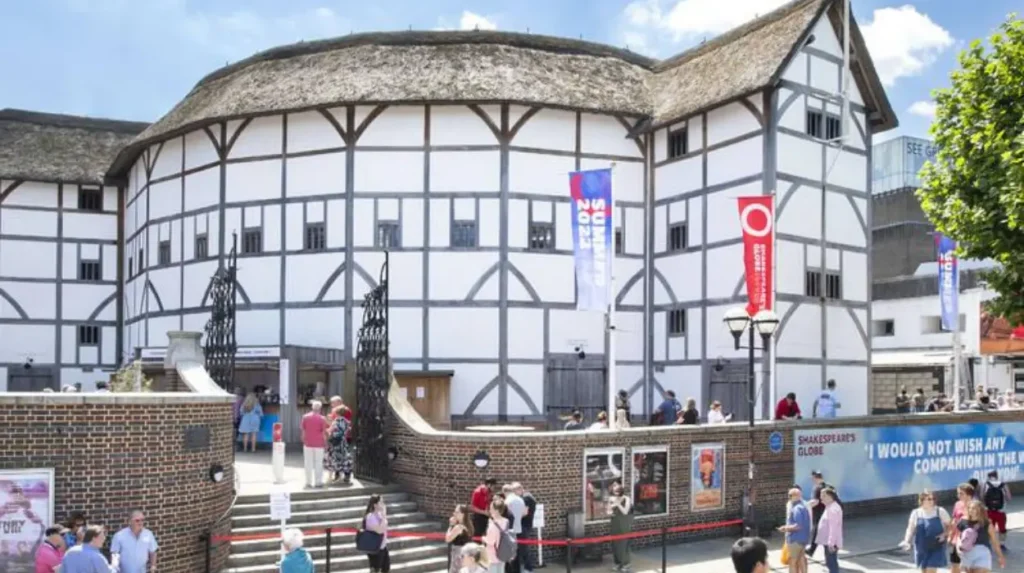
Shakespeare’s Globe provides the strongest historical theatre experience in the wider South Bank cultural district, with an open-air reconstruction of Shakespeare’s Globe and the indoor Sam Wanamaker Playhouse. It combines live performance, theatre history, exhibitions, tours and education.
Shakespeare’s Globe stands on Bankside beside the River Thames. The organisation operates two principal performance spaces: the Globe Theatre and the Sam Wanamaker Playhouse. It also provides an exhibition, guided tours, education programmes and other cultural activities.
The current Globe Theatre opened in 1997. It has a capacity of 1,570 people, with standing space in the central yard and seated capacity in surrounding galleries. It is an open-air wooden theatre designed around the performance conditions associated with Shakespeare’s period.
What makes the Globe Theatre different?
The Globe is roofless over its central yard. Performances therefore take place in an outdoor environment, and visitors need to dress according to the weather.
The auditorium uses a 360-degree arrangement. Audiences surround the stage, creating a relationship between performers and spectators that differs from a conventional modern proscenium theatre.
The present building represents the third Globe. The original theatre opened in 1599. It burned down during a performance of Henry VIII in 1613 after burning material from a stage cannon ignited the thatched roof. A second Globe was subsequently constructed before the theatre closed in 1642.
What is the Sam Wanamaker Playhouse?
The Sam Wanamaker Playhouse is an indoor theatre at Shakespeare’s Globe. It opened in 2014 and provides a smaller, intimate performance environment.
Its indoor format reflects the separate tradition of private indoor playhouses in early modern London. Shakespeare’s Globe explains that London theatres of the period included outdoor amphitheatres and indoor playhouses, which differed in architecture and audience experience.
The venue hosts plays, concerts, readings, workshops and other events throughout the year.
Visitors can therefore combine a performance with a guided tour or exhibition. The Globe exhibition explores around 400 years of theatre history and includes interactive displays, costumes, props and reconstructed performance experiences.
What can visitors experience at the Southbank Centre?
The Southbank Centre provides a broad performing-arts experience rather than a conventional theatre-only visit. Its venues present performance, dance, classical music, talks, literature and cultural events, making it useful for visitors seeking variety on the South Bank.
The Southbank Centre is one of London’s major cultural complexes. Its venues include the Royal Festival Hall, Queen Elizabeth Hall and Purcell Room, alongside other cultural spaces.
The Royal Festival Hall is particularly important. It opened as part of the 1951 Festival of Britain and has a 2,700-capacity auditorium. The building is Grade I listed and has operated with an open-foyer policy since 1983.
Visitors looking specifically for theatre should check the current programme rather than assuming every event is a stage play. The Southbank Centre’s performing-arts programme includes dance, performance, talks and other live events.
The Queen Elizabeth Hall has a 916-seat auditorium and hosts talks, gigs, dance, performance and classical music. The Purcell Room is a smaller venue for literature, poetry, performance, classical music, jazz and electronic music.
This makes the Southbank Centre suitable for visitors travelling with different cultural interests. One person can attend a performance while another explores an exhibition, public space or riverside area.
What makes Brixton House different from Lambeth’s major theatres?
Brixton House offers contemporary theatre rooted in South London communities, new artistic voices and multidisciplinary performance. Its two theatres, studios, café and community programmes create a more localised cultural experience than Lambeth’s large institutional venues.
Brixton House opened in 2022 in the heart of Brixton. It developed from the former Ovalhouse Theatre and operates as a contemporary cultural venue focused on creativity, community and expression.
The venue contains two theatres. The main theatre seats up to 200 people, while the smaller theatre accommodates up to 120. Both are flexible black-box spaces designed for different seating and staging configurations.
This structure allows Brixton House to present theatre, performance, music, poetry, workshops and community activity.
Its programming also reflects South London’s cultural diversity. Recent seasons have focused on Black, Latinx, LGBTQ+ and Global Majority voices, alongside themes connected with Windrush history, migration, women’s experiences and local community identity.
The venue’s 2025–26 impact report recorded more than 18,000 audience members, 17 productions and more than 800 participants in free family activities during school holidays.
For visitors, Brixton House is therefore particularly relevant when the aim is to discover contemporary South London storytelling rather than only established classical repertoire.
The venue is approximately 10 minutes’ walk from central Brixton and is located at 385 Coldharbour Lane.
Why visit Omnibus Theatre in Clapham?
Omnibus Theatre provides an independent theatre experience in a historic former library building beside Clapham Common. Its programme focuses on reimagined classics, modern revivals, new writing, LGBTQ+ work, comedy and emerging artists.
Omnibus Theatre occupies the former Clapham Library building at 1 Clapham Common Northside. The library opened in 1889, and the building became Omnibus Theatre in 2013 following a seven-year community campaign to preserve the site as a civic space.
The theatre has a main performance space with capacity for up to 110 people and an upstairs studio with capacity for up to 75. Its smaller scale creates a close relationship between performers and audiences.
Omnibus programmes reimagined classics, modern revivals and new writing. It also provides a platform for LGBTQ+ work and underrepresented voices.
Its programme extends beyond conventional drama. Current and recurring activity includes storytelling, improvisation, music, new-work development and multidisciplinary festivals.
The venue is around five minutes’ walk from Clapham Common Underground station on the Northern line. It is also accessible from Clapham High Street and Wandsworth Road stations.
For visitors staying in Clapham, Brixton or other parts of South London, Omnibus provides an easy way to experience independent theatre without travelling into the West End.
Which Lambeth theatre is best for different types of visitors?
The best Lambeth theatre depends on the visitor’s preferred experience. National Theatre suits major productions, Old Vic suits historic theatre, Young Vic suits experimental work, Brixton House suits contemporary community-focused theatre, and Omnibus suits intimate independent performance.
Visitors seeking major productions should prioritise the National Theatre. Its three theatres provide different scales and styles within one institution.
Visitors interested in theatre heritage should consider the Old Vic and Shakespeare’s Globe. The Old Vic provides a historic London theatre setting, while Shakespeare’s Globe directly explores early modern performance traditions.
Visitors interested in contemporary theatre should consider the Young Vic and Brixton House. Both venues have strong connections with new artists and modern theatrical forms.
Visitors looking for independent theatre should consider Omnibus Theatre. Its small-scale spaces and programming create a different experience from the major South Bank institutions.
The choice also depends on location. Waterloo and the South Bank are particularly convenient for visitors combining theatre with central London sightseeing. Brixton works well for visitors exploring South London markets, music, food and local culture. Clapham is suitable for visitors combining theatre with Clapham Common and the surrounding neighbourhood.
How should visitors plan a theatre day in Lambeth?
A theatre day in Lambeth works best when visitors combine a performance with nearby cultural attractions, food and riverside areas. South Bank venues suit compact sightseeing itineraries, while Brixton and Clapham provide neighbourhood-focused experiences before or after performances.
The South Bank is the easiest area for a concentrated cultural itinerary. Visitors can begin beside the Thames, explore the riverside, visit a cultural venue and attend an evening performance without extensive travel between activities.
The National Theatre and Southbank Centre are particularly close to the river. Waterloo provides a major transport connection, while several bus routes serve the surrounding South Bank area. The Southbank Centre states that more than 20 London bus routes pass within 500 metres of its venues.
The Old Vic and Young Vic are also close to Waterloo and Southwark. This makes it practical to schedule dinner, a short walk and a theatre performance within the same district.
Brixton requires a different itinerary. Visitors can combine Brixton House with local food, markets, music venues and neighbourhood exploration. The theatre itself has a café and bar, making it possible to remain close to the venue before or after a performance.
Clapham offers another neighbourhood format. Omnibus Theatre is directly beside Clapham Common, so visitors can combine an afternoon walk with an evening performance.
What should visitors check before booking a Lambeth theatre performance?
Visitors should check the production date, running time, age guidance, seating arrangement, accessibility information, venue location and ticket conditions before booking. Outdoor performances also require weather planning, particularly at Shakespeare’s Globe Theatre.
Theatre formats differ substantially across Lambeth. A large National Theatre production has different seating and entry arrangements from a small independent performance at Omnibus or Brixton House.
Visitors should check whether seating is allocated or unallocated. Omnibus, for example, states that its seating is unreserved.
Accessibility information is also important. The Old Vic provides dedicated access services and different accessible performance formats. Omnibus states that its performance spaces and facilities are fully accessible and provides wheelchair arrangements. Brixton House was designed with accessibility in mind, including step-free access and accessible technical facilities.
At Shakespeare’s Globe, visitors need to account for the open-air format. The Globe advises audiences to dress for the weather because performances continue in different weather conditions.
Production guidance is equally important. Individual shows have their own age recommendations, content warnings and running times. Checking the official production page before purchasing tickets provides the most accurate information.
Explore More Area Guide
Lambeth Literary Connections: Writers, Shakespeare and Literary History
Best Riverside Walks Connecting Lambeth Attractions
How important is theatre to Lambeth’s wider visitor economy?
Theatre strengthens Lambeth’s visitor economy by connecting cultural attractions with restaurants, transport, accommodation, riverside activity and neighbourhood destinations. Major institutions attract international visitors, while independent venues extend cultural tourism into Brixton, Clapham and other districts.
The concentration of cultural venues creates a strong reason to visit Lambeth beyond individual attractions. The South Bank combines theatre, music, visual arts, riverside spaces and hospitality within one visitor district.
Theatre also distributes cultural activity across the borough. Brixton House and Omnibus demonstrate how independent venues contribute to local cultural ecosystems rather than concentrating performance exclusively around the South Bank.
Brixton House reported more than 18,000 audience members in its 2025–26 impact reporting and recorded substantial participation in community activities.
Shakespeare’s Globe provides evidence of the international reach of theatre tourism. The organisation reports more than 1.25 million visitors a year and offers performances, tours, workshops and lectures.
Theatre therefore functions as both a cultural attraction and a reason to spend additional time in the surrounding area.
For tourists, this creates an itinerary that extends beyond the performance itself. For domestic business travellers, an evening production offers a structured cultural activity after daytime commitments. For digital nomads and residents, venues with cafés, bars, public areas and community programming create additional reasons to spend time within Lambeth’s cultural districts.
What is the best overall theatre experience for first-time visitors to Lambeth?
For a first visit, the National Theatre is the strongest all-round choice for major drama, while Shakespeare’s Globe is the strongest heritage experience. The Old Vic, Young Vic, Brixton House and Omnibus provide more specialised alternatives across Lambeth.
The National Theatre provides the broadest introduction to contemporary British institutional theatre. Its three performance spaces give visitors access to different production scales and theatrical styles.
Shakespeare’s Globe provides the clearest connection between live theatre and London’s performance history. Its open-air architecture, reconstructed performance conditions, exhibition and guided tours create a complete theatre-heritage experience.
The Old Vic provides historic theatre in a central Waterloo setting. The Young Vic offers contemporary and experimental work in an intimate environment. Brixton House provides modern performance rooted in South London communities. Omnibus Theatre provides independent productions within a preserved historic building.
Together, these venues demonstrate why Lambeth is an important theatre destination. The borough covers large-scale national theatre, historic performance, experimental directing, community-focused arts and independent production.
For visitors planning a London cultural itinerary, the most effective approach is to choose the venue according to the type of theatre experience required rather than treating every theatre as interchangeable. Lambeth’s strength lies in the range of performance formats available within its different neighbourhoods.
The result is a theatre destination that works for a single evening, a weekend itinerary or a longer exploration of London’s performing-arts culture.
What are the best theatres to visit in Lambeth?
The best theatres include the National Theatre, Old Vic, Young Vic, Brixton House and Omnibus Theatre. Each offers a different experience, from large-scale productions and historic drama to contemporary and independent theatre.