Vauxhall is one of South London’s most convenient areas for sightseeing, riverside walks, green space, culture, heritage and food. Located on the south bank of the River Thames in the London Borough of Lambeth, it combines historic landmarks with modern transport connections and an active local leisure scene.
- Why is Vauxhall a good place to visit in South London?
- What can you see at Vauxhall Pleasure Gardens?
- Is Vauxhall City Farm worth visiting?
- Where can you enjoy a riverside walk around Vauxhall?
- What can you do at Vauxhall Park?
- Can you visit the Garden Museum from Vauxhall?
- Can you visit Lambeth Palace from Vauxhall?
- What cultural attractions are close to Vauxhall?
- What are the best things to do in Vauxhall for families?
- Where can visitors find green spaces around Vauxhall?
- Is Vauxhall suitable for an evening visit?
- How easy is it to get around Vauxhall?
- How can you plan a one-day Vauxhall itinerary?
- Why does Vauxhall matter for South London tourism?
Its location makes Vauxhall particularly useful for visitors exploring central London. Vauxhall Underground Station sits on the Victoria line, while Vauxhall railway station provides National Rail services. The area is also close to Westminster, Pimlico, Lambeth, Kennington and the Albert Embankment.
Vauxhall works well as a starting point rather than simply a destination. A visitor can explore its parks, walk beside the Thames, visit a city farm, discover historic gardens and continue towards major cultural attractions.
The area also has an important connection with London’s entertainment history. Vauxhall Pleasure Gardens operated as a major public entertainment venue from the seventeenth century until 1859. The modern Vauxhall Pleasure Gardens occupies part of the historic site.
Why is Vauxhall a good place to visit in South London?
Vauxhall is a strong sightseeing base because it combines a Zone 1 transport interchange, riverside access, historic attractions, green spaces, cultural venues and family activities within a compact part of Lambeth.
Vauxhall has a distinctive position within South London. It sits immediately south of the River Thames and connects several important visitor areas.
The transport network is a major advantage. Vauxhall Underground Station serves the Victoria line. Vauxhall railway station provides National Rail services and links towards London Waterloo, Clapham Junction, Wimbledon and Richmond. The station is also connected with London bus services.
This makes Vauxhall suitable for visitors who want to avoid lengthy cross-London journeys between attractions.
The area also has a strong concentration of public space. Vauxhall Pleasure Gardens provides landscaped open space close to the station. Vauxhall City Farm sits beside the gardens. Vauxhall Park lies further south towards Stockwell.
The Thames provides another major recreational feature. The National Trail Thames Path follows the river through London and continues for approximately 298 kilometres from the source of the Thames to Woolwich.
Vauxhall therefore combines transport, heritage, recreation and culture without requiring visitors to travel far between each experience.
What can you see at Vauxhall Pleasure Gardens?
Vauxhall Pleasure Gardens provides landscaped paths, lawns, trees, meadow planting, sporting facilities and historic features on the former site of London’s famous eighteenth-century entertainment gardens.
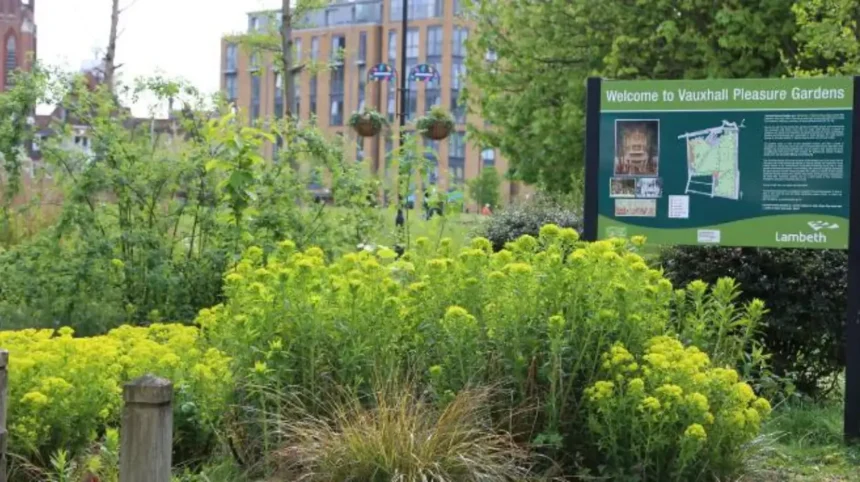
Vauxhall Pleasure Gardens is the most obvious starting point for exploring the neighbourhood. Lambeth Council describes it as a medium-sized park located close to Vauxhall railway and Underground stations and Vauxhall City Farm.
The modern park occupies approximately 2.81 hectares. Its design includes paths, grassed areas, trees, meadow planting and a multi-use games area. The site also includes biodiversity improvements and pollinator-friendly planting.
The entrance from Kennington Lane has distinctive monumental columns. Figures dressed in seventeenth-century clothing sit above the columns and reference the site’s entertainment history.
The park has an important historical identity. The original Vauxhall Pleasure Gardens opened as a commercial entertainment venue in 1661. It developed into a major destination for dining, music, visual entertainment and social activity.
The original gardens attracted visitors from across London and beyond. Historical records associate the venue with figures including George Frideric Handel, Giacomo Casanova and Samuel Pepys.
The original Pleasure Gardens closed in 1859. Housing later occupied the site before the area was cleared after the Second World War and converted into public open space.
As you explore the modern site, you are crossing land with a deep heritage. Read about the full [Insert Anchor Text for History Article Here] to understand its origins.
Today, the gardens are useful for a short walk, outdoor relaxation, informal recreation and local events. Lambeth Council also identifies the site as a Site of Importance for Nature Conservation, recognising its value for wildlife and public access to nature.
Is Vauxhall City Farm worth visiting?
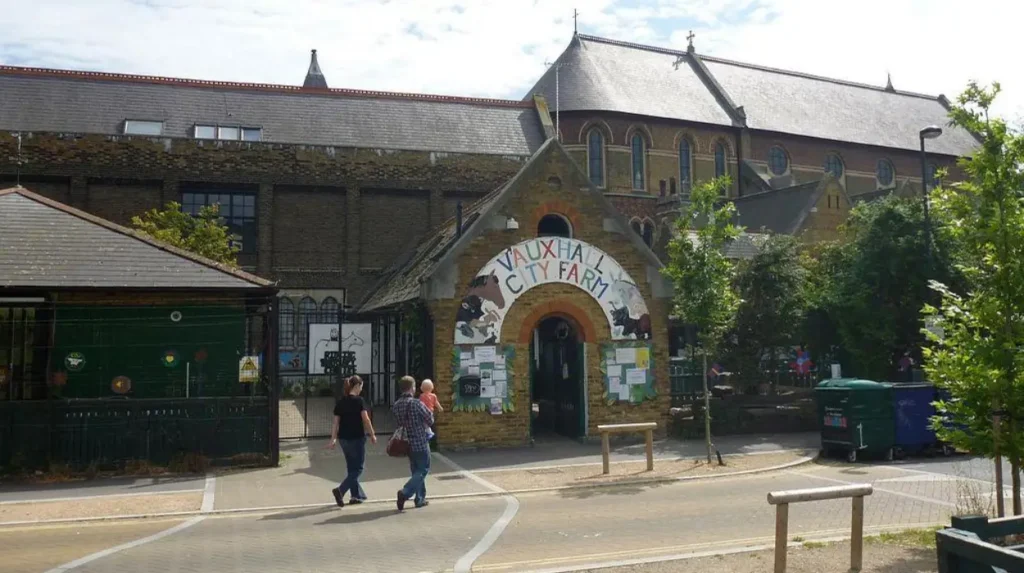
Vauxhall City Farm is a central London urban farm offering animal experiences, educational activities, gardens, workshops and community programmes, making it a practical attraction for families and visitors seeking nature within central London.
Vauxhall City Farm occupies 1.5 acres at 165 Tyers Street. It is located beside Vauxhall Pleasure Gardens and close to the River Thames.
The farm is an education charity rather than simply an animal attraction. Its programmes use farming, animals, horticulture and outdoor activities for education and community development.
The farm welcomes approximately 60,000 visitors each year. Its educational work reaches around 7,000 children and young people through workshops and activities, while its outreach programmes reach more than 50,000 people beyond the farm site.
Visitors can see farm animals, explore the gardens and use the on-site café. The Old Dairy provides drinks and snacks.
Entry is free, with a suggested donation of £4. The farm is generally open Tuesday to Sunday, with current published visitor hours of 10.30am to 4pm and last entry at 3.45pm. Visitors should check the farm’s official information before travelling because opening arrangements can change.
The farm also forms part of the local green-space network. Its paddocks sit alongside Vauxhall Pleasure Gardens, creating a noticeable contrast between livestock areas, mature planting and high-rise urban development.
For families, the farm provides an accessible activity that does not require a full-day commitment. It also works well alongside a visit to Vauxhall Pleasure Gardens.
Where can you enjoy a riverside walk around Vauxhall?
The Thames Path offers a straightforward riverside walking route from Vauxhall towards Westminster and other central London destinations, with views of the river, bridges, historic buildings, modern architecture and major London landmarks.
The River Thames is one of the defining features of Vauxhall. The riverside lies close to the station and provides a natural route towards Westminster and Lambeth.
The Thames Path is a National Trail. Its London section passes through densely developed areas while retaining a continuous relationship with the river. The full trail extends approximately 298 kilometres from the Thames source in Gloucestershire to Woolwich.
A Vauxhall riverside walk is particularly useful for visitors who want sightseeing without entering another attraction. Walking towards Westminster brings the visitor closer to the Palace of Westminster, Westminster Bridge and the wider central London waterfront.
Walking in the opposite direction provides access towards Battersea and other riverside areas.
The route also provides changing architectural views. Vauxhall’s riverside environment includes residential development, commercial buildings, bridges and public spaces.
The Thames Path is generally gentle and mostly flat. The National Trails organisation describes it as one of the easier long-distance trails to navigate and highlights its accessibility by public transport.
For photographers, the riverside offers opportunities to capture bridges, reflections, boats, architecture and changing city skylines.
The best approach is to treat the riverside as a flexible walking route. A short walk works for visitors with limited time. A longer walk works for travellers combining Vauxhall with Westminster, Lambeth or Battersea.
What can you do at Vauxhall Park?
Vauxhall Park provides a historic Victorian green space with a playground, sports courts, café, orchard, lavender garden, landscaped areas and dog exercise facilities between Vauxhall and Stockwell.
Vauxhall Park is south of the main Vauxhall transport interchange. Lambeth Council describes it as a medium-sized Victorian park serving the local community.
The park opened on 7 July 1890. Its creation followed campaigning by Millicent Fawcett, local residents and reformers after the land faced development pressure. Landscape architect Fanny Rollo Wilkinson was commissioned to lay out the park.
The park retains historic landscape features while incorporating modern facilities. Visitors can use the playground, tennis courts, basketball facilities and multi-use games area.
A café provides a convenient stopping point during a longer walk.
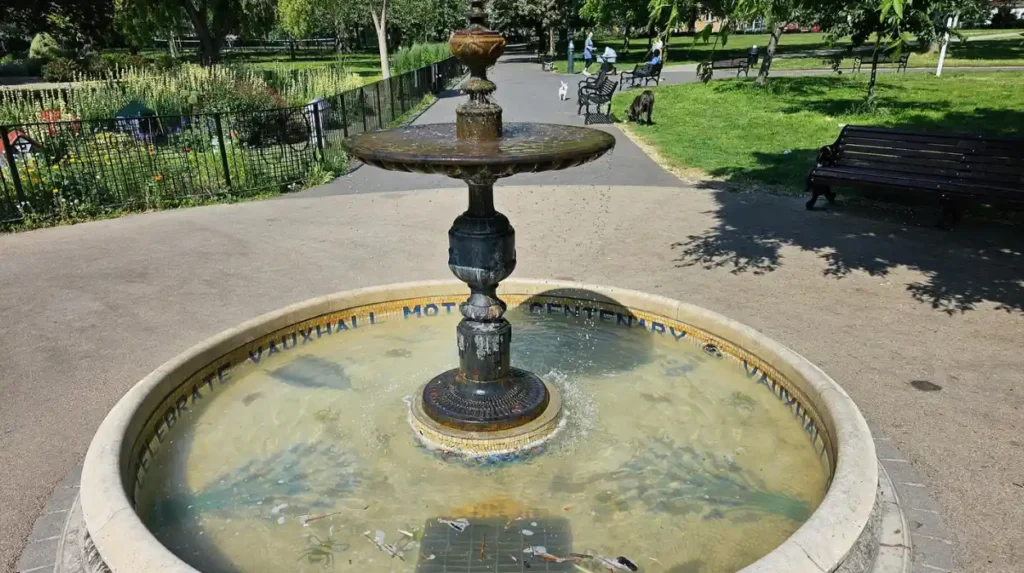
The Lavender Garden is another distinctive feature. It was created in 2003 on the site of a former bowling green to mark the centenary of the Vauxhall Motor Company, whose original factory was nearby.
The park also contains an orchard and a dedicated dog exercise area.
Vauxhall Park received Green Flag recognition and a Green Heritage Award. These designations reflect its combination of public recreation, landscape management and historical character.
The park is therefore particularly useful for visitors who want a quieter green-space experience away from major tourist crowds.
Can you visit the Garden Museum from Vauxhall?
The Garden Museum is approximately a 15-minute walk from Vauxhall and combines garden history, art, architecture, exhibitions, collections, gardens and a café inside the historic former St Mary-at-Lambeth church.
The Garden Museum is located on Lambeth Palace Road beside Lambeth Palace and across the Thames from Parliament. Its official visitor information places Vauxhall approximately 15 minutes away on foot.
The museum occupies the former St Mary-at-Lambeth church. The building has medieval origins and contains historic architectural features.
The Garden Museum describes itself as Britain’s only museum dedicated to the art, history and design of gardens. Its collections cover British gardening from the sixteenth century to the present day.
The museum also preserves the Archive of Garden Design. This archive contains working records associated with leading British garden designers.
The building has a direct connection with John Tradescant, an important seventeenth-century gardener and plant collector. His tomb stands in the museum courtyard.
The museum’s gardens add an outdoor component to the visit. Its front garden includes different planting environments, while the community garden at Old Paradise Gardens contains raised beds, a wildlife pond, sensory planting and a bug hotel.
The museum also operates the Garden Café, providing a useful stop for visitors exploring Lambeth.
Its location makes it easy to combine with a Thames walk. A visitor can travel to Vauxhall, walk towards the river, follow the waterfront towards Lambeth and finish at the museum.
Can you visit Lambeth Palace from Vauxhall?
Lambeth Palace is a major historic landmark near Vauxhall, serving as the London residence of the Archbishop of Canterbury and forming an important part of the historic landscape beside the River Thames.
Lambeth Palace is located close to the Garden Museum and provides an important heritage destination within walking distance of Vauxhall.
Its riverside position makes it particularly relevant to visitors interested in London’s religious, political and architectural history.
The palace complex forms part of a wider historic landscape around Lambeth Palace Road. The neighbouring Garden Museum occupies the former St Mary-at-Lambeth church, creating a concentrated heritage area close to the river.
Visitors should distinguish between seeing Lambeth Palace from the surrounding area and entering the palace itself. Access arrangements, tours and opening dates are controlled by the palace and can vary.
For visitors planning a heritage-focused walk, Lambeth Palace works especially well with the Garden Museum, the Thames Path and nearby Lambeth green spaces.
This section of Lambeth also demonstrates the historical importance of the Thames. The river functioned as a major transport and commercial corridor for centuries, while institutions developed along its banks.
What cultural attractions are close to Vauxhall?
Vauxhall sits close to a major cultural corridor containing the Garden Museum, Tate Britain, historic Lambeth sites, galleries, theatres and creative venues, allowing visitors to extend a Vauxhall visit into a wider South London cultural itinerary.
The area around Vauxhall has a long association with arts, entertainment and creative activity.
The historic Pleasure Gardens established entertainment as an important part of Vauxhall’s identity. Modern cultural activity continues through museums, galleries, performance spaces and creative businesses.
Tate Britain is particularly accessible from Vauxhall. The national gallery is located at Millbank and focuses on British art. It provides a major cultural extension to a Vauxhall visit.
The Garden Museum provides a more specialised cultural experience. Its focus on garden history connects art, design, horticulture, architecture and environmental subjects.
The Vauxhall area also contains venues associated with London’s nightlife and LGBTQ+ cultural history. The Royal Vauxhall Tavern is one of the area’s best-known entertainment venues and has a long association with cabaret, drag and performance.
Visitors interested in local culture should also explore Vauxhall’s railway arches and surrounding streets. The area’s industrial architecture reflects its historical development alongside later residential and commercial regeneration.
The result is a neighbourhood where heritage and contemporary culture exist within a relatively small geographical area.
What are the best things to do in Vauxhall for families?
Families can combine Vauxhall City Farm, Vauxhall Pleasure Gardens, playgrounds, open lawns, riverside walking and nearby museums to create a varied South London day without relying on one single attraction.
Vauxhall City Farm is the strongest family-focused attraction in the immediate area. Its animals, gardens and educational programmes provide structured activities in a central London setting.
Vauxhall Pleasure Gardens provides additional outdoor space. Children can use the park’s open areas and multi-use games facilities while adults explore the historic landscape.
Vauxhall Park offers another family option. Its playground was redesigned and renewed in 2020. The park also contains sports facilities, landscaped areas and an orchard.
The Garden Museum provides a more educational option for families interested in plants, design and history. The museum runs family activities alongside its exhibitions and permanent collection.
A riverside walk provides another low-cost activity. The Thames Path gives families an opportunity to see boats, bridges and major London architecture without paying for an attraction.
A practical family itinerary starts at Vauxhall City Farm, continues through Vauxhall Pleasure Gardens, follows the river towards Lambeth and finishes around the Garden Museum.
Where can visitors find green spaces around Vauxhall?
Vauxhall offers an unusually strong network of urban green spaces for a central London district, with Vauxhall Pleasure Gardens, Vauxhall Park, farm gardens and nearby riverside public spaces providing different outdoor experiences.
Vauxhall Pleasure Gardens is the most central green space. Its planting, lawns, trees and meadow areas provide an immediate break from the surrounding transport infrastructure.
Vauxhall Park provides a larger recreational environment south of the main interchange. Its historic landscape, lavender garden, orchard, sports courts and playground create a broader range of outdoor uses.
Vauxhall City Farm adds agricultural landscape to the area’s green infrastructure. Its paddocks and gardens create a distinctive semi-rural environment beside major roads and modern buildings.
The importance of these spaces extends beyond recreation. Lambeth Council identifies Vauxhall Pleasure Gardens and Vauxhall City Farm together as a Site of Importance for Nature Conservation.
The Garden Museum also contributes to the local green network through its gardens and community gardening spaces.
This combination makes Vauxhall relevant to visitors interested in urban nature, horticulture and sustainable city design.
Is Vauxhall suitable for an evening visit?
Vauxhall has an established evening economy with restaurants, cafés, entertainment venues and nightlife, while its transport connections provide practical access to central London after daytime sightseeing and cultural activities.
Vauxhall’s evening identity developed partly from its long entertainment history.
The original Vauxhall Pleasure Gardens became famous for music, dining, visual entertainment and social gatherings. Its influence helped establish Vauxhall as an entertainment destination.
Modern Vauxhall has a different commercial structure. Restaurants, cafés, bars, performance venues and nightlife businesses operate around the station, railway arches and surrounding streets.
The Royal Vauxhall Tavern remains an important cultural venue within the neighbourhood. Its programme has strong connections with cabaret, drag and LGBTQ+ performance culture.
Visitors should check individual venue schedules before travelling because evening programming changes throughout the year.
Transport is another advantage. Vauxhall sits in Zone 1 and connects Underground, National Rail and bus services.
The Victoria line also provides direct connections towards Victoria, Green Park, Oxford Circus, Warren Street, King’s Cross St Pancras and other central London locations.
This makes Vauxhall practical for visitors who want to finish a day with food or entertainment before returning to accommodation elsewhere in London.
How easy is it to get around Vauxhall?
Vauxhall is highly accessible because its Underground station serves the Victoria line, its railway station provides National Rail connections, and local buses, walking routes and cycling facilities extend access across South London.
Vauxhall railway station is in Travelcard Zone 1 and provides National Rail connections towards destinations including Waterloo, Wimbledon, Clapham Junction and Richmond. South Western Railway also identifies step-free access and cycle facilities at the station.
Vauxhall Underground Station is served by the Victoria line. The line provides direct connections northwards through central London and southwards towards Stockwell and Brixton.
The station also connects with bus services and Santander Cycles.
Walking is particularly useful because several attractions sit within a relatively compact area. Vauxhall Pleasure Gardens is next to the transport interchange. Vauxhall City Farm is immediately nearby. The Garden Museum is roughly a 15-minute walk away.
Visitors with accessibility requirements should check current Transport for London information before travelling. Station facilities and access arrangements can change because of maintenance or engineering work.
For sightseeing, Vauxhall works best as a walkable base. Visitors can use public transport for arrival and departure while completing the central sightseeing section on foot.
Explore More Area Guide
Where to Spend a Quiet Afternoon in Lambeth, South London 2026
Best Stops Between Lambeth Attractions: South London 2026
How can you plan a one-day Vauxhall itinerary?
A practical Vauxhall day can begin with the city farm and Pleasure Gardens, continue towards the Thames and Lambeth heritage sites, then finish with culture, food or entertainment before using Vauxhall’s extensive transport connections.
Start at Vauxhall station in the morning and walk towards Vauxhall City Farm. Allow enough time to explore the farmyard, gardens and visitor facilities.
Continue into Vauxhall Pleasure Gardens. The park provides an opportunity to walk through the landscaped grounds and examine the historic references incorporated into the entrance.
From the gardens, head towards the River Thames. Follow the riverside route north-west towards Lambeth and Westminster.
Continue to the Garden Museum. The museum provides a focused cultural experience covering British garden history, art and design. Its location beside Lambeth Palace makes the surrounding area suitable for heritage exploration.
After the museum, visitors can continue towards Tate Britain or return towards Vauxhall depending on available time.
The afternoon can include Vauxhall Park for visitors who want additional green space. Alternatively, visitors can remain around the riverside and central Lambeth area.
Finish the day with a meal or entertainment in Vauxhall. The neighbourhood’s evening economy provides options close to the transport interchange.
This itinerary works because it combines nature, heritage, culture and recreation rather than concentrating the entire day inside one attraction.
Why does Vauxhall matter for South London tourism?
Vauxhall matters because it connects central London sightseeing with South London neighbourhoods while retaining significant historic landscapes, cultural venues, riverside access, community facilities and transport infrastructure.
Vauxhall occupies an important geographical position between central London and the wider South London network.
Its transport infrastructure supports both tourism and everyday commuting. The combination of Underground, National Rail and bus connections makes the area a natural interchange.
Its historic importance is equally significant. The original Pleasure Gardens established Vauxhall as a major London entertainment destination from the seventeenth century.
The modern neighbourhood has preserved elements of that identity through Vauxhall Pleasure Gardens and contemporary entertainment venues.
Its green infrastructure is another important feature. Vauxhall Pleasure Gardens, Vauxhall City Farm and Vauxhall Park provide different forms of access to nature within a densely developed part of London.
The Thames adds a further layer. The National Trail provides a long-distance walking route through London and links Vauxhall with major riverside destinations.
For tourists, this creates a useful combination of attractions. For residents, it provides everyday recreational infrastructure. For business travellers, it offers accessible activities during limited free time. For digital nomads, cafés, public spaces and transport connections create practical opportunities to combine work and local exploration.
Vauxhall’s future relevance therefore rests on its ability to connect transport, heritage, public space, culture and riverside recreation within South London.
What are the best things to do around Vauxhall?
The best things to do around Vauxhall include visiting Vauxhall Pleasure Gardens, exploring Vauxhall City Farm, walking along the Thames Path, visiting the Garden Museum and relaxing in Vauxhall Park.