Lambeth is one of South London’s most varied visitor areas. The London Borough of Lambeth combines the South Bank, Waterloo, Vauxhall, Kennington, Brixton, Clapham and Streatham with major cultural venues, historic buildings, riverside walks and extensive green spaces.
- Where should you stop between South Bank attractions?
- Where can you take a quiet break near Lambeth Palace?
- Where is the best place to stop after visiting the London Eye?
- Which cafés and restaurants are best for a sightseeing break?
- Where can families rest between Lambeth attractions?
- Where should you stop between cultural attractions?
- Where are the best green stops in wider Lambeth?
- How should you plan rest and refreshment stops across Lambeth?
- What makes Lambeth a good area for sightseeing breaks?
For visitors, the challenge is not finding attractions. It is organising sensible breaks between them. A sightseeing itinerary becomes easier when food, toilets, seating, coffee, quiet spaces and short rest periods are positioned along the route.
The best stopping points sit close to major visitor corridors. South Bank provides the strongest concentration of cafés, restaurants, cultural venues and riverside seating. Waterloo adds convenient transport connections and smaller green spaces. Lambeth Palace and Archbishop’s Park provide a quieter break close to the Thames. Kennington and Brixton offer different food and neighbourhood experiences.
Lambeth Council manages an extensive network of parks and open spaces. Its current parks information lists facilities including quiet sitting areas, cafés, toilets, picnic areas, gardens, wildlife areas and children’s play areas.
This makes Lambeth particularly suitable for sightseeing schedules that alternate between attractions and short recovery periods.
Where should you stop between South Bank attractions?
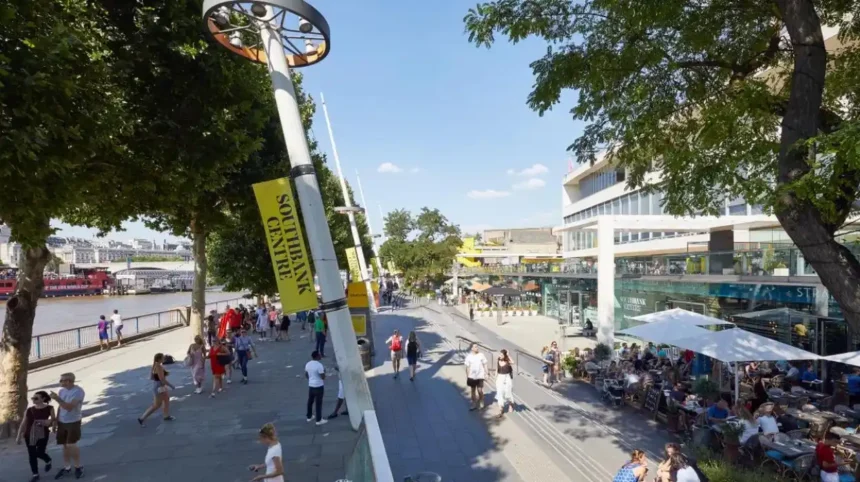
South Bank is the most practical stopping area between Lambeth attractions because its riverside route combines cafés, restaurants, cultural venues, public spaces and transport links within a walkable visitor district along the Thames.
South Bank stretches along the southern side of the River Thames between Lambeth Bridge and Blackfriars Bridge. Visit London identifies the district as a major concentration of attractions, including the London Eye, SEA LIFE London Aquarium, London Dungeon, National Theatre and Southbank Centre.
The area works well when an itinerary includes several attractions in one day. Visitors can stop for a drink before continuing towards another venue without making a major detour.
The riverside pedestrian route is especially useful. It creates a continuous sightseeing corridor rather than requiring visitors to repeatedly return to a transport station.
Food choices cover different budgets and time requirements. Visitors can choose a quick snack, café stop, casual restaurant or longer meal. Southbank Centre also hosts its Food Market on Fridays, Saturdays and Sundays, offering a range of food and drink producers.
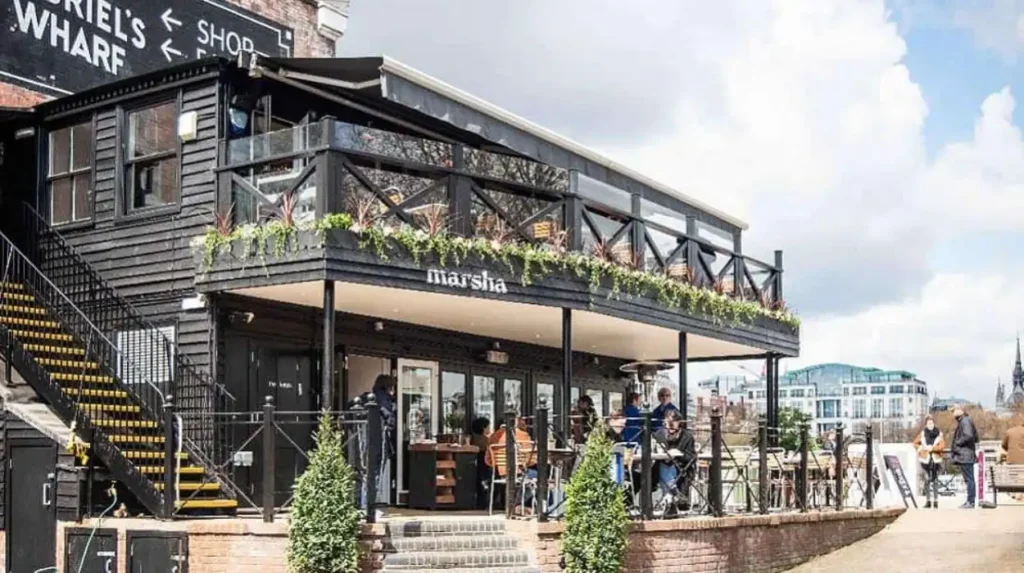
Gabriel’s Wharf is another established food and leisure stop. Its riverside position places restaurants and cafés directly alongside a major walking route.
The National Theatre is useful for visitors combining sightseeing with the performing arts. The venue has two restaurants and two cafés, making it a practical indoor stopping point before a performance or during a longer South Bank itinerary.
South Bank therefore works best when the objective is efficiency. Visitors can combine refreshments, sightseeing, toilets, indoor shelter and riverside views without leaving the principal attraction corridor.
Where can you take a quiet break near Lambeth Palace?
Old Paradise Gardens and Archbishop’s Park provide useful quiet spaces near Lambeth Palace, with seating, greenery and open areas that allow visitors to pause between historic sites and riverside attractions without travelling far.
Old Paradise Gardens is particularly convenient for visitors exploring Lambeth Palace and the surrounding Waterloo area. Lambeth Council describes the space as a small green area with a children’s playground, grassy mounds and seating. It also contains shrubs and spring-flowering native bulbs.
The garden forms part of Lambeth’s wider green-space network. It is managed in partnership with the Garden Museum through the Lambeth Green project, which focuses on biodiversity, planting and community use.
Its location on Lambeth High Street places it within easy reach of the northern part of Lambeth.
Archbishop’s Park offers another useful break close to Lambeth Palace and the Thames. Lambeth Council identifies it as a medium-sized open space in Waterloo with a significant historical background.
These locations suit visitors who need a short rest rather than a full meal. They also provide alternatives to busy cafés and restaurants.
A short outdoor break has practical value during a walking-heavy itinerary. Sitting down for 15 to 30 minutes separates major attractions into manageable sections.
Visitors should also check park opening arrangements. Lambeth Council states that its parks and open spaces close at night, with normal closing times generally set around 15 minutes before dusk.
That timing is particularly relevant during winter visits when daylight hours are shorter.
As you explore the modern site, you are crossing land with a deep heritage. Read about the full to understand its origins.
Where is the best place to stop after visiting the London Eye?
County Hall, the South Bank riverside and nearby cafés provide the strongest stopping options after the London Eye because they place food, refreshments, toilets, seating and transport connections immediately around the attraction.
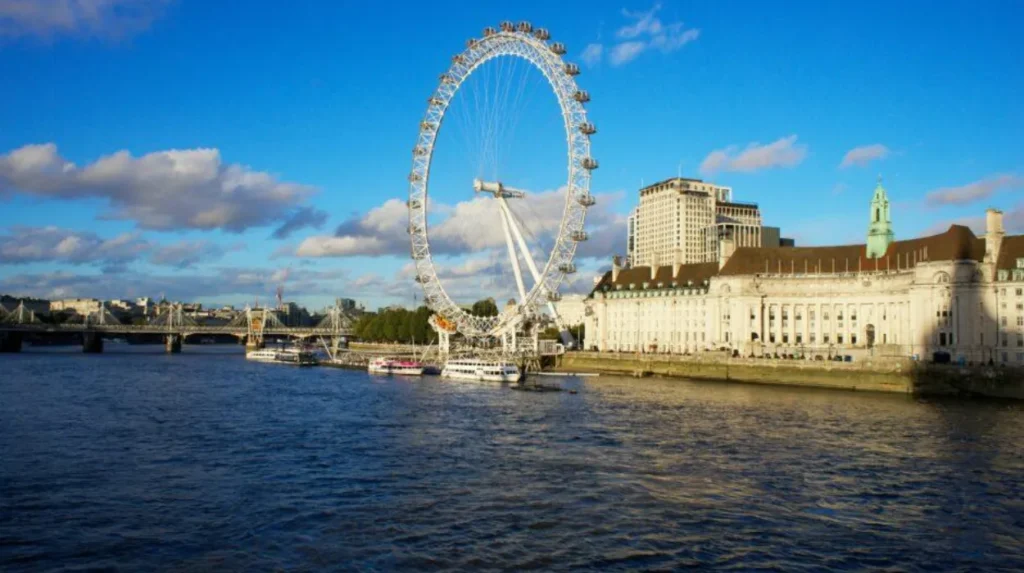
The London Eye stands on the South Bank opposite the Houses of Parliament. Its ticket office is inside County Hall, directly beside the attraction.
This location makes County Hall an obvious reference point when planning a sightseeing route.
Waterloo is approximately five minutes on foot from the London Eye. The attraction also has connections from Embankment, Charing Cross and several bus routes.
Visitors therefore have several choices after completing the experience.
A short riverside walk provides immediate access to cafés and restaurants. Visit London lists restaurants and food venues across South Bank and Waterloo, including options at Gabriel’s Wharf, the National Theatre and Southbank Centre.
The London Eye also has visitor facilities including toilets, baby-changing facilities, first aid and storage.
A useful itinerary separates the London Eye from the next major attraction with a refreshment stop. This avoids moving directly from one queue or enclosed visitor experience into another.
Visitors should also account for timed entry. The London Eye recommends arriving at the designated time shown on the ticket. A 15-minute grace period applies, while queues vary according to visitor demand.
For this reason, the most effective stopping plan is flexible around the booked London Eye time rather than based on an exact minute-by-minute schedule.
Which cafés and restaurants are best for a sightseeing break?
South Bank and Waterloo provide the widest range of food stops in Lambeth’s principal visitor zone, covering quick meals, cafés, market food, afternoon tea, international cuisine and riverside dining within the main sightseeing corridor.
Food stops serve different purposes during sightseeing. A coffee break requires limited time. A full meal requires seating and a longer pause. A market provides flexibility for visitors travelling in groups with different preferences.
South Bank offers all three formats.
Visit London lists cafés, restaurants, bars and food venues across South Bank and Waterloo. Its current guide includes Gabriel’s Wharf, the Southbank Centre Food Market, restaurants at the National Theatre and venues around the riverside.
The Southbank Centre Food Market is particularly useful for visitors who want a varied food choice rather than a formal restaurant. It operates on Fridays, Saturdays and Sundays.
The National Theatre provides an indoor option with two restaurants and two cafés. This makes it suitable for visitors who want to remain within the cultural district during a meal break.
Gabriel’s Wharf provides another established cluster of food businesses close to the river.
For visitors seeking a longer meal, South Bank includes restaurants with river views and more formal dining. Visit London highlights the Oxo Tower Restaurant, Bar and Brasserie, Skylon at Royal Festival Hall and Gillray’s Steakhouse & Bar among the district’s dining choices.
The correct stop depends on itinerary length. A visitor with three attractions scheduled in four hours needs a fast food stop. A visitor spending a full afternoon in South Bank has more time for a sit-down meal.
Pre-booking is relevant for restaurants with fixed seating or popular dining periods. Walk-in food markets and cafés provide greater flexibility.
Where can families rest between Lambeth attractions?
Families have practical stopping choices across South Bank’s pedestrian routes, Lambeth parks and selected gardens, where seating, food, toilets, play areas and open space create useful breaks between attractions for children and adults.
Family sightseeing requires more frequent pauses than an adult-only itinerary. Children need opportunities to sit, eat, use toilets and move around without remaining inside attractions continuously.
South Bank has a strong family infrastructure. Visit London describes South Bank and Waterloo as family-friendly and highlights its walkable riverside environment, attractions, cafés, restaurants and open spaces.
Lambeth’s parks provide another option.
The council’s parks directory includes facilities such as children’s play areas, toilets, cafés, picnic areas, quiet sitting areas and wildlife areas. These facilities differ between individual parks, so visitors should check the specific park before travelling.
Old Paradise Gardens includes a children’s playground and seating. Its location near Lambeth Palace makes it particularly useful for families following a central Lambeth sightseeing route.
St John’s Church Gardens in Waterloo provides another small green stop. Lambeth Council describes the gardens as a Green Flag Award-winning open space with dry and wildlife gardens and a memorial garden.
The practical advantage of smaller gardens is proximity. Families do not need to dedicate an entire hour to a park visit. A short stop provides a change of environment before continuing.
For longer breaks, larger spaces such as Brockwell Park and Clapham Common provide more room for walking and recreation. Lambeth Council describes Brockwell Park as a large park containing ponds, trees, an Old English flower garden and open meadows. Clapham Common covers more than 85 hectares.
These larger parks work better when the itinerary specifically includes South London neighbourhoods rather than only central Lambeth.
Where should you stop between cultural attractions?
The Southbank Centre, National Theatre, BFI area and surrounding riverside venues provide strong cultural stopping points because visitors can combine performances, exhibitions, food and short indoor breaks without leaving South Bank’s principal pedestrian corridor.
Cultural sightseeing often involves fixed entry times. A theatre performance, exhibition or cinema screening creates a defined schedule. Food and rest stops therefore need to sit close to the venue.
South Bank performs well because multiple cultural institutions operate within the same district.
The National Theatre is positioned directly on the riverside. The Southbank Centre provides another major cultural complex. The BFI IMAX adds cinema to the attraction mix. Visit London identifies all three within the South Bank and Waterloo visitor area.
This concentration reduces unnecessary travel between activities.
Visitors can also use food venues inside or around cultural institutions. The National Theatre has two restaurants and two cafés. This allows visitors to remain within the attraction zone while eating.
Indoor stops are especially useful during wet weather. They also provide seating and controlled environments during longer sightseeing days.
The cultural corridor is suitable for different visitor groups. Tourists can combine attractions with a meal. Domestic business travellers can use cafés during downtime. Digital nomads can use suitable cafés for short periods of work between scheduled activities, subject to individual venue policies and available seating.
The key principle is proximity. A stop within the same district protects sightseeing time and reduces unnecessary walking.
Where are the best green stops in wider Lambeth?
Brockwell Park, Clapham Common, Streatham Common and smaller Lambeth gardens provide green stopping points for visitors who extend their itinerary beyond South Bank, with space for walking, sitting, picnics, recreation and nature observation.
Lambeth contains a substantial network of public green spaces. The council currently lists more than 75 parks and open spaces in its online directory.
These locations serve different visitor needs.
Brockwell Park is one of the strongest choices for a longer rest. It contains ponds, trees, ancient oaks, an Old English flower garden and broad meadows.
Clapham Common is another major open space. At more than 85 hectares, it provides substantial room for walking and outdoor recreation.
Streatham Common provides a different experience towards the southern edge of the borough. Lambeth Council describes it as a large area of open land with views across South London.
The Rookery sits within Streatham Common and provides a formal garden environment.
Visitors who prefer smaller green spaces can choose Cleaver Square, Emma Cons Gardens, Stockwell Memorial Gardens or St John’s Church Gardens. These spaces are closer to residential and transport areas.
The choice depends on itinerary geography. Brockwell Park makes sense during a Brixton or Herne Hill route. Clapham Common fits a Clapham itinerary. Streatham Common and The Rookery suit a southern Lambeth itinerary.
A green stop is therefore most effective when it follows the direction of travel rather than forcing a return journey.
Explore More Area Guide
Explore Lambeth’s Neighbourhoods: Brixton, Clapham & Vauxhall
Best Leisure Days in Lambeth: Parks, Culture & Riverside South London 2026
How should you plan rest and refreshment stops across Lambeth?
The most efficient Lambeth sightseeing plan groups attractions by area, places food and rest stops between them, checks opening arrangements and transport connections, and allows enough time for walking, queues, meals, toilets and unexpected delays.
Start by dividing Lambeth into practical sightseeing zones.
South Bank and Waterloo form the strongest central visitor zone. Lambeth Palace, Old Paradise Gardens and Archbishop’s Park provide nearby historical and green-space stops. Vauxhall and Kennington offer additional attractions further south. Brixton, Clapham and Streatham create separate neighbourhood-based itineraries.
The next step is to identify the type of break required.
A 10-minute coffee stop has different requirements from a 45-minute lunch. A family with young children needs accessible toilets and seating. A business traveller needs a convenient venue close to transport. A visitor completing a full-day walking itinerary needs longer rest periods.
Transport also affects the best stopping point.
Waterloo is particularly important for South Bank visitors. The station serves Underground and National Rail services, while Southwark Underground station also provides access to the district. Visit London identifies Waterloo and Southwark as key stations for South Bank and Waterloo.
The London Eye is approximately five minutes from Waterloo, according to the attraction’s visitor guidance.
This makes Waterloo a useful reset point between attractions.
Visitors should also check park opening arrangements before relying on outdoor seating. Lambeth Council states that parks close at night and that normal closing times vary according to daylight.
Weather planning is another practical consideration. South Bank’s indoor cafés, restaurants, theatres and cultural venues provide alternatives when outdoor walking becomes uncomfortable.
The strongest itinerary therefore alternates activity levels. A major attraction is followed by food. A long walk is followed by seating. An indoor museum visit is followed by outdoor space. This approach reduces unnecessary backtracking and keeps the day organised.
What makes Lambeth a good area for sightseeing breaks?
Lambeth works particularly well for sightseeing breaks because its attractions are connected by walkable riverside routes, public transport, restaurants, cafés, parks, cultural venues and small gardens that support short or extended pauses.
The area’s structure is the main advantage.
South Bank concentrates major attractions along the Thames. Waterloo provides major transport connections. Lambeth Palace and nearby gardens add historic and green-space options. Further south, Brixton, Clapham and Streatham provide distinct neighbourhood environments.
The borough’s parks strengthen this network. Lambeth Council’s parks directory records facilities ranging from cafés and toilets to picnic areas, quiet sitting areas, wildlife areas and children’s play areas.
The result is a sightseeing environment with several types of stopping point.
Visitors do not need every break to be a restaurant visit. A riverside bench, public garden, café, food market, museum café or park provides a different type of pause.
South Bank remains the strongest choice for first-time visitors because its attractions and food venues are concentrated along the Thames. Visit London describes the district as walkable and highlights its pedestrianised riverside routes, attractions, cafés, restaurants and open spaces.
For visitors seeking quieter surroundings, Old Paradise Gardens, Archbishop’s Park and other Lambeth green spaces provide alternatives to the busiest riverside locations.
The best stopping strategy is therefore geographical rather than based on a single “best” café or restaurant. Match the stop to the next attraction.
A visitor heading from the London Eye towards the National Theatre needs a South Bank stop. Someone exploring Lambeth Palace needs a nearby garden or café. Someone visiting Brixton needs a local food or green-space break. Someone continuing towards Streatham benefits from a southern Lambeth park.
This approach makes the itinerary more efficient while preserving time for the attractions themselves.
Final takeaway
Lambeth offers a strong range of rest and refreshment stops between attractions. South Bank and Waterloo are the most convenient central choices, particularly for visitors combining the London Eye, National Theatre, Southbank Centre and riverside sightseeing.
Old Paradise Gardens and Archbishop’s Park suit quieter breaks near Lambeth Palace. Brockwell Park, Clapham Common and Streatham Common suit longer outdoor pauses when the itinerary extends deeper into South London.
The most effective plan places a suitable stop after each major sightseeing segment. Short café breaks support fast itineraries. Restaurants support longer visits. Parks and gardens provide outdoor recovery periods. Cultural venues provide indoor alternatives.
With these options positioned around the route, visitors can explore Lambeth without treating food, seating and rest as separate journeys.
What are the best places to stop between Lambeth attractions?
The best places to stop include South Bank, Waterloo, Old Paradise Gardens, Archbishop’s Park, Brockwell Park and Clapham Common. These areas provide cafés, restaurants, seating, green space, toilets and convenient transport connections.