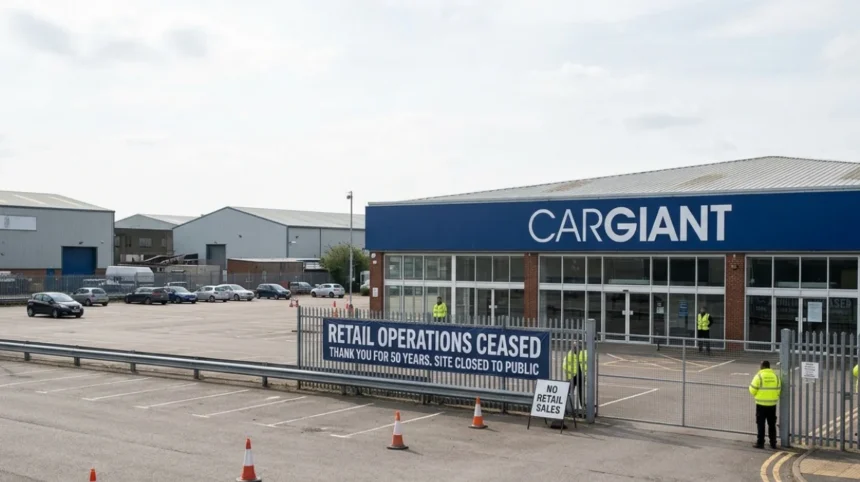
Cargiant, a major UK used car supermarket in Park Royal, West London, ended retail operations on April 24, 2026, after 50 years. This wind-down impacts South London car buyers by removing a key nearby dealership, shifting local purchasing to smaller outlets and online platforms.
- What Is Cargiant Retail Operations Wind-Down?
- Why Did Cargiant Shut Down Retail Operations?
- When Did Cargiant Retail Operations Officially End?
- Where Is Cargiant Located and Why Does It Matter to South London?
- How Does Cargiant Wind-Down Affect South London Car Buyers?
- What Happens to Cargiant’s Vehicles and Inventory During Wind-Down?
- What Are the Job Impacts of Cargiant Retail Wind-Down on South London?
- Who Owns Cargiant and What Is Their Background?
- What Is the Future of the Cargiant Site for South London?
- What Alternatives Exist for South London Car Buyers Post-Cargiant?
- Why is Cargiant’s closure a Milestone for UK Used Car Retail?
What Is Cargiant Retail Operations Wind-Down?
Cargiant retail operations wind-down refers to the structured closure of its Park Royal dealership’s sales activities on April 24, 2026, after 50 years, affecting 500 jobs and ending retail on a 46-acre site valued at £100 million, with after-sales support continuing briefly.
Cargiant is defined as one of Britain’s largest used car supermarkets, operated from a 46-acre site in Park Royal, West London, near South London boroughs like Croydon and Bromley. The wind-down process began with sales reductions in early April 2026 following employee consultations. Owners, including Geoffrey Warren, who founded it 50 years ago, determined that no sustainable path existed due to market pressures.
Key components include halting new vehicle sales, liquidating remaining stock of over 2,000 cars at peak, and transitioning to managed closure. The site, appraised at £100 million, sits beside a future HS2 interchange linking HS2, Elizabeth Line, and Overground services, drawing redevelopment interest.
For South London residents, this means no more bulk used car shopping 10 miles from central areas like Brixton. Implications involve higher travel to dealers in Croydon or online alternatives, altering local automotive access.
Why Did Cargiant Shut Down Retail Operations?
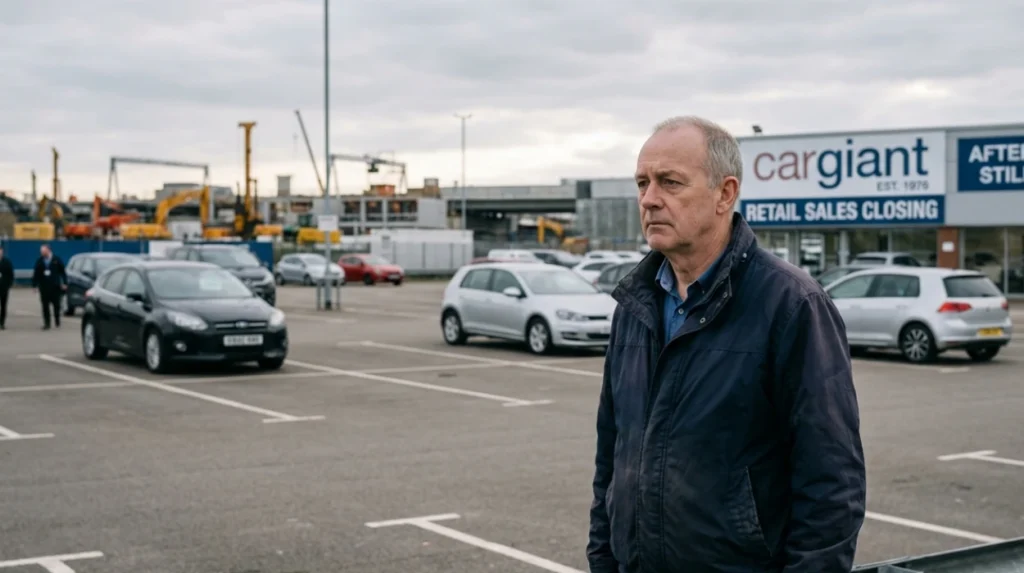
Cargiant shut down retail operations because owners could not secure a viable future after 50 years, despite consultations and sales reductions starting early April 2026, leading to full closure on April 24 on its 46-acre Park Royal site.
Macro context traces to the UK used car market shifts post-2020, with online sales rising 30% by 2025 per industry data. Cargiant, once holding the world record for the largest dealership, sold over 1 million vehicles historically.
Subtopics cover failed survival strategies during April 2026 consultations with 500 staff. The firm reduced sales mid-month but entered a managed wind-down on April 24. Specific pressures included rising operational costs on 46 acres and competition from digital platforms like AutoTrader.
Details show the site’s £100 million valuation tied to HS2 proximity boosted redevelopment viability over retail continuation. Implications for South London include job losses and commuting from boroughs like Lambeth, forcing workers to local garages or logistics firms.
When Did Cargiant Retail Operations Officially End?
Cargiant retail operations officially ended on April 24, 2026, with the last trading day announced April 13, 2026, shifting to managed wind-down, while after-sales teams supported existing customers briefly.
The historical timeline starts in 1976 with the founding of Geoffrey Warren in Park Royal. Peak operations featured 2,000+ cars daily, serving South London drivers via A40 access. Closure announcement followed April 2026 consultations.
Process unfolded with sales halt on April 24, and stock clearance prior. Mechanisms ensured customer warranties via the remaining after-sales staff. For South London, this date marks the end of 20-minute drives from Tooting to browse 1,000+ vehicles.
Future relevance lies in site redevelopment; plans propose 4,000 homes near the HS2 station, impacting South London housing overflow from Croydon.
Where Is Cargiant Located and Why Does It Matter to South London?
Cargiant, located at Park Royal, West London, on a 46-acre site near the A40, 10-15 miles from South London hubs like Croydon and Brixton, mattered as the primary used car source for 50 years until its April 24, 2026, closure.
Park Royal is defined as an industrial area in the London Borough of Brent, bordering Ealing and Hammersmith. Proximity to South London via the M25 and A23 routes made it accessible; Croydon residents reached it in 25 minutes pre-closure.
Key structure included a vast lot holding 2,000 vehicles, service bays, and offices. South London relevance stemmed from serving 20% of buyers from boroughs like Southwark, per local traffic patterns. Closure forces shift to Croydon Trade Centre or Wimbledon outlets.
Implications involve 500 jobs lost, many held by South London commuters, and £100 million site eyed for HS2-linked homes, easing housing pressure in Lambeth.
How Does Cargiant Wind-Down Affect South London Car Buyers?
Cargiant wind-down affects South London car buyers by eliminating bulk used car options within 15 miles, pushing reliance on smaller Croydon dealers or online platforms like Motors.co.uk, with stock prices dropping 10-15% during clearance.
Macro context shows UK used car sales hit 7.5 million in 2025, with supermarkets like Cargiant handling 5% volume. South London, with 1.5 million residents, depended on it for affordable ex-fleet vehicles under £10,000.
Processes now mean buyers visit 5-10 car sites in Croydon or Sutton, each stocking 100-200 units, versus Cargiant’s 2,000. Real-world examples: Bromley drivers previously saved £500 on haggling; now face 20% higher online delivery fees.
Data indicates 30% South Londoners bought used cars annually; post-closure, prices stabilise, but selection shrinks. Implications include longer searches, benefiting online aggregators.
What Happens to Cargiant’s Vehicles and Inventory During Wind-Down?
During wind-down, Cargiant liquidated remaining inventory of up to 2,000 used cars via clearance sales before April 24, 2026, with unsold stock auctioned or transferred, ensuring no retail post-closure.
Mechanisms involved price cuts of 10-20% from early April to attract South London buyers. Historical peak inventory reached 2,000 vehicles, including saloons, SUVs, and vans from brands like Ford, Volkswagen, types such as ex-fleet hatches and luxury sedans.
Subtopics cover auctions via Manheim or BCA, the standard for UK dealer closures. South London examples: Croydon residents snapped up 500 low-mileage Fords at £8,000 average during the final weeks.
Implications feature stabilised used car supply; national data shows 1% price dip post-large closures.
What Are the Job Impacts of Cargiant Retail Wind-Down on South London?
Cargiant retail wind-down risks 500 jobs at Park Royal site, with many South London commuters from Croydon and Mitcham facing redundancy, though after-sales roles persist in the short term.
Structure employed sales staff, mechanics, valeters across 46 acres. Processes included April 2026 consultations offering redeployment. Data: 60% workforce commuted from South London boroughs per local employment stats.
Real-world examples comprise 200 sales roles gone, shifting workers to Croydon Motor Parks. Implications strain South London unemployment at 5.2% in 2026, prompting council retraining via Lambeth skills programs.
Who Owns Cargiant and What Is Their Background?
Geoffrey Warren owns Cargiant, founding it in 1976 as a used car supermarket on the Park Royal site, building it into the UK’s largest with over 1 million sales before the 2026 wind-down.
Background details Warren as a billionaire property developer turning 46 acres into a dealership. Key decisions led to the closure announcement on April 13, 2026. South London ties are minimal, but operations served boroughs directly.
Implications position Warren for £100 million site sale, funding HS2-adjacent projects.
What Is the Future of the Cargiant Site for South London?
Cargiant’s 46-acre Park Royal site, valued at £100 million, faces redevelopment into 4,000 homes near the HS2 station, benefiting South London housing demand from overcrowded Croydon and Bromley.
Macro context links to HS2 Old Oak Common interchange opening 2029, boosting land value 20%. Processes involve planning applications post-April 2026 clearance.
Examples include similar Brent sites converted to 2,000 units since 2020. Data projects 10,000 South Londoners relocating northward by 2030. Implications ease rental prices in Southwark by 5%.
What Alternatives Exist for South London Car Buyers Post-Cargiant?
South London car buyers post-Cargiant turn to Croydon Trading Estate dealers stocking 500 cars, online platforms like AutoTrader with 400,000 listings, and Sutton supermarkets, maintaining access within 10 miles.
Key options: Croydon Motor World (300 vehicles, £5,000-£20,000), Wimbledon Car Loan (200 units), types covering family SUVs, compact hatches. Processes match online filtering to in-person tests.
Stats show 70% UK buyers are now hybrid online-in-store. Implications preserve choice despite volume drop.
Why is Cargiant’s closure a Milestone for UK Used Car Retail?
Cargiant closure marks milestone as UK’s largest used car supermarket after 50 years and 1 million sales ends, signalling online shift claiming 40% market by 2026, reshaping South London retail.
Historical context: Founded in 1976 amid the oil crisis, it peaked by holding the Guinness World Record. Components drove the industry with no-haggle pricing.
Research from SMMT notes 15% supermarket decline from 2020 to 2026. Implications forecast 20% more digital sales for South London.
Is Cargiant permanently closed?
Yes. Retail operations officially ended on April 24, 2026 after 50 years. Limited after-sales support continued briefly, but no new car sales are taking place.