South London readers are increasingly aware of how global foreign‑policy moves affect the UK’s international standing, public finances, and local communities with ties to displaced islanders. The Chagos Islands deal—under which the UK agreed to hand over sovereignty of the British Indian Ocean Territory (BIOT) to Mauritius while leasing the Diego Garcia military base for 99 years—has now been shelved in London after US‑led political pressure. This article explains what the Chagos Islands deal was, why it reached the brink of implementation, and why the UK has formally paused it, with clear implications for South London residents, diaspora communities, and defence‑linked households.
- What is the Chagos Islands deal the UK agreed with Mauritius?
- Why did the UK sign the Chagos deal in 2025?
- What does “shelving the Chagos deal” mean in practice?
- How did Trump and US politics influence the shelved deal?
- Who are the Chagossians and why are they affected?
- What are the legal and diplomatic arguments over Chagos sovereignty?
- How does the shelved Chagos deal affect South London communities?
- What are the financial and security implications for the UK?
- What might happen next to the Chagos Islands’ status?
What is the Chagos Islands deal the UK agreed with Mauritius?
The Chagos Islands deal is a 2025 bilateral agreement under which the UK transfers sovereignty of the Chagos Archipelago (British Indian Ocean Territory) to Mauritius while leasing back the UK–US military base on Diego Garcia for 99 years. In return, the UK pays an average of about £101 million per year over more than a decade, starting at £165 million annually for the first three years, then £120 million a year for the following ten years, with later payments linked to inflation. The arrangement also commits the UK and Mauritius to acknowledging the “wrongs of the past” in the forced removal of Chagossians in the 1960s and 1970s and to facilitating potential resettlement under agreed conditions.
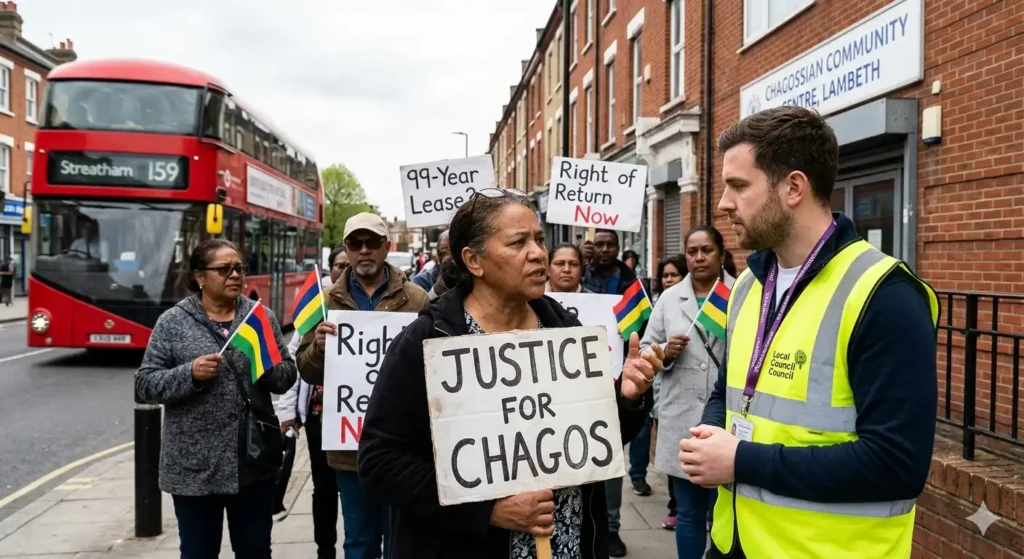
The deal was framed by the UK government as a way to resolve a long‑running sovereignty dispute at the United Nations and International Court of Justice level, while safeguarding strategic defence interests in the Indian Ocean. It followed a series of UN resolutions and international legal findings that the UK’s separation of the Chagos Islands from Mauritius before independence in 1968 was unlawful. South London voters and local advocacy groups have followed this issue closely because many Chagossian descendants now live in areas such as Croydon, Lambeth, and Southwark, giving the dispute a direct community‑level impact.
Why did the UK sign the Chagos deal in 2025?
The UK signed the Chagos deal in May 2025 after more than two years and 13 rounds of negotiations, largely to align its position with binding international‑law rulings and repeated UN General Assembly resolutions. In 2019 the International Court of Justice (ICJ) issued an advisory opinion stating that the UK’s continued administration of BIOT was unlawful and that the decolonisation of Mauritius had not been lawfully completed. The UN General Assembly then voted overwhelmingly in 2019 to demand the UK end its control of the Chagos Islands within six months, a position later reinforced by additional UN and International Tribunal for the Law of the Sea rulings.
Domestically, the UK government argued that a negotiated deal would avoid years of protracted litigation and diplomatic friction, while also clarifying the legal status of the Diego Garcia base for the next century. The agreement grants the UK extensive rights over Diego Garcia, including control of a 12‑nautical‑mile surrounding area, rights of access, maintenance, and investment, and a clear legal framework for continued defence operations with the US. For South London stakeholders, the 2025 agreement was seen as a concession to international law and a step toward addressing historical grievances held by Chagossian families, many of whom trace their roots to the UK’s Caribbean and Indian‑Ocean military and labour networks.
What does “shelving the Chagos deal” mean in practice?
When the UK “shelves” the Chagos deal, it means formal ratification and implementation of the treaty with Mauritius are paused, while the existing legal status of the British Indian Ocean Territory as a UK‑administered overseas territory remains in place. The UK government has halted further parliamentary debate on the draft law needed to implement the agreement, citing the need to secure a formal US‑side letter confirming compatibility with the 1966 UK–US agreement on joint military bases. Without that letter, ministers argue they cannot proceed with ratification without risking a breach of existing treaty obligations to the US.
In operational terms, shelving the deal preserves the current chain of command at Diego Garcia, where the UK leases the base to the US under the terms of the 1966 agreement. The UK continues to administer the territory and make decisions on access, security, and environmental management, while the US retains operational control of the facility. For South London observers, shelving the deal postpones potential pathways for Chagossian return, resettlement funds, and direct UK–Mauritius cooperation on fisheries and conservation, all of which were expected to follow formal transfer.
How did Trump and US politics influence the shelved deal?
The shelving of the Chagos deal accelerated after strong public criticism from US President Donald Trump, who called the arrangement “an of GREATUPID” in January 2026 before later conceding it was “the best he could make” in a phone call with UK Prime Minister Sir Keir Starmer. Trump’s comments reflected longstanding US concerns that any change to the legal status of Diego Garcia could complicate the US military’s ability to operate freely in the Indian Ocean, particularly regarding access, basing‑rights negotiations, and security‑clearance protocols. Senior US officials reportedly warned that aspects of the 99‑year lease‑back structure might conflict with the 1966 UK–US agreement if implemented without explicit US legal confirmation.
Domestically in the UK, the Conservative Party lodged an amendment in the House of Lords arguing that proceeding with ratification would violate the 1966 agreement, forcing the government to pause further debate. Analysts at institutions such as Chatham House have countered that the treaty itself does not breach international law, but that the UK chose to slow the process to avoid a diplomatic rift with Washington. For South London debates, this episode highlights how US‑UK defence relations can override both domestic human‑rights and decolonisation agendas, especially when high‑profile US leaders enter the political fray.
Who are the Chagossians and why are they affected?
Chagossians are the descendants of people who lived in the Chagos Archipelago, mainly on islands such as Diego Garcia, Peros Banhos, and Salomon, before the UK detached BIOT from Mauritius in 1965. Between the late 1960s and the 1970s, the UK forcibly removed roughly 1,500–2,000 islanders to make way for the joint UK–US military base on Diego Garcia, relocating them to Mauritius, the Seychelles, and later to the UK. Many Chagossians and their children now live in Greater London boroughs, including South London areas such as Croydon, Lambeth, and Southwark, forming a distinct diaspora community with ongoing campaigns for reparations and the right to return.
The 2025 deal and its subsequent shelving directly affect Chagossians because it promised both a path toward resettlement and a formal recognition of the “wrongs of the past,” including the forced removal and decades of exclusion. Under the agreement, the UK committed to working with Mauritius on how and when displaced communities could return to certain islands, subject to security, environmental, and logistical constraints. With the deal now paused, those commitments remain unimplemented, leaving Chagossian legal‑aid groups and campaigners in South London to lobby for alternative compensation routes and continued political pressure on the UK government.
What are the legal and diplomatic arguments over Chagos sovereignty?
The core legal dispute over the Chagos Islands centres on whether the UK lawfully detached the Chagos Archipelago from Mauritius in 1965, before Mauritius gained independence in 1968. The UN General Assembly and the International Court of Justice have repeatedly held that decolonisation of Mauritius was incomplete because the UK separated the Chagos Islands without the freely expressed consent of the Mauritian people, in breach of the UN Charter and applicable international law. International tribunals have also ruled that the UK’s 2010 declaration of a marine protected area around BIOT was unlawful, as it was used to thwart Mauritian fisheries and maritime resources claims.
The UK has long maintained that it has valid sovereignty over BIOT, arguing that it purchased the territory from Mauritius in 1965 for £3 million and that the separation was part of a negotiated independence package. However, Mauritius and a majority of UN and international‑law bodies have rejected this, insisting that the deal was coerced and that the islands rightfully belong to Mauritius. The 2025 agreement attempted to bridge this gap by recognising Mauritius’s sovereignty while preserving UK defence rights, but the shelving of the deal leaves the sovereignty dispute formally unresolved in practice, even if the UK accepts the broader international‑law consensus.
How does the shelved Chagos deal affect South London communities?
The shelved Chagos deal affects South London communities in three main ways: through diaspora politics, defence‑sector employment, and ethical‑foreign‑policy debates. Many Chagossian families live in South London boroughs, actively participating in local petitions, church‑based campaigns, and cross‑party advocacy to secure a right of return, compensation, and formal apologies. When the 2025 deal raised hopes of resettlement and resettlement funding, South London activists framed it as a potential route to community‑level restoration; its shelving has therefore generated local frustration and renewed mobilisation efforts.
Second, Diego Garcia’s military base is operationally linked to the UK’s wider defence budget and procurement chains, which indirectly support South London jobs in logistics, construction, and defence‑supply firms. Any long‑term uncertainty over the base’s legal status could prompt UK or US reviews of future investment, affecting contracts and career pathways for South London residents linked to defence‑related sectors. Third, the shelving of the agreement has reignited debates in South London about how the UK balances human‑rights obligations with strategic alliances, especially in neighbourhoods with diverse, post‑colonial histories and strong ties to Mauritius, the Caribbean, and wider Indian Ocean societies.
What are the financial and security implications for the UK?
Financially, the shelved Chagos deal leaves the UK facing the same long‑term costs but without the agreed legal framework structure negotiated with Mauritius. The original 2025 agreement projected that the UK would pay Mauritius a total of about £3.4 billion over the 99‑year lease period, with upfront, high‑value payments that scale down over time. Pausing the deal does not erase those projected liabilities; instead, it freezes the moment at which the UK must translate those figures into a binding treaty‑based budget line, while retaining the operational costs of administering BIOT and maintaining security on Diego Garcia.
On the security side, the arrangement preserves the current 1966 UK–US base agreement, under which the US pays the UK roughly £180 million per year in rent for Diego Garcia, offsetting some of the UK’s defence burden. However, analysts warn that indefinite uncertainty over sovereignty could eventually complicate future renewals of the base agreement or the UK’s ability to renegotiate terms, especially if Mauritius or international bodies push for renegotiation before the current lease‑back framework is settled. For South London, which sees defence‑sector spending as a mixed‑but‑important employment driver, the shelved deal underscores the tension between moral‑policy commitments and long‑term strategic and financial planning.
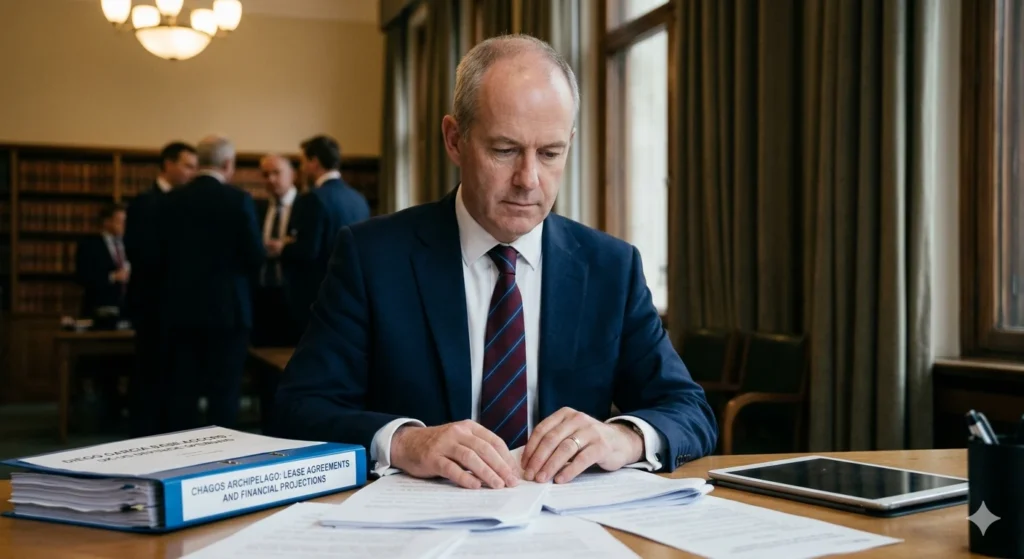
What might happen next to the Chagos Islands’ status?
The likely next steps for the Chagos Islands’ status involve a mix of diplomatic negotiations, domestic‑law processes, and potential increases in pressure from Chagossian campaigners and international bodies. The UK government has indicated it will not proceed with ratification until it receives a formal exchange of letters from the US confirming that the treaty complies with the 1966 UK–US agreement; this step could take months or longer, depending on US legislative and executive calendars. If the US signals its acceptance, the UK may resume parliamentary debate on the draft law, potentially with amended wording to address Conservative Party concerns.
Alternatively, continued resistance either in the US Congress or within the UK’s own political‑party system could force the government to revisit the terms of the lease‑back or explore a shorter‑term agreement, perhaps with tighter conditions on Chagossian resettlement and environmental safeguards. In parallel, Mauritius and Chagossian‑led groups may escalate legal challenges or UN‑level advocacy, seeking to crystallise sovereignty in Mauritian favour regardless of the UK’s willingness to ratify the 2025 deal. For South London audiences, this evolving scenario means that local campaigns, public‑inquiry participation, and media pressure will remain critical tools in shaping how the UK ultimately resolves one of its most sensitive colonial‑legacy disputes.
Why did Britain give the Chagos Islands to Mauritius?
Britain agreed to return the Chagos Islands to Mauritius as part of a long-running sovereignty dispute, driven by international legal rulings, diplomatic pressure, and efforts to resolve colonial-era claims while securing future arrangements for the US-UK military base on Diego Garcia.