Lambeth is one of South London’s most culturally diverse boroughs, offering free access to museums, contemporary art galleries, historic buildings, public exhibitions, creative spaces and riverside cultural attractions. From the internationally recognised Imperial War Museum to the independent exhibitions at Morley Gallery, visitors can explore art, history and local heritage without paying an admission fee.
- What Makes Lambeth an Important Cultural Destination in South London?
- How Has Lambeth’s Cultural Identity Developed?
- What Types of Free Cultural Experiences Are Available?
- Which Free Museums Offer the Best Cultural Experiences in Lambeth?
- Where Can Visitors Find Free Art Galleries and Public Exhibitions in Lambeth?
- Which Free Cultural Experiences Can Visitors Enjoy Along the South Bank?
- Where Can Visitors Explore Lambeth’s History and Heritage for Free?
- Lambeth Palace Library
- Explore Kennington’s Historic Streets
- Discover Waterloo’s Architectural Heritage
- What Free Cultural Activities Are Available in Brixton?
- Which Free Libraries and Community Spaces Support Cultural Learning in Lambeth?
- When Is the Best Time to Experience Free Culture in Lambeth?
The borough stretches from the South Bank and Waterloo to Brixton, Herne Hill, Stockwell, Kennington and Streatham. Each neighbourhood has a distinct cultural identity. Waterloo offers major cultural institutions and public art. Brixton celebrates Black British history, music and community creativity. Kennington preserves important architectural and historical landmarks, while Herne Hill and nearby areas support independent artistic activity.
Free cultural experiences in Lambeth include permanent museum collections, public exhibitions, community arts programmes, historic walks, libraries and outdoor installations. Some attractions operate without admission charges throughout the year, while others offer free access to selected exhibitions, workshops or special events.
Understanding the difference between permanent free admission and temporary ticketed programming helps visitors plan affordable cultural days in Lambeth.
What Makes Lambeth an Important Cultural Destination in South London?
Lambeth is an important cultural destination because it combines national museums, independent galleries, historic institutions, community arts organisations and public creative spaces. Its cultural identity reflects centuries of London history alongside contemporary multicultural influences, particularly in Waterloo, Brixton and Kennington.
Lambeth occupies a strategically important position on the south bank of the River Thames. Its cultural development reflects London’s expansion, industrial transformation, migration and changing artistic communities.
The borough contains internationally recognised attractions and smaller organisations that provide opportunities to experience culture outside conventional museum settings.
Its cultural infrastructure includes publicly accessible museums, galleries, libraries, performance venues and community organisations. These institutions preserve historical collections, present contemporary creative work and support participation in the arts.
How Has Lambeth’s Cultural Identity Developed?
Lambeth’s cultural identity developed through its riverside location, religious institutions, industrial activity and expanding residential communities.
During the medieval period, Lambeth became associated with religious administration through Lambeth Palace, the historic London residence of the Archbishop of Canterbury. Its riverside position also connected the area with Westminster and commercial activity along the Thames.
The nineteenth century brought major changes through railway development, population growth and industrial expansion. Waterloo became an important transport district, while working-class communities developed across Kennington, Brixton and surrounding neighbourhoods.
During the twentieth century, migration transformed Lambeth’s cultural character. Caribbean communities played a particularly significant role in shaping Brixton’s music, food, political activism and creative industries.
Today, Lambeth supports established cultural institutions alongside independent galleries, music venues, community projects and public art.
What Types of Free Cultural Experiences Are Available?
Free cultural experiences in Lambeth fall into several categories, including museum collections, contemporary exhibitions, heritage attractions, public art and community-led activities.
Examples include permanent exhibitions at the Imperial War Museum, changing displays at Morley Gallery, outdoor artwork around the South Bank and cultural learning opportunities at local arts organisations.
These experiences serve different audiences. History enthusiasts benefit from museums and archives. Art lovers find contemporary exhibitions and creative installations. Families access public spaces and community activities, while students and remote workers use libraries and cultural venues for learning.
The availability of free cultural activities also makes Lambeth suitable for visitors who want to explore London without relying on expensive entertainment.
Which Free Museums Offer the Best Cultural Experiences in Lambeth?
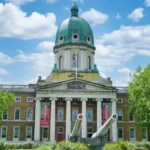
Lambeth offers access to important museum collections that explain British history, international conflicts, social change and cultural development. The Imperial War Museum is the borough’s leading free museum, providing permanent galleries, historical objects and educational exhibitions.
Museums preserve objects, documents, photographs and personal accounts that explain historical events. They also provide educational resources that connect past experiences with contemporary society.
Lambeth’s museum experiences are particularly valuable because visitors can explore significant collections without purchasing standard admission tickets.
Imperial War Museum London
The Imperial War Museum London is one of Lambeth’s most significant cultural attractions. It explores the impact of modern warfare on individuals, families, communities and nations.
The museum opened in 1920 and originally focused on recording Britain’s involvement in the First World War. Its collections subsequently expanded to cover conflicts from the twentieth century to the present day.
Visitors can explore several permanent galleries, including the First World War Galleries and The Holocaust Galleries. These exhibitions use personal testimonies, photographs, military objects and historical documents to explain the human consequences of conflict.
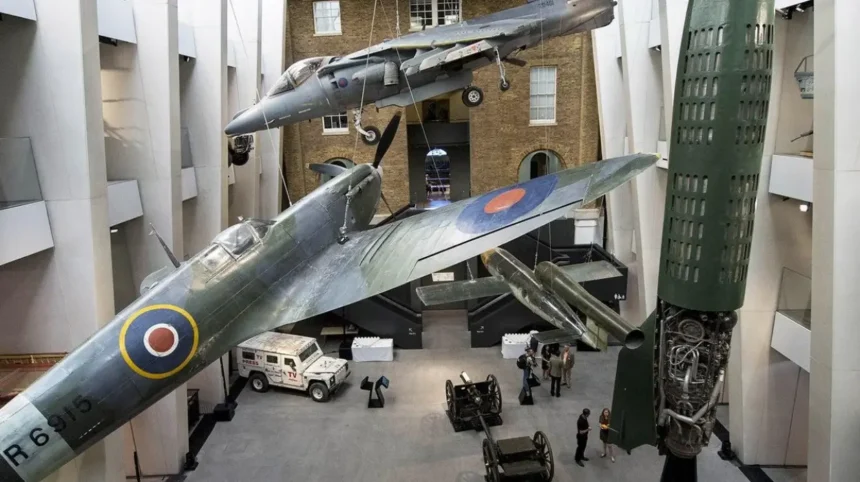
The museum’s central atrium also displays large military objects, including aircraft and vehicles. These installations introduce visitors to the scale of modern warfare.
The museum provides an important educational experience for international tourists, school groups, university students and families.
General admission is free. Certain special exhibitions, events and activities require separate paid tickets. Visitors should check the official website before travelling.
Florence Nightingale Museum: Understanding Nursing History
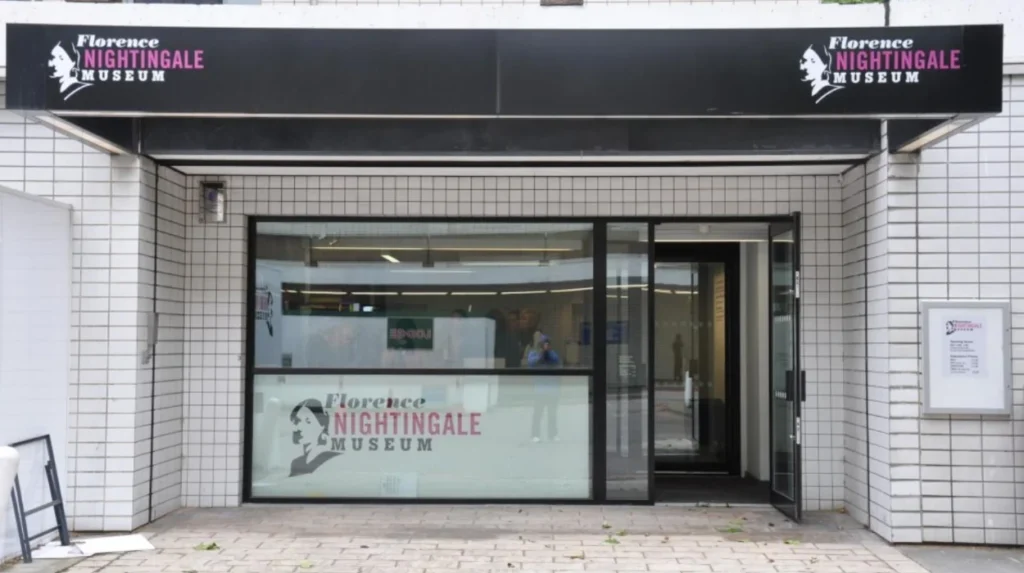
The Florence Nightingale Museum explores the life and work of Florence Nightingale, the nineteenth-century nursing reformer widely recognised for transforming modern nursing.
Located within St Thomas’ Hospital, the museum presents historical nursing equipment, personal belongings, photographs and documents. Its exhibitions explain Nightingale’s work during the Crimean War and her contribution to hospital reform, sanitation and professional nursing education.
However, this museum is not a standard free-admission attraction. It is useful to include in a Lambeth cultural itinerary when comparing free and paid heritage experiences, but visitors seeking completely free activities should prioritise the Imperial War Museum.
Where Can Visitors Find Free Art Galleries and Public Exhibitions in Lambeth?
Lambeth has several accessible art spaces where visitors encounter contemporary artworks, photography, design and community exhibitions without standard admission charges. Morley Gallery, Southbank Centre’s public spaces and independent creative organisations provide particularly useful opportunities.
Art galleries contribute to Lambeth’s cultural identity by supporting artists, presenting new creative work and encouraging public participation.
Unlike traditional museums, contemporary galleries frequently change their displays. This gives visitors opportunities to encounter different artistic approaches throughout the year.
Morley Gallery
Morley Gallery is an accessible cultural venue near Waterloo. It operates as part of Morley College London, an educational institution with a long history of adult learning and creative education.
The gallery presents changing exhibitions involving visual arts, photography, painting, sculpture, design and work produced by emerging artists.
Its connection with an educational institution gives the gallery an important role in supporting creative development. Students, professional artists and independent practitioners contribute to the wider artistic environment.
Free entry makes Morley Gallery a practical cultural stop for visitors exploring Waterloo. Its exhibitions also provide insight into the relationship between art education and contemporary creative practice.
Opening days and exhibition schedules vary, so visitors should confirm current arrangements before visiting.
Southbank Centre
The Southbank Centre is one of the UK’s largest arts centres. It brings together music, literature, dance, theatre, visual arts and public cultural programming.
Its main complex includes the Royal Festival Hall, Queen Elizabeth Hall, Purcell Room and Hayward Gallery.
The venue is free to enter, and visitors can explore public areas, view selected installations and enjoy the riverside environment without purchasing performance tickets.
More than half of its events are advertised as completely free, although the programme changes throughout the year. Free activities include selected exhibitions, talks, public installations, workshops and community events.
The Hayward Gallery is particularly important for contemporary art. Its standard exhibitions often require paid tickets, but selected free exhibitions and community access schemes provide additional opportunities.
The Community Connect programme offers free Hayward Gallery exhibition tickets through participating local organisations and community groups. This creates additional access for Lambeth and Southwark communities. visitlondon.com+2
198 Contemporary Arts and Learning
198 Contemporary Arts and Learning is an important independent arts organisation in the Herne Hill and Brixton area.
Its programme explores contemporary visual culture, identity, social history and the experiences of underrepresented communities.
The organisation provides exhibition opportunities for artists and supports creative learning through educational programmes. Its work connects artistic expression with wider discussions about representation, equality and community identity.
Visitors can explore selected exhibitions without paying admission. The organisation also supports learning and employment initiatives for local creative practitioners.
Its STEP UP programme provides free community learning for eligible Lambeth adults aged 19 and over who are unemployed or on low incomes. The programme demonstrates how cultural organisations contribute beyond exhibition spaces by supporting skills development and participation in the creative economy. google.com
South London Gallery
South London Gallery is a major contemporary art institution in the wider South London cultural landscape.
Although it is located in neighbouring Southwark rather than the London Borough of Lambeth, it provides a useful nearby cultural experience for visitors exploring the wider area.
Its exhibitions feature contemporary artists working across painting, photography, sculpture, film and installation.
The gallery also supports education, community engagement and artistic development. Its main building and additional exhibition spaces provide opportunities to explore changing creative programmes.
General gallery admission is free, although particular events and activities have separate arrangements. tripadvisor.com
Which Free Cultural Experiences Can Visitors Enjoy Along the South Bank?
The South Bank offers some of Lambeth’s most accessible free cultural experiences through public art, riverside installations, creative exhibitions and street performance. Visitors can explore the Queen’s Walk, Leake Street and public spaces surrounding major arts institutions.
The South Bank is a cultural district extending along the southern side of the River Thames.
Its development accelerated following the Festival of Britain in 1951, which introduced major cultural and architectural changes to the riverside.
Today, the area combines public spaces with theatres, galleries, restaurants, markets and performance venues.
Explore the Queen’s Walk
The Queen’s Walk is a public riverside promenade connecting several important attractions along the Thames.
Visitors can walk along the river, observe public installations and enjoy views towards Westminster, the London Eye and St Paul’s Cathedral.
The promenade provides access to public spaces around the Southbank Centre and other cultural institutions.
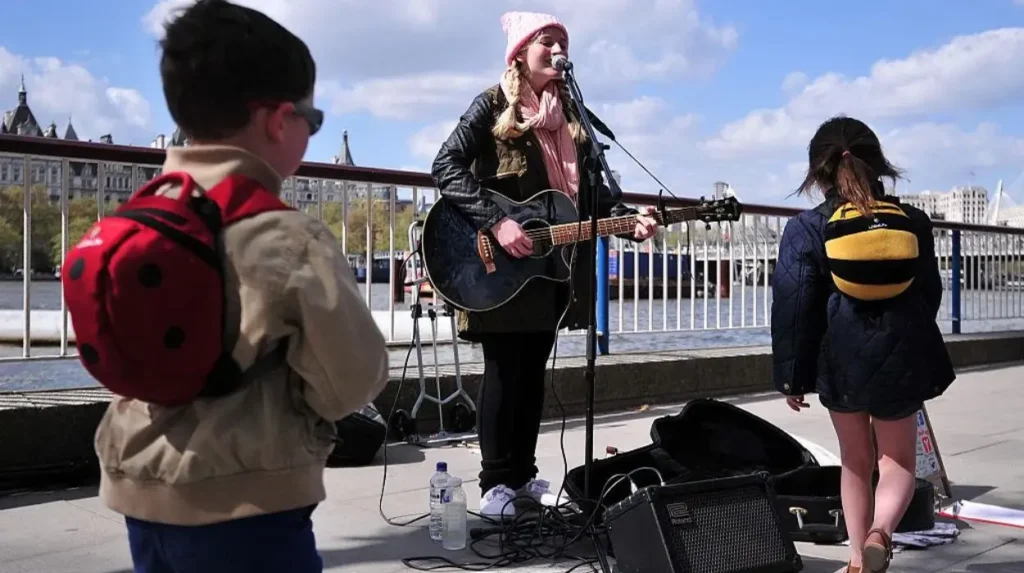
Street performers frequently use the surrounding public areas for music, dance, comedy and physical performances. These activities contribute to the area’s cultural atmosphere.
Watching public performances is generally free, although performers often accept voluntary contributions.
The riverside also provides opportunities to observe London’s architectural development, including historic buildings and modern cultural facilities.
Discover Leake Street Arches
Leake Street is one of London’s best-known locations for public graffiti and street art.
The tunnel runs beneath Waterloo Station and provides an accessible outdoor environment for artists to create large-scale murals.
Its walls display constantly changing artwork. Visitors can observe different techniques, lettering styles, colour combinations and visual themes.
The tunnel became internationally recognised through its association with the 2008 Cans Festival, which brought street artists to Waterloo to create large-scale works.
Unlike conventional galleries, Leake Street does not preserve a permanent exhibition. Its artwork changes as new artists paint over existing designs.
The location demonstrates how public space supports informal cultural expression. Visitors can enter without buying an admission ticket, although individual events and commercial activities have separate arrangements. South Bank London
Visit the National Poetry Library
The National Poetry Library is located within the Royal Festival Hall at the Southbank Centre.
It maintains an extensive collection of modern and contemporary poetry, including books, magazines, journals and other literary materials.
The library provides access to poetry from different periods, languages and cultural backgrounds.
Visitors interested in literature can explore its collections and investigate the relationship between poetry, performance and contemporary society.
The library also hosts selected exhibitions and literary activities. Access arrangements and opening times should be checked before visiting.
Where Can Visitors Explore Lambeth’s History and Heritage for Free?
Lambeth’s historic cultural experiences include religious heritage, archival collections, historic streets and architectural landmarks. Lambeth Palace Library, Kennington’s historic surroundings and Waterloo’s heritage sites provide opportunities to understand the borough’s development.
Heritage experiences explain how communities, buildings and institutions developed over time.
Lambeth’s historic environment reflects religious administration, transport expansion, political activity and changes in London’s urban landscape.
Visitors can explore this history through public exhibitions, libraries, outdoor architecture and selected heritage events.
Lambeth Palace Library
Lambeth Palace Library
Lambeth Palace Library is the historic library and archive of the Church of England. It holds significant collections relating to religious history, theology, administration and British society.
Its historical materials include manuscripts, maps, printed books, correspondence and archival documents. Some collections date back many centuries.
The library organises exhibitions that introduce selected historical objects to public audiences. These exhibitions provide insight into the development of the Church of England and its influence on British cultural history.
Selected public exhibitions and lectures are free, although access to research collections follows separate arrangements.
Visitors should distinguish between the library’s exhibition programme and access to its reading rooms. Exhibition opening times and public event booking requirements vary. google.com+1
Lambeth Palace itself is a historic site with medieval and Tudor architectural elements. It remains the official London residence of the Archbishop of Canterbury and is not a daily walk-in museum.
For visitors interested in its architectural background, explore the full [Insert Anchor Text for Lambeth Palace History Article Here] to understand how the palace developed into one of Britain’s most significant religious landmarks.
Explore Kennington’s Historic Streets
Kennington contains important architectural and historical features that reflect London’s expansion during the Georgian and Victorian periods.
Its historic streets include residential buildings, churches, public squares and landmarks associated with nineteenth-century urban development.
Visitors can explore the neighbourhood on foot and observe architectural details without paying an entrance fee.
The surrounding area also connects with significant historical developments in British politics, transport and religious life.
Walking through Kennington provides an accessible introduction to the relationship between historic architecture and contemporary London neighbourhoods.
Discover Waterloo’s Architectural Heritage
Waterloo contains important examples of twentieth-century architecture, particularly around the Southbank Centre and National Theatre.
The National Theatre is a major cultural institution designed by architect Denys Lasdun. Its distinctive concrete structure is an important example of British Brutalist architecture.
Visitors can explore the exterior and surrounding public areas without buying theatre tickets.
The Southbank Centre also provides opportunities to understand the architectural legacy of the Festival of Britain and the development of post-war cultural infrastructure.
These public spaces demonstrate how architecture contributes to London’s cultural identity.
What Free Cultural Activities Are Available in Brixton?
Brixton provides free cultural experiences through community arts, public murals, independent creative organisations, local heritage and public events. Its cultural identity reflects Caribbean migration, Black British history, music, political activism and contemporary artistic expression.
Brixton is one of Lambeth’s most recognisable cultural neighbourhoods.
Its development reflects migration, commercial growth, community organisation and artistic innovation. Caribbean communities have played a central role in shaping the area’s cultural identity.
The neighbourhood is particularly associated with reggae, sound-system culture, independent music, food markets and Black British political history.
Explore Brixton’s Public Art
Brixton’s public art reflects local history, community identity and contemporary creative expression.
Murals and street installations appear across the neighbourhood, introducing visual references to musicians, historical figures and social movements.
Visitors can explore public artwork while walking through Brixton’s commercial streets and surrounding neighbourhoods.
Windrush Square is particularly important because it commemorates the contribution of Caribbean communities to British society.
The square is named in connection with the HMT Empire Windrush, the ship associated with the arrival of Caribbean migrants in Britain in 1948.
Its public setting makes it an important location for understanding migration history and contemporary multicultural identity.
Experience Brixton’s Music Heritage
Brixton has a significant place in London’s music history.
The neighbourhood became associated with reggae, ska, punk, soul and other musical movements through its independent venues, record shops and community networks.
Electric Avenue is particularly recognised for its historical commercial and cultural importance. The street also became widely known through Eddy Grant’s 1982 song of the same name.
Visitors can explore Brixton’s musical identity through public streets, historical landmarks and community-led events.
Some organised music tours and live performances charge admission. However, independent exploration of the neighbourhood’s music-related landmarks is free.
Visit Community Cultural Events
Brixton hosts community events that celebrate local creativity, heritage and cultural diversity.
These include selected outdoor performances, public celebrations, exhibitions and educational activities.
The programme changes according to the season and the organisations involved.
Lambeth Council, local cultural organisations and community groups provide information about upcoming activities.
Visitors should check event listings because free attendance does not always mean advance registration is unnecessary.
Explore More Area Guide
Which Lambeth Attractions Are Best for Budget Travellers?
Where to Experience Lambeth’s Seasonal Festivals in South London
Which Free Libraries and Community Spaces Support Cultural Learning in Lambeth?
Lambeth’s public libraries and community spaces support cultural learning through books, digital resources, reading activities, exhibitions and educational programmes. They provide accessible environments for residents, students, families and visitors interested in local knowledge.
Libraries are important cultural institutions because they preserve knowledge and provide public access to educational resources.
Lambeth’s library network supports reading, research, digital inclusion and community learning.
Libraries also organise activities that connect people with literature, local history and creative development.
Use Lambeth’s Public Libraries
Lambeth’s public libraries provide access to books, newspapers, digital resources and community activities.
Examples include Brixton Library, Streatham Library, Clapham Library and Carnegie Library.
These facilities support different forms of cultural participation.
Visitors can explore local history collections, borrow books where eligible, access public computers and participate in selected reading groups.
Library membership is free for eligible users, subject to registration requirements.
Students and digital nomads also benefit from public study environments. Library facilities provide practical spaces for reading, research and independent work.
Participate in Community Arts Programmes
Community arts programmes encourage people to participate in creative activities rather than simply observe exhibitions.
Lambeth organisations support activities involving photography, painting, visual arts, writing and creative skills development.
198 Contemporary Arts and Learning is one example of an organisation connecting exhibition programming with educational opportunities.
Selected workshops and community activities are free, although eligibility, registration and availability vary.
These programmes help develop creative confidence and provide opportunities for local people to engage with cultural institutions.
When Is the Best Time to Experience Free Culture in Lambeth?
The best time to explore Lambeth’s free cultural attractions depends on exhibition schedules, public events, museum opening days and seasonal outdoor programming. Weekdays suit quieter museum visits, while weekends offer more opportunities for public performances and community activities.
Lambeth provides cultural experiences throughout the year, but individual attractions operate different schedules.
Permanent museum collections provide relatively consistent opportunities for visitors. Temporary exhibitions and outdoor activities depend on changing programmes.
Are Weekdays Better for Free Cultural Visits?
Weekdays are suitable for visitors who prefer quieter galleries and museums.
The Imperial War Museum, Morley Gallery and selected cultural institutions operate weekday opening schedules.
Weekday visits also suit students and digital nomads who want to combine cultural exploration with independent study or research.
Visitors should check individual opening times because not every gallery operates seven days a week.
Are Weekends Better for Cultural Events?
Weekends provide access to a wider range of public activities across Lambeth.
Southbank Centre frequently hosts cultural programming, while Brixton’s public spaces support community events and independent creative activities.
Seasonal markets, outdoor performances and temporary exhibitions add variety to weekend visits.
However, some events require free advance tickets because organisers manage visitor numbers and venue capacity.
Which Seasons Offer the Best Outdoor Cultural Experiences?
Spring and summer provide suitable conditions for exploring outdoor public art, historic streets and riverside cultural spaces.
Longer daylight hours allow visitors to combine several attractions through walking routes.
Autumn and winter offer more opportunities to focus on indoor exhibitions, museum collections and literary activities.
The South Bank remains accessible throughout the year, although outdoor performance schedules and weather conditions influence the experience.
What are the best free cultural attractions in Lambeth?
The best free cultural attractions in Lambeth include the Imperial War Museum, Morley Gallery, Southbank Centre public spaces, Leake Street Arches and Brixton’s public art. These attractions offer opportunities to explore history, contemporary art and local culture without paying general admission.