Lambeth, in South London, has a distinctive literary and artistic heritage shaped by influential poets, visual artists, musicians, theatre practitioners and contemporary street artists. Its cultural identity connects historic residential streets with public artworks, specialist libraries, creative venues and community archives. Visitors can follow the footsteps of poet and artist William Blake, discover David Bowie’s Brixton connections, explore William Blake-inspired mosaics and experience contemporary street art in Stockwell and Waterloo.
- Why Is Lambeth Important to London’s Literary and Artistic Heritage?
- What makes Lambeth’s cultural heritage distinctive?
- Where Can Visitors Discover William Blake’s Literary Heritage in Lambeth?
- Where Can Visitors Find the William Blake Mosaics in North Lambeth?
- Where Can Visitors Explore David Bowie’s Artistic Connections in Brixton?
- Where Can Visitors Experience Contemporary Street Art in Stockwell?
- Which Literary and Historical Collections Can Visitors Explore at Lambeth Archives?
- Where Can Visitors Discover Poetry and Literary Culture Near Waterloo?
- What Can Visitors Discover at the National Poetry Library?
- Why Is the Southbank Centre Important to Lambeth’s Creative Identity?
- Where Can Visitors Explore Historic Art and Garden Heritage at the Garden Museum?
- Where Can Visitors Discover Street Art and Creative Culture at Leake Street?
- Which Theatres and Cultural Venues Connect Lambeth with London’s Performing Arts?
- How Can Visitors Plan a Literary and Artistic Walking Tour of Lambeth?
- Why Does Lambeth’s Artistic Heritage Remain Relevant to Modern Visitors?
The borough’s creative history spans several centuries. During the late eighteenth century, William Blake lived and worked in Lambeth, producing important poetry and visual art. In the twentieth century, Brixton developed strong associations with popular music, independent culture and political expression. Today, public art projects, galleries, performance venues and historical collections preserve these connections.
For visitors interested in literature, painting, music and creative history, Lambeth offers opportunities to explore cultural heritage through real locations rather than relying exclusively on traditional museums. The best experiences include Hercules Road, Brixton’s David Bowie mural, Lambeth Archives, the William Blake mosaics, Stockwell Hall of Fame and the South Bank cultural district.
Why Is Lambeth Important to London’s Literary and Artistic Heritage?
Lambeth is important to London’s cultural history because it was home to William Blake, developed strong connections with musicians such as David Bowie, and supports public art, literary collections and creative institutions. Its historic streets and cultural venues connect different periods of artistic expression.
Lambeth occupies the south bank of the River Thames and includes neighbourhoods such as Waterloo, Vauxhall, Kennington, Brixton, Stockwell, Herne Hill and Streatham. Each neighbourhood contributes to the borough’s cultural identity through architecture, performance, literature, music and visual art.
The area’s artistic importance developed through different historical periods. During the eighteenth century, Lambeth attracted writers and artists because of its developing residential communities and proximity to central London. William Blake’s residence in the borough represents one of its strongest literary associations.
The nineteenth century brought further changes through industrial development, population growth and the expansion of entertainment venues. Public gardens, theatres, churches and cultural organisations helped shape the area’s creative environment.
In the twentieth century, Brixton became associated with music, independent cultural movements and influential performers. David Bowie, born in Brixton in 1947, remains one of the neighbourhood’s most internationally recognised cultural figures.
Contemporary Lambeth continues this tradition through street art, independent creative spaces, community exhibitions and public cultural programmes.
What makes Lambeth’s cultural heritage distinctive?
Three important characteristics explain its appeal:
- Literary history: William Blake’s former Lambeth residence and the surviving commemorative features associated with his work.
- Musical and artistic heritage: David Bowie’s Brixton birthplace and the neighbourhood’s changing street-art culture.
- Living creative culture: Public artworks, libraries, archives and venues supporting contemporary artistic expression.
These connections make Lambeth particularly suitable for visitors interested in exploring the relationship between London’s historical development and its creative communities.
Where Can Visitors Discover William Blake’s Literary Heritage in Lambeth?
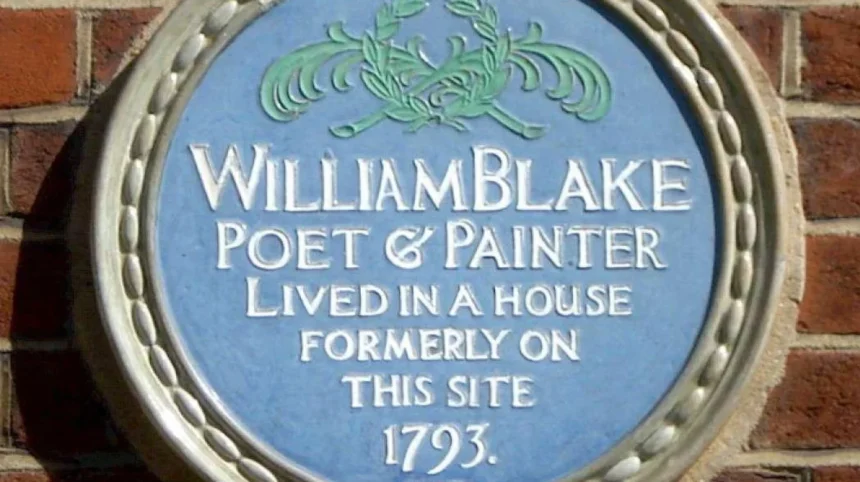
Visitors can explore William Blake’s Lambeth heritage around Hercules Road, where the poet and artist lived from 1791 to 1800. The location connects directly with the creation of Songs of Experience, America and several important illustrated prophetic works.
William Blake (1757? No: 1757 is incorrect; he was born in 1757? Actually William Blake was born 28 November 1757.) was an English poet, painter, printmaker and visionary artist. He became one of the most influential figures in English Romantic literature and visual art.
Blake moved to Lambeth in 1791 with his wife, Catherine Blake. Their home stood at 13 Hercules Buildings, near the present-day Hercules Road area.
According to Tate’s historical account of Blake’s London, he lived at this address until 1800. During this period, he produced several significant works, including Songs of Experience, Europe and America. He also developed a series of important watercolours.
The original property was demolished in 1918. Therefore, visitors should understand that the present-day location is a heritage landmark rather than a preserved historic house.
What Can Visitors See Around Hercules Road?
Hercules Road provides a starting point for understanding Blake’s relationship with Lambeth. Visitors can explore the surrounding streets, identify commemorative features and connect the modern neighbourhood with the poet’s eighteenth-century residence.
The surrounding urban environment has changed considerably since Blake’s lifetime. Residential development, railway infrastructure and modern transport routes have transformed the area.
However, the location remains significant because it identifies where some of his most important creative work developed.
Blake’s Lambeth period also provides an important historical connection between poetry and visual art. His illustrated publications combined written language with original imagery, creating a distinctive approach to artistic expression.
Why Is Blake’s Lambeth Period Important?
Blake’s residence demonstrates that Lambeth was not simply a residential area in London’s wider history. It was also a place where internationally recognised literary and artistic work developed.
His experiences of urban growth, poverty and industrial change influenced his observations of society. These themes appear throughout his poetry and illustrated publications.
Visitors interested in Romantic literature should combine Hercules Road with a visit to the nearby William Blake mosaics.
For a wider understanding of the neighbourhood’s development, explore the full [Insert Anchor Text for Lambeth’s Historical Background Article Here] to understand how its residential streets, transport infrastructure and cultural institutions evolved.
Where Can Visitors Find the William Blake Mosaics in North Lambeth?
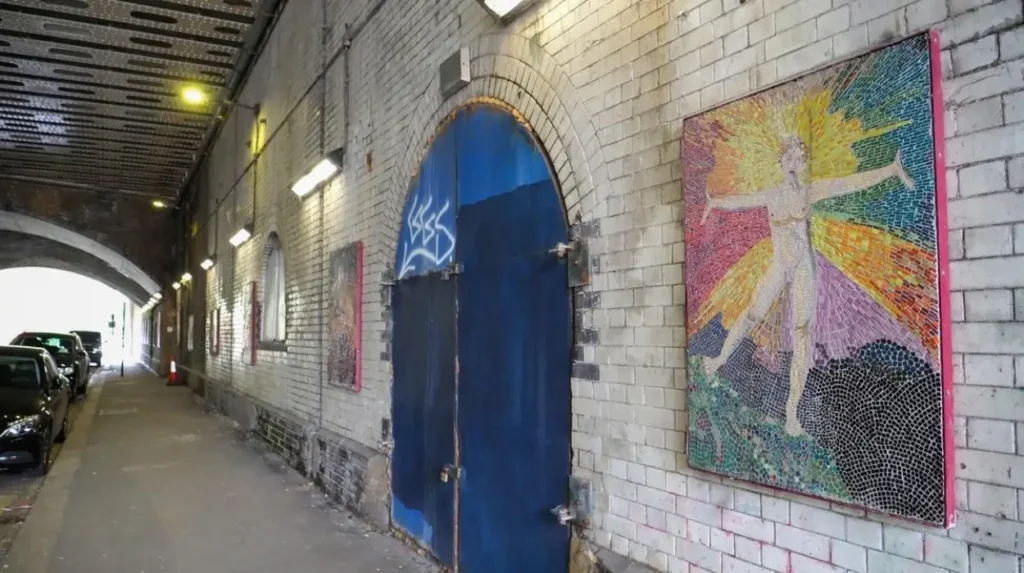
Visitors can discover William Blake-inspired public mosaics around Centaur Street, Virgil Street and Carlisle Lane in North Lambeth. These artworks combine literary references and visual imagery, bringing the poet’s historical connection into the borough’s contemporary public spaces.
The William Blake mosaics offer a particularly interesting experience for visitors who want to combine literary history with outdoor art.
The artworks form part of the Blake’s Lambeth initiative, a community-based public art project that celebrates the poet’s association with the neighbourhood. The mosaics appear around railway arches and pedestrian routes, transforming otherwise overlooked urban spaces into locations for artistic interpretation.
Centaur Street is an important starting point. Visitors can also explore nearby Virgil Street and Carlisle Lane to discover further examples.
What Makes the Mosaics Significant?
The mosaics connect Blake’s poetry and illustrations with contemporary public art. Their placement in ordinary neighbourhood spaces makes literary heritage accessible without requiring museum admission or a formal guided tour.
Some installations incorporate visual references to Blake’s creative work, while others use literary themes to establish connections between historical writing and modern artistic expression.
The project also demonstrates the importance of community participation in heritage preservation. Instead of presenting literary history exclusively through museum displays, it introduces cultural references into the everyday environment.
Visitors should allow time to examine the artworks closely and photograph their details. The installations work particularly well as part of a walking route connecting Hercules Road with other North Lambeth landmarks.
Where Can Visitors Explore David Bowie’s Artistic Connections in Brixton?
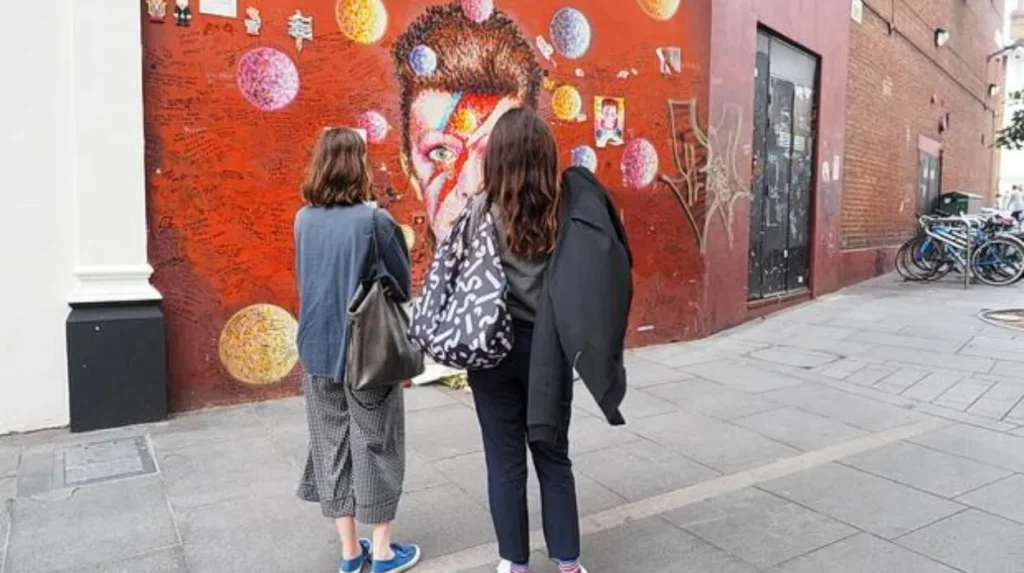
Brixton is one of Lambeth’s most recognisable cultural destinations because David Bowie was born there in 1947. Visitors can explore the famous Bowie mural on Tunstall Road and discover the neighbourhood’s wider musical and artistic identity.
David Bowie was an internationally recognised British musician, songwriter, performer and cultural innovator. Born David Robert Jones on 8 January 1947, he grew up in the Brixton area before developing an influential career in popular music.
His connection with Brixton remains an important part of the neighbourhood’s cultural identity.
The best-known public tribute is the David Bowie mural on Tunstall Road. Created by Australian artist James Cochran, also known as Jimmy C, the artwork was unveiled in 2013.
The mural depicts Bowie with imagery associated with his Aladdin Sane period. Its distinctive painted style makes it one of Brixton’s most recognisable public artworks.
Why Is the Tunstall Road Mural Important?
The mural represents the connection between an internationally influential artist and his birthplace.
It also demonstrates how public art preserves cultural memory. Rather than keeping Bowie’s legacy inside a gallery, the mural places it directly within the neighbourhood associated with his early life.
The artwork attracts music enthusiasts, photographers and international visitors interested in Bowie’s career.
Visitors should also explore the surrounding Brixton streets. The neighbourhood has a wider cultural identity shaped by Caribbean heritage, independent music, performance spaces, markets and community art.
Brixton’s musical history extends beyond one internationally recognised performer. Its contribution to reggae, soul, punk, electronic music and other genres has influenced London’s wider cultural development.
What Else Can Visitors Explore in Brixton?
Brixton Market provides an opportunity to experience the neighbourhood’s multicultural identity through independent businesses, food and everyday community life.
The surrounding streets also contain historical murals and contemporary public artworks.
The Brixton Society documents the neighbourhood’s mural history, including works such as Big Splash, Nuclear Dawn and the David Bowie mural. Its records demonstrate how mural art has developed as an important form of local cultural expression.
A visit to Brixton therefore offers more than a single celebrity landmark. It provides an introduction to the relationship between music, community identity and visual art in South London.
Where Can Visitors Experience Contemporary Street Art in Stockwell?
Stockwell Hall of Fame is a recognised outdoor street-art destination in Lambeth, featuring constantly changing graffiti and large-scale wall paintings. Its open-air setting provides visitors with an opportunity to experience contemporary urban creativity and London’s graffiti culture.
Stockwell Hall of Fame is located at Aytoun Road, between Stockwell and Brixton. It is particularly well known for its graffiti-covered walls and its role in supporting London’s street-art community.
The site developed into a recognised location for graffiti artists because of its accessible wall spaces and established creative culture.
Unlike a traditional gallery, Stockwell Hall of Fame displays art in an outdoor environment. Its appearance changes as artists create new designs and existing work is replaced.
How Does Stockwell Hall of Fame Support Local Creativity?
The site demonstrates how urban spaces can support artistic activity outside conventional cultural institutions.
Graffiti and street art provide visual platforms for personal expression, social commentary and neighbourhood identity. Stockwell Hall of Fame brings these forms of creativity into a recognised public setting.
Its history also reflects the changing attitude towards graffiti in London. Artistic work that was once associated primarily with unauthorised urban painting increasingly appears in designated spaces and organised creative projects.
Visitors can photograph the artwork and observe the different styles used by individual artists.
The location also works well as part of a wider walk through Stockwell and Brixton.
Visitors should respect the artists and the surrounding community. Individual pieces change regularly, so the artwork seen during one visit is not necessarily present during another.
Which Literary and Historical Collections Can Visitors Explore at Lambeth Archives?
Lambeth Archives is the borough’s principal local history research centre, located at 16 Brixton Hill. Its collections include historical photographs, maps, manuscripts, documents and artworks that help visitors understand Lambeth’s literary, artistic and social development.
Lambeth Archives provides one of the most useful starting points for understanding the borough’s cultural history.
The institution operates as Lambeth’s record office and local studies library. Its collections preserve documentary evidence relating to the borough’s communities, buildings, institutions and important historical figures.
Its records date back to the sixteenth century and include material from local government, schools, churches, businesses, charities and community organisations.
For visitors interested in writers and artists, these collections provide a valuable way to investigate the people behind Lambeth’s cultural development.
What Historical Material Is Available?
The archives contain several important types of material:
- Historical photographs documenting buildings, streets and neighbourhood changes.
- Maps showing the development of Lambeth’s districts.
- Personal and organisational records relating to local residents.
- Artworks and visual collections connected with the borough.
- Documents relating to social, cultural and community history.
These materials help researchers understand how Lambeth developed from historic settlements into a major part of modern London.
Visitors researching William Blake, Brixton’s musical heritage or the history of local artistic communities can use the collections to identify relevant records.
Why Should Tourists Visit Lambeth Archives?
Lambeth Archives provides historical context that ordinary sightseeing does not always reveal.
A photograph of a demolished building, for example, can help visitors understand how a familiar street looked before modern development. Historical maps also demonstrate how transport routes and residential districts changed.
The centre is located at 16 Brixton Hill, London SW2 1ET, within walking distance of Brixton’s main transport connections.
Lambeth Council publishes the opening schedule and visitor information. The centre recommends arranging an appointment for archive research, particularly on Saturdays.
Visitors should check exhibition arrangements before travelling because the exhibition space is also used for meetings and educational activities.
Where Can Visitors Discover Poetry and Literary Culture Near Waterloo?
The National Poetry Library at the Southbank Centre provides a major literary destination near Waterloo. Its extensive modern poetry collection, public exhibitions and literary activities connect visitors with contemporary British and international poetry.
The National Poetry Library is located on Level 5 of the Royal Festival Hall at the Southbank Centre.
It is an important destination for visitors interested in written literature, poetry publishing and contemporary creative expression.
The library holds the largest public collection of modern poetry in the world. Its collections support readers, researchers, students and people interested in exploring poetry beyond conventional literary museums.
What Can Visitors Discover at the National Poetry Library?
The library provides access to a wide range of modern poetry publications and related resources.
Its collections help visitors explore different literary styles, poetic movements and contemporary writing practices.
The institution also supports the wider literary programme of the Southbank Centre, where performances, discussions and cultural events introduce poetry to different audiences.
Its location makes it particularly convenient for visitors exploring Waterloo and the riverside cultural district.
The library is generally open six days a week:
- Tuesday: 12 noon–6 pm.
- Wednesday to Sunday: 12 noon–8 pm.
- Monday: Closed.
Opening arrangements should be checked before visiting, particularly during public holidays or special events.
Why Is the Southbank Centre Important to Lambeth’s Creative Identity?
The Southbank Centre is one of London’s major performing arts institutions. Its site includes the Royal Festival Hall, Queen Elizabeth Hall, Purcell Room and Hayward Gallery.
These venues support music, dance, theatre, visual art, talks and literary programming.
The Hayward Gallery is particularly relevant to visitors interested in contemporary visual art. Its exhibitions introduce work by established and emerging artists through changing programmes.
The riverside setting also connects the cultural venues with public spaces, restaurants, bookshops and outdoor events.
Much of the Southbank Centre’s public areas are accessible without purchasing performance tickets. However, individual exhibitions and performances have separate admission arrangements.
For visitors seeking a combination of literature and visual art, the Southbank Centre provides a useful addition to a Lambeth heritage itinerary.
Where Can Visitors Explore Historic Art and Garden Heritage at the Garden Museum?
The Garden Museum in Lambeth explores the history of British gardens, landscape design and botanical collecting. Located inside the former St Mary-at-Lambeth church, it connects visitors with historic garden culture and the legacy of collector John Tradescant.
The Garden Museum is located beside Lambeth Palace on Lambeth Palace Road.
The museum occupies the former St Mary-at-Lambeth church, a historic building with connections to the development of British gardening and botanical collections.
One of its important historical connections is John Tradescant the Elder, a seventeenth-century gardener and plant collector. He and his son, John Tradescant the Younger, helped introduce and document plants from different parts of the world.
John Tradescant the Elder’s tomb remains in the museum’s garden.
What Can Art and History Enthusiasts Discover?
The museum explores how gardens developed as artistic, cultural and practical spaces.
Visitors can discover historical gardening objects, botanical collections, garden design and the relationship between landscape architecture and wider British history.
The historic building also provides an architectural experience. Its church structure and surrounding garden create a connection between religious heritage and botanical history.
The museum is particularly relevant to visitors interested in visual design because gardens combine architecture, sculpture, planting and landscape composition.
Its exhibitions also explain how botanical collecting influenced the development of gardening traditions.
Visitors should check current admission arrangements and exhibition schedules before travelling.
Where Can Visitors Discover Street Art and Creative Culture at Leake Street?
Leake Street beneath Waterloo Station is a recognised street-art destination where graffiti and mural painting create an evolving outdoor gallery. Visitors can explore its colourful tunnel, photograph changing artworks and experience an important part of London’s contemporary urban culture.
Leake Street Tunnel is one of the most recognisable street-art locations near Waterloo.
The pedestrian tunnel runs beneath Waterloo Station and is associated with London’s developing graffiti culture.
Its reputation grew following the 2008 Cans Festival, an event associated with street artist Banksy that helped establish the tunnel as a recognised space for graffiti.
Unlike conventional galleries, the artwork changes regularly. New artists contribute paintings, lettering, illustrations and large-scale visual compositions.
Why Is Leake Street Popular with Art Enthusiasts?
The tunnel demonstrates how public spaces can become platforms for contemporary creative expression.
Its walls provide space for different artistic approaches, including traditional graffiti lettering, figurative painting and experimental compositions.
The surrounding Leake Street Arches also contain independent food, drink and entertainment businesses.
Visitors can combine photography and street-art exploration with a wider Waterloo visit.
The tunnel is a useful destination for:
- Street-art enthusiasts interested in graffiti culture.
- Photographers documenting contemporary London.
- Visitors researching public art and urban regeneration.
- Artists interested in large-scale outdoor painting.
The tunnel is generally accessible around the clock, although individual businesses within the arches operate separate opening hours.
Which Theatres and Cultural Venues Connect Lambeth with London’s Performing Arts?
Lambeth’s performing arts heritage is particularly visible around Waterloo and the South Bank, where major cultural institutions support theatre, music, dance and visual art. The area’s venues connect historic performance traditions with contemporary British and international creative production.
The South Bank cultural district is an important part of Lambeth’s artistic identity.
Its institutions provide opportunities to experience different creative disciplines through exhibitions, performances and public programmes.
Southbank Centre
The Southbank Centre is one of the area’s principal cultural destinations.
Its venues include:
- Royal Festival Hall, which hosts orchestral performances and musical events.
- Queen Elizabeth Hall, which supports music and performing arts.
- Purcell Room, which provides an intimate performance environment.
- Hayward Gallery, which presents contemporary visual art exhibitions.
The centre also supports the National Poetry Library and a wider programme of literary and cultural events.
The Old Vic
The Old Vic is an important historic theatre near Waterloo Station.
Its history extends over more than two centuries. The theatre has played a significant role in British stage performance and continues to present productions featuring established and emerging performers.
Its association with dramatic literature makes it relevant to visitors exploring London’s theatrical heritage.
The Old Vic is particularly useful for understanding how historic theatres maintain their cultural relevance through changing productions and audiences.
National Theatre
The National Theatre is another major cultural institution nearby.
It is located on the South Bank in the neighbouring London Borough of Southwark, rather than Lambeth. Nevertheless, its proximity makes it a practical addition to a Waterloo and South Bank cultural itinerary.
The theatre presents classical drama, contemporary writing and new productions.
Visitors should distinguish between Lambeth’s own cultural landmarks and nearby South Bank institutions when planning a borough-specific heritage visit.
Explore More Area Guide
Best Places to Visit Near Lambeth’s Historic Hospitals
Did a Ghost Train Entomb Victorian Corpses at Crystal Palace Park 2026
How Can Visitors Plan a Literary and Artistic Walking Tour of Lambeth?
Visitors can explore Lambeth’s literary and artistic heritage through a walking itinerary connecting Hercules Road, William Blake mosaics, Lambeth Palace, Waterloo, Stockwell and Brixton. Grouping nearby landmarks reduces unnecessary travel and provides a broader understanding of the borough’s creative history.
A planned walking route helps visitors understand how Lambeth’s cultural identity developed across different neighbourhoods.
Which Route Is Best for First-Time Visitors?
The North Lambeth and Waterloo section is suitable for visitors with limited time.
Start around Hercules Road and explore the William Blake mosaics before visiting the Garden Museum. Continue towards the Southbank Centre and Leake Street.
This route combines literary heritage, historical architecture, poetry and contemporary visual art.
Visitors with additional time can travel south towards Stockwell and Brixton.
The second section introduces a different aspect of Lambeth’s cultural identity through street art, musical heritage and historical research.
How Much Time Should Visitors Allow?
A short cultural visit focused on Waterloo and North Lambeth requires approximately half a day, depending on museum visits and exhibition schedules.
A wider exploration including Brixton, Stockwell and Lambeth Archives requires a full day.
The time required depends on whether visitors explore the locations from outside or attend exhibitions, performances and guided activities.
Public transport provides convenient connections between Waterloo, Stockwell and Brixton. Walking is particularly useful within individual neighbourhoods.
Why Does Lambeth’s Artistic Heritage Remain Relevant to Modern Visitors?
Lambeth’s artistic heritage remains relevant because its historic literary connections, public artworks, creative institutions and community archives continue to influence the borough’s cultural identity. These places support tourism, education, neighbourhood preservation and contemporary artistic participation.
Lambeth’s cultural importance extends beyond the historical achievements of individual writers and artists.
Its heritage demonstrates how creative activity influences neighbourhood identity and how historical places contribute to modern urban life.
Cultural Tourism and Local Economic Activity
Literary and artistic landmarks provide additional reasons for visitors to explore Lambeth beyond London’s best-known attractions.
A visitor interested in William Blake can explore Hercules Road, visit the mosaics and continue towards the Garden Museum.
A music enthusiast can discover Brixton’s David Bowie mural before exploring independent businesses and local cultural venues.
These activities distribute visitor interest across different neighbourhoods and support the wider visitor economy.
Education and Historical Research
Institutions such as Lambeth Archives provide important resources for students, researchers and local historians.
Their collections preserve historical evidence that supports research into architecture, literature, social history and artistic development.
The National Poetry Library also provides a specialist resource for people interested in modern poetry and literary publishing.
These institutions help maintain connections between historical cultural figures and contemporary generations.
The Future of Public Art in Lambeth
Public art remains an important feature of Lambeth’s changing urban environment.
Projects such as the William Blake mosaics and Stockwell Hall of Fame demonstrate how neighbourhood spaces can support creative expression.
Street art also provides opportunities for emerging artists to display their work outside conventional galleries.
As neighbourhoods develop, maintaining historical artworks, documenting changing murals and supporting community participation will remain important to the borough’s cultural identity.
Lambeth’s future artistic appeal therefore depends on both protecting established heritage and providing opportunities for contemporary creativity.
Which famous writers are associated with Lambeth?
William Blake is the most notable writer associated with Lambeth. The English poet, painter and printmaker lived at Hercules Buildings between 1791 and 1800, where he produced several important literary and artistic works.