London’s theatre history is closely connected to Lambeth, the South London borough on the south bank of the River Thames. The area contains important sites linked to Victorian entertainment, music hall performances, modern theatre, and the development of popular culture. From the historic Old Vic Theatre near Waterloo to the former Surrey Theatre district and the cultural venues around the South Bank, Lambeth offers a detailed view of how London’s performing arts developed.
- Which Lambeth sites are most important to London’s theatre history?
- Why is the Old Vic Theatre important to Lambeth’s theatrical heritage?
- What was the Surrey Theatre, and where did it stand?
- Why was the Surrey Theatre important to popular drama?
- How can visitors trace the former Surrey Theatre site?
- How did the National Theatre change London’s performing arts history?
- What role did Waterloo and The Cut play in London theatre history?
- How does the South Bank connect Lambeth with London’s wider cultural history?
- How did post-war redevelopment influence the cultural district?
- Which South Bank locations are useful for theatre-history visitors?
- How did popular entertainment influence Lambeth’s historic theatres?
- Why are working-class audiences important to this history?
- What do historic playbills reveal about London’s theatre industry?
- Which historic theatre buildings survive in Lambeth today?
- How can visitors explore Lambeth’s theatre history on foot?
- Why does Lambeth’s theatre history remain relevant today?
Lambeth’s theatrical heritage reflects the changing relationship between entertainment, transport, urban development, and working-class culture. Its historic theatres attracted audiences from across London, while later arts institutions established new roles for performance in public life. Visitors exploring these locations encounter both surviving theatre buildings and places whose original entertainment venues disappeared during redevelopment.
Understanding Lambeth’s theatre history requires examining the buildings, performers, audiences, and social changes that shaped the borough. Some venues retain their historic identities, while others survive through archival records, historical maps, and the street patterns of former entertainment districts.
Which Lambeth sites are most important to London’s theatre history?
The Old Vic, the former Surrey Theatre area near Blackfriars Road, and the wider Waterloo and South Bank cultural district are central to Lambeth’s theatre history. These locations document the development of commercial drama, popular entertainment, and modern performing arts in South London.
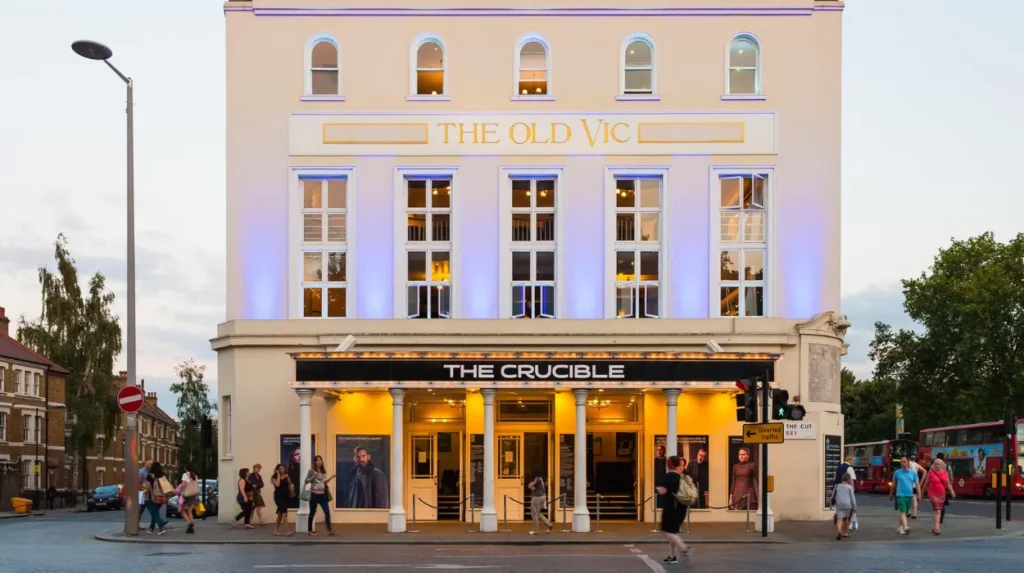
The Old Vic is the strongest surviving landmark associated with Lambeth’s theatrical past. Located on The Cut near Waterloo, the theatre opened in 1818 as the Royal Coburg Theatre. It later became associated with Shakespearean drama, classical theatre, and major developments in British acting.
The former Surrey Theatre, which opened in 1782, represents an earlier phase of South London entertainment. It stood on Blackfriars Road, an area associated with popular drama, spectacle, and theatrical performances for audiences outside the traditional West End.
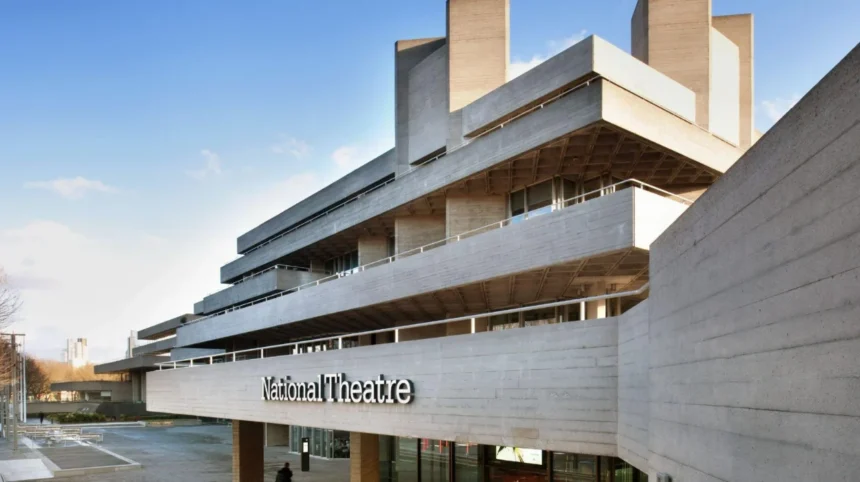
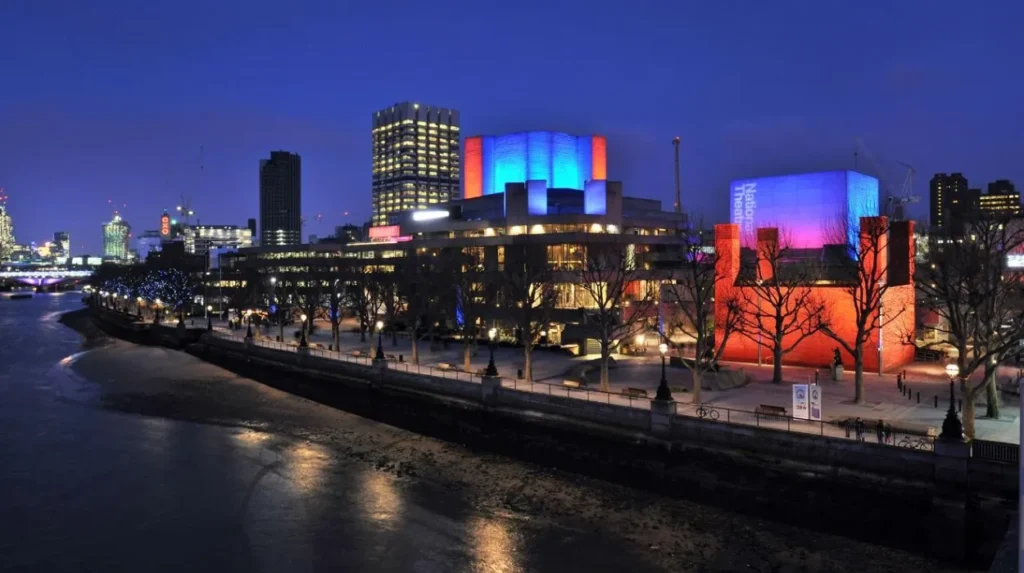
The South Bank adds a modern dimension to this history. The National Theatre, officially the Royal National Theatre, opened its permanent complex in 1976. Its presence helped establish the riverfront as a major destination for British theatre and cultural activity.
These sites represent different stages in London’s performing arts development: eighteenth-century popular entertainment, nineteenth-century commercial theatre, and twentieth-century publicly supported cultural institutions.
Why is the Old Vic Theatre important to Lambeth’s theatrical heritage?
The Old Vic is one of London’s most historically significant working theatres. Opened in 1818 as the Royal Coburg Theatre, it became known for accessible drama and later for major Shakespeare productions, influential actors, and the development of British theatrical performance.
The Old Vic stands at 103 The Cut, close to Waterloo railway station. Its location connects the history of theatre with the growth of transport infrastructure and the expansion of South London as a destination for audiences.
The building opened on 11 May 1818 as the Royal Coburg Theatre. It was established by theatre managers James William Davidge and Richard William Davidge. Its original programme included popular dramatic entertainment designed to attract a broad audience.
In the nineteenth century, London theatre operated within a social and legal environment that distinguished between different types of licensed performance. The Old Vic developed its identity through popular drama and changing programmes as the capital’s entertainment industry expanded.
The theatre later became particularly associated with Shakespeare. In 1912, Lilian Baylis took control of the theatre’s artistic direction and strengthened its reputation for presenting classical drama and opera at accessible prices.
Baylis’s work helped establish the Old Vic as a major cultural institution. Her commitment to professional performance and training also contributed to the development of the associated Sadler’s Wells and Old Vic artistic traditions.
During the twentieth century, the theatre hosted celebrated performers and influential productions. Its Shakespearean history helped secure its place within British theatre, while later renovations preserved its historic character and improved its facilities.
How did Lilian Baylis influence the Old Vic?
Lilian Baylis was a theatre and opera manager whose work transformed the Old Vic into an important centre for classical performance. She became closely associated with the venue in the early twentieth century and expanded its cultural role through sustained programming.
Baylis supported productions that introduced audiences to Shakespeare and other established dramatic works. Her approach emphasised artistic quality alongside accessible ticket prices. The theatre subsequently became a training ground and performance platform for generations of actors.
The Old Vic’s institutional history also connects with the wider development of the National Theatre. Laurence Olivier led the National Theatre company when it began performing at the Old Vic in 1963, before the company moved to its permanent South Bank building in 1976.
What can visitors see at the Old Vic today?
Visitors can attend professional theatre productions, explore the building’s historic auditorium, and experience a venue that continues to function as a working theatre. The programme changes by season, so visitors should consult the official Old Vic website for current performances, access arrangements, and ticket information.
The theatre’s location also makes it a practical starting point for a walking exploration of Waterloo’s cultural history. The surrounding streets contain other performing arts venues, railway infrastructure, and sites associated with the development of modern South London.
What was the Surrey Theatre, and where did it stand?
The Surrey Theatre was an influential South London entertainment venue opened in 1782. It stood on Blackfriars Road near the present-day Southwark and Lambeth boundary and became associated with melodrama, popular spectacle, and the theatrical culture of nineteenth-century London.
The Surrey Theatre began as the Royal Circus, an entertainment venue established by Charles Dibdin, a composer, dramatist, and theatrical entrepreneur. Its early identity reflected the popularity of circus-style entertainment, music, and spectacle in late eighteenth-century London.
The venue later developed into a major theatre serving audiences south of the Thames. Its changing programmes reflected the popularity of melodrama, a dramatic form characterised by strong emotional conflicts, clear moral contrasts, and theatrical effects.
The Surrey Theatre occupied an important position in the growth of popular entertainment. London’s theatrical geography was not limited to Covent Garden and Drury Lane. South London venues attracted audiences who wanted dramatic performances closer to their homes and workplaces.
The theatre was renamed the Surrey Theatre in the nineteenth century. Its history reflects the expansion of commercial theatre and the growing importance of working-class audiences in London’s cultural economy.
The original building was destroyed by fire in 1865. A replacement theatre opened on the site in 1866, continuing the venue’s theatrical function. The theatre eventually closed in 1924, after more than a century of changes in ownership, programming, and urban surroundings.
The building no longer operates as a theatre. Its historical importance is therefore understood through archival images, theatre histories, maps, and records of the performances staged there.
Why was the Surrey Theatre important to popular drama?
The Surrey Theatre contributed to the development of melodrama and spectacle as popular forms of entertainment. Its programming reflected an audience interested in dramatic plots, visual effects, music, and performances outside the elite theatrical traditions of central London.
The venue also demonstrates how theatre served different social groups. London’s commercial theatres operated within a competitive market in which managers adapted their programmes to audience demand, local conditions, and licensing rules.
How can visitors trace the former Surrey Theatre site?
Visitors can explore the Blackfriars Road area using historic maps and archival images to understand the location of the former theatre. The original venue is gone, so a visit focuses on urban history rather than entry to a surviving theatrical building.
For a deeper understanding of the neighbourhood, connect the theatre’s history with the development of South London’s transport routes, housing, and commercial streets. These changes explain why historic entertainment districts often disappeared as the city expanded.
How did the National Theatre change London’s performing arts history?
The National Theatre reshaped British theatre by establishing a permanent home for a nationally significant repertory company on London’s South Bank in 1976. Its roots date to 1963, when the company began performing at the Old Vic under artistic director Laurence Olivier.
The National Theatre represents a major stage in the development of publicly supported theatre in Britain. The National Theatre Act 1949 established the legislative basis for government support towards creating a national theatre building. The project developed over several decades before the permanent South Bank complex opened.
The company began performances at the Old Vic in 1963. Laurence Olivier, one of Britain’s leading twentieth-century actors, became its first artistic director. His leadership helped establish the company’s national profile and its commitment to ambitious dramatic productions.
The permanent building opened in 1976 on Upper Ground beside the Thames. The site became part of a wider cultural landscape shaped by post-war redevelopment, public architecture, and investment in arts institutions.
The National Theatre contains three principal auditoriums: the Olivier, the Lyttelton, and the Dorfman. These spaces support different production formats, from large-scale plays to smaller experimental performances.
Its repertory approach allows a company to present different productions within the same season. This model supports new writing, classic drama, adaptations, and contemporary interpretations of established works.
The National Theatre also expanded its reach through NT Live, a programme that broadcasts selected stage productions to cinemas and other venues. The initiative connects London-based theatre with audiences who do not attend performances in person.
Why is the National Theatre relevant to Lambeth’s history?
The National Theatre demonstrates how Lambeth’s cultural identity expanded beyond traditional commercial theatres. Its South Bank location established a major performing arts institution within a district that also contains concert halls, public spaces, and riverside cultural attractions.
Visitors can explore the building’s public areas, attend productions, and learn about the institution through its official programme and visitor information. The National Theatre’s history also provides a useful link between the Old Vic’s nineteenth-century origins and the development of modern British theatre.
What role did Waterloo and The Cut play in London theatre history?
Waterloo and The Cut became important theatrical locations because transport links, commercial streets, and established audiences supported the growth of South London entertainment. The Old Vic remains the area’s defining historic theatre, connecting the neighbourhood’s earlier performance culture with contemporary productions.
The Cut is a street connecting the Waterloo area with the wider Southwark neighbourhood. Its location near Waterloo station makes it an important route for visitors attending performances and exploring local history.
Waterloo station opened in 1848 and expanded substantially as London’s railway network developed. Improved transport connections made the area easier to reach from other parts of London and from destinations beyond the capital.
The relationship between railway growth and theatre attendance reflects a wider change in urban leisure. Audiences increasingly travelled across London to attend performances, while theatres benefited from locations near busy streets and transport interchanges.
The Old Vic’s position on The Cut places it within this changing urban environment. Its history also reflects the area’s social transformation, from nineteenth-century popular entertainment to a contemporary district with restaurants, offices, residential buildings, and cultural venues.
Which other venues help explain the area’s performing arts history?
The Young Vic is another significant theatre in Waterloo. Founded in 1970, it developed a reputation for contemporary theatre and productions that engage with a broad audience. Its relationship with the Old Vic is important because the two venues demonstrate different approaches to performance within the same neighbourhood.
The Old Vic maintains a historic identity rooted in classical drama and major theatrical productions. The Young Vic has pursued a more experimental programme, including new writing and reinterpretations of established works.
Together, these venues show how Waterloo supports different performance traditions. Visitors can compare their architectural settings, artistic programmes, and institutional histories during a single visit.
As you explore the modern streets around Waterloo, you are crossing an area shaped by centuries of entertainment and urban change. Read the full [history of Waterloo’s theatres and performing arts heritage] to understand how transport, neighbourhood growth, and changing audiences influenced its development.
How does the South Bank connect Lambeth with London’s wider cultural history?
The South Bank connects Lambeth with London’s wider cultural history through major arts institutions, riverside public spaces, and post-war redevelopment. The Royal National Theatre and Royal Festival Hall demonstrate how the area developed into a destination for theatre, music, architecture, and public cultural activity.
The South Bank is a riverside district opposite central London’s historic City of Westminster. Its development as a major cultural area accelerated during the twentieth century, particularly after the Second World War.
The 1951 Festival of Britain was a national exhibition celebrating British achievement in science, industry, design, and the arts. Its main South Bank site helped establish the area as a location for modern architecture and public cultural experiences.
Royal Festival Hall opened in 1951 as part of the festival’s legacy. It is primarily a concert hall rather than a theatre, but its presence illustrates the wider development of performance culture along the river.
The National Theatre later added a major dramatic arts institution to the district. Its permanent building, opened in 1976, strengthened the area’s role as a centre for professional theatre.
The South Bank therefore provides a broader context for understanding Lambeth’s theatrical heritage. Its cultural institutions operate across different art forms, including spoken drama, orchestral music, dance, and experimental performance.
How did post-war redevelopment influence the cultural district?
Post-war redevelopment transformed parts of the riverside through new buildings, public spaces, and cultural facilities. The South Bank became a setting for modernist architecture, public access to the river, and major national arts institutions.
This development changed how visitors experienced the area. Rather than attending a single performance and leaving immediately, audiences gained access to riverside walks, exhibitions, restaurants, bookshops, and public gathering spaces.
The district’s cultural significance extends beyond individual performances. Its institutions demonstrate how public investment, architecture, and urban planning shape the availability of arts and entertainment.
Which South Bank locations are useful for theatre-history visitors?
Visitors can explore the National Theatre, Royal Festival Hall, and riverside public spaces to understand the relationship between performance and urban development. These locations provide different perspectives on London’s cultural history, even though they do not all function as conventional theatres.
Checking current venue programmes before travelling helps visitors combine performances with exhibitions, public events, or guided visits where available.
How did popular entertainment influence Lambeth’s historic theatres?
Popular entertainment shaped Lambeth’s theatrical identity through melodrama, circus acts, music hall, pantomime, and variety performances. The Surrey Theatre and the Old Vic demonstrate how South London venues served audiences seeking affordable entertainment beyond the established theatres of Covent Garden and Drury Lane.
The development of popular theatre reflected changes in London’s population, employment, leisure, and transport. Commercial managers competed for audiences by offering distinctive programmes and adapting performances to changing tastes.
Melodrama was a major theatrical form during the nineteenth century. Its plots often featured dramatic danger, emotional conflict, and clear moral divisions. These productions appealed to audiences who valued accessible stories and spectacular stage effects.
Circus entertainment also contributed to the history of the Surrey Theatre. Its earliest incarnation as the Royal Circus combined equestrian displays with other forms of entertainment. The venue later developed a stronger theatrical identity.
Music hall and variety performances became increasingly important in the late nineteenth and early twentieth centuries. These programmes featured short acts, songs, comedy, and other forms of popular entertainment. The Surrey Theatre’s later history included this transition before its closure in 1924.
The Old Vic also changed its role repeatedly. It operated under different names and management structures before becoming known for its major classical productions. These changes illustrate how a theatre building can survive while its artistic purpose evolves.
Why are working-class audiences important to this history?
Working-class audiences helped establish theatre as a form of urban leisure beyond elite cultural institutions. Affordable admission, accessible locations, and varied programmes brought live performance to people with different incomes and social backgrounds.
Emma Cons, who became associated with the Old Vic in the late nineteenth century, pursued a model of respectable entertainment and educational opportunity. Lilian Baylis subsequently developed the venue’s classical drama and opera programmes, helping broaden access to established performing arts.
Their work forms part of a longer debate about the social purpose of theatre. London’s historic venues served commercial goals while also providing education, community participation, and cultural access.
What do historic playbills reveal about London’s theatre industry?
Historic playbills document performances, dates, performers, prices, and promotional language. They help researchers reconstruct theatre programmes and understand how managers marketed entertainment to local audiences.
The London Museum holds a playbill for the Royal Surrey Theatre dating from 1842. It advertises a programme that included a domestic drama set during the French Revolution and a panorama of London. The document demonstrates the range of material presented to nineteenth-century audiences.
These records also provide evidence of the competitive nature of the theatrical industry. Venues promoted elaborate scenery, dramatic subjects, and special attractions to distinguish their programmes from those of rival theatres.
Which historic theatre buildings survive in Lambeth today?
The Old Vic is the principal surviving historic theatre associated with Lambeth’s theatrical heritage. The National Theatre and Young Vic represent later developments, while the former Surrey Theatre survives through historical documentation rather than its original building.
The survival of theatre buildings provides an important way to understand London’s cultural history. Some venues retain historic auditoriums, while others have been demolished, rebuilt, or replaced by new cultural facilities.
The Old Vic is particularly significant because its auditorium retains important elements of its historic design. Historic England recognises the building for its architectural and theatrical importance. Its listing identifies it as a rare surviving example of an older English theatre.
The Young Vic offers a different architectural and artistic experience. Founded in 1970, it represents the development of modern theatre provision in Waterloo. Its productions contribute to the continuing cultural life of the neighbourhood.
The National Theatre illustrates another approach to theatrical architecture. Its South Bank building reflects twentieth-century modernism, with interconnected auditoriums and public spaces designed to support a substantial producing theatre.
The Surrey Theatre provides a contrasting example. Although the original venue no longer exists, archival photographs, printed programmes, and historical accounts preserve evidence of its contribution to popular entertainment.
These differences matter when interpreting historic sites. A surviving building provides direct evidence of architectural design and use, while a demolished venue requires visitors to reconstruct its history from documentary sources.
Explore More Area Guide
What Visitors Can Learn About Lambeth’s Famous Historical Residents
Lambeth Literary Landmarks: Famous Writers and Historic Places
How can visitors explore Lambeth’s theatre history on foot?
Visitors can explore Lambeth’s theatrical heritage through a walking route linking the Old Vic, the Young Vic, and the South Bank’s major cultural institutions. The route combines historic theatre architecture, modern performance venues, railway history, and riverside public spaces.
A theatre-history walk works best when it combines surviving buildings with explanations of lost venues and changing neighbourhoods. Waterloo provides a practical starting point because the Old Vic and Young Vic are close to the area’s main transport links.
1. Begin at the Old Vic
Examine the theatre’s exterior and its position on The Cut. If a performance or tour is available, use the opportunity to learn more about the auditorium and the theatre’s changing identity.
2. Visit the Young Vic
Compare the contemporary venue with the Old Vic. Its programme illustrates the role of new writing, experimental productions, and reinterpretations of classic works in modern theatre.
3. Continue towards the National Theatre
Explore the South Bank’s modern theatrical architecture and public areas. Check the venue’s programme for performances, exhibitions, or available guided activities.
4. Research the former Surrey Theatre site
Consult historic maps and archival images to locate the former entertainment venue near Blackfriars Road. Its disappearance illustrates the impact of redevelopment on London’s theatrical landscape.
Visitors should check opening arrangements and performance schedules before setting out. Theatre buildings do not necessarily offer public access outside scheduled performances or advertised tours.
The route also suits visitors with limited time in South London. A shorter visit can focus on the Old Vic and Young Vic, while a longer outing can include the National Theatre and riverside cultural district.
For visitors working remotely or travelling on business, the South Bank also offers cafés, restaurants, and public spaces. These facilities provide opportunities to combine cultural exploration with breaks between appointments.
Why does Lambeth’s theatre history remain relevant today?
Lambeth’s theatre history remains relevant because its surviving venues and lost entertainment sites document changes in public culture, architecture, and access to the performing arts. The Old Vic, Young Vic, and National Theatre continue to connect historical traditions with contemporary theatrical production.
London’s theatre history is not confined to the West End. South London venues demonstrate how cultural life developed across the Thames and responded to changing audiences, transport connections, and social conditions.
The Old Vic illustrates continuity through a building that has adapted to different artistic purposes over more than two centuries. Its history connects popular entertainment with Shakespearean drama and the development of major British acting traditions.
The former Surrey Theatre demonstrates a different form of continuity. Its building disappeared, but archival evidence preserves its role in popular drama, circus entertainment, and music hall culture.
The National Theatre represents the expansion of public cultural infrastructure during the twentieth century. Its permanent South Bank home established a major institution dedicated to producing and presenting theatre to audiences across Britain and internationally.
These sites also reveal how theatre history intersects with urban development. Railway expansion changed audience access, redevelopment altered historic streets, and new cultural buildings changed how residents and visitors used the riverside.
For researchers, the combination of surviving architecture and archival evidence provides a foundation for studying these changes. For visitors, it offers a way to understand the city through its performance spaces rather than through famous landmarks alone.
Lambeth’s theatrical heritage therefore remains an active part of London’s cultural identity. Historic venues preserve earlier performance traditions, contemporary theatres introduce new work, and documentary collections retain evidence of places that no longer exist.
Which theatre is the most historically important in Lambeth?
The Old Vic Theatre is one of Lambeth’s most historically important theatres. It opened in 1818 as the Royal Coburg Theatre and later became renowned for Shakespearean drama, classical productions, and influential British actors.