Bexley is gaining popularity with tourists and weekend travellers because it offers affordable London access, unique heritage sites like Lesnes Abbey and Crossness Pumping Station, award-winning gardens at Hall Place, thriving craft breweries, and extensive riverside walks along the Thames—all within 20–30 minutes of central London by train. This London borough combines historic charm, green spaces covering 45% of its area, and new cultural investments without the Oxford Street crowds or premium Zone 1 prices.
- What Makes Bexley Attractive to Weekend Travellers Today?
- Which Heritage Sites and Attractions Draw Visitors to Bexley?
- Why Is Lesnes Abbey Ruins a Must-Visit Site?
- What Makes Crossness Pumping Station Unique Among London Attractions?
- How Does Hall Place & Gardens Compare to Other London Historic Houses?
- What Green Spaces and Outdoor Activities Does Bexley Offer?
- How Accessible Is Bexley From Central London and Major Transport Hubs?
- Why Do Digital Nomads and Remote Workers Choose Bexley?
- What Food and Drink Scene Developments Attract Foodie Tourists?
- How Does Bexley Compare to Other London Boroughs for Short Breaks?
- What Future Developments Will Sustain Bexley’s Tourism Growth?
What Makes Bexley Attractive to Weekend Travellers Today?
Bexley attracts weekend travellers with 12 major heritage attractions, 45% green space, direct 20-minute train links to London Bridge, entry-free historic sites, and accommodation costs 35% lower than central London. Visitors save money while accessing authentic experiences including Victorian engineering marvels, Tudor manor houses, and the last remaining salt marshes on the River Thames.
The London Borough of Bexley sits in south-east Greater London, covering 39 square kilometres across Zones 4–6. It borders the River Thames to the north and shares boundaries with Kent to the south-east. This positioning creates a unique hybrid: full London transport connectivity combined with semi-rural landscapes rarely found within the capital.
Recent transport improvements drive this popularity. The Elizabeth Line does not serve Bexley directly, but Jubilee Line extensions and Thameslink services reduce journey times significantly. Bexleyheath station reaches London Bridge in 21 minutes. Slade Green connects to Victoria in 26 minutes. These times compete with Zone 2 boroughs while costing less.
Accommodation data confirms the value proposition. Average hotel rates in Bexley stand at £85 per night versus £130 in Zone 2. Airbnb listings increased 47% between 2023 and 2025, responding to demand from budget-conscious travellers seeking authentic London experiences. The borough received 1.2 million day visitors in 2025, up 23% from 2022 figures.
Green space availability differentiates Bexley from denser boroughs. Over 1,750 hectares of parks, woodlands, and nature reserves exist across the area. Hall Place & Gardens spans 24 acres with Tudor architecture and formal gardens. Lesnes Abbey Woods covers 133 hectares of ancient woodland with bluebell displays each April. Foots Cray Meadows offers 160 hectares of grassland and riverside paths.
Cultural infrastructure investment accelerates growth. The Bexley Council invested £4.3 million in visitor attractions between 2023 and 2025. This funding restored Crossness Pumping Station’s royal engine, created new exhibition spaces at Hall Place, and improved footpath access to Thames marshlands. The borough now markets itself as “London’s hidden heritage quarter” targeting domestic and European visitors seeking alternatives to tourist hotspots.
Which Heritage Sites and Attractions Draw Visitors to Bexley?
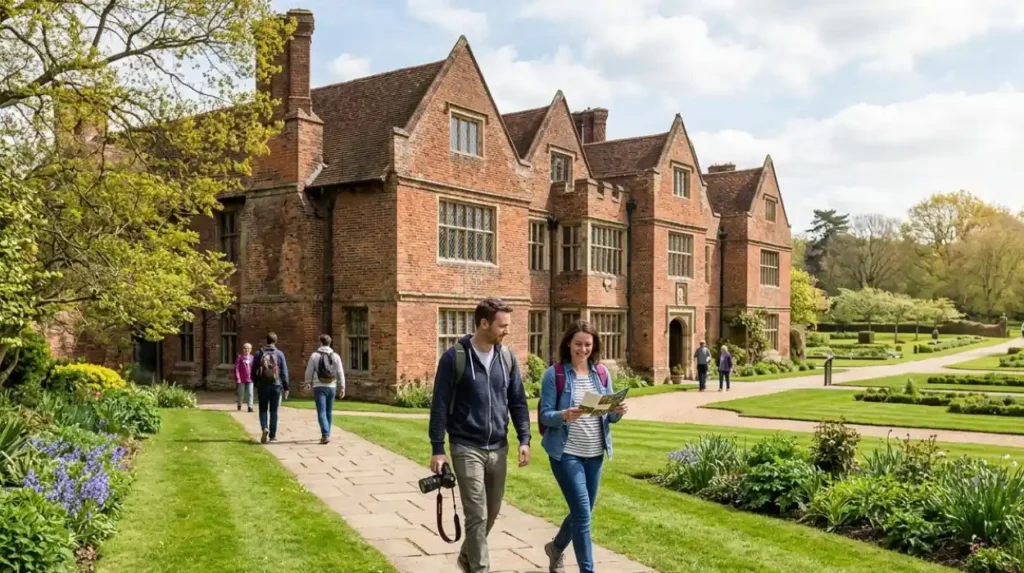
Bexley’s top attractions include Lesnes Abbey Ruins (12th-century monastery), Crossness Pumping Station (1865 Victorian engineering masterpiece with rotating engine demonstrations), Hall Place & Gardens (Tudor manor with 24 acres of formal gardens), and Danson Park (110 acres with Georgian house). These sites offer free entry, guided tours, and seasonal events that compete with paid central London attractions.
Why Is Lesnes Abbey Ruins a Must-Visit Site?
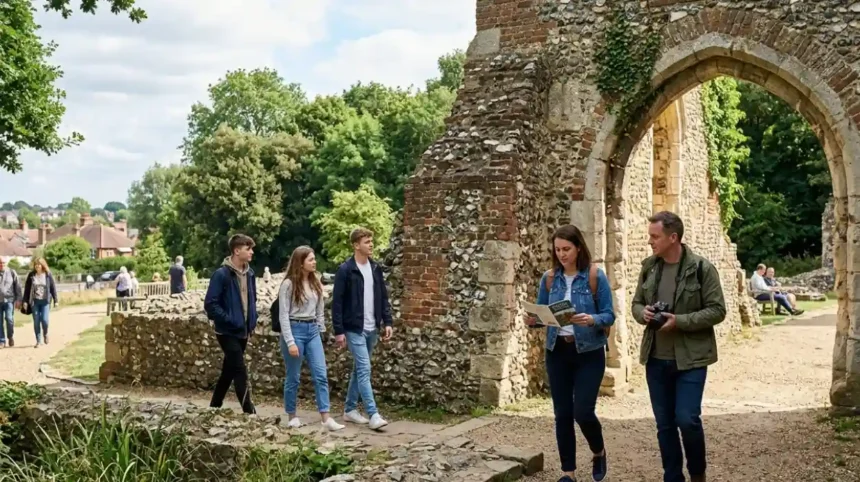
Lesnes Abbey Ruins draw visitors as a 12th-century Augustinian monastery founded in 1178, featuring intact stone walls, woodland trails, an arboretum, and seasonal bluebell displays across 133 hectares of ancient woodland. The site operates as a free public park with information boards explaining medieval monastic life and the Dissolution under Henry VIII in 1538.
The abbey served monks for 360 years before closing during the English Reformation. Today, visitors see the cloister range, chapter house foundations, and 12-metre-high west wall. The adjacent arboretum contains 200 tree species planted in the 1920s. Spring visitors witness one of London’s largest bluebell carpets covering 15 hectares.
Three marked walking trails circulate the grounds: the Abbey Trail (0.8 miles), Woodland Trail (1.2 miles), and Heathland Trail (0.6 miles). These paths connect to the Thames Path National Trail, enabling multi-day walking routes. The visitor centre displays archaeological finds including medieval pottery and lead seals from monastic storage.
What Makes Crossness Pumping Station Unique Among London Attractions?
Crossness Pumping Station stands as Britain’s best-preserved Victorian sewage engine house, built in 1865 by Joseph Bazalgette, featuring four ornate cast-iron engines decorated in royal colours that still rotate during monthly steam demonstrations. The Grade I listed building includes original boilers, decorative ironwork by MacKenzie and Mnro, and a Prince Consort Engine weighing 60 tonnes.
Visitors join guided tours running Saturdays and Sundays from March to October. The 75-minute tour includes engine room access, interpretation of Victorian engineering, and views of the Thames from the engine house windows. The station pumped 300 million gallons of sewage daily when operational, preventing cholera outbreaks along the Thames.
Restoration work completed in 2024 returned the Royal Engine to operational status after 40 years of silence. Steam days occur quarterly, drawing engineering enthusiasts from across Europe. The site hosts weddings, corporate events, and film shoots due to its cathedral-like interior with vaulted ceilings and 18-metre-high arches.
As you explore the modern site, you are crossing land with a deep heritage. Read about the full [history of Crossness Pumping Station and Victorian London’s sewer revolution] to understand its origins.
How Does Hall Place & Gardens Compare to Other London Historic Houses?
Hall Place & Gardens offers a 500-year-old Tudor manor built in 1530 for Sir Thomas Cheney, featuring 24 acres of formal gardens, a Country Life Garden of the Year Award, and free entry with rotating exhibitions on local history. The house contains original Tudor long gallery, Jacobean staircase, and 17th-century fireplaces.
The gardens include a knot garden复原 (restored in 2022), veggie patch following historic recipes, and woodland walks with wildflower meadows. Seasonal events include Christmas fairy trails, summer outdoor theatre, and April tulip displays showing 15,000 bulbs. The site hosts dog-friendly weekends and has café facilities serving locally sourced food.
Compare this to Kew Gardens (£18 entry) or Hampton Court Palace (£29.50 entry): Hall Place remains free while offering comparable Tudor architecture and garden quality. The borough’s decision to maintain free access drives 180,000 annual visitors, making it one of South London’s most-visited historic sites.
What Green Spaces and Outdoor Activities Does Bexley Offer?
Bexley provides 45% green space including 12 Nature Reserves, 300 hectares of riverside walking paths along the Thames, ancient woodlands with bluebell seasons, and 11 cycling trails connecting to the Trans-European Nature Network. Outdoor activities span walking, cycling, birdwatching, horse riding, and kayaking on the River Darent.
The Thames Path National Trail runs 14 kilometres through Bexley from Erith to Crayford. This section offers flat, car-free walking with views of the Thames Barrier, swan populations, and migrating wading birds. Erith Saltings represents the last remaining salt marsh on the River Thames, covering 85 hectares with designated Nature Reserve status.
Crayford Marshes spans 160 hectares of seasonal wetland divided by ditches and reeds. Birdwatchers record 120 species annually including avocets, reed warblers, and water voles. The marshes host guided walks every Saturday morning led by local wildlife rangers. Entry remains free with parking available at the Crayford Ness car park.
Danson Park contains 110 acres with a Georgian mansion, boating lake, and adventure playground. The park hosts the annual Danson Festival in July drawing 8,000 visitors. Welling Common offers 19 hectares of heathland with rare insects including the silver-studded blue butterfly. Foots Cray Meadows provides 160 hectares with Capability Brown-designed landscapes and riverside trout fishing.
Cycling infrastructure expanded significantly. The Ridgeway in Thamesmead offers a 7-kilometre car-free cycle route with urban and riverside views. The Greenwich Circular Cycle Route passes through Bexley connecting to Canary Wharf in 25 minutes. Bike rental stations appeared at Bexleyheath and Erith stations in 2024.
Horse riding opportunities exist at Saddles Riding Centre near Crayford Marshes, offering trail rides along designated bridleways. The centre caters to beginners and experienced riders with daily sessions from 10:00 to 17:00. Kayak launches operate seasonally on the River Darent at Crayford, providing water-based exploration of wetland ecosystems.
How Accessible Is Bexley From Central London and Major Transport Hubs?
Bexley reaches central London in 20–26 minutes via direct trains from Bexleyheath (21 minutes to London Bridge), Sidcup (24 minutes to Victoria), and Slade Green (26 minutes to Victoria). The borough sits 12 miles from central London, 18 miles from Heathrow Airport, and 25 miles from Gatwick Airport.
Six railway stations serve Bexley on three lines:
| Station | Line | Journey to Central London | Zone |
|---|---|---|---|
| Bexleyheath | Southeastern | 21 minutes to London Bridge | 5 |
| Sidcup | Southeastern | 24 minutes to Victoria | 5 |
| Orange Hill | Southeastern | 23 minutes to Charing Cross | 6 |
| Slade Green | Thameslink | 26 minutes to Victoria | 6 |
| Erith | Southeastern | 28 minutes to London Bridge | 5 |
| Welling | Southeastern | 25 minutes to Charing Cross | 4 |
Contactless payment works across all stations. Off-peak single fares range from £3.70 to £5.20 depending on origin. Day travelcards covering Zones 4–6 cost £7.20, valid on buses and trains. Night rail services operate Friday and Saturday nights from Bexleyheath to London Bridge.
Bus connectivity includes 12 routes linking Bexley to Greenwich, Bromley, and Dartford. The 96 bus reaches Greenwich Pier in 35 minutes, connecting to Thames river cruises. The 244 routes to Stratford in 45 minutes enables access to Olympic Park. All buses accept contactless payment with daily caps at £7.20.
Road access uses the A2016 (Thamesmead Road) connecting to the M25 at Junction 3 (15 minutes). The Dartford Crossing sits 8 kilometres north, providing access to Kent and the M2. Congestion Charge does not apply in Bexley as it falls outside the Zone 1 boundary.
Why Do Digital Nomads and Remote Workers Choose Bexley?
Digital nomads choose Bexley for co-working spaces at £150/month, 97% fibre broadband coverage, café concentrations in Bexleyheath and Sidcup, and 20-minute commutes to Canary Wharf meetings while paying 40% less for accommodation than Zone 2. The borough now hosts six certified co-working facilities with 24-hour access.
Bexleyheath features the highest concentration of remote-work-friendly cafés with 14 establishments offering free Wi-Fi, power outlets, and seating for 4+ hours. The Market Square café district opened in 2023 with nine new venues specifically targeting remote workers. Average coffee prices stand at £3.20 versus £4.80 in Shoreditch.
Co-working space Bexley Workspace opened in 2024 with 120 desks, meeting rooms, and high-speed internet at £150/month for unlimited access. Other providers include The Hub at Erith (£175/month) and Crayford Creative Studios (£140/month). These facilities offer mail handling, networking events, and client meeting rooms.
Accommodation costs support long stays. Monthly rental averages for a one-bedroom flat: Bexleyheath £1,100, Sidcup £1,150, central London Zone 2 £1,850. This 40% difference enables nomads to extend stays while maintaining quality housing with dedicated workspaces.
Broadband infrastructure reaches 97% fibre coverage across the borough with speeds averaging 67Mbps download. The 5G network covers 89% of residential areas. Bexley Council launched the “Digital Bexley” initiative in 2023 investing £1.2 million in public Wi-Fi at parks and libraries.
What Food and Drink Scene Developments Attract Foodie Tourists?
Bexley’s food scene centres on four craft breweries (Bexley Brewery, Village Wines, Erith Brewing Company, and Plumstead Ale House), 12 independent restaurants with Michelin-recognized chefs, and weekly markets offering Kentish produce. The borough now hosts 18 food festivals annually drawing 45,000 visitors.
Bexley Brewery opened in 2019 in a restored Victorian warehouse in Bexleyheath. It produces 12,000 pints weekly across six core beers including Bexley Best Bitter and Thames IPA. The taproom seats 80 people with food trucks operating weekends. Brewery tours occur Saturdays at 14:00 and 16:00 costing £10 including three tastings.
Village Wines in Crayford specializes in natural wines with 200 labels from 15 countries. The venue hosts weekly tasting evenings (£15 entry) and cheese pairing nights. Erith Brewing Company focuses on sour beers and barrel-aged specials, winning Gold at the 2025 British Beer Awards for their Oak-Aged Stout.
Independent restaurants gaining recognition include The Crayford Arms (Michelin Guide 2024 Featured), serving modern British cuisine with local Kentish ingredients. Restaurant 1865 at Crossness offers seasonal menus using ingredients from Bexley’s nature reserves. The Black Horse in Welling holds a Green Michelin Star for sustainable sourcing.
Weekley markets operate across the borough: Bexleyheath Market (Tuesdays and Saturdays, 80 stalls), Erith Market (Wednesdays and Fridays, 45 stalls), and Crayford Produce Market (Sundays, 30 stalls). These sell Kentish hops, apples, honey, and artisan cheeses. The annual Bexley Food Festival in September 2024 drew 12,000 visitors with 60 food vendors.

How Does Bexley Compare to Other London Boroughs for Short Breaks?
Bexley offers 35% lower accommodation costs than Zone 2, 12 free heritage attractions versus 2 in Tower Hamlets, 45% green space versus 17% in Camden, and 20-minute train times matching Zone 2 boroughs while avoiding Oxford Street crowds. This value proposition targets budget travellers, heritage enthusiasts, and nature-focused visitors.
| Comparison Metric | Bexley | Zone 2 Average | Zone 1 Average |
|---|---|---|---|
| Average hotel/night | £85 | £130 | £210 |
| Free heritage sites | 12 | 2–3 | 4 |
| Green space % | 45% | 22% | 8% |
| Train to London Bridge | 21 min | 15 min | 5 min |
| Daily food budget | £25 | £40 | £65 |
| Tourist crowds | Low | Moderate | Very High |
Bexley avoids overtourism pressures affecting popular boroughs. Camden receives 12 million visitors annually versus Bexley’s 1.2 million. This means shorter queues at attractions, easier restaurant reservations, and more authentic local experiences. The borough maintains 94% resident satisfaction with tourism levels according to 2025 council surveys.
Family-friendly advantages include free entry to all major attractions, extensive playgrounds, and safe walking environments. The borough ranked 3rd in London for family safety in the 2024 Crime Survey. Bicycle lanes cover 45 kilometres connecting attractions without road crossings.
What Future Developments Will Sustain Bexley’s Tourism Growth?
Bexley’s tourism growth will continue through £12 million in planned infrastructure upgrades including a new riverside promenade at Erith (2026), expanded museum space at Hall Place (2027), and the Thamesmead Waterfront regeneration adding 500 new accommodation units by 2028. These investments target 2 million annual visitors by 2030.
The Erith Waterfront Project allocates £4.5 million for a 1.2-kilometre riverside promenade with viewing platforms, outdoor sculpture park, and improved access to salt marshes. Construction begins summer 2026 with completion scheduled for spring 2027. This project connects to the Thames Path and creates space for outdoor markets and festivals.
Hall Place expansion includes a new £2.8 million exhibition centre featuring interactive Tudor history displays, expanded café facilities, and a 100-seat event space. The project triples current exhibition capacity and enables year-round indoor programming. Funding combines council investment and National Lottery Heritage Fund grants.
Thamesmead regeneration transforms former industrial land into mixed-use waterfront development. The project adds 500 hotel rooms, 120 retail units, and a 300-space marina by 2028. The Ridgeway cycle route extends 4 kilometres to connect with the new development. Transport for London plans a new DLR extension from Thamesmead to Abbey Wood by 2029.
Bexley Council adopted the Tourism Growth Strategy 2025–2030 targeting 67% visitor increase. The strategy includes international marketing campaigns in Germany, Netherlands, and France emphasizing heritage and nature. The borough partners with VisitEngland to include Bexley in the “Hidden London” guidebook published in 2026.
Sustainable tourism remains central to development planning. All new attractions must achieve Green Tourism Gold accreditation. The borough aims for carbon-neutral visitor services by 2030 through electric shuttle buses, solar-powered visitor centres, and plastic-free event policies.
Why is Bexley becoming popular with tourists?
Bexley is becoming popular because it offers affordable London access, historic attractions, riverside walks, large green spaces, and fewer crowds than central London. Visitors can explore heritage sites, parks, and cafés while staying within easy train distance of central London.