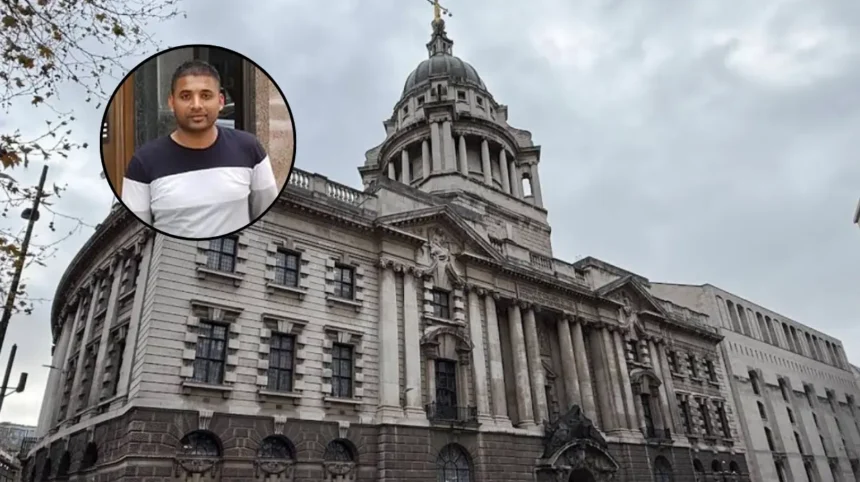
Key Points
- Guilty Plea: Daniel Levy, 48 years old, pleaded guilty in the Old Bailey to murdering 41-year-old Indian national, Abdul Kaleem Shaik, in Lambeth, South London.
- Confession: Levy turned up at Bishopsgate police station on January 1 and surrendered himself, confessing to police saying, “It is happening again.”
- Prior Homicide: It may now be revealed that Levy, who suffers from schizophrenia, was found guilty in October 2001 for the manslaughter by diminished responsibility and arson of his 72-year-old grandmother in July 2000.
- Reason for Murder: During questioning, Levy stated that he killed Mr Shaik because his friend was severely depressed and he wanted to “help him” get his way to heaven through the act of homicide since he thought it was “assisted suicide”.
- Sentence Date Set: Judge Lynn Tayton QC ruled that Levy was competent enough to plead and ordered him to remand in custody before his sentencing, which will take place on 9th September.
Lambeth (South London News) September 2, 2026 — A 48-year-old convicted killer who previously stabbed his grandmother to death and set her ablaze has dramatically changed his plea to admit murdering his friend inside a south London flat over the New Year period.
Daniel Levy appeared at the Central Criminal Court (the Old Bailey) on Wednesday, where he pleaded guilty to the murder of Indian national Abdul Kaleem Shaik, 41, following a fatal knife attack in Lambeth.
The court heard that Levy stabbed Mr Shaik in the neck with a large knife at his flat on Bondway, Vauxhall, sometime between New Year’s Eve and the early hours of New Year’s Day. Shortly after 8pm on 1 January, Levy presented himself at Bishopsgate police station in east London and confessed to officers, uttering the phrase: “It’s happened again”.
The utterance was a direct reference to Levy’s conviction in October 2001 for the manslaughter by diminished responsibility and arson of his 72-year-old grandmother, Nurzida Galimozanova, whom he attacked in July 2000.
Following Levy’s confession at the police station, officers dispatched to his residence in Vauxhall discovered Mr Shaik’s body lying on a makeshift bed, suffering from a severe stab wound to the neck, with blood covering his chest, neck, and face. A bloodstained knife was recovered from the scene, and Levy was formally arrested and charged with murder on 3 January.
CCTV footage obtained by the Metropolitan Police verified that only Levy and Mr Shaik were present inside the flat on the evening of 31 December.
What Details Emerged Regarding the Incident and Plea Change?
As reported by legal correspondents covering the Old Bailey proceedings, prosecutor Peter Ratliff detailed the circumstances surrounding the fatal stabbing and Levy’s actions immediately after the attack.
During a police interview on 2 January, Levy gave a comprehensive statement revealing he had known Mr Shaik for years and had permitted him to stay at his Vauxhall flat. Levy told investigators that Mr Shaik had become “very depressed” and was struggling to manage. Levy explained that due to his friend’s declining mental health, he felt compelled to end his life to secure his passage to heaven.
Prosecutor Peter Ratliff told an earlier hearing:
“He described how he had been considering and trying to do this for some time. In the early hours of January 1, he finally did what he had planned by stabbing the deceased in the neck”.
Mr Ratliff further noted that Levy stated
“he could hear him dying but did not want to watch it and went to the mosque to pray, had a massage and showered before going to the police station”.
Levy, who lives with schizophrenia, had initially accepted causing the death but denied murder on the grounds of diminished responsibility due to his mental health condition at the time. However, he dramatically altered his plea to guilty just as a jury was about to be sworn in for his trial.
Addressing Judge Lynn Tayton KC regarding his decision to forgo a trial, Levy stated in court:
“I don’t want to go to trial. I don’t want my personal information outside in public. I would rather just go quietly as possible, do my time”.
Defense counsel Michael Holland KC requested that Levy receive credit for his late guilty plea, emphasising that the defendant had never denied committing the act. Mr Holland KC also requested details concerning Mr Shaik’s psychological state to determine whether Levy’s perception of his actions as “akin to assisted suicide” held any objective foundation.
Judge Tayton KC confirmed Levy was fit to plead and remanded him in custody ahead of formal sentencing on 9 September.
Background of the Particular Development
The conviction of Daniel Levy for a second fatal knife attack brings into sharp focus his extensive history within the criminal justice and forensic mental health systems.
In July 2000, Levy killed his 72-year-old grandmother, Russian-born Nurzida Galimozanova, at a residence in Borough, south London. During those court proceedings, it was disclosed that Mrs Galimozanova had travelled to stay with Levy after his mother became alarmed by his erratic behaviour. Levy doused his grandmother’s room with turpentine and white spirit, ignited the room, sprayed flames into her face using an aerosol canister, and inflicted 30 stab wounds. Levy later told authorities he felt compelled to carry out the attack after hearing voices directed at him while watching the film Gladiator.
In October 2001, Levy pleaded guilty at the Old Bailey to manslaughter by diminished responsibility and arson. He was sentenced to an indefinite hospital order under the Mental Health Act. Subsequent investigations into his care exposed significant deficiencies, demonstrating that mental health staff had overlooked his psychiatric history, which included multiple suicide attempts prior to the assault on his grandmother.
In 2003, Levy absconded from a secure mental health facility. Following an eventual conditional release into the community, he was recalled to a psychiatric hospital in 2013 after expressing intentions to harm his parents.
Upon his subsequent release, Levy was placed under supervision requiring him to maintain contact with a community mental health team. His antipsychotic medication was administered via supervised injections. Court disclosures revealed that while Levy believed he was compliant with his treatment, he had repeatedly expressed skepticism to clinicians regarding his actual need for medication.
Explore More Lambeth News
Lambeth Council Consultation on Community Spaces in Waterloo and South Bank 2026
Met Police Raid Wandsworth Road Flat Over Prohibited Knives Lambeth 2026
Prediction: Impact on Mental Health Care Policy and Public Safety Standards
This development is anticipated to trigger significant institutional ramifications across the National Health Service (NHS) forensic mental health sector, the Ministry of Justice, and public safety oversight bodies.
Scrutiny of Community Supervision Protocols
The fact that an individual with a documented history of severe violence, delusion-driven homicide, and institutional escape was residing unmonitored in multi-occupancy accommodation will likely prompt an independent statutory inquiry. Community mental health trusts supervising high-risk offenders released under conditional hospital orders will face intensified pressure to audit their risk assessment models, particularly regarding patients who express doubts about their prescribed injectable medication.
Impact on Victim Families and Foreign Nationals
For foreign nationals residing in the UK, such as the victim’s family in India, this outcome highlights systemic vulnerabilities in institutional safeguard mechanisms. Legal representatives for Mr Shaik’s family may pursue civil claims or demand formal inquest investigations into whether public authorities failed in their duty of care to protect the public from a known dangerous offender.
Reform in Forensic Psychiatric Discharge Criteria
This case is expected to influence upcoming legislative debates surrounding reforms to the Mental Health Act. Policy experts predict tighter statutory criteria for the conditional release of offenders convicted of violent homicides, alongside stricter recall mechanisms when patients demonstrate partial compliance, skepticism towards treatment, or signs of deteriorating mental stability.