Key points
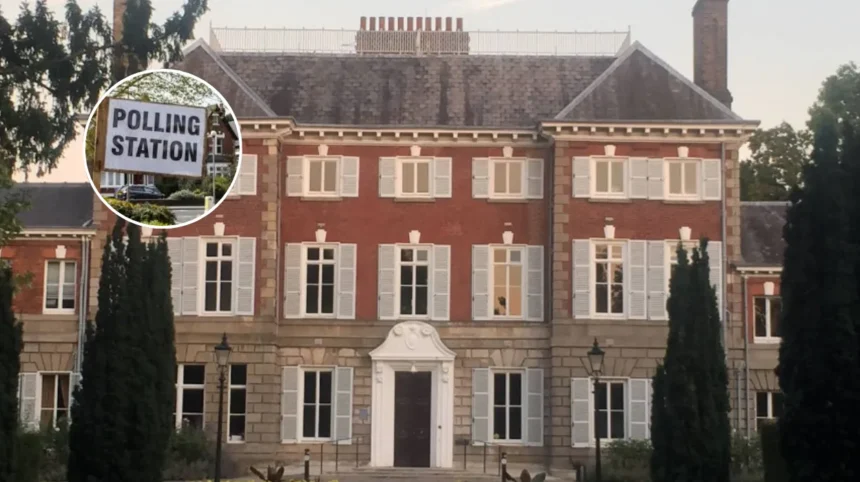
- Local council elections in the London Borough of Richmond‑upon‑Thames will be held on Thursday, 7 May 2026, with all 54 seats across 18 wards up for election.
- The deadline to register to vote is midnight on Monday, 20 April 2026.
- The deadline to apply for a postal vote is 5 pm on Tuesday, 21 April 2026.
- At the 2022 council election, Richmond recorded the highest turnout in London at 47.7%, with an 8.2% swing from the Conservatives to the Liberal Democrats.
- After the 2022 election, the Liberal Democrats held 48 seats, the Conservatives 1 seat, and the Greens 5 seats; the Lib Dems later gained the Conservatives’ last seat in a by‑election.
- London‑based political analysts, including Professor Tony Travers of the London School of Economics, describe Richmond as one of the safest Liberal Democrat‑controlled boroughs in London.
- Across London, Labour currently controls 21 of the 32 borough councils, the Conservatives 5, the Liberal Democrats 3, and tower‑based or “no overall control” arrangements apply in a small number of boroughs.
- The London Communications Agency’s insight director, Nick Bowes, has described the 2026 London borough elections as likely the most consequential in the capital for at least two decades.
Richmond‑upon‑Thames (South London News) April 20, 2026. In the London Borough of Richmond‑upon‑Thames, all 54 council seats across 18 wards are up for election, with the Liberal Democrats entering the contest in a position of dominance after sweeping gains in 2022.
- Key points
- What is happening in Richmond‑upon‑Thames in 2026?
- How did Richmond‑upon‑Thames vote in 2022?
- How do Richmond‑upon‑Thames elections fit into wider London politics?
- How can residents in Richmond‑upon‑Thames prepare to vote?
- Background of the development in Richmond‑upon‑Thames
- Prediction: How this development could affect residents of Richmond‑upon‑Thames
What is happening in Richmond‑upon‑Thames in 2026?
As reported by the London Borough of Richmond‑upon‑Thames on its official website, the 2026 local elections will decide who controls the council for the next four years, with every seat in all 18 wards contested on Thursday, 7 May. The borough’s own
“Everything you need to know to cast your vote in the local elections”
guide notes that the deadline to register to vote is midnight on Monday, 20 April 2026, and that applications to vote by post must be submitted by 5 pm on Tuesday, 21 April.
The Richmond Council website explains that electors must be aged 18 or over on polling day, be British, Irish, qualifying Commonwealth, or certain European Union citizens resident in the UK, and be registered on the electoral roll. In a separate borough notice titled
“Make registering to vote your first resolution of 2026”,
The council reminds residents that voter‑ID rules now apply at polling stations, and that anyone without an accepted form of photo ID can apply for a free Voter Authority Certificate by 5 pm on Tuesday, 28 April.
Postal voters are not affected by the voter‑ID requirement, and proxy‑voting applications for new proxies must be received by 5 pm on 28 April, with limits on how many people a single proxy can represent.
How did Richmond‑upon‑Thames vote in 2022?
Broad‑based London coverage, including that prepared by the BBC’s political team, notes that Richmond‑upon‑Thames recorded the highest turnout in London at the 2022 borough elections, with 47.7% of eligible voters taking part. An 8.2% shift in the vote share from the Conservatives to the Liberal Democrats contributed to a dramatic change in the council’s composition, with the Liberal Democrats ending up with 48 seats, the Conservatives reduced to just 1 seat, and the Greens holding 5 seats.
According to the BBC’s national overview of the 2026 London contests, the Conservatives have since lost their last Richmond seat to the Liberal Democrats in a local by‑election, leaving the borough fully under Liberal Democrat control. Commentary from Professor Tony Travers of the London School of Economics, quoted by the BBC, describes Richmond as
“now the safest London borough in terms of Liberal Democrat control”,
Although he allows that the Greens could potentially gain one or two seats from the Lib Dems, while the Conservatives are unlikely to recover significantly there.
How do Richmond‑upon‑Thames elections fit into wider London politics?
An analysis piece published by the BBC under the headline
“Local elections 2026: London may become a political patchwork quilt”
observes that Labour currently control 21 of London’s 32 borough councils, a record‑equalling high for any single party. The Conservatives run five boroughs, the Liberal Democrats three councils in south‑west London, and there are two boroughs in “no overall control” where no party holds a majority.
As reported by Nick Bowes, the insight director at the London Communications Agency, in the BBC’s coverage, the 2026 elections are “likely to be the most consequential elections in London, certainly for the past 20 years – possibly since the first borough elections in 1964.” Bowes is quoted as saying that the polls are “very fragmented”, making exact predictions difficult, but that the night may be “very bad” for both Labour and the Conservatives in London, opening space for smaller parties and independents.
How can residents in Richmond‑upon‑Thames prepare to vote?
Councillor‑authored and council‑produced notices, along with hyperlocal outlets such as the Richmond, Twickenham and Teddington News, confirm that polling will take place from 7 am to 10 pm on Thursday, 7 May 2026, with wards across Richmond‑upon‑Thames, Twickenham, Richmond, Barnes, Ham and other localities casting their votes. The borough’s
“Local Council elections 2026”
page notes that all registered voters will receive a poll card from 30 March detailing their designated polling station, and that the full list of candidates for Richmond‑upon‑Thames is available on the council’s elections website.
The council’s
“Everything you need to know to cast your vote in the local elections”
and GOV.UK guidance agree that the cut‑off to register to vote is midnight on 20 April 2026, with online registration taking less than five minutes and requiring a National Insurance number. The BBC’s interactive
“what elections are being held in your area”
tool and the GOV.The UK postal‑vote page echoes that the postal‑vote application deadline is 5 pm on Tuesday, 21 April 2026, with ballot packs sent out at least 19 working days before the election.
Background of the development in Richmond‑upon‑Thames
Richmond‑upon‑Thames has long been a politically mixed borough, but its 2022 local election marked a decisive swing away from the Conservatives toward the Liberal Democrats, a pattern that has since been reinforced by the loss of the Conservatives’ final seat in a by‑election. The borough sits within a wider London context where Labour dominates the capital’s councils, but where the Liberal Democrats still hold a bloc in south‑west London and the Conservatives have seen their previously “crown‑jewel” boroughs such as Wandsworth and Westminster fall to Labour.
The 2026 contests are the first London‑wide borough elections under a new set of national polling conditions and stricter voter‑ID rules, both of which have been highlighted by local authorities and the BBC as factors that could influence turnout and party performance.
Prediction: How this development could affect residents of Richmond‑upon‑Thames
Given the current balance of power and expert commentary, the most likely scenario is that the Liberal Democrats will retain overall control of Richmond‑upon‑Thames in 2026, with any meaningful change more likely to come from the Greens gaining a small number of seats rather than from a Conservative revival.
If that pattern holds, residents are likely to continue to see a council that prioritises environmental and transport‑related policies, moderate local‑tax levels, and a cautious approach to large‑scale housing developments, as these have been central themes in recent Liberal Democrat‑led administrations. Any increase in Green representation could lead to sharper pressure on climate‑action measures and local‑plan revisions, while low Conservative numbers would limit the ability of that party to challenge decision‑making from within the chamber, potentially shifting opposition‑style scrutiny to community groups and parish‑ or ward‑level forums.