Key Points
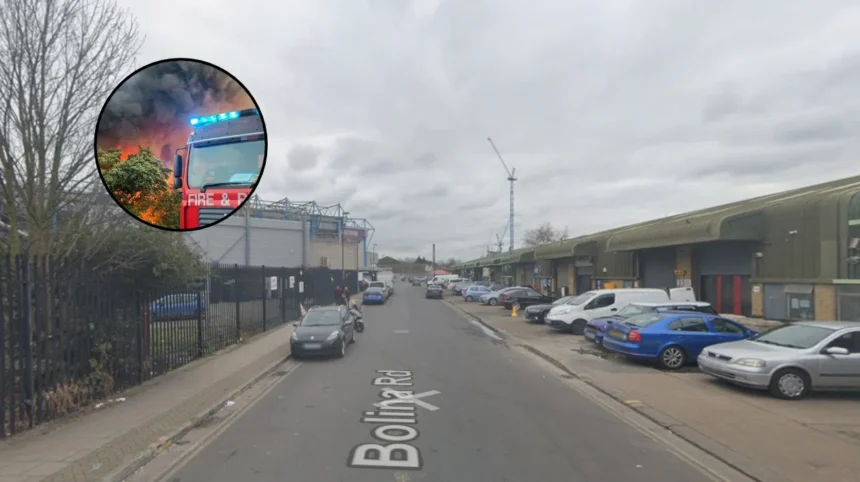
- Location of Incident: Bolina Road, South Bermondsey, London, situated in close proximity to Millwall Football Club’s stadium, The Den.
- Date of Occurrence: Morning of Thursday, 5 November.
- Core Incident: Fire broke out within an industrial warehouse unit, resulting in partial destruction of the first-floor mezzanine.
- Official Findings: The London Fire Brigade (LFB) confirmed the site was a “suspected cannabis factory” producing Class B drugs.
- Safety Hazards Identified: Unsafe electrical wiring used to siphon power illegally posed significant operational risks to attending firefighters.
- Community Guidance: Fire authorities have urged members of the public to learn the warning signs of illegal drug farms to prevent future structural fires.
South London (South London News) November 6, 2026 — Emergency services responded to a multi-agency operation on Thursday morning following reports of a heavy structural blaze at an industrial estate on Bolina Road, near The Den in South Bermondsey. Fire crews arriving at the scene discovered that the property, a multi-storey industrial warehouse unit, housed a suspected illegal cannabis factory. A significant portion of the building’s first-floor mezzanine was entirely destroyed before fire crews managed to contain the flames and prevent further structural spread to adjacent industrial lots.
What Happened During the South Bermondsey Warehouse Fire?
The incident began in the early hours of Thursday, 5 November, when emergency callers reported thick smoke emanating from the commercial premises along Bolina Road. Units from the London Fire Brigade were dispatched immediately to tackle the outbreak. Upon forcing entry into the commercial unit, operational crews encountered dense smoke and compromised structural elements, concentrated primarily around the upper levels of the facility.
Firefighters executed an aggressive interior attack to control the blaze, limiting the primary fire damage to part of the first-floor mezzanine. Despite the structural damage sustained inside the unit, firefighters successfully prevented the fire from breaching the exterior boundary walls or engulfing neighboring commercial entities operating along the industrial corridor.
Following an initial damage assessment and thermal sweep of the site, fire investigators confirmed that the warehouse was actively being utilised for the cultivation of Class B controlled substances. The presence of specialized growing equipment, high-intensity lighting systems, and modified electrical installations led authorities to classify the venue as a suspected illicit cannabis factory.
Why Are Cannabis Factory Fires Considered Exceptionally Dangerous?
The discovery of commercial-scale drug cultivation at the site highlighted the severe physical dangers associated with improvised agricultural setups within urban infrastructure. A spokesperson for the London Fire Brigade explained the specific hazards encountered by emergency personnel, noting that cannabis factory fires present unique risks due to the deliberate bypass of standard electrical infrastructure. Criminal networks routinely tamper with mains supplies to extract high volumes of unmetered electricity required to power specialized lighting and heating units.
The London Fire Brigade spokesperson stated that cannabis factory fires can be particularly dangerous because of the way criminals use unsafe wiring to illegally obtain electricity in order to grow the plants. The spokesperson further observed that these operations are often situated in top floors or lofts, which means when a fire takes hold it spreads rapidly, destroying roofs and damaging neighbouring buildings.
In addition to rapid flame propagation, operational firefighters face direct physical threats upon entering compromised premises. The fire brigade spokesperson emphasised that firefighters can also be exposed to risks when dealing with the fires because of bad wiring and traps at some of the properties.
To mitigate these recurring threats within industrial and residential sectors, fire authorities have appealed directly to local communities and property owners to remain vigilant. The spokesperson added that it is important that people know the key signs and inform the police so that they can act swiftly to prevent these dangerous fires from happening.
Background of Illegal Cannabis Cultivation in Commercial Buildings
The incident on Bolina Road reflects a wider pattern across Metropolitan London and the United Kingdom, where organized crime groups increasingly convert industrial units, disused warehouses, and commercial spaces into high-yield cannabis farms. Industrial areas such as South Bermondsey are often targeted due to the high density of commercial warehouses, existing heavy electrical access, and low footfall outside regular business operating hours.
Improvised agricultural operations within these spaces typically involve serious building code violations. Perpetrators frequently bypass circuit breakers, install unauthorized high-wattage transformers, and overload internal electrical circuits to sustain continuous 24-hour light cycles. These alterations severely impair the safety mechanisms built into modern commercial structures. Furthermore, the installation of continuous irrigation systems alongside uninsulated electrical lines substantially increases the likelihood of short circuits and catastrophic fires.
Law enforcement agencies and fire services have consistently warned commercial landlords regarding their legal liability and property risks. Illegal occupants often use false identities or shell companies to secure short-term commercial leases, quickly modifying the interior layout with makeshift partitions, suspended ceilings, and ventilation ducting that compromise standard fire-compartmentation designs.
Predictions: How Will This Development Affect the Local Community and Commercial Sector?
This latest emergency response and subsequent criminal discovery on Bolina Road will have direct implications across several local groups and sector stakeholders:
Commercial Property Owners and Landlords
Property owners and commercial estate managers across South Bermondsey and the wider Borough of Southwark face heightened scrutiny from both law enforcement and insurance underwriters. In the wake of this incident, commercial insurers are likely to demand stricter vetting procedures and more frequent physical inspections for industrial lettings. Landlords who fail to identify unauthorized structural or electrical alterations risk invalidating their building insurance policies, leaving them fully liable for structural damage caused by illicit tenants.
Neighboring Industrial Tenants and Local Businesses
Surrounding commercial operators face increased operational disruptions and potential policy changes. Business owners operating near the Bolina Road complex may encounter temporary utility disruptions while distribution networks inspect regional sub-stations for unauthorized tapping. Furthermore, adjacent businesses face elevated structural risk premiums due to the proximity of high-hazard, unmonitored commercial spaces.
Local Residents and Community Safety
For residents living in the vicinity of South Bermondsey and near The Den, this incident underscores ongoing public safety concerns surrounding organized crime and illicit industrial activity. Increased police patrols and targeted enforcement operations are anticipated throughout the local industrial corridors. Municipal authorities are expected to step up public awareness campaigns encouraging residents to report indicators of illegal cultivation—such as persistent chemical odours, covered windows, unusual thermal radiation, or heavy hums from commercial extraction fans—to police and fire departments.