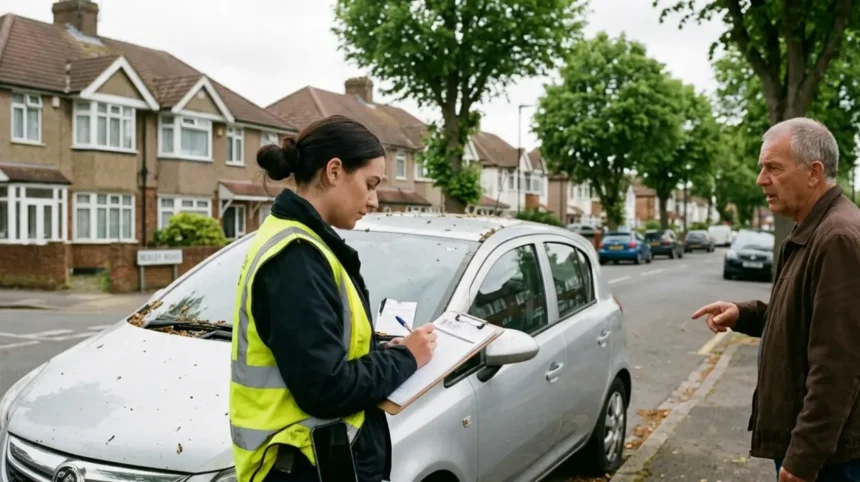
Reporting an abandoned car in Bexley starts with confirming that the vehicle is actually abandoned, then sending a report to Bexley Council through its street-reporting system. The council investigates abandoned or untaxed vehicles, checks legal status, and removes vehicles that meet the abandonment criteria after the correct notice process.
- What counts as an abandoned car in Bexley?
- Where do you report an abandoned vehicle?
- What information should you include?
- How does the removal process work?
- What happens after the council acts?
- What should you do first in South London?
- When should you use the police or DVLA?
- How does the law support removal?
- What evidence helps most?
- Why does removal matter in Bexley?
- How does this apply in 2026?
- South London reporting context
What counts as an abandoned car in Bexley?
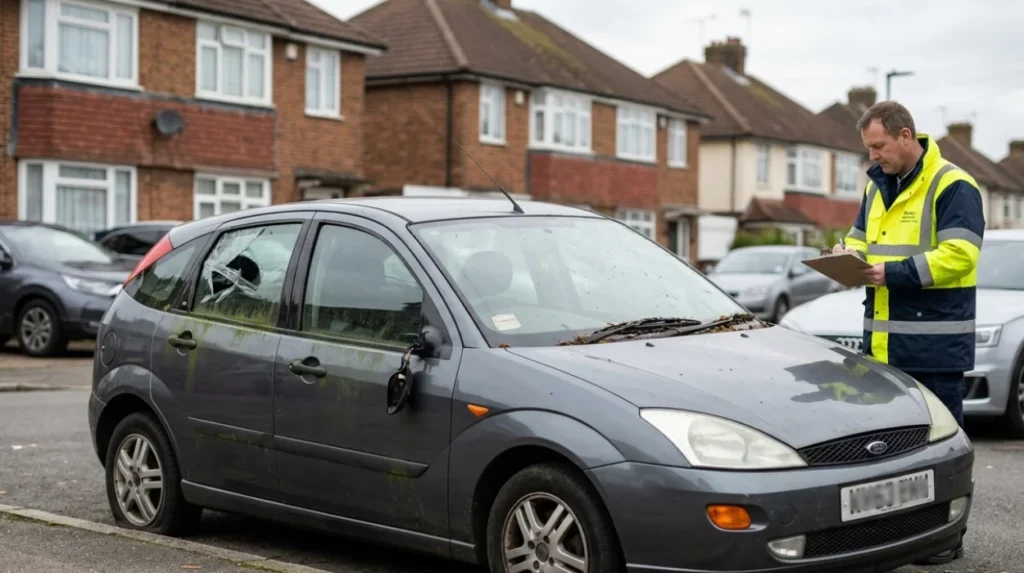
An abandoned car is a vehicle that has been left without lawful authority, shows signs of neglect, and stays in place long enough to suggest the owner has stopped using it. In Bexley, the council considers condition, location, tax status, and how long it has been stationary before deciding whether to remove it.
An abandoned vehicle is not the same as a vehicle that is simply parked for a long time. A car can be stationary and still belong to someone who is away, unwell, or using it occasionally. Council officers look for evidence such as flat tyres, broken windows, missing plates, burnt-out damage, rust, waste inside the car, or no sign of recent use.
The legal definition matters because councils do not remove every unused vehicle. Under government guidance, local authorities must remove abandoned vehicles from roads and from land in the open air, including some private land, but they first assess whether the vehicle meets the legal test for abandonment. That assessment protects both the public and lawful vehicle owners.
Where do you report an abandoned vehicle?
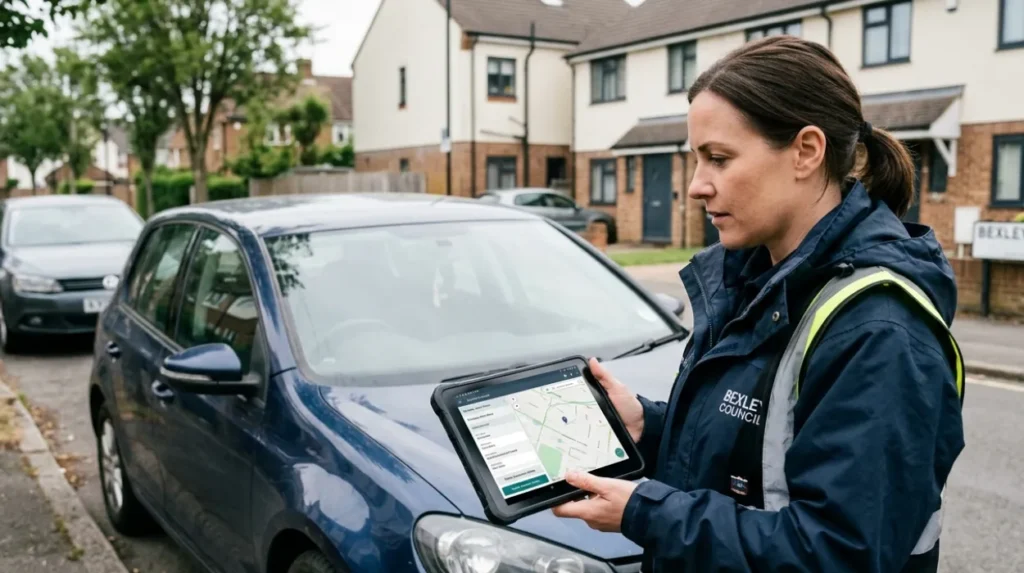
You report an abandoned vehicle in Bexley to Bexley Council using its FixMyStreet-based reporting route for street and road issues. The council’s own service lists abandoned or untaxed vehicles among the problems that can be reported through this location-based system, and it then investigates the case.
Bexley Council states that street and road issues can be reported through its FixMyStreet reporting tool, and abandoned or untaxed vehicles are included in that category. The reporting process asks you to enter a Bexley postcode or street name, pinpoint the location on a map, and submit the details for investigation.
This is the main route for public-road cases in Bexley. If the vehicle is on a public highway, the report reaches the council team responsible for enforcement and removal decisions. If the vehicle is on private land, ownership and access issues change the process, and the landowner usually needs to take the lead.
What information should you include?
A strong report includes the registration number, make, model, colour, exact location, condition, and how long the vehicle has been there. Photos help the council identify the vehicle faster and decide whether it looks abandoned or simply parked.
Include the following details in a single report:
- Vehicle registration number, if visible.
- Make, model, and colour.
- Exact location, including street name and nearby landmark.
- How long it has remained in the same place.
- Visible damage or neglect, such as flat tyres, missing wheels, broken windows, rust, burnt-out panels, or mould.
- Whether the vehicle contains waste or poses a hazard.
- A photo of the vehicle and surrounding street, if possible.
These details matter because councils must separate abandoned vehicles from taxed vehicles, vehicles with valid legal status, and vehicles that are merely inconveniently parked. Bexley advises checking whether a vehicle is taxed or declared SORN before reporting it, because tax disc displays are no longer used.
How does the removal process work?
After a report is submitted, the council inspects the vehicle, completes statutory checks, and decides whether it is abandoned. If it is confirmed as abandoned, the council serves notice and then removes it according to legal rules for roads or land in the open air.
The process begins with inspection. Bexley says the vehicle will be inspected and removed only after satisfactory legal checks confirm it is abandoned. That means the council checks the registration details, tax status, and ownership records before taking action.
National guidance sets the legal framework. If the vehicle is on a road or highway, the authority can work to remove it after finding the owner and giving 7 days’ written notice to collect it. If the vehicle is on land in the open air, including some private land, the authority must normally give the landowner or occupier 15 days’ notice before removal. These rules explain why removal does not happen immediately in every case.
If the vehicle is in a dangerous condition, councils can act faster. Guidance from local authorities commonly uses a 24-hour notice period for dangerous, wrecked, or burnt-out vehicles on public land or highways. This applies to vehicles that present an immediate risk to the public.
What happens after the council acts?
If the council confirms abandonment, it can attach a notice, arrange removal, and store or dispose of the vehicle through its contractor or authorised pound. If an owner comes forward, the vehicle is returned only after the removal and storage costs are paid.
Once a vehicle is removed, the owner still has a chance to reclaim it if they can prove ownership and pay the required costs. Government guidance says authorities must return the vehicle if the owner claims it and pays the removal and storage charges.
If no owner comes forward, the authority can dispose of the vehicle. That outcome is common when a car is severely damaged, without plates, or left in a state that shows clear abandonment. Councils handle the vehicle through an authorised disposal chain rather than leaving it on the street. The public benefit is a cleaner street, less obstruction, and reduced risk of vandalism or pests.
What should you do first in South London?
Start by checking whether the car is taxed, has a registration plate, and is on a public road or private land. Then submit a precise report to Bexley Council through its reporting system with a photo and location details, because accurate evidence speeds up enforcement.
In South London boroughs, the fastest route is always the local authority responsible for the street. Bexley’s site directs residents to report abandoned or untaxed vehicles through its street-reporting system, which fits the normal London borough model. If the vehicle is on a council estate or privately owned land, the route changes because landownership changes responsibility.
A practical report sequence is simple:
- Check the exact location.
- Check whether it is on a road, highway, or private land.
- Note visible signs of abandonment.
- Take one or two clear photos.
- Submit the report through Bexley’s street reporting page.
That sequence avoids incomplete reports. Councils spend less time chasing missing details when the registration, location, and condition are clear from the start.
When should you use the police or DVLA?
Use the police only when the vehicle is dangerous, leaking fuel, contains hazardous items, or creates an emergency risk. Use the DVLA for untaxed vehicles, because untaxed and abandoned are not the same thing, and Bexley recommends checking tax or SORN status first.
An untaxed vehicle does not automatically count as abandoned. Bexley tells residents to check the DVLA to see whether a vehicle is taxed or declared SORN before making a report. This matters because the DVLA and the council handle different problems.
Police involvement is limited to urgent risk. Examples include petrol leaks, dangerous loads, or an immediate public hazard. If the car is just untaxed, the council or DVLA route is the correct first step. If it is safe but clearly neglected, the council is still the proper authority.
How does the law support removal?
The legal basis comes from national abandoned-vehicle rules that require councils to investigate, give notice, and remove abandoned vehicles from roads and land in the open air. The law also protects landowners and owners by requiring notice and a chance to reclaim the vehicle.
The government guidance is clear. Councils and national park authorities must remove abandoned vehicles from roads and land in the open air, and they must follow notice requirements before disposing of them. For land in the open air, the landowner or occupier gets 15 days’ notice. For vehicles on roads, if the owner is found, they receive 7 days’ written notice to collect the vehicle.
This legal structure explains why a report does not trigger instant towing. Councils must protect due process while still clearing streets. The balance is important in London, where vehicles can be left for many reasons, including breakdowns, estate moves, insurance gaps, or deliberate dumping.
What evidence helps most?
The best evidence is a clear photo, the exact street location, and notes showing the vehicle has not moved for days or weeks. Signs such as smashed glass, missing wheels, no plates, or severe rust make the case stronger and easier to verify.
A council officer needs evidence that supports abandonment rather than inconvenience. Photos showing the same car in the same place over time are especially useful. If you notice new damage, waste inside the vehicle, or signs that the car is being used as storage, include that in the report.
This also helps during follow-up. If the council needs further confirmation, your notes create a record of the vehicle’s condition at the time of reporting. That speeds up review and reduces disputes about whether the car had simply been left temporarily.
Why does removal matter in Bexley?
Removing abandoned cars improves road safety, reduces obstruction, supports cleaner streets, and lowers the risk of vandalism or fire. It also protects residents from blocked pavements, hidden hazards, and long-term street blight.
Abandoned vehicles create practical problems. They take up parking space, attract fly-tipping, and can become unsafe if broken glass, sharp metal, or fuel leaks appear. On residential streets, that can reduce visibility and make walking, cycling, and parking more difficult.
There is also a public-health angle. Councils describe abandoned vehicles as an eyesore and a risk when vandalised or left to deteriorate. In a borough such as Bexley, where residential streets and mixed-use roads sit close together, clearance helps maintain both appearance and safety.
How does this apply in 2026?
In 2026, the reporting process remains anchored in council enforcement, digital reporting, and legal checks. The main difference is that residents now rely on online location-based systems and digital tax checks rather than old paper tax-disc methods.
Bexley’s guidance already reflects the modern system. It tells residents that tax discs are no longer displayed, and it directs them to check tax or SORN status online before reporting. It also uses a location-based digital reporting route that fits current local-government service design.
For readers searching in 2026, the practical steps stay stable: identify the vehicle, confirm it is likely abandoned, report it through Bexley Council’s system, and let enforcement follow the statutory process. That makes the article evergreen, because the core legal process is stable even when the online reporting interface changes.
South London reporting context
South London residents should use the borough council that covers the street where the vehicle sits. In Bexley, that means Bexley Council, not a neighbouring borough, because enforcement is location-specific and based on the street boundary.
This matters because London boroughs do not share a single abandoned-car team across all streets. A vehicle on a Bexley road belongs in Bexley’s reporting system, while a vehicle in another borough belongs to that borough’s team. The council boundary determines who investigates, who posts notices, and who arranges removal.
For South London readers, the best search intent is clear: use the borough name plus “abandoned vehicle” plus “report.” That matches the service model used by Bexley and most other London councils, where the correct authority depends on the exact street location.
What counts as an abandoned car in Bexley?
An abandoned car is a vehicle that appears neglected, unused, or left without lawful authority for a long period. In Bexley, councils look for signs such as flat tyres, broken windows, missing number plates, rubbish inside, heavy damage, or evidence that the vehicle has not moved for weeks.