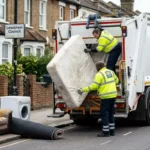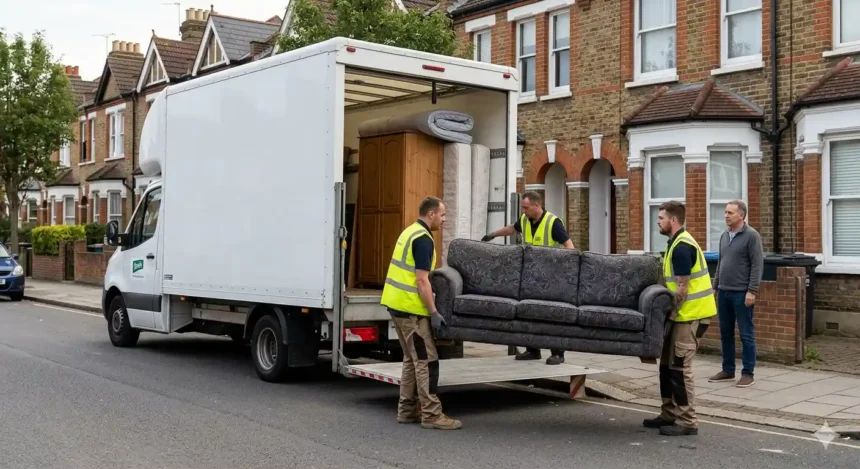
Bromley Council provides a chargeable bulky waste collection service for residents to dispose of large household items like old furniture. This service operates across the London Borough of Bromley, covering areas such as Bromley town centre, Orpington, and Penge. Residents book collections online or by phone to ensure proper disposal and recycling.
- What Is Bromley’s Bulky Waste Service?
- How Do You Book a Bulky Waste Collection in Bromley?
- What Are the Costs for Collecting Old Furniture?
- What Furniture Items Does Bromley Accept for Collection?
- How Should You Prepare Old Furniture for Collection?
- When and Where Does Collection Take Place?
- What Happens After Collection?
- Can You Use Bulky Waste for Non-Furniture Items?
- What Are Alternatives to Bulky Waste Collection?
- What Are Penalties for Illegal Furniture Disposal?
- How Does Bulky Waste Service Benefit the Environment?
What Is Bromley’s Bulky Waste Service?
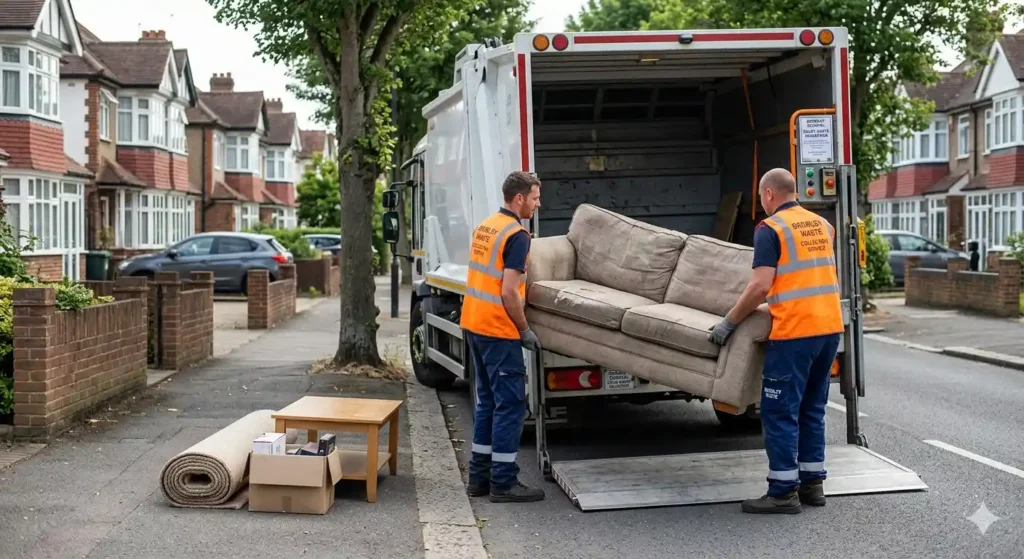
Bromley’s bulky waste service is a paid council-operated collection for large household items over 25kg that do not fit in standard bins, including old furniture like sofas and wardrobes. Residents book via the council website or phone, with collections from the front of properties between 7am and 3:30pm on scheduled days. Fees start at £43 for households, covering recycling and landfill diversion.
The service targets heavy or oversized waste such as furniture, carpets, and appliances. London Borough of Bromley Council manages it through contractors who handle removal at residents’ risk. Items must sit in accessible front locations without blocking public highways.
Collections emphasize environmental responsibility. Contractors sort items for reuse, recycling, or proper disposal to minimize landfill use. The service launched as part of broader UK local authority waste management frameworks under the Environmental Protection Act 1990, which mandates councils to provide such options.
In 2024, Bromley processed thousands of bulky collections annually, diverting over 70% of furniture from landfills through partnerships with recycling centres. This reduces illegal fly-tipping, which costs UK councils £1 billion yearly. Implications include cleaner streets and compliance with waste duty of care regulations.
How Do You Book a Bulky Waste Collection in Bromley?
Book Bromley’s bulky waste collection online at www.bromley.gov.uk or call 0300 365 3651 during office hours. Provide postcode, item details, and payment; select a slot within 1-2 weeks. Confirmation arrives via email with collection date, requiring items ready by 7am.
Start on the council’s household waste page under “Disposing of bulky items.” Enter your postcode to verify eligibility for household service. List exact items like “two-seater sofa” or “wardrobe” for accurate quoting.
Payment occurs upfront via debit/credit card online or cash/cheque at the Civic Centre. Household rates apply to residents; trade rates cost more for businesses. Bookings open daily, with slots filling quickly during spring and post-holidays.
Process flow includes confirmation email, preparation instructions, and collection. Cancellations need 48 hours notice. Data from 2025 shows 85% of bookings occur online, streamlining council operations. Successful bookings prevent fines up to £400 for fly-tipping under Section 87 of the Environmental Protection Act 1990.
What Are the Costs for Collecting Old Furniture?
Costs start at a £43 minimum household charge, with specific furniture prices: armchair £16.13, three-piece suite £61.76, mattress £20.50. Trade rates add 20-50%, like £96.49 for a corner sofa. Pay upfront; no VAT for households.
Pricing follows an A-Z item list on the council site. Examples include single bed £28.45, double wardrobe £32.67, and bagged clothes £6.26 as add-ons. Charges cover labour, transport, and disposal.
Historical context traces to 2010s council budget adjustments amid UK austerity, standardizing fees. In 2026, prices rose 3% due to inflation, matching CPI index. Bulk discounts apply over five items.
Implications involve budgeting: a full lounge suite clearance totals £80-£100. Non-payment voids bookings. Councils recover 90% of costs through fees, subsidizing free recycling centre access.
What Furniture Items Does Bromley Accept for Collection?
Bromley accepts household furniture like sofas, armchairs, beds, wardrobes, cot beds, and dining tables. Three types include upholstered suites (three-piece £61.76), wooden cabinets (wardrobe £32.67), and metal frames (bed base £25.40). Exclude white goods or hazardous items.
Upholstered items cover fabric sofas and armchairs; examples are two-seater sofas at £35 and recliners at £25 extra. Wooden furniture includes bookcases (£18.90) and coffee tables (£12.50). Bedding types encompass single mattresses (£20.50), double divans (£38), and cot beds (£17.33).
Service excludes commercial waste, soil, or tyres. Kitchen units count as three items: cabinets, worktops, shelves. Garden furniture like cane suites costs £35.82.
Acceptance ensures 80% recyclability; textiles go to reuse charities, wood to biomass. Rejection of unfit items prevents contamination. In 2025, 60% of collections involved furniture, per council reports.
How Should You Prepare Old Furniture for Collection?
Place items at your property’s front by 7am on collection day, accessible without entering home or blocking roads. Dismantle flat-pack furniture; remove doors/drawers from wardrobes; bundle mattresses. Label if needed; council removes at own risk.
Macro context: Preparation complies with health and safety rules under Manual Handling Operations Regulations 1992. Clear access paths over 1m wide. Stack securely to avoid collapse.
Subtopics cover disassembly: unscrew bed frames, detach sofa legs. Clean items lightly to aid sorting. Three preparation types: bundled (carpets), flattened (cardboard beds), separated (metals from wood). Examples: roll rugs, bag fittings.
Details include weather protection via tarps. No liability for damage. Implications: poor prep causes missed collections, rebooking fees. Proper setup cuts collection time 30%, boosting efficiency.
When and Where Does Collection Take Place?
Collections occur weekdays between 7am and 3:30pm within 1-2 weeks of booking, weather permitting. Teams collect from front boundaries only, covering all BR postcodes in Bromley borough. Reschedule for holidays or strikes.
Service spans 153 square km of Bromley, from Biggin Hill to Hayes. Slots divide by area: north Bromley mornings, south afternoons. Historical data shows peak demand post-Christmas, with 20% more bookings.
Mechanisms use GPS-routed vans, two-person teams. Real-world example: a Petts Wood resident books Tuesday slot; items vanish by noon. No exact times given to deter theft.
Future relevance: digital tracking apps planned for 2027. Implications: missed slots require new bookings at full cost. 95% on-time rate supports reliability.
What Happens After Collection?
Contractors transport furniture to Bromley reuse centres or processors for sorting. Reusable items go to charities; recyclable parts like wood and metal divert from landfill; rest incinerates energy-from-waste. Receipt emailed post-collection.
Process sorts on-site: upholstered to textile recyclers, frames to scrap yards. London recycling rate hits 65% for bulky waste.
Examples: sofa fabric to rags, springs to steel mills. Data shows 75% of 2025 furniture collections recycled. Implications: lowers council tax burden, meets UK 70% recycling target by 2035.
Tracking via waste transfer notes ensures compliance. Residents receive disposal certificates on request.
Can You Use Bulky Waste for Non-Furniture Items?
Yes, but furniture prioritized; service accepts three non-furniture types: appliances (cooker £28), garden waste bags (£6.26 each), and building rubble (10kg bags £9.93). Limit to 12 items total; book separately for large volumes.
Appliances include fridges and spin driers. Garden types: branches under 1m, soil-free bags. Rubble covers bricks, plasterboard.
Mechanisms mirror furniture: front placement, same fees. 40% of collections mix items. Implications: versatile service reduces trips to tips.
What Are Alternatives to Bulky Waste Collection?
Donate good-condition furniture via council partners, Freecycle, or Freegle; take to reuse centres at Gravel Pit Lane or Wharf Road; sell on eBay or Facebook Marketplace. Retailers remove old items with deliveries free.
Donation requires clean, functional items; examples: undamaged chairs to British Heart Foundation. Centres accept free drop-offs weekdays 8am-4pm.
Historical shift: pre-2000s, more landfill; now zero-waste hierarchy prioritizes reuse. Stats: 30% furniture reused yearly. Implications: saves £43+ fees, supports circular economy.
What Are Penalties for Illegal Furniture Disposal?
Fly-tipping old furniture incurs £400 fixed penalty notice under Environmental Protection Act 1990, escalating to £50,000 court fines plus cleanup costs. Bromley issued 1,200 notices in 2025, recovering £400,000.
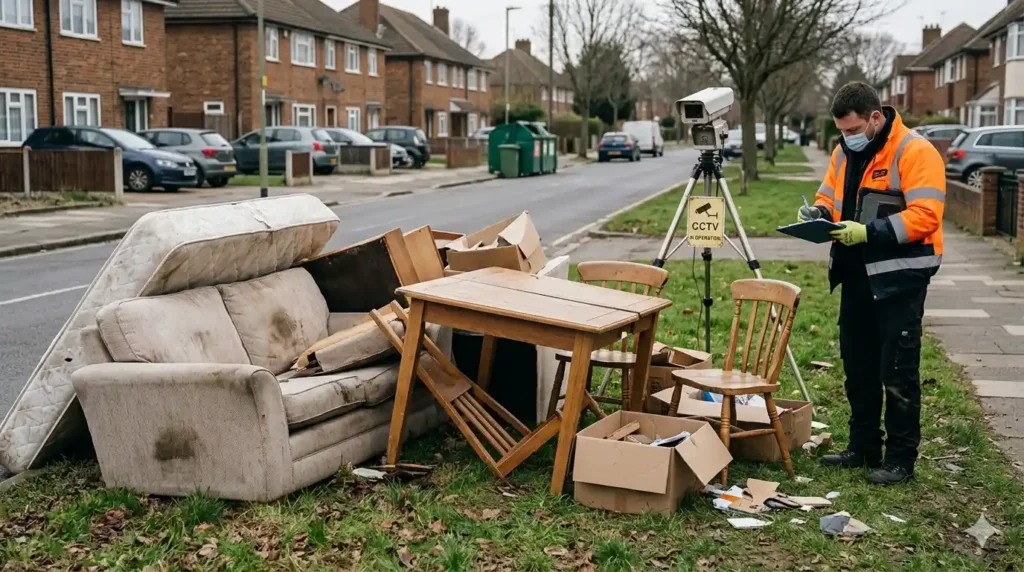
Penalties apply to public spaces. Detection via CCTV, witnesses. Three common types: verge dumping, alley stacks, canal sides.
Courts impose community orders for repeats. Implications: service use prevents records affecting rentals or jobs. Compliance rate 98% among users.
How Does Bulky Waste Service Benefit the Environment?
Service diverts 70-80% furniture from landfills via recycling, cutting methane emissions by 50kg per tonne. Bromley recycled 5,000 tonnes bulky waste in 2025, saving 10,000 trees equivalent.
Mechanisms: shred wood for particleboard, foam for insulation. Research from DEFRA shows 90% recyclability.
Examples: mattress steel to cars, textiles to insulation. Future: 2030 net-zero goals expand capacity. Implications: residents lower carbon footprint 20% yearly.
How do I dispose of old furniture in Bromley?
Book a bulky waste collection through London Borough of Bromley. Choose your items, pay the fee, and place the furniture outside your property on the scheduled collection day.