Key Points
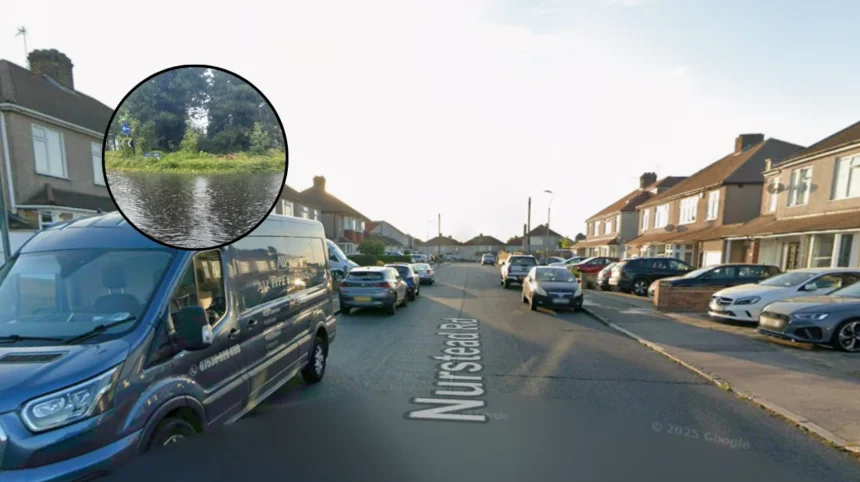
- Heavy rain caused severe surface water flooding at the busy roundabout near Morrisons in Erith.
- A photograph taken at around 9:00 am showed hazardous driving conditions across the carriageway.
- Local drainage systems appeared unable to cope with the volume of intense rainfall.
- The Met Office issued a yellow thunderstorm warning for south-east England, in effect from 5:00 am until 10:00 pm.
- Forecasters warned motorists about sudden flooding, spray, temporary road closures and disruption to public transport.
Erith (South London News) August 27, 2026 – Drivers faced exceptionally difficult conditions in Erith after flooding covered substantial parts of the roundabout near Morrisons following hours of continuous heavy rain. A photograph taken at around 9:00 am depicted standing water stretching across the carriageway at the busy junction, with surface water covering much of the asphalt and creating hazardous conditions for morning commuters. The disruption coincided directly with an active yellow thunderstorm warning issued by the Met Office, which encompassed wide areas of south-east England from 5:00 am until 10:00 pm. Forecasters warned that intense bursts of rain could produce sudden flooding and spray on roadways, significantly increasing the likelihood of temporary road closures and public transport delays throughout the region.
What Caused the Severe Flooding at the Erith Roundabout?
The immediate cause of the inundation was a prolonged period of intense precipitation that overwhelmed the local urban drainage infrastructure. Photographic evidence recorded at approximately 9:00 am showed rain continuing to fall as water pooled heavily around the roundabout network. The accumulation of surface water across multiple lanes indicated that the gully systems and surrounding drainage channels were unable to cope with the sheer volume of water delivered within a short timeframe.
As a result, vehicle tyres lost traction on the submerged sections, forcing drivers to navigate the junction at drastically reduced speeds to avoid aquaplaning. The location, being a key arterial point adjacent to the Morrisons supermarket, experienced immediate congestion as traffic slowed to negotiate the standing water safely.
What Direct Warnings Did the Met Office Issue for South-East England?
The Met Office put a yellow weather alert in place, highlighting the risk of severe convective activity across south-east England throughout the day. The official alert, spanning a 17-hour window from early morning to late evening, explicitly signaled the potential for localized torrential rain, lightning, and transient flooding events.
According to meteorologists at the official weather service, rapid surface water accumulation poses an immediate risk to road safety. The guidance issued alongside the weather warning noted that heavy downpours would likely produce widespread road spray, reducing visibility for motorists and creating unexpected deep pools of water on low-lying carriageways.
Furthermore, the meteorological service advised that infrastructure failures could occur alongside transport disruptions. Lightning strikes associated with the thunderstorm front present a distinct hazard to electrical networks and railway signaling equipment, whilst localized pooling threatens to interrupt bus routes reliant on low-lying road corridors like the Erith roundabout network.
Background of the Erith Carriageway and Local Infrastructure
The roundabout adjacent to the Morrisons store in Erith serves as a primary traffic distribution node within the London Borough of Bexley, carrying significant volumes of local residential transport, commercial deliveries, and public transit vehicles daily. Low-lying urban junctions across south-east England remain routinely vulnerable to surface water flooding during short-duration, high-intensity rainfall events.
Urban drainage systems across the region are typically designed to standard historical capacity thresholds. When sudden thunderstorm cells track across the area, the rate of surface water runoff off non-permeable asphalt surfaces frequently exceeds the hydraulic capacity of standard road gully networks. This structural limitation often leads to temporary surcharging of manholes and rapid ponding at natural low points on the highway, requiring intervention from local authority maintenance teams to clear detritus and restore normal flow.
Explore More Erith News
Man Dies in Fatal Bexley Road House Fire: Erith 2026
Dramatic 100-Ton Scrap Yard Blaze Hits Industrial Erith 2026
How Will This Weather Event and Road Conditions Impact Local Commuters and Residents?
The short-term impact of this weather development directly affects daily commuters, local transport operators, and residents within the Erith catchment area. Motorists relying on the arterial routes passing through the Morrisons roundabout face extended journey times, heightened vehicle wear, and an elevated risk of accidents caused by reduced braking efficiency and hidden road surface hazards.
Commercial deliveries to nearby retail outlets and local businesses are likely to experience knock-on delays as drivers re-route to avoid congested low-water points. For public transport users, localized flooding of this nature frequently causes tactical cancellations or diversions of local bus services, alongside potential delays on regional rail links if lightning or localized track flooding occurs.
In the longer term, recurring surface water events of this magnitude highlight the ongoing operational challenges facing highway authorities regarding gully clearance schedules and sustainable drainage upgrades needed to build resilience against extreme localized summer weather events.