Key Points
- Falconwood Station Ranked Lowest: Falconwood has been officially named the worst-performing train station across the London Borough of Bexley, according to a comprehensive review of recent data.
- National Standings Disclosed: The station placed 1,481st out of 2,649 nationwide rail hubs tracked across the United Kingdom.
- Punctuality Disruption Revealed: Merely 33 per cent of all scheduled services at Falconwood managed to arrive precisely on time during the analytical framework.
- Widespread Delays Documented: While 43 per cent of services faced delays of one to two minutes, approximately 12 per cent lagged by three to four minutes, and around two per cent were dropped entirely.
- Bexley Borough Trends Identified: Welling and Bexleyheath followed closely as the second and third worst-performing hubs, both sustaining low overall scores alongside distinct cancellation challenges.
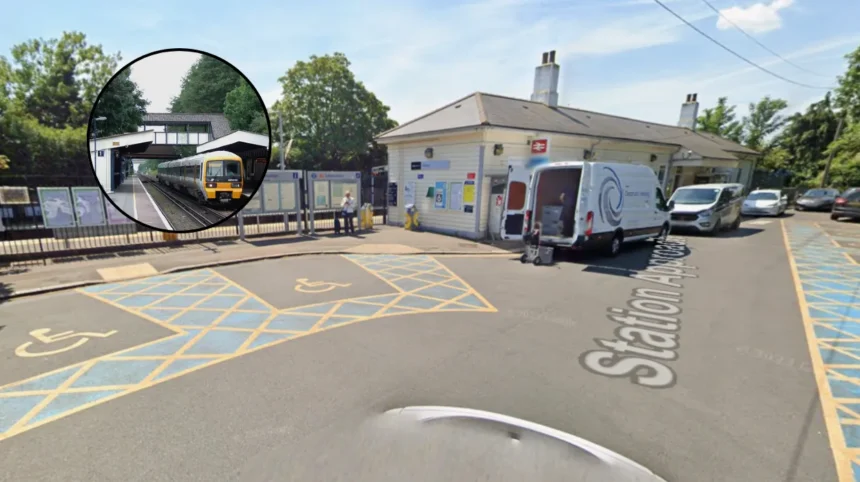
Bexley (South London News) July 9, 2026 – Falconwood has been officially named the worst-performing train station in the London Borough of Bexley following an extensive six-month performance analysis.
- Key Points
- Which Bexley Station Witnesses the Highest Rate of Train Delays?
- How Did Other Rail Hubs Across Bexley Perform in the Assessment?
- Which Local Stations Sustained the Highest Rates of Service Cancellations?
- Background of the Bexley Rail Network Developments
- Predictions: How these Developments Can Affect Local Commuters
The latest operational assessment conducted by rail performance-tracking website On Time Trains revealed that the South East London transport hub ranked 1,481st out of 2,649 stations across the United Kingdom, registering a modest overall performance score of 87 per cent.
The evaluation was established via a deep statistical breakdown tracking service punctuality and cancellation frequency across a total of 33,277 individual rail services during the monitored timeline.
The findings have sparked renewed discussions regarding local transport accessibility, infrastructure investments, and service reliability across the commuter corridors operating throughout Bexley.
Which Bexley Station Witnesses the Highest Rate of Train Delays?
As reported by a correspondent for London Now, the extensive data suite compiled from national rail records verified that Falconwood stands out as the primary location for timing discrepancies within the borough boundaries.
The study clarified that just a third of the trains serving Falconwood arrived exactly on time, with only 33 per cent of services operating precisely according to the official timetable.
The remaining balance of the schedules showed a heavy concentration of minor and moderate timing infractions. A further 43 per cent of trains running through the station were delayed by one to two minutes, while 12 per cent were logged as being three to four minutes late.
For commuters relying on tight transfers, the data showed that six per cent of all services were delayed by between five and nine minutes, with an additional three per cent arriving more than 10 minutes past their scheduled arrival window.
Around two per cent of all intended trains were cancelled altogether, leaving passengers to wait for subsequent services on the line.
How Did Other Rail Hubs Across Bexley Perform in the Assessment?
The structural issues highlighted by the data are not entirely isolated to Falconwood, as neighboring transport points recorded identical performance marks under parallel scrutiny.
As reported by the analytical team at On Time Trains, Welling recorded the second-worst performance among Bexley’s stations, also achieving an identical overall score of 87 per cent.
Despite matching Falconwood’s overall percentage grade, Welling secured a slightly stronger national position, ranking 1,383rd across the United Kingdom.
The data sample for Welling encompassed 33,278 services, where around 52 per cent of trains arrived strictly on time. However, 27 per cent were delayed by one to two minutes, and two per cent of services were cancelled entirely, mirroring the disruption trend seen along the line.
Bexleyheath emerged as the third worst-performing station within the regional territory, matching its neighbors with a performance score of 87 per cent while ranking 1,359th out of 2,649 stations nationwide.
Out of the 33,566 services analysed at Bexleyheath, exactly half arrived on time, while 29 per cent encountered delays of one to two minutes, and two per cent of scheduled operations were completely aborted.
Which Local Stations Sustained the Highest Rates of Service Cancellations?
The operational data demonstrated a clear trade-off between slight arrival delays and absolute service terminations across alternative stations in the borough. As noted in the compiled findings from On Time Trains, Slade Green ranked next among the lower-performing stations with a slightly higher baseline score of 89 per cent.
The station saw a significantly larger data allocation of 39,232 services analysed, out of which 65 per cent arrived on time.
However, four per cent of all services at Slade Green were cancelled, marking the highest individual cancellation rate recorded among all stations throughout Bexley.
Concurrently, Barnehurst and Crayford both recorded overall performance scores of 89 per cent. At Barnehurst, 60 per cent of the 34,436 services analysed managed to arrive strictly on time, while Crayford recorded a 54 per cent punctuality rate across its monitored schedules, showing a marginal buffer against the heavy delay brackets impacting Falconwood.
Background of the Bexley Rail Network Developments
The transport infrastructure serving Falconwood, Welling, and Bexleyheath is fundamentally tied to the historical development of the Bexleyheath Line, an integral branch of the suburban rail network connecting South East London with major inner-city terminals including London Victoria, London Charing Cross, and London Cannon Street.
Opened originally on 1 January 1936 to accommodate the rapid residential expansion of the Bexley suburb, Falconwood Station was constructed inside a brick-lined cutting, managed operationally by Southeastern services.
Over the decades, the line has seen rising passenger footfall as the outer London boroughs grew into dense commuter communities.
However, the track layout relies heavily on shared infrastructure, historical signaling frameworks, and complex junctions close to central London, which historically compounds delays.
When an outbound train experiences a minor delay at an inner London hub like London Bridge or Lewisham, the knock-on effect impacts sub-stations downstream along the Bexleyheath Line.
This reliance on dense, tightly packed timetables means that small operational hitches frequently translate into the short-duration delays of one to four minutes that now characterize the vast majority of Falconwood’s daily arrivals.
Predictions: How these Developments Can Affect Local Commuters
The revelation of Falconwood as the statistically lowest-performing station in the area is expected to alter travel habits, property dynamics, and institutional accountability across the London Borough of Bexley.
For the core audience of daily commuters, professional professionals, and students relying on Southeastern services, these documented delays are highly likely to influence morning routines, forcing passengers to budget wider travel windows to protect against the high probability of short-term delays.
From an economic perspective, the publication of objective performance scores might impact residential sentiment near the lower-ranked hubs. Homebuyers looking to settle in Zone 4 commuter zones often prioritize rail reliability; prolonged placement near the bottom of national transit rankings could subtly shift local demand toward areas serviced by lines with stronger punctuality rates, such as the Elizabeth line connections further north.