Key Points
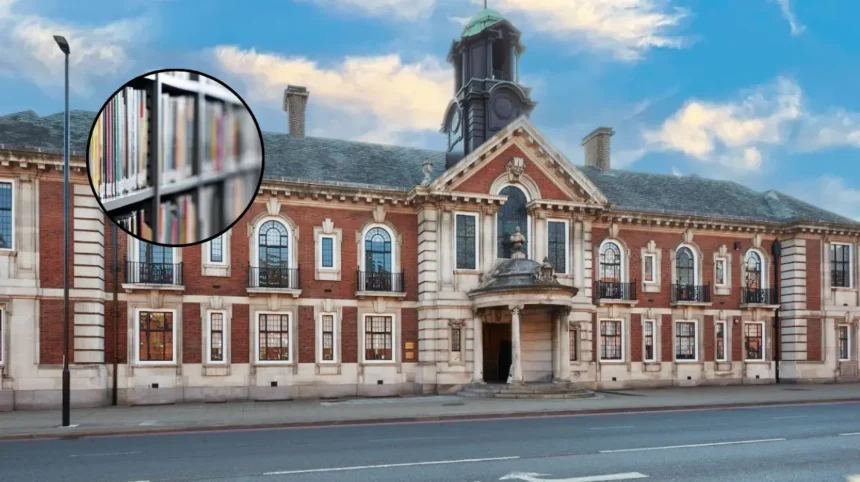
- Shortlands Library, located at 110 Shortlands Road, faces structural closure for “many months, if not years,” following the discovery of severe ground movement, wall cracking, asbestos exposure, and a sinkhole.
- Bromley Council revealed that detailed technical investigations identified two large trees at the front of the property as the primary cause of severe soil subsidence.
- Tree removal cannot commence until autumn 2026 to avoid disrupting bird-nesting season and must be carried out in stages to prevent physical damage to surrounding residential properties.
- Wall movement triggered by the subsidence has compromised structural areas containing asbestos, alongside the formation of an internal sinkhole.
- Facilities have been temporarily relocated to St Mary’s Church on Kingswood Road, where council officials plan to enhance the temporary library setup.
- Air quality testing will take place before council teams decant the premises, transferring books and equipment to other locations.
- Bromley Council is formally assessing all long-term strategies, including the potential relocation of Shortlands Library to an alternative site.
Bromley (South London News) August 17, 2026 — A municipal library in South London is expected to remain closed for years after extensive structural damage, exposed asbestos, and an internal sinkhole were discovered on the site. Bromley Council confirmed the extensive findings following detailed structural investigations at Shortlands Library, located at 110 Shortlands Road. The building was initially closed to the public in January 2026 as a precautionary measure after significant cracks were observed along a rear exterior wall.
Why Has Shortlands Library Been Forced to Close Long-Term?
As reported by Cameron Blackshaw, LDRS Reporter for the Evening Standard, structural engineers concluded that major subsidence driven by vegetation root networks caused the physical deterioration of the structure. Two mature trees located directly in front of the building extracted moisture from the underlying soil, inducing foundation movement that compromised the building’s structural integrity.
A spokesperson for Bromley Council stated:
“The two large trees at the front are causing subsidence at the property. This is causing cracking in the walls, including where there is asbestos present, and a sinkhole in the floor”.
The presence of asbestos inside the cracked walls complicates remediation efforts, converting standard structural maintenance into a controlled environmental hazard project. Furthermore, the ground failure culminated in a sinkhole forming through the floor, creating immediate physical hazards.
What Is the Timeline and Process for Removing the Trees?
The local authority confirmed that physical repairs to the library building cannot commence immediately due to environmental and safety constraints. The two front trees require removal in gradual phases to prevent sudden ground shifts that could damage neighbouring residential structures.
As stated by a spokesperson for Bromley Council:
“Because the trees are so large they will need to be taken down in stages to avoid damage to nearby properties, and seasonally (outside of nesting season). Therefore, it will take some time to remove them, and we wouldn’t be able to start until this autumn”.
The spokesperson added regarding the reopening timeframe:
“Only once the trees are fully removed could we start to repair and refurbish the property. The implications of this are that the current library building will be unavailable for many months if not years”.
What Safety Procedures and Relocation Steps Are Being Taken?
As detailed by local media coverage, Bromley Council will initiate a full decant of the Shortlands Road facility following environmental clearance. Specialized teams will conduct thorough air quality tests to confirm the absence of airborne asbestos fibres.
Upon securing satisfactory air quality results, council workers will enter the property to salvage books, electronic equipment, and community materials for reuse across the borough’s library network.
In the interim, community library services will continue operating from a temporary facility hosted at St Mary’s Church on Kingswood Road. Council officials stated that plans are underway to upgrade the layout and facilities within St Mary’s Church to deliver a expanded temporary service for local residents. Simultaneously, Bromley Council is evaluating broader options for the service, explicitly reviewing whether finding an alternative permanent location within Shortlands represents a more viable long-term solution than restoring the 110 Shortlands Road site.
Background of the Shortlands Library Closure
The closure of Shortlands Library forms part of broader infrastructure and facility management challenges within the London Borough of Bromley.
The site at 110 Shortlands Road has exhibited signs of minor structural movement for a prolonged period. When the council initially closed the site on January 21, 2026, officials noted that while historical monitoring showed minor settlement, the sudden appearance of pronounced cracks along the rear wall necessitated immediate closure on health and safety grounds. Subsequent deep-level surveys revealed that the root systems of the two large front trees had drastically altered subsoil moisture levels, precipitating severe localized subsidence.
The discovery of asbestos during the subsequent engineering assessment added substantial procedural complexity. Asbestos was widely utilized in British public building construction throughout the mid-to-late 20th century. When encapsulated within undisturbed walls, the material poses minimal risk; however, structural fracturing caused by subsidence exposes the hazardous fibres, triggering strict statutory containment regulations.
This ongoing disruption coincides with wider library service shifts across the borough. Bromley Central Library was closed on June 30, 2026, to facilitate its relocation to a new facility at 145 High Street. Consequently, the simultaneous disruption of both central and local branch locations has significantly restricted access to public reading spaces and community services across the area.
Explore More Bromley News
Asbestos and Sinkhole Found in Shortlands Library, South London 2026
Bromley Football Club Plans Solar Panels at Hayes Lane, Bromley 2026
Prediction: How Will This Development Affect the Local Community?
The extended closure of 110 Shortlands Road and the ongoing structural remediation process will have multi-faceted impacts on various sections of the local population:
- Impact on Young Families and Early Years Children: Local families relying on free early-childhood developmental sessions—such as the weekly ‘Baby Bounce and Rhyme’ or creative workshops—will experience reduced capacity and modified schedules within the smaller, temporary space at St Mary’s Church. Reduced physical space can lead to capped attendance numbers, potentially excluding local parents seeking accessible community support.
- Impact on Elderly Residents and Vulnerable Groups: Older community members who utilize local library drop-in sessions (such as adult social groups) for community connection and digital access may face accessibility challenges. The loss of a dedicated, permanent public building disrupts established social hubs, which are essential for combatting social isolation among local seniors.
- Impact on Students and Remote Workers: The absence of a dedicated quiet study space, public workstations, and research facilities for prolonged periods will force students and remote workers to travel further to neighbouring towns or alternative borough libraries, placing additional pressure on surviving facilities like the pop-up library network.
- Impact on Local Homeowners and Traffic: Nearby residents along Shortlands Road will face localized disruption starting in autumn 2026. The phased felling of mature trees, heavy machinery deployment, air monitoring units, and subsequent decanting vehicles will likely necessitate temporary lane closures, parking restrictions, and elevated noise levels. Furthermore, the long-term removal of mature street trees alters the immediate aesthetic and environmental landscape of the street.