Key Points
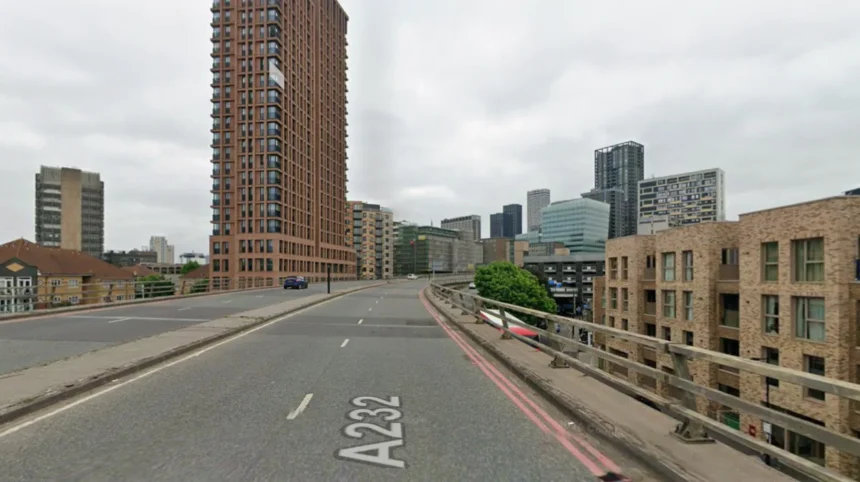
- Structural Deterioration: The 693-metre Croydon Flyover, built in 1968, has been rated in “poor condition” by Transport for London (TfL).
- Failure Window: TfL documents warn that, without major structural work, critical components could reach failure point between 2029 and 2031.
- High Daily Traffic Volume: Around 40,000 vehicles use the flyover each day across Old Town roundabout and Croydon High Street, while another 30,000 travel underneath the elevated structure.
- Root Causes of Damage: Years of water leaking through the road deck have damaged the reinforced concrete and corroded internal steelwork. Expansion joints, bearings, drainage systems, waterproofing and parapets have also reached the end of their operational lifespans.
- Existing Interim Safety Controls: TfL has reduced the speed limit from 40mph to 30mph, introduced spalling inspections every six months, restricted abnormal loads and installed protective netting to catch falling debris.
- Proposed Remediation Plan: The proposed two-phase scheme would begin with above-deck repairs, including waterproofing, resurfacing and joint work, followed by substructure repairs to concrete piers, half-joints and bearings.
- Diversion and Congestion Risk: If the flyover closes, an estimated 40,000 vehicles a day would be diverted onto 3.5 miles of local roads, causing major traffic disruption across Sutton, Croydon and Bromley.
Croydon (South London News) August 25, 2026 – One of south London’s busiest elevated arterial corridors could face severe operational restrictions or complete closure within the decade unless significant capital funding is secured for structural refurbishment. As detailed in an official funding submission by Transport for London (TfL), the Croydon Flyover has been formally categorised as being in a “poor condition,” with vital structural elements predicted to reach critical failure thresholds between 2029 and 2031 if comprehensive interventions are not carried out.
- Key Points
- Why is the Croydon Flyover at risk of structural failure?
- What temporary safety measures are currently in place?
- How does Transport for London plan to repair the structure?
- Background of the Croydon Flyover development
- Prediction: How will this development affect road users, businesses, and local services?
Why is the Croydon Flyover at risk of structural failure?
The 693-metre reinforced concrete dual carriageway was originally constructed in 1968 and has served for over half a century as a cornerstone of south London’s highways network. According to findings detailed by local transport reporters at London Now and Your Local Guardian, structural evaluations undertaken by engineering teams show that numerous core components are now entirely life-expired.
Water ingress penetrating through the upper deck surface over extended periods has accelerated the structural decay of the concrete. This continuous moisture penetration has led to concrete deterioration and widespread corrosion of the internal steel reinforcement bars. Technical assessments highlighted in TfL documentation confirm that structural bearings, expansion joints, protective deck waterproofing, safety parapets, and drainage systems require full-scale replacement or extensive remediation.
As recorded by regional transport updates, engineers from Transport for London have warned that without major structural capital investment, the rate of degradation will leave the authority with no choice but to enforce emergency lane restrictions or close the elevated highway altogether to maintain public safety.
What temporary safety measures are currently in place?
Transport for London has already implemented a range of mitigations to maintain operational safety while capital funding bids are under review. As reported by Your Local Guardian, TfL reduced the maximum speed limit across the flyover from 40mph down to 30mph to lessen dynamic impact loading on the weakened deck joints.
In addition, heavy vehicle movement has been constrained through restrictions placed on abnormal loads. Transport for London inspectors carry out safety checks every six months to monitor concrete spalling—a phenomenon where deteriorating concrete fragments break away from the main structure. Temporary catch netting has been fitted underneath the spans to prevent falling concrete debris from dropping onto the 30,000 vehicles, pedestrian pathways, and commercial spaces located directly below the flyover.
Despite these operational controls, Transport for London officers have reiterated that short-term mitigations cannot indefinitely halt structural decay, and that engineering forecasts identify 2029 as the point where unaddressed components could degrade beyond safe operational tolerances.
How does Transport for London plan to repair the structure?
To rectify the deep-seated structural issues, Transport for London has designed a structured, two-phase overhaul intended to fully restore the bridge’s load-bearing integrity and extend its service life.
| Repair Phase | Work Scope | Target Outcomes |
| Phase 1: Above-Deck | Resurfacing, deck waterproofing replacement, new expansion joints, upgraded safety parapets, and modernized drainage installations. | Halts water ingress, protects underlying rebar, and reduces surface wear. |
| Phase 2: Substructure | Concrete remediation across piers and crossbeams, half-joint structural repairs, bearing refurbishment or replacement, and structural strengthening. | Restores load capacity, removes structural risks, and eliminates emergency speed caps. |
Transport for London technical plans state that carrying out both refurbishment phases will successfully eliminate the need for ongoing emergency inspections and restore original design capacities across the corridor.
Background of the Croydon Flyover development
The Croydon Flyover was planned and built during the late 1960s as part of an ambitious post-war urban modernisation plan for the London Borough of Croydon. Opened in 1968, the structure was engineered to lift east-west orbital traffic above the heavily congested ground-level intersections of the A236 Old Town roundabout, Croydon High Street, and local tramways.
Over the decades, traffic volumes across outer south London increased dramatically, transforming the flyover into a key strategic arterial link. The corridor connects the London Boroughs of Sutton, Croydon, and Bromley, while offering regional connection points to major national routes including the A23, M23, and M25 motorways.
Like many brutalist concrete civil engineering projects constructed across the United Kingdom during the 1960s, the flyover was designed with an estimated lifespan of 50 to 60 years before requiring heavy overhaul. The structural deck waterproofing systems installed during initial construction have progressively worn down over half a century of continuous heavy traffic exposure.
In recent years, funding constraints across London’s transport infrastructure networks have delayed large-scale renewals of major concrete structures across the capital. This has forced transport authorities to rely on localized patch repairs, load monitoring, and speed reductions to manage older civil structures until national and regional capital allocation frameworks are finalised.
Explore More Croydon News
Man Dies in Met Police Custody in Croydon 2026
East Croydon Trains Disrupted After Car Strikes Bridge: Travel Chaos 2026
Prediction: How will this development affect road users, businesses, and local services?
Should Transport for London fail to secure the necessary funding for the two-phase repair plan, the eventual restriction or full closure of the Croydon Flyover will trigger severe consequences across south London’s transport grid and regional economy.
Traffic Congestion and Local Drivers
If the structure is closed to traffic, an estimated 40,000 daily vehicles will be forced off the elevated carriageway and directed onto a 3.5-mile local diversion route. Because much of the surrounding surface road network consists of single-carriageway urban streets, the sudden diversion of high traffic volumes will inevitably create severe gridlock across Croydon, Sutton, and Bromley. Drivers will experience significantly increased journey times, heightened vehicle operating costs, and elevated fuel consumption.
Public Transport and Emergency Services
The disruption will extend beyond private motorists. While one main bus route traverses the flyover itself, twelve separate bus routes operate directly beneath the structure, serving roughly 75,000 bus passenger journeys every day. Ground-level gridlock caused by flyover lane restrictions will create widespread delays across the local bus network, while intersecting street-running Tramlink services could face operational bottlenecks at street crossings. Emergency service response times could also be compromised, as both Croydon Fire Station and Croydon Police Station are located in close proximity to opposite ends of the flyover corridor.
Economic and Regeneration Impact
From an economic standpoint, prolonged traffic restrictions would pose a direct challenge to the Croydon Metropolitan Centre, which supports more than 400 businesses and 25,000 local jobs. Freight deliveries, commercial transport, and construction logistics would suffer severe delays. Furthermore, urban development within the Croydon Opportunity Area—which targets the delivery of over 14,000 new homes alongside new commercial footprint—relies heavily on predictable transport capacity. According to TfL’s economic assessment models, preventing structural closure avoids massive broader economic losses tied to gridlock, localized air pollution spikes, and lost productivity.