Key Points
- Lebanon Road Stop Closure: Transport for London (TfL) has confirmed the immediate closure of the Lebanon Road tram stop due to localized faulty track infrastructure.
- Elmers End Suspensions: Services running to and from Elmers End have been completely halted throughout the current week.
- Network-Wide Delays: Significant overcrowding and reduced frequency are being reported along the Croydon to Wimbledon corridor, ahead of scheduled engineering works.
- Fortnightly Shutdown Ahead: Nearly half of the entire Croydon tram network is set to be shut down for two weeks for major planned maintenance.
- Return Date: Normal service levels across the affected branches are not anticipated to resume until 6 November.
- Infrastructure Strain: The network has experienced a surge of over two-thirds more closure days in 2026 compared to 2025, underscoring ongoing concerns regarding aging rolling stock and track systems.
Croydon (South London News) October 22, 2026 – Significant operational disruptions have hit the South London tram network this week following the emergency closure of the Lebanon Road tram stop caused by a defect in the local track infrastructure. As reported by the editorial staff of Inside Croydon, Transport for London (TfL) has officially verified that the station was forced to cease operations after routine inspections uncovered faulty track nearby, leading to the complete suspension of all tram services running to and from Elmers End for the remainder of the week.
- Key Points
- Why Has the Lebanon Road Tram Stop Been Closed by Transport for London?
- How Are Passengers Affected Across the Wimbledon and Croydon Routes?
- What Is the Full Scope of the Impending Two-Week Tram Network Shutdown?
- Background of the Particular Development
- Prediction: How This Development Can Affect South London Commuters and Local Businesses
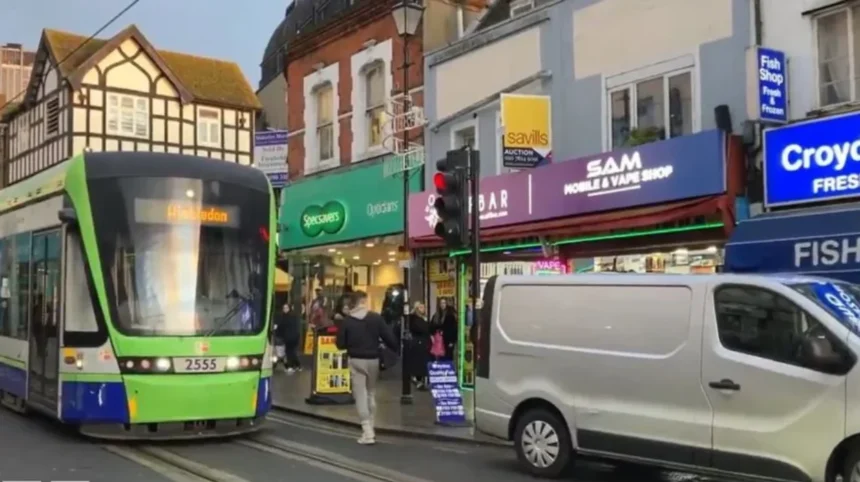
This unscheduled halt occurs immediately prior to a major planned intervention by Transport for London, which will see nearly half of the entire Croydon tram network closed down for a fortnight of scheduled engineering works over the coming weekend. According to accounts gathered from regular local commuters, passengers have experienced severe overcrowding at peak hours alongside reduced service reliability on the key route connecting Croydon and Wimbledon—a corridor that was not originally scheduled to be impacted by the impending maintenance operations. Official guidance confirms that full services are not expected to be restored across the affected lines until 6 November.
Why Has the Lebanon Road Tram Stop Been Closed by Transport for London?
As reported by the transport desk at Inside Croydon, the decision to shut down the Lebanon Road stop was enacted as a precautionary measure following the discovery of damage and structural fatigue on the running rails close to the platform. Transport for London confirmed that safety checks necessitated the immediate withdrawal of passage over the affected section to facilitate repair work.
The closure of this key junction has caused an immediate domino effect across the eastern branches of the network. Because Lebanon Road serves as an essential conduit for trams moving eastward from Central Croydon towards Beckenham Junction and Elmers End, engineers have been required to restrict movement through the junction, leaving the Elmers End branch entirely without tram coverage for the duration of the current week.
How Are Passengers Affected Across the Wimbledon and Croydon Routes?
As reported by Inside Croydon, long-suffering passengers travelling on the Wimbledon to Croydon line have faced heightened levels of overcrowding and prolonged waiting times despite operating outside the boundary of the emergency track works. Commuters have reported a noticeable shortage of operational tram carriages available on the network, leading to reduced overall frequencies during peak transit periods.
Passengers using the line have highlighted that overcrowding has been aggravated by irregular scheduling, leaving platforms congested at major interchange points such as East Croydon and West Croydon. The reduced availability of functional rolling stock has limited TfL’s capacity to deploy relief services, creating operational bottlenecks across the wider South London transport corridor.
What Is the Full Scope of the Impending Two-Week Tram Network Shutdown?
As reported by the reporting team at Inside Croydon, the current unscheduled delays precede a much broader infrastructure program scheduled by Transport for London, which will see almost 50 percent of the tram network taken offline for a two-week block of “planned engineering works.”
The fortnight-long shutdown is intended to allow engineering teams uninterrupted access to perform heavy track renewals, deep ballast maintenance, and signal upgrades across critical junctions. However, with emergency closures already halting service on the Elmers End branch, local commuters are facing three consecutive weeks of continuous travel disruption, with TfL projecting that normal timetabled operations across the network will only resume on 6 November.
Background of the Particular Development
The Croydon tram network, originally opened in May 2000 under the Tramlink brand, spans approximately 28 kilometres (17 miles) of track connecting Wimbledon, Croydon, Beckenham Junction, and New Addington. When launched, the light rail system provided a vital transit alternative across South London, an area historically lacking extensive underground rail infrastructure.
However, as reported by Inside Croydon, the network has faced escalating reliability challenges stemming from long-term under-investment dating back to Boris Johnson’s tenure as Mayor of London and continuing under Sadiq Khan’s administration at City Hall. Much of the original infrastructure and primary rolling stock fleets—which have been in continuous service for over twenty-six years—are now approaching the end of their design lifespan.
The consequences of aging physical assets have manifested in a steep rise in operational failures. Comparative transport performance metrics indicate that the network has registered over two-thirds more total closure days in 2026 than in 2025. Frequent mechanised breakdowns of both the physical track network and the aging tram carriages have led to growing scrutiny over the long-term funding allocations provided for suburban light rail links relative to central London transport infrastructure.
Prediction: How This Development Can Affect South London Commuters and Local Businesses
The extended disruption across the tram network is anticipated to have a direct negative impact on South London commuters, local town centre businesses, and secondary transport services across the Borough of Croydon.
For daily commuters reliant on the light rail system, the prolonged closures will lead to increased travel times, heightened financial expense, and forced reliance on replacement bus services or overcrowded local bus routes. The severe congestion along the Wimbledon to Croydon line is likely to prompt a temporary shift towards private vehicle usage, compounding road traffic congestion along key arterial routes such as the A232 and A23 during morning and evening rush hours.
For local businesses situated in Central Croydon and surrounding districts like Addiscombe and Elmers End, the disruption threatens footfall during a critical trading period. Reduced frequency and station closures hinder access for shoppers and workers travelling into Croydon’s commercial district, potentially suppressing retail and hospitality revenues.
From an operational standpoint, if capital investment for comprehensive rolling stock replacement and track renewal remains constrained, transport users in South London can anticipate a higher frequency of emergency closures, permanent speed restrictions over degraded rail sections, and an increasingly fragile public transport link over the coming years.