Key points
- Crystal Palace will play their Conference League semi‑final home leg at a neutral 33,000‑seat stadium instead of Selhurst Park.
- The decision stems from UEFA’s stadium‑capacity and safety requirements for the semi‑final stage, which Selhurst Park’s current infrastructure does not fully meet.
- Palace advanced to the last four by overcoming Fiorentina in the quarter‑finals, marking their biggest European campaign to date.
- The first‑leg semi‑final will be hosted at the Stadion Miejski im. Henryka Reymana in Kraków, Poland, with the return fixture scheduled for Selhurst Park if backing is cleared.
- The neutral‑venue tie is widely framed in the media as Crystal Palace’s “biggest ever European match” in terms of stage and atmosphere.
(South London News) April 17, 2026
Crystal Palace will stage their Conference League semi‑final home‑leg clash in a neutral 33,000‑capacity stadium, leaving Selhurst Park sidelined for what is being described as the club’s biggest European match in history. The Eagles booked their place in the last four with a narrow quarter‑final win over Fiorentina, and now face Ukrainian side Shakhtar Donetsk in a two‑legged showdown, with the first leg fixed at the Stadion Miejski im. Henryka Reymana in Kraków.
- Key points
- Why is the home leg being moved?
- How did Crystal Palace reach the semi‑final?
- Where exactly will the first‑leg match be?
- What does this mean for Crystal Palace’s fans?
- What is the broader context of this stadium switch?
- How does this tie fit into Crystal Palace’s history?
- Background: the origins of this stadium‑switch decision
- Prediction: how this development could affect fans and the club
Why is the home leg being moved?
Could Selhurst Park host the semi‑final on its own terms?
The decision to shift the home‑leg tie to a neutral venue was reported by several outlets as a consequence of UEFA’s capacity and security standards for the semi‑final stage.
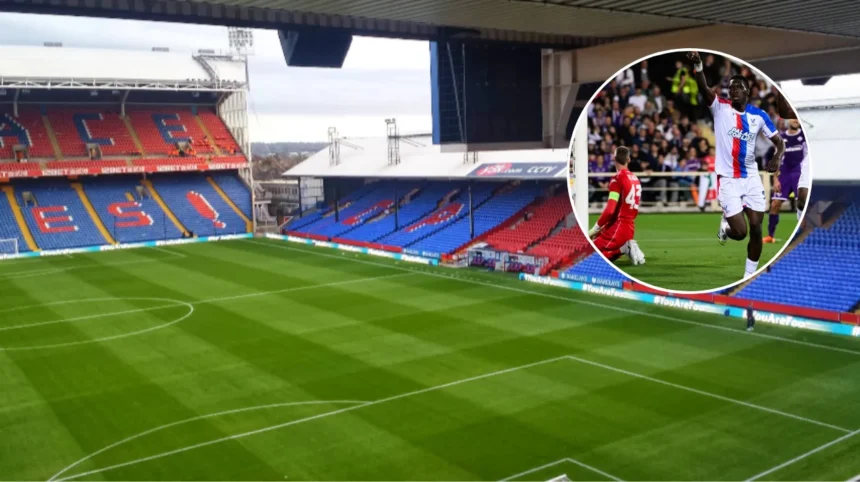
Currently, Selhurst Park’s all‑seated capacity sits around 25,456, below the 30,000+ thresholds that often apply to late‑stage European fixtures.
As noted by reporters at The Sun and on Palace’s official site, UEFA’s grading effectively ruled out hosting the semi‑final at Selhurst Park in its present configuration, even though the club has long‑term plans to expand the Main Stand and raise the overall capacity toward 34,000.
How did Crystal Palace reach the semi‑final?
Crystal Palace’s run to the Conference League semi‑finals was confirmed after a hard‑fought quarter‑final tie against Fiorentina, which finished with a 2–1 loss on the road but sufficient aggregate progress.
The club’s website described the Fiorentina result as a “hold off” of a late fightback, emphasising both the opposition’s late pressure and Palace’s resilience.
Domestic‑based coverage underlines that the campaign represents the deepest European run of the club’s modern era, well beyond the limited European appearances of previous decades.
International outlets covering the draw, including ESPN and Polish‑based match‑data sites, have also highlighted that this marks Crystal Palace’s first time contesting a European semi‑final at the senior level.
Where exactly will the first‑leg match be?
The first‑leg semi‑final between Shakhtar Donetsk and Crystal Palace is scheduled for Thursday 30 April 2026 at 3:00 pm local time at the Stadion Miejski im. Henryka Reymana in Kraków.
This venue is also listed as the official match stadium on Crystal Palace’s own fixtures and ticket‑resale platforms, with the return fixture set for 7 May 2026 at Selhurst Park if the licensing and capacity conditions are met.
International coverage, including ESPN and Polish‑centric match data sites, consistently names the Henryk Reyman Municipal Stadium as the fixed venue for the opening leg, underlining UEFA’s requirement for a larger, neutral‑friendly ground that meets its broadcast and crowd‑safety criteria.
What does this mean for Crystal Palace’s fans?
Ticketing platforms and match‑data sites show that the Kraków leg will be categorized as a Crystal Palace “home” fixture despite the neutral‑stadium designation, with prices and allocation structures reflecting the club’s involvement rather than purely Shakhtar’s hosting rights.
This has implications for travel and cost, as many Palace supporters would need to make additional arrangements to attend in Poland rather than simply crossing town to Selhurst Park.
At the same time, coverage from the club’s official channels stresses that the move is not a demotion but a logistical necessity to preserve the tie’s status on the European calendar.
The expectation is that the return leg at Selhurst Park, if cleared, will still count as a home‑tie for the purposes of crowd allocation and ticketing, albeit with the first leg having been played away from home soil.
What is the broader context of this stadium switch?
UEFA’s stadium‑grading framework for the Conference League mirrors the approach used in the Champions League and Europa League, where capacity, facilities, and safety infrastructure all influence whether a venue can stage semi‑finals and finals.
English‑language guides to sports reporting emphasise that editors and broadcasters routinely cross‑check UEFA documentation whenever a club’s home ground is unavailable for a late‑stage tie, as was the case here for Palace.
In Palace’s instance, the club’s long‑standing proposals to expand Selhurst Park—already approved by Croydon Council several years ago—have yet to be completed, leaving the current 25,000‑plus capacity below the level typically required for semi‑final fixtures.
Commentators and club‑affiliated sources stress that this is less a reflection on Selhurst Park’s atmosphere and more a function of the technical and financial timelines around redevelopment.
How does this tie fit into Crystal Palace’s history?
Historical overviews on sites such as Wikipedia and club‑fan guides underline that Crystal Palace’s European experiences have been limited until this season, with previous appearances confined to early‑round or one‑off cup ties rather than deep‑run campaigns.
The Conference League semi‑final, even if the home‑leg leg is moved to a neutral venue, is treated by multiple outlets as the largest European fixture in the club’s modern history in terms of stage and profile.
Match‑data and ticketing platforms label the Shakhtar‑Palace semi‑finals as the first time Palace has reached the last four of any European competition, a point echoed by the club’s own match‑reporting writ‑up of the Fiorentina quarter‑final win. Local and national coverage alike frame the tie as a milestone for a historically mid‑tier Premier League club breaking into a more prominent European bracket, even if logistics have forced the venue to shift.
Background: the origins of this stadium‑switch decision
This move to a neutral 33,000‑seat stadium originates in UEFA’s stadium‑grading regime for the Conference League, which requires clubs to meet minimum capacity and safety standards for semi‑final ties.
For Crystal Palace, the issue is structural: Selhurst Park, while well‑known for its compact, hostile atmosphere, currently falls short of the 30,000+ thresholds that UEFA typically applies at this stage.
The club’s long‑term plan to expand the Main Stand and raise the overall capacity to around 34,000 has been approved but not yet realised, leaving UEFA no option but to allocate a neutral venue that satisfies its technical checklist. The Stadion Miejski im. Henryka Reymana in Kraków fits that requirement, giving UEFA a compliant host while still allowing the tie to carry Crystal Palace’s name as the “home” side for the first leg.
Prediction: how this development could affect fans and the club
For Crystal Palace supporters, the relocation means higher travel costs and more complex planning for the first‑leg semi‑final, particularly for those who had hoped to attend the tie at Selhurst Park. At the same time, seeing the club in a European semi‑final—regardless of venue—could strengthen fan engagement and ticket demand in future seasons, especially if redevelopment at Selhurst Park is completed to UEFA’s satisfaction.
For the club itself, staging a conference‑league semi‑final in a larger, neutral stadium may raise the club’s commercial profile, increasing broadcast exposure and sponsorship interest even if the atmosphere is diluted compared with a full Selhurst Park crowd. In the longer term, this episode is likely to add pressure to accelerate the Main‑Stand redevelopment, in order to ensure that any future European semi‑finals or finals can be played at home rather than away from South London.