Key Points
- Lambeth Council is preparing to take the Loughborough Estate Management Board (LEMB) to the High Court to compel action on governance and financial concerns affecting 1,214 homes near Brixton, south London.
- The council issued a final warning letter to LEMB on 13 March 2026, demanding immediate steps within 14 days, including re-running a continuation ballot for tenants and leaseholders.
- LEMB’s legal representative requested a 14-day extension, which was rejected; a further seven-day extension was granted, but LEMB did not provide a full response by the deadline.
- A November 2025 Lambeth Council report highlighted audit concerns, including unjustified spending on foreign travel and gifts, alongside governance and financial management issues.
- LEMB’s Annual General Meeting (AGM) on 19 February 2026 was invalid due to attendance below the required threshold under its own rules.
- The council has referred LEMB to the Financial Conduct Authority (FCA) over potential misuse of funds.
- Lambeth Council states it had “no choice” but to pursue legal action to protect residents’ rights.
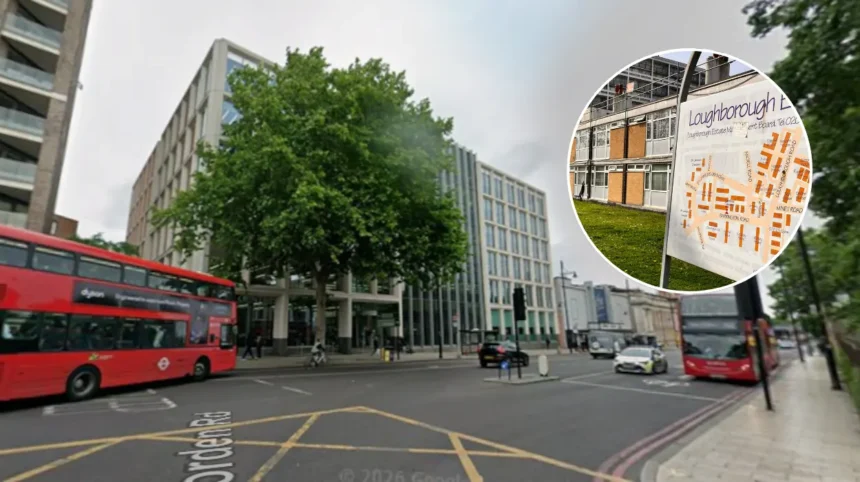
Brixton (South London News) April 17, 2026 – Lambeth Council has announced it is preparing legal action against the Loughborough Estate Management Board (LEMB), the tenant management organisation responsible for 1,214 homes on the Loughborough Estate near Brixton. The authority seeks a High Court order to force LEMB to address serious governance and financial shortcomings, including re-running a continuation ballot where tenants and leaseholders can vote on the board’s performance.
- Key Points
- Why Is Lambeth Council Taking LEMB to Court?
- What Governance and Financial Issues Were Identified?
- Why Was the LEMB Annual General Meeting Invalid?
- What Steps Did Lambeth Council Take Before Legal Action?
- How Has LEMB Responded to the Council’s Demands?
- Background of the Development
- Prediction: Impact on Loughborough Estate Residents
Why Is Lambeth Council Taking LEMB to Court?
Lambeth Council detailed its position in a statement confirming preparations for High Court proceedings. As reported across multiple outlets, the council’s move follows months of unresolved concerns.
On 13 March 2026, the authority sent LEMB a final warning letter, requiring action within 14 days on issues such as governance failures and financial irregularities.
LEMB’s legal representative sought a 14-day extension to the initial deadline of 27 March 2026, but this was denied. A final seven-day extension was provided, yet the board failed to deliver a complete response, according to council records.
“We have been patient and reasonable in seeking a response from LEMB, including granting an extension to the original deadline of 27 March,”
said a Lambeth Council spokesperson, as quoted in coverage by Inside Housing.
The spokesperson added:
“The matters raised, in many cases, span several months of requests from the council that have simply gone unanswered or have been unsatisfactorily responded to. The response received does not provide sufficient assurance that robust measures are in place to address the serious issues identified. As a result, we have taken the decision to apply to the High Court to compel compliance with the management agreement and to protect residents’ ability to have their rightful say on the future management of their estate.”
What Governance and Financial Issues Were Identified?
A Lambeth Council report published last November flagged multiple audit concerns at LEMB. These included financial management lapses, procurement irregularities, and a lack of value for money.
Notably, the report pointed to substantial spending on foreign travel and gifts without adequate justification.
As detailed in the council’s communication to residents, LEMB manages the estate under a requirement to maintain transparency, governance standards, and financial probity.
The audit review, considered by Lambeth’s Corporate Committee, identified these as significant issues. In response to the potential misappropriation of funds, Lambeth Council referred LEMB to the Financial Conduct Authority (FCA), the regulator for mutual societies including tenant management organisations.
The council has also addressed resident concerns directly, writing to those on the Loughborough Estate to clarify the situation and offering LEMB the use of council offices and security for meetings to enable resident participation.
Why Was the LEMB Annual General Meeting Invalid?
The LEMB AGM held online on 19 February 2026 did not meet the board’s own rules on attendance. Council documents state that participation fell below the number of shareholders required, rendering the meeting invalid. Lambeth Council has learned of this shortfall through its oversight, as outlined in a letter to residents dated around the period.
This invalidity compounds ongoing governance problems. The council demanded that LEMB convene a valid AGM as part of the remedial actions in the 13 March letter.
Additional requirements included processing all outstanding applications in line with LEMB’s rules. Failure to comply has escalated the dispute to potential court intervention.
What Steps Did Lambeth Council Take Before Legal Action?
Lambeth Council’s approach involved repeated engagement. The November 2025 report prompted initial actions, followed by the council’s offer of facilities for the AGM.
The 13 March 2026 letter specified immediate steps: re-running the continuation ballot, validating the AGM, and addressing financial audits.
Extensions were granted despite initial refusals, demonstrating forbearance. Housing Today reported that the council viewed itself as having “no choice” after LEMB’s incomplete response. This sequence underscores the authority’s efforts to resolve matters without litigation while prioritising resident interests.
The council’s actions align with its broader call for government powers to intervene in failing tenant management organisations, as noted in earlier statements from December 2025 involving Cllr Danny Adilypour.
How Has LEMB Responded to the Council’s Demands?
LEMB has not issued a full public response detailed in available reports. Its legal representative’s extension request indicates awareness of the issues, but the board’s submission by the final deadline was deemed insufficient by Lambeth Council. No further statements from LEMB representatives appear in the coverage from Inside Housing or Housing Today.
The partial response failed to assure the council of measures against the identified problems, including the audit findings on spending and governance. Residents await clarity on the board’s position amid the legal preparations.
Background of the Development
The Loughborough Estate Management Board (LEMB) operates as a tenant management organisation (TMO) under agreement with Lambeth Council, handling day-to-day management of 1,214 homes in Loughborough Junction, near Brixton. Established to empower residents in estate oversight, LEMB must comply with strict governance, financial, and transparency standards.
Concerns emerged progressively. The November 2025 audit report marked a key milestone, exposing issues like unexplained foreign travel and gifts expenditure, procurement flaws, and governance gaps. Lambeth Council’s Corporate Committee reviewed these, leading to the FCA referral.
The invalid February 2026 AGM and stalled continuation ballot heightened tensions, culminating in the March 2026 ultimatum and April legal announcement. This reflects ongoing council scrutiny of TMOs to ensure resident protections.
Prediction: Impact on Loughborough Estate Residents
A High Court order compelling LEMB compliance could enforce a re-run continuation ballot, allowing tenants and leaseholders direct input on the board’s future. This might lead to leadership changes or council intervention if governance remains deficient, potentially stabilising finances and operations.
Residents could experience short-term disruptions from legal proceedings, such as delays in estate maintenance or meetings, but long-term benefits might include better accountability and value for money in spending. Persistent issues could prompt broader TMO reforms, affecting how similar organisations serve Lambeth tenants by mandating stricter oversight. Tenants may gain stronger voices in management decisions, though court timelines could extend uncertainty for months.