Key Points
- Six people were arrested during an immigration raid at an Evri delivery centre in Croydon on 9 July 2026.
- Those arrested comprised three Brazilian nationals, two Pakistani nationals and one Indian national, all held for various immigration offences.
- The Home Office said the individuals have been placed on immigration bail with strict conditions while further inquiries take place.
- Parallel raids were carried out at two other Evri centres in Redditch, Worcestershire, and Crawley, West Sussex, leading to four further arrests.
- In total, 10 people were arrested across the three sites as part of a wider crackdown on illegal working in the delivery sector.
- The Government said it will seek to remove those found to be working illegally “as soon as possible”.
- Employers found to have hired illegal workers without carrying out required pre-employment checks could face fines of up to £60,000 per worker.
- It is understood that the use of subcontractors for recruitment is common in the delivery sector, complicating oversight of right‑to‑work checks.
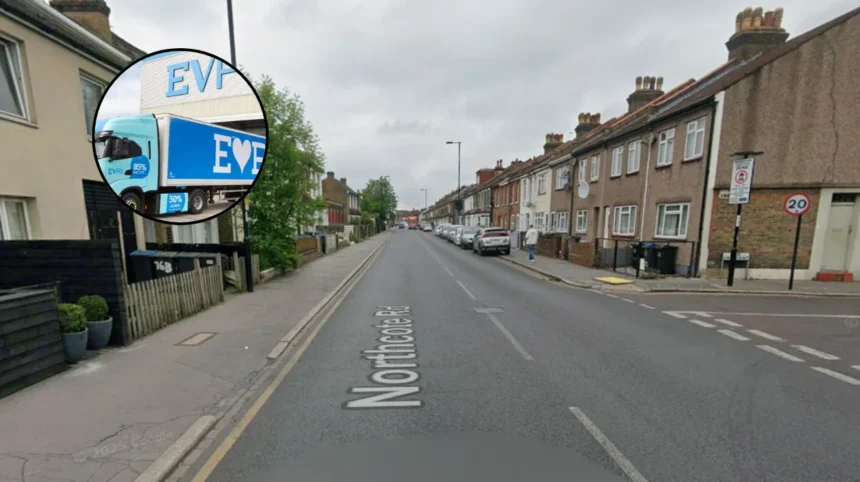
Croydon (South London News) July 18 2026 — Six people were arrested after an immigration enforcement raid at an Evri delivery centre in South London, in an operation the Home Office described as part of a broader effort to tackle illegal working in the delivery sector.
- Who was arrested and what offences are alleged?
- Where else did enforcement action take place and how many were arrested in total?
- What penalties could Evri or its contractors face?
- How common is subcontracting in delivery and why does it matter for compliance?
- What has the Home Office said about wider enforcement in the delivery sector?
- Background: How did this development unfold and what rules apply?
- Prediction: How could this development affect workers, employers and local communities?
As reported by staff at MyLondon, officers visited the Evri site in Croydon on 9 July, where three Brazilian nationals, two Pakistani nationals and an Indian national were arrested for various immigration offences. The Home Office said those individuals have been placed on immigration bail, subject to strict conditions, while further inquiries take place.
In parallel, the Home Office raided two other Evri delivery centres in Redditch, Worcestershire, and Crawley, West Sussex.
Four people were arrested across those sites: one Pakistani national in Redditch, and a Gambian national, a Ghanaian national and a Pakistani national in Crawley, all for overstaying their visas. The Government said it will now look to remove them from the UK as soon as possible.
The Home Office warned that the liable employer could face a substantial fine of up to £60,000 per worker if it is found they employed illegal workers and failed to conduct the relevant pre‑employment checks.
It is understood to be a common practice for companies in the delivery sector to use subcontractors for their recruitment, a factor that can complicate compliance with right‑to‑work rules.
Who was arrested and what offences are alleged?
At the Croydon site, the six individuals arrested were three Brazilian nationals, two Pakistani nationals and one Indian national, detained for “various immigration offences”, according to coverage by MyLondon and the Evening Standard.
The Home Office has not specified the exact nature of each person’s alleged offence beyond categorising them as immigration offences, but confirmed they are now on immigration bail with strict conditions pending further inquiries.
At the Redditch centre, one Pakistani national was arrested, while in Crawley a Gambian national, a Ghanaian national and a Pakistani national were detained, all for overstaying their visas, as reported by MyLondon and Hits Radio (Sussex).
The Government has stated it intends to remove those found to be working illegally “as soon as possible”.
Where else did enforcement action take place and how many were arrested in total?
Immigration Enforcement teams visited three Evri delivery centres in total: Croydon in South London; Redditch in Worcestershire; and Crawley in West Sussex, according to reporting by MyLondon, Hits Radio (Sussex) and LBC.
Six people were arrested in Croydon, and four more across Redditch and Crawley, bringing the combined total to 10 arrests linked to Evri in this operation.
What penalties could Evri or its contractors face?
The Home Office said the liable employer could face a substantial fine of up to £60,000 per worker if it is found they employed illegal workers and failed to conduct the relevant pre‑employment checks.
This figure aligns with the Home Office’s published civil penalty regime for employers who do not carry out compliant right‑to‑work checks, under which businesses can be fined up to £60,000 for each illegal worker where statutory checks were not properly completed.
In more serious cases, where an employer is found to have knowingly employed someone without the right to work, criminal sanctions can apply, including imprisonment for up to five years and an unlimited fine, as set out in Home Office guidance.
The current enforcement action focuses on the civil penalty route tied to compliance failures, but the criminal route remains available where knowledge or reasonable cause to believe is established.
How common is subcontracting in delivery and why does it matter for compliance?
It is understood to be a common practice for companies in the delivery sector to use subcontractors for their recruitment, according to MyLondon’s reporting on the Croydon raid.
Subcontracting arrangements can create additional layers between the brand and the individuals actually performing deliveries, which can make it harder to ensure that every worker has undergone the correct right‑to‑work checks before starting work.
Government guidance makes clear that employers remain responsible for ensuring that anyone they engage has the right to work, and that failure to carry out prescribed checks can result in civil penalties even where there is no intent to break the law.
In practice, this means that principal companies, intermediaries and subcontractors all need clear processes to verify identity and immigration status before anyone is allowed to work.
What has the Home Office said about wider enforcement in the delivery sector?
This Evri‑focused operation sits within a wider series of Home Office initiatives targeting illegal working in the gig and delivery economy. In late 2025, for example, Immigration Enforcement teams arrested 171 delivery riders over seven days in a national “enforcement blitz”, with 60 detained for removal, according to a Home Office news release and subsequent BBC coverage.
Earlier in 2025, a week‑long operation under “Operation Equalize” led to 280 arrests for illegal working activity after 1,780 individuals were stopped and spoken to, as reported by the Home Office and Reuters.
Ministers have repeatedly stated that such operations are intended to send a message that people working illegally will be arrested and removed, and that the law is being tightened to close loopholes in casual, subcontracted and gig work.
The Evri arrests in Croydon, Redditch and Crawley reflect that same enforcement posture, with the Home Office emphasising both removals and potential employer penalties.
Background: How did this development unfold and what rules apply?
The immediate development began with coordinated visits by Home Office Immigration Enforcement officers to three Evri delivery centres on and around 9 July 2026, starting with the Croydon site in South London.
Officers arrested six_people at the Croydon location and four more across Redditch and Crawley, all in connection with immigration offences including visa overstays.
The legal framework underpinning the action is the Home Office’s illegal working and employer sanctions regime.
Under current rules, employers must carry out specified right‑to‑work checks before an individual starts work; failure to do so can lead to a civil penalty of up to £60,000 per illegal worker.
Where an employer knowingly employs someone without the right to work, criminal offences can apply, carrying up to five years’ imprisonment and an unlimited fine.
The Government has also indicated legislative and policy changes designed to extend and strengthen right‑to‑work obligations in the gig and delivery sectors, including measures to address illicit account‑sharing and subcontracting arrangements that can obscure who is actually working.
The Evri operation is therefore consistent with a stated policy goal of reducing illegal working in delivery by combining on‑the‑ground enforcement with the threat of significant financial and criminal consequences for non‑compliant employers and intermediaries.
Explore More Croydon News
High Court Reviews Council Housing Service: Croydon 2026
Southern Trains Disrupted: Essential Croydon Rail Works Underway (2026)
Prediction: How could this development affect workers, employers and local communities?
For workers in the delivery sector, particularly those on temporary visas or with uncertain immigration status, heightened enforcement activity increases the risk of being stopped, arrested and, where appropriate, removed from the UK. Individuals found to be working illegally can expect immigration bail with strict conditions followed by efforts to remove them “as soon as possible”, as stated by the Government in this case.
For employers and contractors, including brands like Evri and the subcontractors they rely on, the primary impact is financial and reputational. If investigations conclude that illegal workers were employed without compliant checks, the liable entity could face civil penalties of up to £60,000 per worker, and in serious cases criminal prosecution.
That may prompt companies to tighten onboarding procedures, increase the frequency of right‑to‑work audits, and demand more robust compliance from subcontractors.
For local communities, including Croydon and surrounding areas, the visible presence of immigration enforcement at delivery hubs may reinforce perceptions of a crackdown on illegal working in the gig economy.
Depending on how operations are communicated and conducted, this could affect public confidence in the fairness of the system, as well as the willingness of local businesses to engage with complex subcontracting chains without stronger compliance safeguards.
Over time, if enforcement remains sustained and penalties are applied consistently, the sector may see a shift towards more formalised recruitment and verification practices, with fewer opportunities for undeclared or non‑compliant work.