Key Points
- Borough Split: Greenwich councillors will reconsider the borough’s part of the Deptford Reach housing project on 13 October, following neighbouring Lewisham’s resolution to refuse its portion.
- Scheme Scope: The overall development by RER London proposes 802 homes on the former Lewisham College site, comprising 548 homes in Lewisham and 254 in Greenwich.
- Planning Standpoint: Greenwich planning officers continue to recommend approval for their side, which features a 19-storey building, two 10-storey blocks, and a single-storey workshop.
- Lewisham Decision: Members of Lewisham’s Strategic Planning Committee voted to refuse permission on 24 September, citing concerns over height, massing, townscape impact, heritage, and effects on houseboat residents.
- Access Safeguard: The primary vehicle access route relies on Deptford Church Street in Lewisham; Greenwich officers propose a condition tying Greenwich approval to the formal outcome of the Lewisham application.
- Affordable Housing Level: Across the total 802 homes, only 24 affordable units are proposed (3 per cent by dwelling count or 5.1 per cent by habitable rooms), supported by an independent viability assessment.
- Community Concerns: Local voices, including houseboat residents and the Creekside Educational Trust, raised objections regarding privacy, loss of sunlight, and the necessity of nature restoration in the creek.
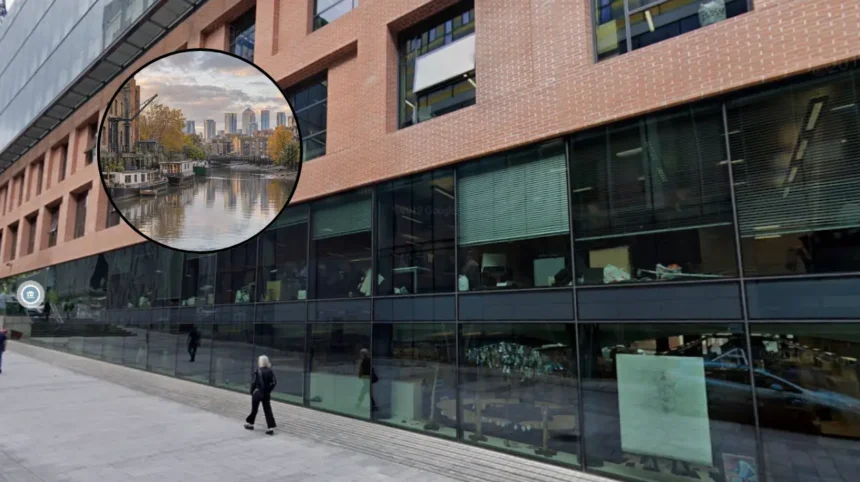
Greenwich (South London News) October 6, 2026 – How will Greenwich councillors respond after Lewisham refused its share of the Deptford Reach development? Members of the Royal Borough of Greenwich’s Planning Board are preparing to return to the council chamber on 13 October to determine the outcome of a planning application for 254 new homes alongside Deptford Creek. This decision comes after neighbouring Lewisham Council resolved to turn down its side of the cross-boundary Deptford Reach masterplan. The proposal, brought forward by developer RER London, spans the former Lewisham College site beside Deptford Bridge and envisions a total of 802 residential units across the administrative border. Whilst Lewisham’s Strategic Planning Committee voted against the 548-home element situated within its jurisdiction, Greenwich planning officers have maintained their recommendation that permission should be granted for the remaining 254 properties proposed on Greenwich land.
- Key Points
- Why did Lewisham Council vote against the Deptford Reach proposals?
- What is the current position of the Royal Borough of Greenwich planning officers?
- Is the refusal by Lewisham Council final and legally binding?
- Will the developer attempt to appeal the Lewisham decision?
- How does the vehicle access route link the two separate planning applications?
- What proportion of affordable housing is proposed for the Deptford Creek site?
- What specific concerns have been raised by local residents and ecological trusts?
- Background of the Deptford Creek planning development
- Prediction: How this development decision can affect local residents, house buyers, and community groups
Why did Lewisham Council vote against the Deptford Reach proposals?
Members of Lewisham’s Strategic Planning Committee convened on 24 September and resolved to refuse the 548-home application submitted within their boundary. Before the meeting, Lewisham officers had formally recommended refusal on design and heritage grounds. The committee concurred with these findings, highlighting significant concerns regarding the height, scale, and overall massing of the proposed structures. Members concluded that the physical presence of the development would inflict unacceptable harm on the local townscape and surrounding heritage assets, alongside creating adverse visual impacts for community members living aboard houseboats along Deptford Creek.
What is the current position of the Royal Borough of Greenwich planning officers?
The Greenwich Planning Board met on the same evening of 24 September to consider its portion of the Deptford Reach scheme, which includes a 19-storey tower, two 10-storey blocks, and a single-storey workshop space. Rather than moving to a vote on whether to grant or refuse permission, Greenwich members decided to defer the decision until Lewisham had determined its corresponding case. In their latest update to the board, Greenwich planning officers have reaffirmed their recommendation to approve the scheme on Greenwich land, establishing an unusual administrative divide in the prospects of a unified development project.
Is the refusal by Lewisham Council final and legally binding?
A committee resolution to refuse planning permission does not constitute an immediate final refusal notice. The decision in Lewisham remains subject to potential referral to the Mayor of London, who retains the statutory authority to call in the application and assume decision-making powers himself. Should the Mayor choose not to intervene, the Secretary of State for Housing, Communities and Local Government also holds powers to call in the application for determination at a national level. Only if neither executive authority steps in will Lewisham Council be cleared to issue its formal refusal notice.
Will the developer attempt to appeal the Lewisham decision?
According to planning documentation prepared by Greenwich officers, the applicant, RER London, holds a statutory right of appeal should a formal notice of refusal be issued by Lewisham Council. Greenwich officers understand that the developer intends to exercise this right of appeal in the event that the refusal becomes official. Consequently, the ultimate outcome for the 548-home Lewisham portion remains legally unresolved, as an appeal process through the Planning Inspectorate would initiate a fresh planning assessment rather than acting as an automatic reversal of the local committee’s resolution.
How does the vehicle access route link the two separate planning applications?
The administrative link between the two council applications plays a pivotal role in Greenwich’s upcoming choice. The sole vehicle access route identified to service the entire 802-home development is positioned off Deptford Church Street, located entirely on the Lewisham side of the borough border. To address this reliance, Greenwich officers have recommended a specific planning condition linking any Greenwich grant of permission directly to the outcome in Lewisham: should the Lewisham application be formally refused, or if a subsequent planning appeal is dismissed or withdrawn, the permission for Greenwich’s portion would also be refused. This safeguard currently remains a recommendation and does not commit Greenwich members prior to their re-examination of the site on 13 October.
What proportion of affordable housing is proposed for the Deptford Creek site?
Across the entire 802-home masterplan, the developer has proposed 24 affordable homes, representing 3 per cent of the total development by dwelling count. For the 254-home Greenwich portion specifically, the scheme contains 10 affordable dwellings. Within its formal planning report, Greenwich Council notes that the site-wide affordable provision equates to 5.1 per cent when calculated by habitable rooms rather than individual housing units. The council’s report highlights that an independently reviewed viability assessment concluded the scheme is currently unable to support a higher proportion of affordable housing due to financial constraints.
What specific concerns have been raised by local residents and ecological trusts?
Beyond the strategic planning debates regarding scale and affordable housing levels, the proposals have drawn scrutiny from local community stakeholders. During the Lewisham committee meeting, a representative speaking on behalf of local houseboat residents argued that the sheer height and proximity of the towers would severely compromise privacy and restrict access to natural sunlight for those living on the water. Concurrently, representatives from the Creekside Educational Trust presented criticisms regarding the scheme’s impact on the creek, urging the introduction of stronger environmental measures designed to actively protect and restore native wildlife habitats within the waterway. In response, RER London has maintained that its masterplan will deliver significant public benefits, including opening up public access to a section of Deptford Creek that has remained closed to the public for more than a century.
Background of the Deptford Creek planning development
Deptford Creek forms the tidal reach of the River Ravensbourne, running through an urban corridor that marks the historic border between the London Borough of Lewisham and the Royal Borough of Greenwich. Historically heavily industrialised, the creek area has undergone incremental regeneration over recent decades, evolving from active wharves and industrial utilities into a mix of residential developments, creative studio spaces, and ecological conservation sites.
The land currently at the centre of the Deptford Reach application previously accommodated part of the former Lewisham College campus beside Deptford Bridge. Because the site boundary overlaps the administrative borders of both local authorities, any multi-building redevelopment proposal requires dual consent from both Greenwich Council and Lewisham Council. Cross-boundary applications of this nature necessitate independent planning evaluations by both councils, despite sharing critical infrastructure such as shared public realm spaces, drainage connections, and central vehicular access routes.
Prediction: How this development decision can affect local residents, house buyers, and community groups
The upcoming decision by Greenwich Council and the ongoing appeal trajectory in Lewisham stand to directly impact multiple local groups across Deptford and the surrounding urban areas.
Impact on local residents and houseboat dwellers For nearby residents and the established houseboat community along Deptford Creek, the final outcome will shape the physical environment of the waterway. If the tall buildings—including the proposed 19-storey tower—are eventually permitted through appeal or mayoral intervention, residents face potential long-term alterations to sunlight levels, altered wind corridors, and reduced visual privacy over the creek. Conversely, if the refusal holds and leads to a reduced scheme, local residents may experience lower density construction and preserved heritage views, though potentially alongside a longer period of construction disruption while revised plans are drafted.
Impact on local house buyers and the regional housing supply For prospective house buyers and renters in south-east London, the stalling of the 802-home development delays the arrival of new housing stock near Deptford Bridge transport links. However, given that the current scheme provides only 3 per cent affordable housing by unit count (or 5.1 per cent by habitable rooms), the development’s contribution toward addressing acute local affordable housing shortages remains minimal. A prolonged appeal or redrafting process could either secure higher proportions of affordable housing through re-negotiated viability terms or delay overall housing delivery in the area.
Impact on community groups and environmental ecology For local community organisations and ecological advocacy bodies such as the Creekside Educational Trust, the final determination will establish whether the creek receives environmental safeguards and nature restoration measures. While the developer promises to unlock public waterfront access restricted for over a century, local environmental stakeholders will remain reliant on planning conditions to ensure increased footfall and nearby urban density do not disturb tidal habitats or harm the biodiversity of Deptford Creek.