Key Points
- New Planning Submission: Raglan Woolwich Ltd, a Sidcup-based developer, has submitted a second planning application to Greenwich Council to convert and extend the former Lord Raglan pub at 158 Burrage Road, Woolwich.
- Proposed Facilities: The updated proposal includes a 16-room aparthotel, the retention of public house usage across part of the ground and basement levels, and a newly landscaped pub garden.
- Staff Accommodation: The neighboring property at 160 Burrage Road is earmarked for reconfiguration to provide staff accommodation and a manager’s flat.
- Previous Rejection: Greenwich Council planners previously rejected an 18-room proposal submitted in March 2026 due to concerns over over-dominant massing, poor design, and adverse impact on neighboring residential properties.
- Design Modifications: The developer cut two rooms from the original scheme and modified the rear extension design to mitigate council objections regarding overshadowing and visual impact.
- Prior Approval: A separate application by the same developer to construct a two-floor extension delivering four staff bedrooms was approved by Greenwich Council in September 2025.
- Current Status: The pub, which closed in 2022, currently has its commercial lease on the market while the revised planning application undergoes public consultation with the Royal Borough of Greenwich.
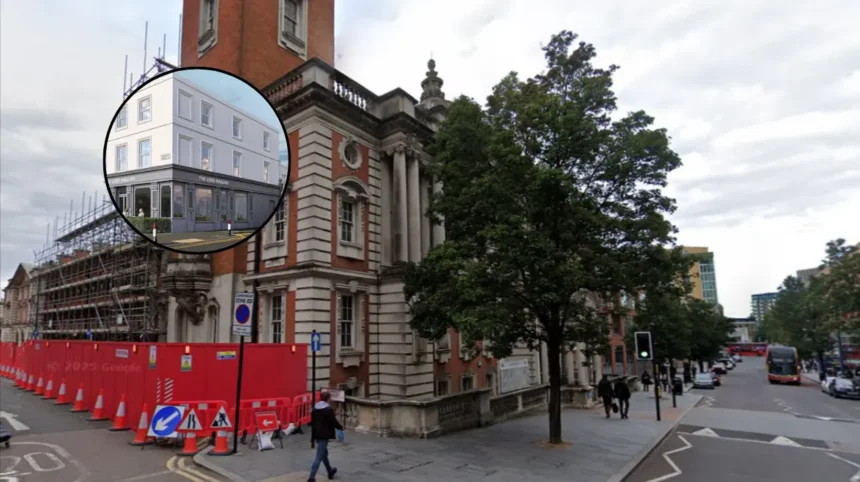
Woolwich (South London News) August 11, 2026 – Plans to renovate and extend the vacant Lord Raglan pub at 158 Burrage Road in Woolwich have been resubmitted to Greenwich Council, offering a potential path for the historic venue to reopen as a combined pub and 16-room aparthotel. The Sidcup-based developer, Raglan Woolwich Ltd, has submitted a revised proposal following the refusal of its earlier 18-room scheme by local authority planners. The updated scheme seeks to alter the physical footprint of the site, reconfigure the adjacent property at 160 Burrage Road for staff and managerial housing, and establish a newly landscaped pub garden while preserving drinking facilities on the ground floor and basement.
- Key Points
- What Are The Specific Plans Submitted To Greenwich Council For 158 Burrage Road?
- Why Did Greenwich Council Refuse The Original 18-Room Aparthotel Proposal?
- How Has The Developer Altered The Scheme To Address Council Concerns?
- What Is The Background To The Lord Raglan Development?
- How Could This Development Affect Local Residents And The Woolwich Community?
What Are The Specific Plans Submitted To Greenwich Council For 158 Burrage Road?
As reported by Darryl Chamberlain of The Greenwich Wire, the new submission by developer Raglan Woolwich Ltd represents a second attempt to construct a serviced accommodation facility wrapped around the historic drinking establishment. The site, situated on Burrage Road near Woolwich town centre, has stood empty since the pub served its final pint in 2022.
Under the revised design, the development proposal retains the public house use class across designated portions of the basement and ground floor. The upper levels and extensions are designed to house a 16-room aparthotel—a hybrid accommodation format combining self-contained units featuring kitchenette facilities alongside standard hotel amenities.
Furthermore, the plans detail the inclusion of a newly formed pub garden accompanied by comprehensive hard and soft landscaping across the rear premises. To support the operational requirements of the aparthotel and pub, the adjacent residential dwelling at 160 Burrage Road is proposed to undergo internal reconfiguration to accommodate on-site staff quarters and a dedicated manager’s apartment.
Why Did Greenwich Council Refuse The Original 18-Room Aparthotel Proposal?
As reported by J Smith of Murky Depths, the initial application for the site was published in March 2026 and featured an 18-room aparthotel scheme alongside a part one-, part two-storey rear extension at 160 Burrage Road.
However, local authority planning officers at the Royal Borough of Greenwich refused permission for the original layout. Planning officers determined that the proposed extension was over-dominant in scale, exhibited poor architectural design, and would generate an unacceptably negative impact on surrounding occupants. Key areas of concern highlighted during the assessment of such residential applications typically include overbearing massing, potential loss of daylight, overshadowing of adjacent gardens, and heightened noise disturbance.
How Has The Developer Altered The Scheme To Address Council Concerns?
As reported by Darryl Chamberlain of The Greenwich Wire, Raglan Woolwich Ltd responded to the initial refusal by revising the spatial parameters of the development. The applicant reduced the overall capacity of the aparthotel from 18 rooms down to 16, directly cutting the floor area required for guest units.
The applicant maintains that the scaled-back design reduces the physical massing of the rear extension, thereby mitigating previous concerns surrounding dominance over neighboring gardens on Burrage Road. The revised application also integrates elements from a previously approved application; in September 2025, Greenwich Council granted planning permission to the same developer for a two-floor extension aimed at providing four staff bedrooms.
While the structural alterations are intended to align the development with Greenwich Council’s urban design policies, the commercial lease for the pub premise remains actively listed on the market.
Explore More Greenwich Council News
Greenwich Council Clashes Over HMO Restrictions in Local Plan Greenwich 2026
Eltham residents hit by Thames Water issues on Well Hall Road and Eltham High Street
What Is The Background To The Lord Raglan Development?
The Lord Raglan is located at 158 Burrage Road in Woolwich, positioned within a predominantly residential corridor situated a short distance from the primary commercial core of Woolwich town centre. Operating for decades as a traditional neighborhood public house, the establishment faced operational challenges common across the UK hospitality sector, culminating in its closure in 2022.
Following its closure, the building remained unoccupied while various commercial options were evaluated. The broader Woolwich area has seen several redevelopment applications targeting historic and closed public houses. For instance, nearby sites such as The Ordnance Arms have undergone structural extension works, while proposals for other neighborhood pubs have involved redevelopment or partial demolition.
In response to changing urban demands, developers in South East London have increasingly turned toward “aparthotel” models. These developments combine short-term and long-term accommodation with ground-floor commercial or community retention, a trend reflected in recent planning applications submitted across the Royal Borough of Greenwich.
How Could This Development Affect Local Residents And The Woolwich Community?
If approved by the Royal Borough of Greenwich, the conversion of The Lord Raglan into a dual-use pub and aparthotel will impact several local stakeholders:
- Local Residents and Neighbors: Nearby householders on Burrage Road will see a long-vacant building brought back into active physical use. While the reduction to 16 rooms aims to diminish overshadowing and loss of privacy, neighbors will remain attentive to potential noise generated by the rear pub garden and guest turnover associated with short-term accommodation.
- Patrons and Hospitality Seekers: For Woolwich community members, the scheme offers the possibility of regaining a neighborhood pub facility. The retention of drinking space on the ground floor and basement, alongside a new outdoor garden, provides space for social gathering, provided a commercial operator takes up the lease.
- Local Economy and Visitors: The introduction of 16 serviced aparthotel rooms provides additional visitor lodging near Woolwich town centre, potentially supporting local retail and food businesses through increased visitor spending. However, the long-term benefit to the community will depend on whether the pub portion is successfully leased and maintained as a genuine public amenity rather than undergoing future applications for full residential change of use.