Key Points
- The Royal Borough of Greenwich has issued formal operational updates to affected landholders and local businesses following a crucial Cabinet decision in June to execute a Compulsory Purchase Order (CPO) for the Woolwich Exchange scheme.
- The large-scale regeneration project will deliver approximately 1,000 new residential properties (including affordable housing units), fresh commercial and public sector space, and a complete refurbishment of the Grade II listed former Covered Market.
- Property titles and land ownership will not transfer to local council control for at least 12 months after the receipt of official correspondence.
- Current occupiers will not be required to vacate any site premises prior to 31 March 2028.
- Affected commercial and residential parties are guaranteed a minimum of six months’ advance notice before vacant possession is formally demanded.
- Full financial compensation, dedicated relocation assistance, and ongoing support frameworks have been pledged by the local authority.
- First granted planning permission in December 2021, the scheme experienced protracted delays caused by shifting market conditions, inflated construction costs, and updated safety regulations.
- A dedicated community drop-in advice session is scheduled for affected occupiers at the Woolwich Front Room on 26 August.
LONDON (South London News) August 21, 2026 — The Royal Borough of Greenwich has formally moved to the next operational phase of its flagship Woolwich Exchange regeneration project, providing long-awaited clarity to property owners, local traders, and residents across the development boundary. Following a decisive local authority Cabinet meeting in June to enact a Compulsory Purchase Order (CPO), formal letters setting out binding procedural timelines, operational support frameworks, and entitlement pathways have been issued to all affected parties within the designated land assembly zone.
The multi-million-pound urban transformation scheme aims to construct around 1,000 mixed-tenure homes—incorporating a significant quota of affordable housing—alongside modern public realms, dynamic commercial units, and the sensitive restoration of the historic Grade II listed former Covered Market.
What Are the Confirmed Timelines for Landowners and Businesses?
Under the statutory details released by the local authority, the land assembly timeline has been structured to prevent immediate operational disruption for local commerce. The council confirmed that underlying property titles will not transfer over to municipal ownership for at least 12 months from the date the official notification letters are received by the recipient.
Furthermore, local authority executives have established a hard temporal boundary for physical site clearances. No property owner or commercial tenant within the Woolwich Exchange footprint will be required to vacate their premises prior to 31 March 2028.
To ensure business continuity and orderly transition periods, the local authority has guaranteed that all affected parties will receive a minimum of six months’ formal written notice before vacant possession of any individual property is required.
As reported by William Eichler of LocalGov, Councillor Tom Creswell, Cabinet Member for Planning and Development at the Royal Borough of Greenwich, emphasized the operational clarity this step brings. Councillor Tom Creswell stated that:
“Woolwich Exchange will revitalise the historic covered market and bring new homes, shops and public spaces to the heart of one of London’s fastest-growing town centres. The site has huge potential, and, after many years, this is a big step towards it.”
Councillor Tom Creswell further stated that:
“Importantly, this means that businesses have clarity on their future. Nobody will be asked to leave before March 2028, and everyone affected will receive at least six months’ notice before vacant possession is required. We’ll continue working closely with those affected and provide the support and compensation they are entitled to throughout the process.”
Why Has the Woolwich Exchange Project Experienced Delays?
The primary planning consent for the comprehensive Woolwich Exchange proposal was originally granted in December 2021.
However, the physical execution of the scheme stalled for several years due to a combination of severe macroeconomic headwinds, unprecedented spikes in UK construction inflation, shifting market conditions, and evolving statutory building safety regulations across the capital’s housing sector.
To overcome these structural hurdles and ensure the project remained viable, the local council opted to take direct responsibility for the land assembly process via compulsory purchase mechanisms.
To ensure all stakeholders are thoroughly briefed on their legal entitlements, financial compensation packages, and relocation assistance, the Royal Borough of Greenwich has scheduled a public drop-in session on 26 August at the Woolwich Front Room, offering direct face-to-face consultation with municipal officers and development advisors.
Explore More Greenwich Council News
Plumstead HMO Growth Sparks Local Crime Fears and Council Response 2026
GLI Proposes Massive Charlton Data Centre Development in Greenwich 2026
Background of the Woolwich Exchange Development
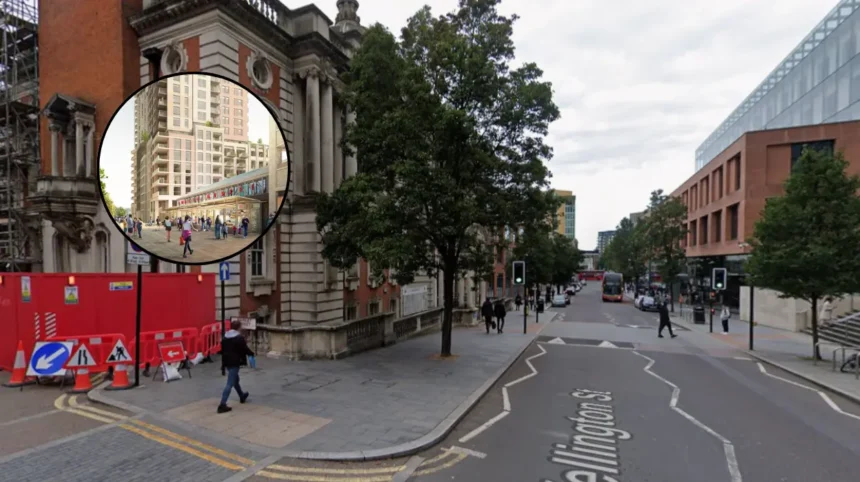
The origin of the Woolwich Exchange project dates back over a decade as part of the broader, long-term master plan to revitalize Woolwich town centre. Bound by Plumstead Road, Woolwich New Road, Spray Street, and Burrage Road, the 2.3-hectare site was historically known as the Spray Street Quarter.
The area has long consisted of a dense mix of independent retail outlets, commercial premises, community services, and light industrial spaces.
A pivotal moment in the development timeline occurred when Historic England granted Grade II listed status to the mid-20th-century Woolwich Covered Market, famous for its distinctive wave-format shell roof.
This heritage designation necessitated a comprehensive re-design of the overarching master plan to ensure the historic structure was preserved and seamlessly integrated as the civic heart of the new commercial and leisure development rather than demolished.
Following extensive public consultations, the Royal Borough of Greenwich initially partnered with private development consortia to promote the comprehensive regeneration scheme.
The council made formal applications for compulsory purchase powers to unify the fragmented land titles. A public inquiry into the CPO was conducted in early 2023, culminating in the Secretary of State confirming the Compulsory Purchase Order without modifications on 12 July 2023.
Despite securing CPO confirmation, the post-pandemic economic landscape—marked by high interest rates, supply chain bottlenecks, and new fire safety mandates requiring additional staircases in high-rise residential buildings—forced a strategic pause and re-evaluation.
In June 2026, Greenwich Council Cabinet formally resolved to take a direct hand in funding and executing land assembly to ensure the statutory CPO powers were exercised before their legal expiration limit in August 2026, thereby securing the future viability of the site.
Prediction: How This Development Will Affect Key Stakeholders
The progression of the Woolwich Exchange scheme will have profound, multi-faceted implications for several distinct groups across the local ecosystem over the next decade:
- Local Business Owners and Commercial Tenants: Independent retailers and service providers within the site boundary now possess a clear, legally defined operational runway until at least March 2028. While this eliminates the immediate threat of sudden eviction, traders face an extended period of transition. The guaranteed minimum six-month notice window and statutory financial compensation will assist businesses in planning structured relocations to nearby commercial units within Woolwich or the wider borough. However, some smaller independent businesses may struggle to find comparable low-cost floor space in the local area, potentially altering the character of Woolwich’s traditional high-street commerce.
- Local Residents and Housing Applicants: For the thousands of households on Greenwich’s social housing waiting list and young professionals seeking homes in South East London, the delivery of approximately 1,000 mixed-tenure housing units represents a major influx of modern residential stock. The inclusion of a significant proportion of designated affordable housing will provide vital opportunities for local residents, while the wider regeneration is expected to boost surrounding property values and enhance overall community infrastructure.
- The Woolwich Economy and Town Centre Vitality: In the medium to long term, transforming a partially dilapidated urban plot into a vibrant commercial, residential, and leisure hub will significantly increase footfall in Woolwich town centre. The restored Covered Market is poised to become a landmark destination for dining, culture, and retail, helping Woolwich capitalize on its enhanced transport connectivity via the Elizabeth line, DLR, and National Rail networks. Conversely, nearby residents and local commuters should anticipate localized urban disruption, construction noise, and temporary traffic diversions once heavy building works commence past 2028.