Key Points
- Service Extension: Southwark Council has officially extended its Night Time Uniformed Patrol Service (NTUPS) following a successful initial pilot scheme.
- Funding Allocation: The local authority agreed to inject £600,000 of fresh funding into the initiative to sustain operations.
- Operational Hours: Patrols operate seven nights a week between 6:00 pm and 2:00 am to bridge the operational gap left by daytime community wardens.
- Key Achievements: During the pilot phase, officers handled 70 callouts related to violence against women and girls (VAWG) and made 52 referrals for homeless support.
- Deployment Team: Operates with eight to ten uniformed officers and one team leader per shift, managed by Kingdom Services Limited.
Southwark (South London News) August 21, 2026 – Southwark Council has formally confirmed that its dedicated night-time uniformed patrol service will continue operating for another year, bolstered by an additional £600,000 in council funding aimed at tackling community safety concerns after dark. The extension comes after a pilot scheme demonstrated significant success in curbing anti-social behaviour, assisting rough sleepers, and protecting women across the borough.
- Key Points
- What Is the Night Time Uniformed Patrol Service?
- What Successes Did the Pilot Scheme Achieve?
- What Have Council Officials Said About the Extension?
- How Are the Night Patrols Deployed Across Southwark?
- What Is the Background of This Development?
- What Is the Prediction for How This Will Affect Local Residents and Businesses?
What Is the Night Time Uniformed Patrol Service?
The Night Time Uniformed Patrol Service (NTUPS) was launched as a specialized community safety initiative to complement the council’s existing daytime Community Warden team. Whilst standard community wardens and park liaison officers generally wrap up their duties by 9:00 pm, NTUPS officers step in during peak hours of vulnerability between 6:00 pm and 2:00 am.
The scheme was initially introduced under a pilot agreement, with teams deployed across high-density areas, residential estates, town centres, and local parks.
The initiative was commissioned to address growing concerns regarding night-time crime, anti-social behaviour, and public safety.
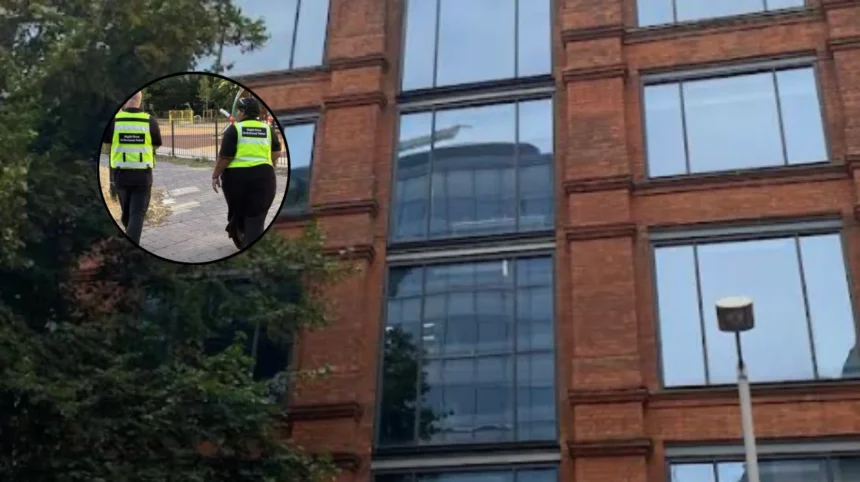
As reported by local democracy reporters who joined patrols in areas such as Walworth during the pilot period, the officers function as a highly visible presence on foot.
Operated in partnership with external security specialist Kingdom Services Limited, each shift deploys eight to ten uniformed officers alongside a team leader, scaling up staffing on high-volume weekend nights.
What Successes Did the Pilot Scheme Achieve?
Data released regarding the pilot scheme highlights a wide range of operational interventions across the borough. Crucially, uniformed patrol officers responded to 70 separate callouts involving violence against women and girls (VAWG), providing immediate site reassurance, conflict de-escalation, and direct coordination with emergency services.
In addition to addressing safety concerns for women, the patrol teams acted as a frontline connection for vulnerable individuals experiencing street homelessness. Over the course of the pilot, officers made 52 direct homeless support referrals, linking rough sleepers with council housing teams and specialist outreach services like No Second Night Out.
Beyond these key figures, the officers routinely handled public nuisance incidents, drug-related harm interventions, and estate safety checks, ensuring anti-social behaviour was tackled before escalating into serious criminality.
What Have Council Officials Said About the Extension?
Local authority leaders have praised the impact of the initiative, emphasizing that visible enforcement is critical to maintaining public trust and safety in Southwark.
As reported by the Local Democracy Reporting Service, Councillor Natasha Ennin, Cabinet Member for Community Safety and Neighbourhoods, stated that feeling safe in the borough is just as vital as being safe, noting that deploying teams directly where intelligence indicates they are needed most ensures that residents feel protected and supported after dark.
Further expanding on the long-term vision for the borough’s safety infrastructure, Councillor David Watson, Executive Member for Community Safety and Engagement, explained that the council remains firmly committed to making Southwark safer through sustained investment in both prevention and enforcement.
Councillor Watson highlighted that the newly agreed £600,000 funding allocation ensures more uniformed officers will remain on the ground across streets, parks, and housing estates to deter criminal and nuisance behaviour at night when such activity is statistically most widespread.
How Are the Night Patrols Deployed Across Southwark?
The operational structure of NTUPS relies heavily on data-led targeting rather than fixed, static routes. Patrol units are directed using real-time crime data, anti-social behaviour logs, and specific community concerns raised by residents and local business owners.
Key Deployment Priorities:
- Tackling Anti-Social Behaviour: Deterring open-air drug use, street drinking, and noise nuisances in residential zones.
- Protecting Women and Girls: Patrolling night-time economy hotspots, transport hubs, and poorly lit walkways to prevent harassment and violence.
- Supporting Vulnerable Communities: Engaging with rough sleepers to provide referrals to safe shelter and emergency services.
- Estate Safety: Maintaining a visible presence around housing estates to prevent vandalism and property damage.
Explore More Southwark Council News
Southwark Council Sanctions Rogue Landlords in South London 2026
Southwark Caps Lime, Voi, Forest E-Bike Fares In Southwark 2026
What Is the Background of This Development?
To fully understand the establishment and extension of the Night Time Uniformed Patrol Service, it is necessary to examine Southwark’s broader history with community safety challenges and policy responses over recent years.
Historically, Southwark has faced notable public safety challenges typical of inner-London boroughs, particularly regarding domestic abuse rates, night-time street harassment, and anti-social behaviour around busy transport interchanges like Elephant and Castle, Peckham, and Canada Water. Council data previously indicated that Southwark recorded among the highest levels of domestic abuse offences across Greater London, prompting the council to institute a comprehensive Violence Against Women and Girls (VAWG) Strategy.
Following high-profile national incidents concerning women’s safety in public spaces, a borough-wide safety survey conducted by Southwark Council revealed that over half of female respondents felt unsafe when walking alone at night, citing gender as the primary reason for their concern.
In response, Southwark signed up to the Women’s Night Safety Charter and launched local initiatives like Project Vigilant alongside the Metropolitan Police.
However, a structural gap remained in local enforcement. While Southwark maintained a core team of approximately 32 community wardens, their shift patterns meant that coverage concluded late in the evening, leaving early-morning hours largely reliant on police resources. Recognizing that the Metropolitan Police faced competing demand pressures, Southwark Council designed the NTUPS pilot to bridge the enforcement gap between dusk and 2:00 am.
The successful trial proved that dedicated local authority security patrols could effectively reduce anti-social behaviour and offer immediate welfare support without overwhelming local police units.
What Is the Prediction for How This Will Affect Local Residents and Businesses?
The decision to fund and extend the Night Time Uniformed Patrol Service for another year is expected to yield tangible, wide-ranging impacts for several key groups across Southwark.
For residents, particularly women and young girls navigating the borough late at night, the continued presence of 8 to 10 uniformed officers patrolling key transport nodes and high-density walkways will likely lead to an increased sense of physical safety.
The sustained 70-plus VAWG interventions recorded during the pilot suggest that prompt de-escalation of harassment will remain a key outcome, potentially encouraging more women to utilize public spaces confidently after dark.
Venues operating within Southwark’s vibrant night-time economy—such as pubs, restaurants, theatres, and late-night retail establishments—stand to benefit from reduced instances of anti-social behaviour outside their premises.
The presence of patrols acts as a visible deterrent against rowdy behaviour, vandalism, and street disorder, creating a safer environment for patrons and staff members finishing late shifts.
With 52 homelessness referrals achieved during the pilot year, the service extension ensures that unhoused individuals on Southwark’s streets will continue to have direct, compassionate contact with municipal teams trained to route them into emergency accommodation pathways like No Second Night Out. This proactive outreach reduces the likelihood of long-term rough sleeping.
In terms of broader public administration, the continuation of NTUPS will relieve burden on local Metropolitan Police neighbourhood teams. By assigning low-level anti-social behaviour, noise complaints, and welfare checks to council-funded patrol units, police officers can focus resources on high-priority criminal investigations, resulting in a more efficient overall safety framework across the borough.