Key Points
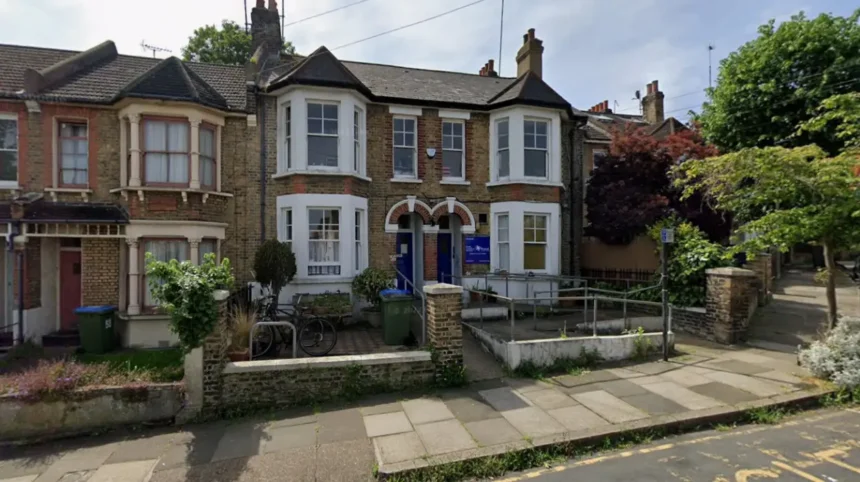
- Plans have been submitted to convert a former mental health charity building at 54–56 Ormiston Road in Greenwich into a 12‑person house in multiple occupation (HMO).
- The property was previously used by South East London Mind to run its Greenwich services for over 40 years, including one‑to‑one counselling and peer‑support groups.
- The development is being put forward by Eade Planning on behalf of applicant BNA Construction.
- The building is currently legally classed as residential accommodation for seven occupants, so the HMO scheme would represent only a “minimal increase” in occupancy.
- The ground floor is set to include six en‑suite bedrooms and an open‑plan kitchen and living area, with five further rooms on the first floor.
- The loft floor would be enlarged via a proposed rear roof extension and would house an extra bedroom and a kitchen.
- The design and access statement states that the developer intends to “refurbish and renovate the property to be suitable for modern-day living”.
Greenwich (South London News) May 16, 2026 – Former charity building in Greenwich could become HMO for twelve (Greenwich News / News Shopper coverage) – Plans to convert a long‑standing local mental health charity building in Greenwich into a 12‑person house in multiple occupation (HMO) have been submitted to the borough’s planning officers.
As reported by a local news outlet covering the Royal Borough, the site is the former headquarters of South East London Mind, which used 54–56 Ormiston Road for more than four decades to host counselling, advocacy and peer‑support services for residents of the area. A report in News Shopper / Greenwich News notes that the building has been tied to community mental‑health provision for over 40 years, during which time it served as a hub for local residents needing psychological and emotional support.
Why is this building being redeveloped now?
The application has been lodged by Eade Planning on behalf of the applicant, BNA Construction, according to planning documents cited by the local news coverage.
The move marks a shift from charitable community use to a purely residential model, albeit within the same footprint.
The News Shopper / Greenwich News article explains that the premises is already classified in the planning system as residential accommodation serving seven occupants, meaning that the proposed HMO would raise the number of residents only incrementally.
The report quotes submissions stating that the increase in occupancy would therefore be “minimal”, an argument that is expected to feature in the case for the scheme when it goes before the council’s planning committee.
How would the building be re‑configured?
According to the same coverage, the ground floor is set to be reconfigured to include six en‑suite bedrooms, together with an open‑plan kitchen and living space designed to serve multiple residents from a shared living area.
On the first floor, plans provide for five additional rooms, which would also be used for residential purposes within the HMO.
The design and access statement summarised in the report also details proposals for the loft floor. It explains that the existing loft would be enlarged through a proposed rear roof extension, which would create space for an extra bedroom and a kitchen at that level.
Developers are pitching the scheme as a refurbishment and renovation of the existing structure “to be suitable for modern-day living”, rather than a full demolition and rebuild.
What is the current status of the scheme?
At the time of the report, the plans remain in the application stage and have not yet been decided by Greenwich Council.
The council now has a period within which it can consult statutory consultees, local residents and relevant amenity groups before scheduling the proposal for determination by planning officers or a committee.
Residents and local organisations have been notified via standard planning‑notification channels, and any comments submitted during the consultation window will be recorded in the planning file, as is usual practice under the UK’s planning‑application process.
The local news report stresses that the project is currently one of many HMO proposals under consideration in the borough, amid wider debate about the scale and management of such housing in the community.
Background of the development
The site at 54–56 Ormiston Road has a long history as a centre for mental‑health support in Greenwich. South East London Mind operated from the building for over 40 years, using it as a base for one‑to‑one counselling, peer‑support groups, and information and advocacy services for people with mental‑health issues.
News Shopper / Greenwich News coverage frames this background as part of the wider story, noting that the closure of the charity’s presence at the site marked the end of a long‑standing community service in the area.
The change in use from a charity‑run mental‑health centre to a proposed 12‑person HMO reflects broader trends in London, where former institutional or community buildings are repurposed for residential use, often driven by redevelopment pressures and shifting demand for housing.
The current planning‑consultation process is therefore taking place against a backdrop of local discussion about how former community assets are maintained, reused, or sold when charities can no longer occupy them.
Prediction: How this change could affect the local audience
For local residents and neighbours on Ormiston Road and the surrounding streets, the conversion of the former charity building into an HMO could translate into a modest but noticeable increase in residential density and footfall.
The cited “minimal increase” in occupancy from seven to 12 residents suggests that the change will not be dramatic in purely numerical terms, but the nature of shared‑house living – with common entrances, shared spaces and potentially higher turnover of tenants – may affect perceptions of noise, parking and street use.
For Greenwich Council housing and planning officers, the application forms part of a wider portfolio of HMO schemes being assessed in the borough. If the proposal is approved, it may set a precedent for how other similar former‑community sites are treated, particularly where existing residential‑use classifications already allow for higher occupancies. The decision could also influence how the council weighs arguments about “minimal” occupancy increases against concerns about local‑service loss and the erosion of community assets.