Key Points
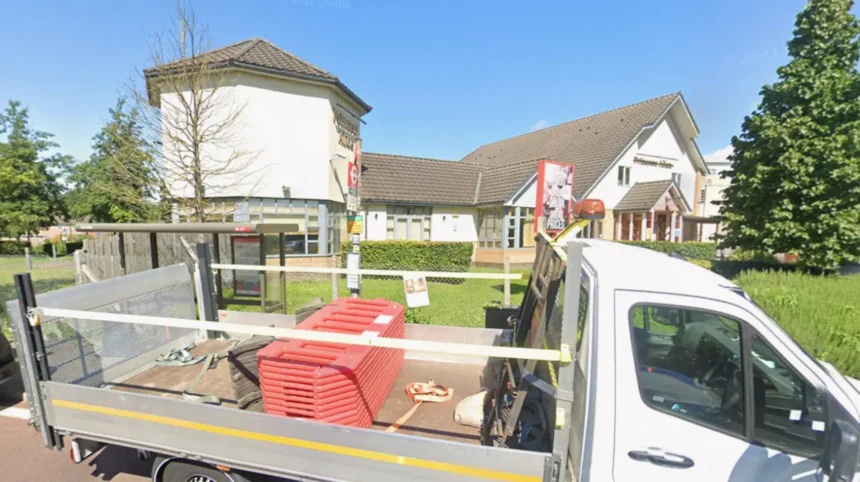
- Discount supermarket chain Lidl has submitted plans to demolish the Princess Alice pub in Thamesmead.
- The retailer intends to construct a standalone single-storey supermarket on the site without incorporating any residential housing.
- The proposed development comes despite the surrounding Thamesmead district being formally designated as a major housing zone.
- The site benefits from close proximity to key public transport links, located a short bus journey from Elizabeth line, Southeastern Metro, and Thameslink services.
- The proposal has sparked debate over the efficient use of brownfield land in London amid ongoing housing supply challenges.
Thamesmead (South London News) November 7, 2026 – European discount supermarket giant Lidl has officially unveiled development plans that would see the demolition of the Princess Alice public house in Thamesmead to make way for a new retail store. The submission of the planning application marks a critical juncture for the commercial plot, confirming long-held expectations regarding the discount chain’s intentions for the location. Under the current proposals, the existing pub structure will be fully cleared to allow for the construction of a modern supermarket designed to serve the local retail catchments of Thamesmead and the surrounding southeast London boroughs.
Why is Lidl planning to demolish the Princess Alice pub?
According to details outlined in the project documentation submitted by planning agents acting on behalf of Lidl, the retailer has identified the Princess Alice pub location as an ideal venue to expand its presence within the London Borough of Bexley and Greenwich borders. The scheme involves clearing all structural elements currently on the plot to erect a standard-format discount foodstore complete with dedicated customer parking, loading bays, and associated landscaping.
As detailed by local planning reporters covering London real estate developments, the decision to seek full demolition rather than a mixed-use conversion stems from the corporate retailer’s standardized site layout guidelines. The strategic intent is to provide a dedicated single-level retail environment aimed at capturing increased footfall from nearby residential neighborhoods.
How does the proposal impact local housing targets?
As reported by urban development analysts monitoring London land allocation, the project has drawn scrutiny due to the complete absence of residential units within the design proposal. The Princess Alice site sits within an area broadly designated as a key housing zone aimed at addressing London’s acute housing shortage. Critics and urban planning experts note that the construction of a single-storey retail unit on brownfield land fails to capitalize on opportunities to build high-density housing above commercial premises.
As highlighted by land-use commentators reviewing municipal planning submissions, Thamesmead has seen significant public and private investment aimed at expanding housing delivery. The decision by Lidl to present a scheme without any residential accommodation runs counter to local planning frameworks that encourage mixed-use schemes on well-connected brownfield sites.
What transport connections serve the Princess Alice site?
The site currently occupied by the Princess Alice pub is situated in close physical proximity to major regional transit infrastructure. The location sits just a short bus journey—approximately five minutes—from key rail interchanges providing direct links into central London and the wider South East.
Public transport links accessible from the plot include:
- The Elizabeth line, providing high-frequency east-west cross-capital connectivity.
- Southeastern Metro services, offering access to traditional London terminal stations.
- Thameslink routes, linking the area to core regional networks north and south of the capital.
Because of these established transport connections, planning observers argue that the site holds significant potential for transit-oriented development, making the single-use retail plan a focal point for debate among local stakeholders.
What is the background of the Princess Alice pub site development?
The Princess Alice pub has served as a prominent local landmark within Thamesmead for several decades, occupying a sizable footprint along key arterial access routes. Named after the historic XIX century passenger steamship SS Princess Alice—which sank nearby in the River Thames in 1878 following a tragic collision—the public house has formed part of the suburban commercial landscape of the area through various phases of Thamesmead’s modern urban development.
In recent years, local town planning policies across Greater London have increasingly favored mixed-use developments, particularly on brownfield sites positioned near major transport hubs. The wider Thamesmead district was designated as a major Housing Zone by municipal authorities to support the construction of thousands of new homes alongside commercial, community, and leisure spaces.
As part of this broader regeneration strategy, local council guidance has consistently emphasized maximizing land use efficiency. Despite these published policy objectives, private commercial entities retain the right to submit single-use planning applications, bringing corporate expansion targets into direct interaction with regional urban planning goals.
How could this development affect the local community and stakeholders?
Impact on Local Residents and Consumers
For local residents, the establishment of a new Lidl branch on the Princess Alice site would expand access to discount grocery shopping, potentially lowering household expenditure on essential food and household goods. However, residents seeking new housing opportunities within the immediate neighborhood will see no additional residential supply generated from this specific plot, potentially maintaining pressure on local housing availability.
Impact on Nearby Businesses and Public Services
Existing retail competitors in the immediate area may experience heightened commercial competition due to Lidl’s entry into the local market. Furthermore, the removal of a public house eliminates an established social gathering space, altering the composition of local commercial services available to the neighborhood.
Impact on Urban Transport and Infrastructure
The addition of a standalone store with dedicated parking is likely to alter traffic movements along adjacent roads. While the site benefits from close proximity to public transport routes, the car-centric layout typical of standalone retail stores may increase localized vehicle trips, impacting traffic flows near nearby bus corridors connecting to Elizabeth line and national rail stations.