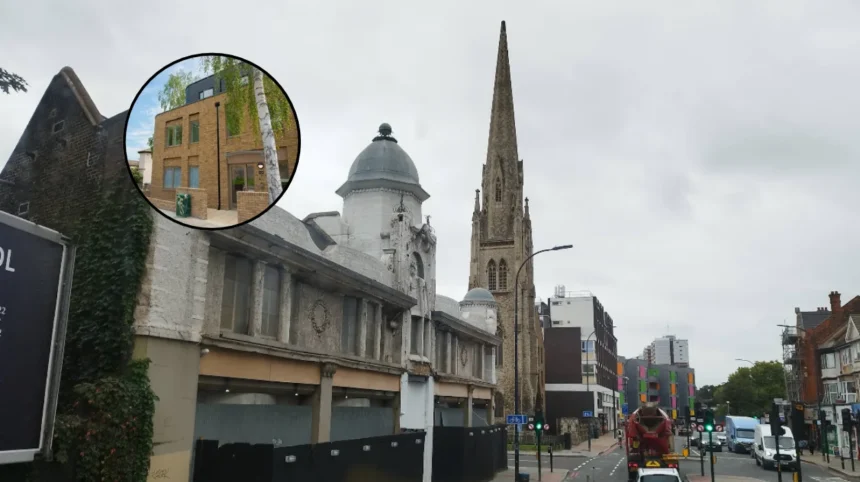
- Property investment firm Property Buyers Today predicts average house prices in Lewisham could rise from £519,081 to £778,621 following the proposed Bakerloo Line extension.
- Terraced house prices are forecast to increase from £700,000 to over £1 million, while semi-detached properties could reach nearly £1.25 million.
- The growth projections are based on historical property price trajectories observed in areas connected to London’s underground network via the Elizabeth Line.
- Phase One of the proposed infrastructure project includes establishing new stations at Old Kent Road, New Cross Gate, and Lewisham.
- The transport extension is expected to unlock the construction of up to 100,000 new homes across the region.
- Delivery hopes have been renewed following the Budget announcement by Labour Chancellor John Healey granting expanded financial powers to regional mayors.
- Mayor of London Sir Sadiq Khan stated that these expanded financial powers will enable the final delivery of the long-awaited project.
Lewisham (South London News) November 7, 2026 – Residential property values across the London Borough of Lewisham could experience a 50 per cent increase if the proposed Bakerloo Line extension is successfully delivered, according to a recent predictive report released by property investment company Property Buyers Today. The forecast outlines that overall average house prices within the area would climb from the current baseline of £519,081 to £778,621, drawing direct analytical comparisons to property value trends recorded along the Elizabeth Line route following its completion in 2022. The development project, which encompasses Phase One station locations at Old Kent Road, New Cross Gate, and Lewisham, is projected to enable the construction of 100,000 new homes in London. Renewed momentum for the transport infrastructure follows statements from the Mayor of London, Sir Sadiq Khan, who indicated that newly announced fiscal authority granted to regional leadership will allow the local government to deliver the project.
- How Will the Bakerloo Line Extension Impact Lewisham House Prices?
- What Role Does Government Budget Policy Play in Transport Infrastructure?
- What Are the Structural Details of the Bakerloo Line Extension Phase One?
- What Is the Historical Context of the Bakerloo Line Extension Scheme?
- How Will This Property Development Affect Local Residents and Homeowners?
How Will the Bakerloo Line Extension Impact Lewisham House Prices?
The financial modeling published by Property Buyers Today indicates that property value increases will vary across different residential dwelling categories within the borough. According to data released by the firm, average prices for terraced properties in Lewisham are projected to rise from £700,000 to over £1 million. Furthermore, semi-detached properties within the affected areas are forecast to reach valuations of almost £1.25 million upon implementation of the transport link.
The valuation model mirrors the historical market growth trajectory documented in suburban and urban zones that gained direct connectivity to the Transport for London network through the Elizabeth Line opening in 2022. As reported by Property Buyers Today founder Saif Derzi,
“Lewisham has been given a significant boost following the Budget announcement, which could help unlock the long-awaited Bakerloo Line extension into south-east London.”
What Role Does Government Budget Policy Play in Transport Infrastructure?
The financial viability of the extension project follows policy adjustments detailed during the recent Budget announcement by Labour Chancellor John Healey. As part of the broader fiscal strategy, Chancellor John Healey revealed that devolved powers and expanded financial capacity would be granted to regional mayors across the United Kingdom to fund large-scale infrastructure developments directly.
Following the policy declaration by Chancellor John Healey, Mayor of London Sir Sadiq Khan confirmed that the enhanced borrowing and funding frameworks provided to his office would enable the Greater London Authority to advance the Bakerloo Line extension. The project had previously experienced operational delays due to funding allocations and capital expenditure constraints across the capital’s public transport network.
What Are the Structural Details of the Bakerloo Line Extension Phase One?
Phase One of the proposed Bakerloo Line extension focuses on expanding London Underground service beyond its current terminus at Elephant and Castle into south-east London transit corridors. The planned route includes major intermediate station hubs designed to improve regional capacity, including:
- Old Kent Road: Construction of new station infrastructure intended to anchor surrounding urban regeneration schemes.
- New Cross Gate: Integration with existing London Overground and National Rail services to create an interchange hub.
- Lewisham: Extension of the line to establish direct connection with the Docklands Light Railway (DLR) and national rail services.
Urban planning estimates integrated into the project framework indicate that establishing these underground links will provide the necessary transport capacity to support 100,000 new residential housing units across the designated development zones.
What Is the Historical Context of the Bakerloo Line Extension Scheme?
The proposal to extend the Bakerloo Line south-eastward from Elephant and Castle has formed a core component of Transport for London (TfL) long-term strategic plans for several decades. South-east London has historically maintained lower London Underground network density compared to areas north of the River Thames, relying primarily on suburban National Rail lines, bus networks, and the Docklands Light Railway.
Initial formal consultations for the extension were conducted by Transport for London in 2014 and 2019, identifying the Old Kent Road corridor to Lewisham as the preferred Phase One alignment, with potential future phases extending toward Hayes and Beckenham. However, progress stalled due to capital funding deficits, shifting passenger demand patterns, and wider economic constraints affecting public infrastructure spending. The project gained renewed momentum following the government’s decision to grant regional authorities greater autonomy over infrastructure financing mechanisms.
How Will This Property Development Affect Local Residents and Homeowners?
The predicted 50 per cent appreciation in house prices presents distinct economic implications for different demographic groups across the London Borough of Lewisham:
- Existing Homeowners: Current property owners stand to gain substantial equity growth, with average asset values increasing by more than £250,000 across the overall housing stock and terraced house valuations breaching the £1 million mark.
- Prospective Buyers and Renters: Rising valuations may create increased financial barriers to entry for first-time buyers attempting to purchase property within the borough, alongside potential upward pressure on rental rates as land values adjust to upgraded transport links.
- Local Businesses and Developers: Enhanced accessibility and guaranteed footfall around new stations at Old Kent Road, New Cross Gate, and Lewisham are expected to attract commercial investment, supporting retail, hospitality, and residential development schemes.