Key points
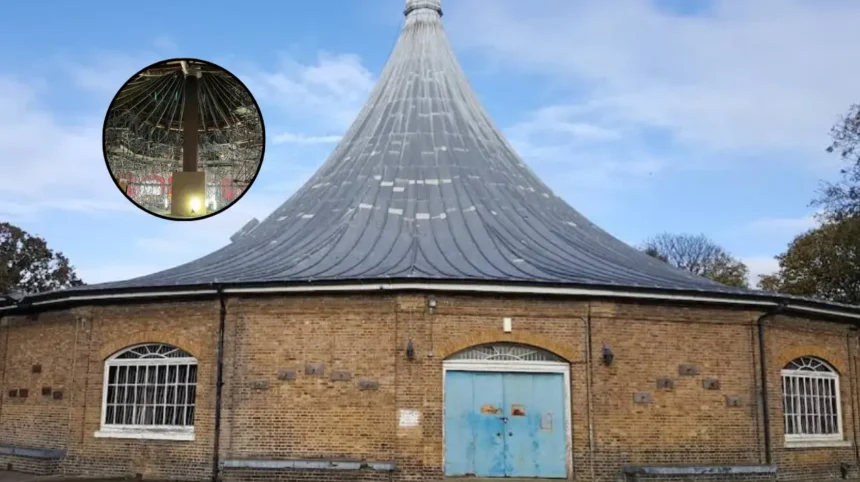
- The Woolwich Rotunda, a Grade II*‑listed circular structure on Woolwich Common, has been put on the market by the Ministry of Defence alongside the Royal Artillery Barracks.
- Built in 1814 as a temporary ballroom for the Prince Regent in Carlton House gardens, London, the Rotunda was designed by John Nash and later moved to Woolwich to become a museum for the Royal Artillery.
- The museum opened in 1820 and was one of the earliest purpose‑built public museums in the world; it closed to the public in 1999 when its collection was transferred to Firepower at the Royal Arsenal.
- Recent use has been limited: the building served as a boxing gym for the King’s Troop, Royal Horse Artillery, but has had no sustained occupation since about 2010.
- Historic England has listed the Rotunda as grade II* and placed it on its Heritage at Risk register, highlighting deterioration and the need for urgent repair.
- A newly formed Rotunda Trust, backed by the Greenwich Enterprise Board, is bidding to take over the building and restore it as a community and commercial events venue, including live music and theatre.
Greenwich (South London News) April 22, 2026 a newly formed Rotunda Trust hopes to save what it calls a “200‑year‑old Millennium Dome” by taking over the derelict Rotunda near Woolwich Common and turning it into a mixed‑use events venue. The Rotunda Trust has joined forces with the Greenwich Enterprise Board to bid for the historic building, which was originally erected in Westminster but was moved to Woolwich in 1820 and has now been put up for sale by the Ministry of Defence.
- Key points
- How did the Rotunda become a museum in Woolwich?
- What has the Rotunda been used for since the 19th century?
- Why is the Ministry of Defence selling the Rotunda now?
- Who wants to save the Woolwich Rotunda and how?
- What is the current condition of the Rotunda and what are the risks?
- How might the Rotunda’s sale affect Woolwich residents and visitors?
- Background of the Woolwich Rotunda’s development
- What might happen next and how could this affect the public?
The Woolwich Rotunda is a circular, 24‑sided polygonal structure on Woolwich Common, South East London, built in 1814 as a temporary ballroom to celebrate the defeat and exile of Napoleon. As noted by the Royal Artillery Museum, the Rotunda started life as an elaborate marquee in the grounds of Carlton House, the town residence of the future King George IV when he was Prince Regent. After the victory celebrations ended, the building was deemed surplus and was later authorised for removal to Woolwich to serve the Royal Artillery.
How did the Rotunda become a museum in Woolwich?
As reported by the Royal Artillery Museum, the collection was re‑housed in the Rotunda on Woolwich Common in 1820, where the museum first opened to the public. The Prince Regent authorised the Rotunda’s removal to Woolwich so it could be used
“for the conservation of the trophies obtained in the last war, the artillery models, and other military curiosities usually preserved in the Repository,”
according to the Royal Artillery Museum’s history page.
The building was rebuilt on the eastern edge of the Royal Military Repository training grounds and reopened as a museum in mid‑1819 or 1820, intended to serve both military personnel and the wider public.
Historic England describes the Rotunda as a structure of international significance, now listed as a Grade II* listed building and recorded on its Heritage at Risk register due to its deteriorating condition and uncertain future.
What has the Rotunda been used for since the 19th century?
For nearly 180 years the Rotunda housed the Royal Artillery’s museum, exposing the public to artillery models, captured trophies and military curiosities.
As noted by Greenwich Wire, the museum closed to the public in 1999 when its collection was moved to Firepower at the Royal Arsenal, a newer museum complex that later struggled to maintain visitor numbers and was itself closed in 2016.
After the museum’s closure, the Rotunda saw only sporadic reuse. As reported by Greenwich Wire, the building briefly served as a boxing gym for the King’s Troop, Royal Horse Artillery, but has had no sustained occupied use since about 2010.
Historic England’s listing entry notes that the Rotunda is now derelict, with the structure at risk of further decay if a viable long‑term use and maintenance plan is not secured.
Why is the Ministry of Defence selling the Rotunda now?
As reported by Yahoo News UK, the Ministry of Defence has put the Grade II* listed Woolwich Rotunda up for sale alongside the Royal Artillery Barracks, which are expected to be redeveloped into housing.
The barracks land is being marketed as part of wider defence‑estate rationalisation, with the MOD seeking to dispose of surplus sites while attempting to retain some heritage‑sensitive uses on the same sites where possible.
Although the Rotunda is sold as a separate asset, its fate is closely tied to the wider redevelopment of Woolwich’s military footprint.
As noted by the Rotunda Trust via Greenwich Wire, the MOD’s sale process means that the building’s future depends on whether a buyer—such as the trust itself—can meet price and use requirements while also undertaking substantial restoration work.
Who wants to save the Woolwich Rotunda and how?
The Rotunda Trust, newly established in 2026, is leading a campaign to secure the building and restore it as an events and community space. As reported by Greenwich Wire, the trust has partnered with the Greenwich Enterprise Board to bid for the Rotunda, aiming to restore it so it can host community events, commercial functions, live music, theatre, and educational visits.
Trust spokespeople, quoted in Greenwich Wire, describe the Rotunda as a “200‑year‑old Millennium Dome” because of its circular, domed form and its potential to become a major cultural and entertainment venue on Woolwich Common.
Historic England has previously highlighted that the building “is of international significance” and that any viable future use must respect its heritage value while ensuring regular maintenance.
What is the current condition of the Rotunda and what are the risks?
Historic England’s Heritage at Risk register shows the Woolwich Rotunda as a Grade II* listed building whose condition is deteriorating, with the site described as “at risk” due to lack of active use and maintenance. The register notes that the building was placed on the Heritage at Risk list in 2007, and its most recent substantial use ended over a decade ago.
Reports from the Waterloo Association and Historic England stress that the structure retains many original features despite its dereliction, and that further decay could threaten both its architectural integrity and its historical value.
Placing the building on the Heritage at Risk register is intended to prompt public attention and to encourage potential bidders, including community groups, to develop credible restoration plans.
How might the Rotunda’s sale affect Woolwich residents and visitors?
For Woolwich residents and local organisations, the sale of the Rotunda raises questions about long‑term access to green space, cultural infrastructure, and heritage‑led regeneration. As reported by Greenwich Wire, the Rotunda Trust’s ambition is to open the building to visitors for the first time in more than 25 years, potentially increasing footfall to Woolwich Common and offering a new venue for community groups, schools and arts organisations.
If the trust or another not‑for‑profit bidder succeeds, the Rotunda could become a mixed‑use events and learning space, balancing ticketed events with free community access.
By contrast, if the building is bought primarily for private or highly commercial use, local campaigners fear that public access and educational programming could be limited or priced out of reach for many residents.
Background of the Woolwich Rotunda’s development
The Woolwich Rotunda began as a temporary marquee‑style ballroom in the grounds of Carlton House, designed by architect John Nash in 1814 for the Prince Regent’s victory celebrations over Napoleon. After the festivities ended, the Prince Regent authorised the structure’s dismantling and relocation to Woolwich, where it was rebuilt on the edge of the Royal Military Repository training grounds in 1818–1820.
Once re‑erected, the Rotunda opened as a museum for the Royal Artillery’s collection, becoming one of the earliest purpose‑built public museums in the world. Over the next 180 years it served as a museum storage and display space, with periodic repairs and interior modifications, before closing in 1999 and falling into disuse. In 2007 Historic England placed the building on its Heritage at Risk register, and since then various groups have campaigned for its restoration or transfer to a community or heritage‑focused operator.
What might happen next and how could this affect the public?
Going forward, the Woolwich Rotunda’s future will depend on the outcome of the MOD’s sale process and the ability of interested parties—especially the Rotunda Trust and Greenwich Enterprise Board—to meet financial, technical and planning requirements. If a heritage‑sensitive buyer emerges, the building could be restored to a continuously occupied use, with regular maintenance, interpretation panels and possibly guided tours, as Historic England has urged for at‑risk listed buildings.