Key Points
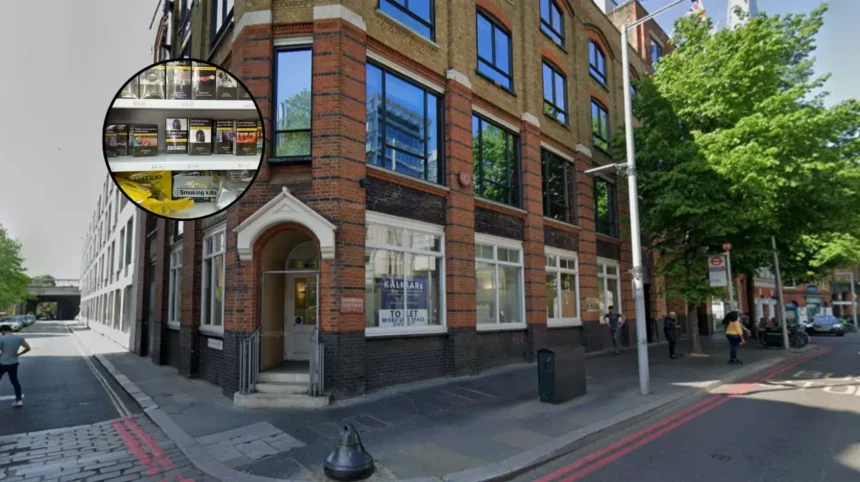
- Southwark Council has forced a shop on Camberwell Church Street to close for three months after an undercover investigation found it repeatedly selling illegal and counterfeit tobacco and vapes.
- Six undercover visits were carried out by the council, during which officers were sold counterfeit cigarettes and vapes, including two occasions where children were sold fake cigarettes for £5 a pack.
- Three formal inspections took place, and traders seized more than 32,000 illegal cigarettes, 490 illicit vapes and 43 shisha packs from the premises.
- The closure order was granted on April 15, 2026, at Croydon Magistrates’ Court under the Anti‑Social Behaviour, Crime and Policing Act 2014 following Southwark Council’s application.
- The landlord opposed the order, but the court ruled there was clear evidence of ongoing illegal activity and that closure was necessary to prevent it continuing.
- The shop will remain closed until July 15, 2026, under the three‑month closure order.
Camberwell (South London News) April 22, 2026 A shop on Camberwell Church Street has been ordered to shut for three months after Southwark Council uncovered repeated sales of illegal and counterfeit cigarettes and vapes in an undercover investigation. As reported by Southwark Council, the business was identified as a persistent outlet for illicit tobacco and vaping products, some of which were sold to children during covert operations. The closure order was granted on April 15, 2026, at Croydon Magistrates’ Court under the Anti‑Social Behaviour, Crime and Policing Act 2014, with the shop now forced to remain closed until July 15 this year.
How did the council uncover the illegal sales?
Southwark Council’s trading standards team conducted a series of covert operations at the Camberwell Church Street shop, which began with intelligence about illicit tobacco and vapes being sold in the area. According to council statements, officers made six undercover visits to the shop, during which they were repeatedly sold illegal and counterfeit cigarettes and vaping products.
On at least two of these visits, council‑trained test purchasers under the age of 18 were able to buy fake cigarettes for £5 a pack, highlighting the shop’s alleged willingness to sell to minors despite strict age‑restriction laws.
Following these undercover operations, the council carried out three formal inspections of the premises. During these inspections, traders seized more than 32,000 illegal cigarettes, 490 illicit vapes and 43 shisha packs.
The council described the products as “counterfeit, illicit and potentially harmful”, noting that such items often circumvent tax and regulatory safety checks applied to legal tobacco and vaping goods. These findings formed the evidential basis for the council’s application to close the shop under the Anti‑Social Behaviour, Crime and Policing Act 2014.
Why did the council ask the court to close the shop?
Southwark Council applied for a closure order at Croydon Magistrates’ Court, arguing that the shop’s repeated sale of illegal tobacco and vapes – including to under‑18s – posed a risk to public health and encouraged anti‑social behaviour. Officials cited national and local tobacco control policies, which treat the sale of counterfeit cigarettes and vapes as both a public‑health and a licensing issue, especially where children are involved.
The council also pointed to the broader impact on the local community, including the presence of cheap, unregulated products that can undermine lawful retailers and encourage further illicit trade.
The order was granted on April 15, 2026, with the court ruling that there was clear evidence of ongoing illegal activity at the premises.
As reported by Southwark Council, the magistrate concluded that closing the shop for a three‑month period was necessary to prevent the continuation of these offences and to give police and licensing authorities time to reassess the suitability of the location for future trading. The closure order applies to the shop’s use as a retail premises and effectively prevents the outlet from reopening for business until July 15, 2026.
What happened during the court hearing?
At the hearing held at Croydon Magistrates’ Court, Southwark Council presented evidence from the undercover visits and the seizure operation, including photographs, witness statements and product samples. The council argued that the pattern of illegal sales, including the sale of cigarettes to children, demonstrated a consistent disregard for tobacco and age‑restriction laws.
As noted by the council’s enforcement team, the controlled purchases provided a clear paper trail of how the products were being sold, the price points and the involvement of underage test purchasers.
The shop’s landlord opposed the closure order, according to council sources, describing the premises as a legitimate corner shop and disputing the scale and nature of the alleged offences. Landlord representatives told the court that past inspections had not uncovered such quantities of illegal goods and that the business had otherwise complied with local licensing rules.
However, the magistrate ultimately sided with Southwark Council, ruling that the volume and regularity of the illicit sales, combined with the presence of products sold to children, justified the use of a closure order under the Anti‑Social Behaviour, Crime and Policing Act 2014.
What are the legal powers being used here?
The closure order was issued under the Anti‑Social Behaviour, Crime and Policing Act 2014, which gives local authorities and police powers to tackle premises linked to persistent anti‑social behaviour or serious nuisance. In the context of illicit tobacco and vapes, councils can use these powers to close premises where there is evidence of repeated illegal sales, including to minors, or where such activity is linked to wider community disorder.
The 2014 Act allows for closure orders of up to three months for qualifying premises, with the possibility of extension if similar offences continue after reopening.
Southwark Council has increasingly used these powers in recent years to target shops linked to illegal tobacco and vapes, arguing that the measures are a proportionate response to public‑health risks and the erosion of fair trading standards.
The council has also highlighted the potential dangers of counterfeit cigarettes and vapes, which can contain unknown chemicals, faulty batteries or unregulated nicotine levels, and may not carry the health warnings or safety markings required of legal products.
Background of the development
The closure of the Camberwell Church Street shop sits within a wider national and local crackdown on illegal tobacco and vape sales. Public‑health and trading‑standards bodies have repeatedly warned that illicit cigarettes and vapes – including counterfeit products, unlicensed vapes and “grey market” imports – undermine tax regimes, skirting age‑restriction and safety rules designed to protect young people and vulnerable adults.
In Southwark, the council has run targeted campaigns over several years, using undercover operations and test purchases to identify shops that repeatedly breach tobacco and age‑control laws.
The Anti‑Social Behaviour, Crime and Policing Act 2014 has been used by a growing number of local authorities in England and Wales to close premises involved in serious nuisance or illegal trading, including repeat sales of counterfeit tobacco and vapes.
In other boroughs, similar closure orders have followed seizures of tens of thousands of illegal cigarettes and hundreds of illicit vapes, with courts often stressing the need to protect local communities from the health and safety risks associated with unregulated products. Southwark Council has described this latest case as part of an ongoing strategy to cut off the supply of cheap, illegal tobacco and vapes that can disproportionately affect poorer neighbourhoods and young people.
Predictions and potential impact on the particular audience
For local residents and community groups in Camberwell and surrounding areas of Southwark, the closure of the shop may be followed by a visible reduction in the availability of cheap, counterfeit cigarettes and vapes from that specific premises.
If the three‑month closure and subsequent monitoring deter the operators from resuming illegal sales, similar outlets in the wider borough may face closer scrutiny, potentially making it harder to obtain unregulated tobacco and vaping products in the immediate vicinity.
For young people and parents, the case underscores the active use of age‑testing and undercover operations to enforce tobacco and vape‑purchase laws. The involvement of under‑18 test purchasers in the investigation signals that local authorities are treating the sale of fake cigarettes to children as a serious breach, which could lead to tougher enforcement at other shops suspected of flouting age‑restriction rules. Over time, sustained enforcement of this kind could reduce the perception among some teenagers that cheap, unregulated vapes and cigarettes are easily accessible, while also encouraging more responsible behaviour among local retailers who may fear similar closure orders.