Key Points
- Disputed Annual General Meeting: The Loughborough Estate Management Board (LEMB) in Brixton abruptly terminated its online Annual General Meeting (AGM) on Friday 23 October 2026, re-electing itself without conducting a proper or transparent vote count.
- Audit and Fraud Warning: A recent audit conducted by Lambeth Council highlighted severe failures in financial governance and identified a “high risk of fraud” within the management board.
- Legal and Procedural Shift: Despite High Court proceedings brought by Lambeth Council requiring an in-person meeting, LEMB shifted the AGM online with just 24 hours’ notice, citing concerns over resident disruption.
- Resident Exclusion: Tenants and homeowners were subjected to technical glitches, missing financial accounts, muted microphones, and strict shareholder restrictions that prevented active democratic participation.
- Legislative Context: Campaign group Loughborough Voices recently protested outside Lambeth Town Hall, lobbying central government to overhaul the Right to Manage legislation governing Tenant Management Organisations (TMOs).
Brixton (South London News) October 26, 2026 — Residents of the Loughborough Estate in Brixton were left deeply outraged on Friday evening after their Tenant Management Organisation (TMO) abruptly terminated its Annual General Meeting (AGM), preventing community members from exercising their yearly democratic right to vote the management board out of office.
The meeting, hosted by the Loughborough Estate Management Board (LEMB) on 23 October 2026, was marked by procedural chaos, technical failures, and widespread accusations of voter suppression. Lambeth Council had recently undertaken High Court action against LEMB over severe governance failures, seeking to ensure that the meeting took place in person for the first time in seven years. However, with less than 24 hours’ notice, the board moved the session online, claiming that residents intended to cause “chaos, confusion and unrest” after it emerged that community members planned to record the proceedings.
During the virtual gathering, attendees reported that board officials cited technical difficulties when requested to present critical documentation, including the annual financial accounts. Multiple residents were either denied entry to the virtual room entirely or had their microphones muted when trying to raise points of order.
Under the mutual society rules of the board, an annual standing item on the AGM agenda requires a vote on whether LEMB should continue managing the social housing estate or hand full operational control back to Lambeth Council. Residents reported that LEMB Chair Peter Shorinwa phrased the ballot in an incoherent manner, making it impossible for participants to understand the question being posed. A digital show of hands was never properly counted before the administrators shut down the meeting and expelled all participants.
Shortly afterwards, Shorinwa briefly reopened the online session to announce that the entire board had been re-elected to their positions. No formal or verifiable vote on board membership had taken place prior to the announcement, leaving residents bewildered and furious.
Throughout the session, LEMB Neighbourhood Services Director Folasade Adedotun repeatedly advised attendees that only registered shareholders were permitted to participate and vote in the governance of the estate. This statement drew sharp criticism from estate residents, many of whom disclosed that their repeated formal applications for shareholder status had been routinely ignored or rejected by the board. When one resident confronted the leadership, stating that she had submitted seven separate applications for shareholding without success, officials terminated the meeting for a second and final time.
Why Is Lambeth Council Unable to Take Immediate Operational Control of the Estate?
Why has the local authority not intervened directly despite clear evidence of systemic mismanagement? A recent internal audit of LEMB commissioned by Lambeth Council identified severe structural failures in financial oversight, concluding that the management organisation operates under a “high risk of fraud.”
Despite these findings and subsequent High Court litigation brought by the council to enforce democratic accountability, municipal officials maintain that current statutory framework limits their power to remove the board immediately. Under existing legislative rules governing TMOs, local authorities lack direct, straightforward mechanisms to intervene or unilaterally strip operational responsibilities from an entrenched management board, even when faced with financial irregularities and a demonstrated loss of resident confidence.
How Are Loughborough Estate Residents Campaigning for Legislative Reform?
How are local community members responding to the ongoing governance crisis? Campaign group Loughborough Voices has intensified its public activism, organising a protest outside Lambeth Town Hall on Wednesday 14 October while presenting a formal deputation to a full Council meeting.
The campaign group presented two central demands to the local authority:
- The immediate implementation of a fully funded, comprehensive programme to address years of overdue structural repairs across the Loughborough Estate.
- Formal municipal support to lobby Matthew Pennycook, the Housing Minister, to enact substantial reforms to the Right to Manage legislation that governs Tenant Management Organisations across the United Kingdom.
National reform efforts have moved forward in response to growing scrutiny over TMO governance. On 21 October, the Ministry of Housing, Communities and Local Government published its formal review of the Social Housing Right to Manage framework. This was followed on Thursday 22 October by the publication of an amendment paper to the Social Housing Bill, setting up key parliamentary debates on TMO oversight.
While Loughborough Estate residents express cautious optimism that upcoming statutory safeguards will establish stronger regulatory accountability, they remain stuck in a immediate standoff with their management board to regain democratic oversight of their homes.
Background of the Particular Development
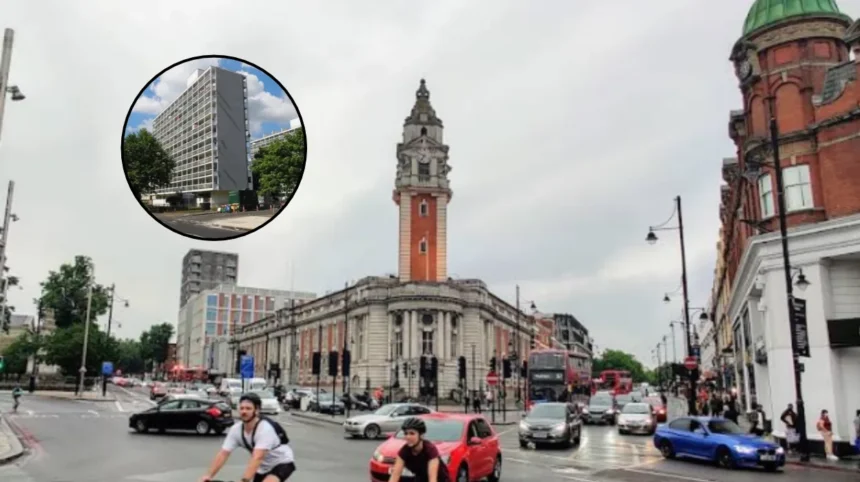
The Loughborough Estate is a large social housing development situated in Brixton, within the London Borough of Lambeth. Operational management of the estate was transferred from Lambeth Council to the Loughborough Estate Management Board under the Social Housing Right to Manage regulations, designed to give local residents direct control over communal maintenance, repairs, and neighborhood services.
Over recent years, relationship dynamics between estate residents, the TMO leadership, and Lambeth Council have severely deteriorated. Tenants and leaseholders have repeatedly raised grievances regarding neglected maintenance, delayed repairs, opaque accounting practices, and restricted access to TMO shareholding membership. The shift towards online AGMs during previous years further insulated the board from direct resident scrutiny, culminating in Lambeth Council’s decision to pursue legal proceedings in the High Court to enforce an in-person meeting for 2026. The unexpected reversal back to a digital platform and the subsequent handling of the vote represent the latest breakdown in a long-standing dispute over local housing governance.
Prediction: How This Development Can Affect Social Housing Residents and TMO Governance
This development is likely to have significant short- and long-term consequences for social housing tenants, local authorities, and the broader framework of TMO management across the United Kingdom.
Immediate Impact on Loughborough Estate Residents
- Continued Service Failure: In the short term, the re-election of the existing board without a clear democratic mandate means that estate residents will likely continue to face unresolved repair backlogs, maintenance delays, and degraded estate services.
- Erosion of Democratic Trust: The chaotic handling of the AGM and the systematic exclusion of residents from shareholder status deepens distrust between the community and its immediate housing managers, increasing the likelihood of legal challenges, rent withholding campaigns, or further public demonstrations.
Wider Implications for Social Housing Policy and Local Authorities
- Increased Legal and Regulatory Scrutiny: The High Court action initiated by Lambeth Council sets a clear precedent for local authorities struggling with non-compliant housing management boards. Other councils experiencing similar governance conflicts may utilize formal litigation to enforce compliance and financial transparency.
- Accelerated Legislative Reform: The operational breakdown at LEMB provides direct empirical evidence for parliamentarians deliberating the Social Housing Bill. The publication of the Ministry of Housing’s review and subsequent amendments are likely to result in stricter statutory oversight, streamlined legal mechanisms for local authorities to terminate TMO agreements in cases of severe financial mismanagement, and mandatory standardized rules ensuring open access to shareholder status for all estate residents.