Key Points
- Lambeth Council has approved a reduced settlement of £365,000 from Metropolitan Thames Valley Housing (MTVH) to resolve a 20-year land dispute at Lingham Court on Clapham Road.
- The original 2003 development agreement entitled the council to £1 million for the freehold transfer of land, payable in two £500,000 instalments; the first was paid, but the second was not due to disputes over costs and final terms.
- MTVH had submitted counterclaims totalling £135,000 for demolition, site clearance, and decontamination works, which Lambeth cannot robustly evidence for or against owing to incomplete records from the agreement’s age.
- A council report acknowledges incomplete records, making court action difficult, costly, and high-risk with no guarantee of a better outcome.
- The settlement is deemed a “pragmatic” solution by council officers to end the long-standing liability and avoid further expense.
- Although Lambeth retains the freehold on paper, MTVH has occupied, managed, and operated the site for around two decades, providing extra-care housing under the original agreement.
- The unresolved land transfer stemmed largely from the dispute over the final payment.
- The £365,000 will be treated as a capital receipt to support Lambeth’s housing finances, including its Exceptional Financial Support arrangements for 2025/26; around four per cent will cover disposal-related costs.
- The agreement includes a clause preventing either party from bringing future claims related to the deal.
- The decision was approved under delegated powers, with the freehold transfer expected to complete within weeks.
- The story was first reported by Jason Cobb of Brixton Buzz on 4th February 2026.
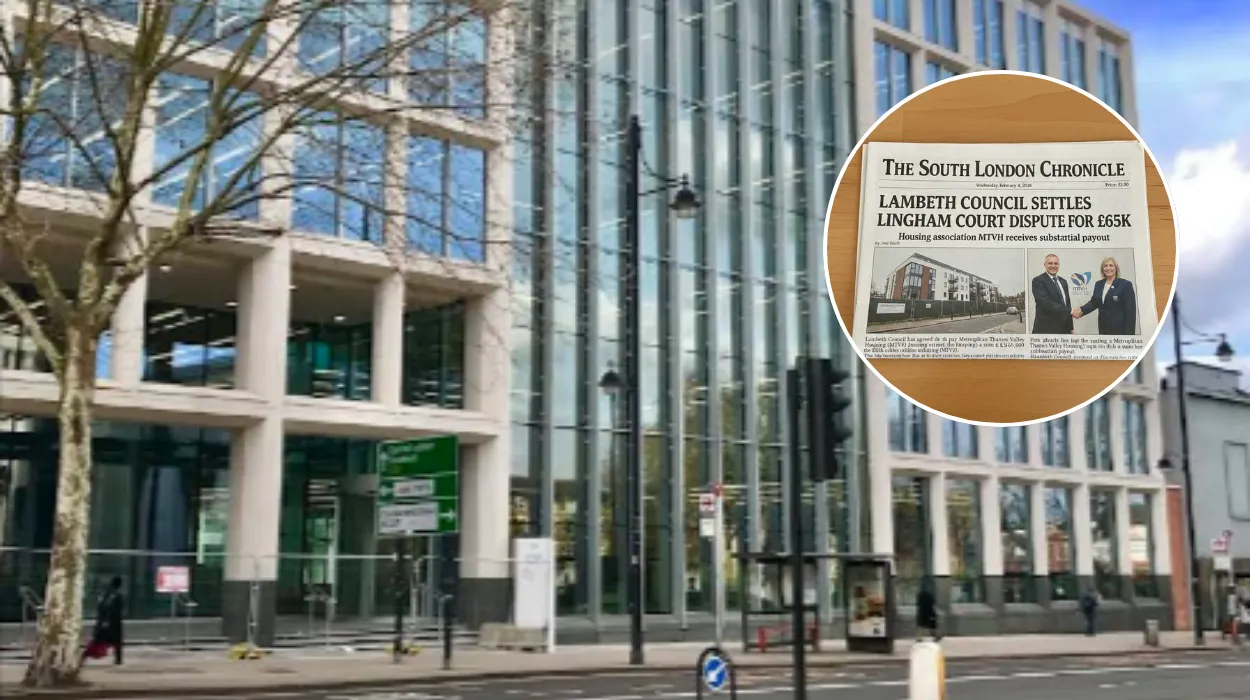
Lambeth (South London News) February 4, 2026 – Lambeth Council is set to receive significantly less money than originally agreed after approving a settlement to resolve a 20-year-old land dispute at Lingham Court on Clapham Road. Under the original 2003 development agreement, the council was due £1 million for the freehold transfer, but has now accepted £365,000 from housing association Metropolitan Thames Valley Housing (MTVH) as a pragmatic close to the matter.
- Key Points
- What Triggered the Original 2003 Dispute?
- Why Did MTVH Submit Counterclaims?
- How Does the Council Justify Accepting Less Money?
- What Role Did Incomplete Records Play?
- Who Is Metropolitan Thames Valley Housing?
- What Happens to the Freehold After Settlement?
- How Will the Payout Benefit Lambeth’s Finances?
- Why Was Delegated Powers Used for Approval?
- What Broader Lessons Emerge for Land Deals?
- When Did Brixton Buzz Break the Story?
- Where Is Lingham Court Located?
What Triggered the Original 2003 Dispute?
The dispute originated from a development agreement signed in 2003 between Lambeth Council and what is now MTVH. As detailed in the council’s report, the deal involved the freehold transfer of land at Lingham Court in exchange for £1 million, split into two £500,000 instalments.
As reported by Jason Cobb of Brixton Buzz, the first payment was duly made, but the second never materialised following disagreements over costs and final terms. The council report, titled “ODDR 1-30 Lingham Court Clapham Road Resolution of Outstanding Freehold Transfer and Settlement,” notes that records relating to the dispute are incomplete, complicating any retrospective legal pursuit.
MTVH occupied the site immediately and has managed it for extra-care housing ever since, despite the paperwork snag. Lambeth says the outstanding transfer lingered primarily because of the payment row.
Why Did MTVH Submit Counterclaims?
MTVH had lodged counterclaims amounting to £135,000, covering demolition, site clearance, and decontamination works carried out at the site. According to the council report cited by Jason Cobb of Brixton Buzz, Lambeth officers state they cannot robustly evidence these claims either way due to the agreement’s age and patchy documentation.
As reported by Jason Cobb of Brixton Buzz, officers warn that pursuing the matter in court would prove costly and high-risk. The report concludes there is no guarantee the council would secure more than the £365,000 now on offer, tipping the balance towards settlement.
This pragmatic stance reflects the challenges of resolving legacy disputes when evidence trails off over two decades. MTVH’s long-term operation of the site as extra-care housing adds further context to their position.
How Does the Council Justify Accepting Less Money?
Council officers describe the £365,000 deal as a “pragmatic” solution to draw a line under a liability outstanding since 2003. As outlined in the report covered by Jason Cobb of Brixton Buzz, it avoids litigation costs and risks while finally completing the transaction.
The payment will enter as a capital receipt, bolstering Lambeth’s housing finances amid its Exceptional Financial Support needs for 2025/26. Approximately four per cent—roughly £14,600—will offset disposal-related costs, leaving the bulk for housing support.
Although Lambeth holds the freehold nominally, MTVH’s de facto control for 20 years underscores the settlement’s practicality. The deal also bars future claims by either side, providing closure.
What Role Did Incomplete Records Play?
Incomplete records emerge as a pivotal factor, as highlighted in Lambeth’s official report. Jason Cobb of Brixton Buzz reports that the council acknowledges gaps in documentation, rendering court action unviable.
These evidentiary shortcomings apply to both Lambeth’s claim for the full £500,000 second instalment and MTVH’s £135,000 counterclaims. Officers note the passage of time has eroded the paper trail, making robust defence or prosecution impossible.
This situation exemplifies broader challenges in local government: long-tail disputes from past deals often falter on faded archives. The report stresses that legal pursuit offered no assured betterment over the settlement.
Who Is Metropolitan Thames Valley Housing?
Metropolitan Thames Valley Housing (MTVH) is the housing association at the dispute’s heart, having managed Lingham Court since 2003. As per Jason Cobb’s Brixton Buzz article, MTVH provides extra-care housing there under the original agreement, despite the freehold technicality.
The association’s counterclaims reflect works they undertook, including demolition, clearance, and decontamination—efforts now factored into the reduced payout equation. MTVH’s operational stewardship over two decades positions them as the site’s effective custodians, influencing the settlement’s terms.
No further statements from MTVH appear in the covered reporting, but their role as counterparty underscores the mutual interest in resolution.
What Happens to the Freehold After Settlement?
The freehold transfer to MTVH is slated for completion within weeks, following delegated powers approval. Jason Cobb of Brixton Buzz notes this will formalise MTVH’s long-held possession and management rights.
Lambeth retains nominal title on paper currently, but MTVH’s occupation since 2003 has rendered this distinction academic until now. The settlement rectifies this, aligning legal status with reality.
How Will the Payout Benefit Lambeth’s Finances?
The £365,000 qualifies as a capital receipt, earmarked for housing finances including 2025/26 Exceptional Financial Support—a mechanism for strained local authorities. Brixton Buzz coverage specifies four per cent covers disposal costs, maximising net gain.
This influx aids Lambeth amid fiscal pressures, channeling funds into housing priorities without litigation drain. Officers frame it as ending a protracted overhang efficiently.
Why Was Delegated Powers Used for Approval?
The decision bypassed full council debate via delegated powers, enabling swift action on what officers deem low-risk. As Jason Cobb reports for Brixton Buzz, this expedited the path to weeks-away completion.
Such delegation suits contained, pragmatic resolutions where urgency and evidence gaps counsel against delay. It reflects administrative efficiency in tying off 2003 loose ends.
What Broader Lessons Emerge for Land Deals?
This case spotlights risks in long-term development pacts: disputes festering over payments can span generations, exacerbated by record erosion. Lambeth’s report, via Brixton Buzz, warns of litigation perils in such scenarios.
Housing associations like MTVH often shoulder operations amid paperwork stalls, blurring ownership lines. Settlements like this prioritise closure over maximalism, safeguarding public finances.
When Did Brixton Buzz Break the Story?
Jason Cobb published the exclusive on Brixton Buzz on 4th February 2026, drawing directly from Lambeth’s report. The article under Lambeth Council and News categories leaves room for comments, inviting public input.
No other media coverage has surfaced to date, making Brixton Buzz the sole source. Its focus on local affairs ensures comprehensive detailing of the council document.
Where Is Lingham Court Located?
Lingham Court sits on Clapham Road in Lambeth, a key South London site for extra-care housing. MTVH’s tenure there since 2003 highlights its community role amid the legal limbo.
The location’s prominence underscores the dispute’s local stakes, now resolved without court fanfare. Completion will seamless integrate it into MTVH’s portfolio.