Key Points
- Lambeth Council has extended formal congratulations to students across the borough as GCSE results were collected from schools.
- Official, complete results for Lambeth schools will be published by the Department for Education in November.
- Early visits to local institutions, including The Norwood School in Crown Dale, indicate significant academic achievements across various grade boundaries.
- Top individual performers include Thomas Law, Vivian Sharkey, Otto Balaam, and Rosabella Morgan, all securing high proportions of Grade 9s and top marks in vocational subjects.
- Cabinet Member for Children and Young People, Cllr Alice Weavers, praised the dedication of pupils, educators, and support networks assisting in post-16 transitions.
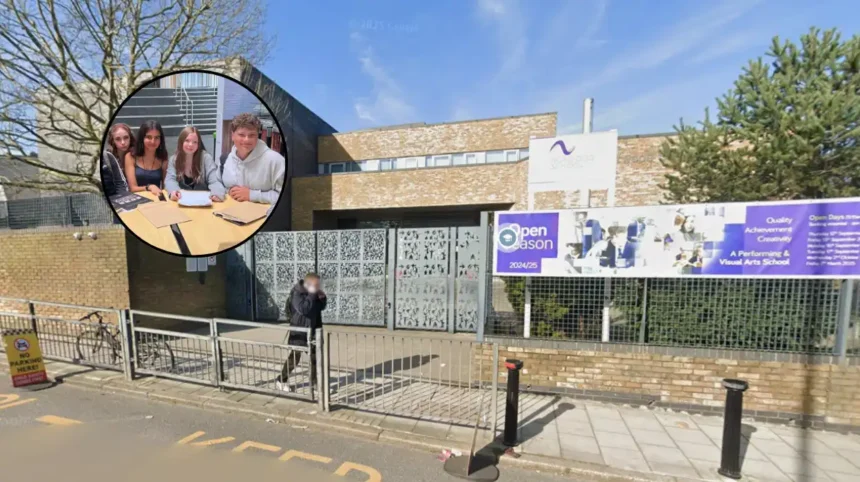
Lambeth (South London News) August 20, 2026 — Students across the London Borough of Lambeth have formally collected their GCSE examination results this morning, marking a critical educational milestone and prompting official commendations from local council authorities. While official borough-wide performance metrics will remain unconfirmed until the Department for Education releases its comprehensive dataset in November, early indicators gathered directly from local educational institutions suggest a pattern of strong academic outcomes. At The Norwood School on Crown Dale, pupils gathered early in the day to receive their grade notifications, revealing notable individual accomplishments across both traditional core subjects and specialized vocational qualifications.
How Did Individual Lambeth Students Perform in Their GCSE Examinations?
Among the high achievers at The Norwood School, student Thomas Law recorded top-tier academic marks, securing a total of seven Grade 9s and two Grade 8s. Fellow student Vivian Sharkey achieved an identical score profile, attaining seven Grade 9s and two Grade 8s. Reflecting on the result outcome, Sharkey stated that
“I can’t believe it – I worked so hard but I also gave time to myself. So it shows my approach worked.”
Further performance highlights from The Norwood School included Otto Balaam, who achieved five Grade 9s, two Grade 8s, and two Grade 7s. Discussing his academic journey upon receiving his results, Balaam remarked that
“I’m really pleased, I’ve enjoyed my time here and I’m looking forward to the future.”
Similarly, student Rosabella Morgan recorded five Grade 9s and three Grade 8s, alongside a distinction star ($D^*$) in Dance, representing the maximum attainable mark for that specific qualification. Commenting on the outcome, Morgan stated, “It’s amazing – I’m so happy.”
What Is the Official Response From Lambeth Council Leaders?
Responding to the educational developments across the borough, Councillor Alice Weavers, Lambeth Council’s Cabinet Member for Children and Young People, issued a statement praising the collective efforts of the academic community. Cllr Weavers stated:
“Congratulations to all young people receiving GCSE results. We wish everyone good luck with their next steps and thank you to everyone who supports students with their GCSEs and transitions to post-16 education and training.”
Explore More Lambeth Council News
Lambeth Council Pledges Return of High Street Bins, South London 2026
Lambeth Council Votes Against EHRC Single-Sex Spaces Guidance: South London 2026
Background of GCSE Results Day and Performance Reporting
The General Certificate of Secondary Education (GCSE) serves as the primary academic qualification for students aged 14 to 16 across England, Wales, and Northern Ireland, typically taken at the conclusion of Key Stage 4.
Following a series of national curriculum reforms introduced between 2017 and 2020, the traditional $A^*$-to-$G$ grading system was systematically replaced with a numerical scale ranging from $9$ (the highest attainable grade) down to $1$ (the lowest).
Under this framework, a Grade $4$ is classified as a standard pass, whilst a Grade $5$ is formally recognized as a strong pass by educational authorities and post-16 institutions.
The reporting cycle for national examinations operates on a structured multi-stage timeline. Initial results are released directly to candidates and institutions on designated national result days in late August, allowing students to secure places in further education, sixth-form colleges, apprenticeships, or vocational training programmes.
However, consolidated regional and borough-wide analytical data undergoes rigorous validation by central government statisticians. Consequently, the Department for Education publishes its comprehensive performance league tables and finalized statistical summaries later in the autumn, typically in November. This secondary publication provides the formal baseline for assessing borough-level academic progress, institutional accountability, and national performance comparisons.
Prediction: How Will These Results Affect Local Educational Stakeholders?
The immediate and long-term outcomes of this results cycle will influence several distinct groups across the Lambeth community:
For the cohort of young people receiving their grades, these results directly dictate immediate entry paths into post-16 education. Achieving top marks, particularly Grade 8s and 9s, enables entry into highly competitive A-Level programmes, specialized vocational diplomas, and elite apprenticeship tracks.
Students who hit key threshold passes in core subjects such as Mathematics and English Language avoid compulsory retakes, allowing them to proceed seamlessly with further academic or practical training.
For local academic providers like The Norwood School, early positive results bolster institutional reputation and community trust ahead of the formal Department for Education data release in November.
Strong performance figures serve as a key metric for prospective student enrollment during autumn open days, directly influencing school admissions figures and subsequent central funding allocations for future academic years.
For Lambeth Council and local policy makers, early indicators of success provide a baseline to evaluate the efficacy of local educational support structures and targeted youth initiatives. The finalized metrics published in November will allow local authorities to identify areas of academic strength as well as specific subjects or schools requiring targeted intervention, resource re-allocation, or additional educational investment ahead of subsequent examination cycles.